Showing posts with label Alzheimer’s. Show all posts

Wednesday, January 13, 2016

Boosting brain’s waste disposal system may slow neurodegenerative diseases

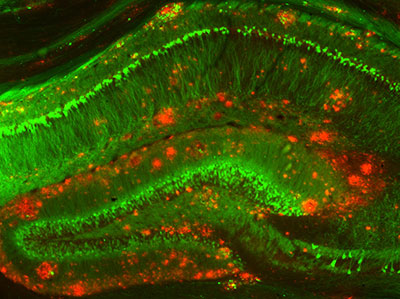
Brain images show rolipram panel with less bright red dots than control panel.
The researchers showed that rolipram activates the brain’s garbage disposal system, eliminating excess tau proteins (glowing red dots).Columbia University Medical Center
Several neurological disorders, such as Alzheimer’s disease, are characterized by proteins that accumulate in the brain. One protein, called tau, clumps into twisted threads known as tangles. These are a hallmark of Alzheimer’s disease and several other neurodegenerative disorders known as tauopathies.
Our cells have a waste disposal system that works like a combination garbage disposal and recycler. The system, called a proteasome, is a hollow, cylindrical structure that breaks down defective proteins into smaller pieces. The pieces can then be recycled into new proteins needed by the cell.
A research team led by Dr. Karen E. Duff at Columbia University set out to assess whether abnormal tau buildup might be due to defects in proteasome function. The study was supported by NIH’s National Institute of Neurological Disorders and Stroke (NINDS) and National Institute of General Medical Sciences (NIGMS). Results appeared in the January 2016 issue of Nature Medicine.
The researchers used a genetically engineered mouse model of tauopathy. The mice accumulate tau and develop cognitive deficits. The team found that tau accumulation was associated with decreased proteasome activity. Using a cell culture model, they determined that tau aggregates impair proteasome function.
Proteasome function is activated by a pathway involving protein kinase A and cyclic AMP (cAMP). The scientists hypothesized that activating this pathway might increase proteasome function.
When the genetically engineered mice were given a drug that increases cAMP levels (rolipram), they showed increased proteasome function, reduced aggregated tau levels, and improved cognitive performance. The drug was effective in the early stages of degeneration, but not in the later stages of tauopathy. It had no effect on normal healthy mice.
“These results show, for the first time, that you can activate the proteasome in the brain using a drug and effectively slow down the disease, or prevent it from taking a hold,” Duff says. “The proteasome system we are studying also degrades proteins associated with a number of other neurodegenerative diseases such as Parkinson’s, Huntington’s, frontotemporal degeneration, and amyotrophic lateral sclerosis. We may be able to apply these findings to other disorders that accumulate proteins.”
The researchers plan to search libraries of FDA-approved drugs or new molecules for compounds that work more efficiently than rolipram or activate proteasomes by different pathways.

Tuesday, January 5, 2016

Brain Research::Do we have free will? ♦ Helmetless-tackling drills significantly reduce head impact ♦ Newly discovered windows of brain plasticity may help stress-related disorders

Helmetless-tackling drills significantly reduce head impact Sparked by national debate and efforts to help make football safer for players, research has found that a novel set of helmetless-tackling drills are effective in reducing head impacts by 28 percent in one season.
Newly discovered windows of brain plasticity may help stress-related disorders Even under repeated stress, the brain maintains the potential to adapt and recover. Researchers have shown how changes in gene expression cause these transitory opportunities to open up. Their results suggest well-timed treatment could change the trajectory of a brain suffering from a stress-related disorder.
Activity of Brain Proteins Associated with Memory Impairment in Alzheimer’s Identified Researchers at a laboratory for research of molecular and cellular mechanisms underlying learning and memory found that “repairing” the activity led to an improvement in memory. A start-up they established on the basis of the findings will attempt to develop drugs delaying the onset of cognitive symptoms.
The brain-computer duel: Do we have free will? Our choices seem to be freer than previously thought. Using computer-based brain experiments, researchers studied the decision-making processes involved in voluntary movements. The question was: Is it possible for people to cancel a movement once the brain has started preparing it? The conclusion the researchers reached was: Yes, up to a certain point -- the 'point of no return'.

Monday, November 30, 2015

DNA repair factor linked to breast cancer may also play a role in Alzheimer’s disease

NIH-funded research suggests deficient DNA repair may lead to dementia.
Breaking down BRCA1Scientists reduced levels of BRCA1 in mouse brains and in neurons in a dish to investigate the role of the protein in dementia. Image courtesy of Lennart Mucke, University of California, San Francisco.
Mutant forms of breast cancer factor 1 (BRCA1) are associated with breast and ovarian cancers but according to new findings, in the brain the normal BRCA1 gene product may also be linked to Alzheimer’s disease. The results, published in Nature Communications, suggest that low levels of BRCA1 protein in the brain may contribute to dementia. The study was funded by the National Institutes of Health.
“It’s extremely interesting that one molecule can be critically involved in two apparently opposing conditions: cancer, in which too many cells are born and neurodegenerative disease, in which too many brain cells die off,” said senior author Lennart Mucke, M.D., director of the Gladstone Institute of Neurological Disease, San Francisco, and the Joseph B. Martin Distinguished Professor of Neuroscience, and professor of neurology at the University of California, San Francisco.
Dr. Mucke and his colleagues suspected that defects in DNA repair mechanisms could contribute to cognitive decline in AD and focused their studies on BRCA1. BRCA1 plays a key role in repairing deoxyribonucleic acid (DNA), our genetic code. DNA is a double helix structure that is made of two strands and resembles a twisted ladder. Occasionally, one or both of the strands will develop breaks, which are fixed by DNA repair proteins including BRCA1. This process is critical for cell survival because if DNA is not repaired properly, the cell may die.
When Dr. Mucke’s group examined brains of patients who died with Alzheimer’s, they discovered low levels of BRCA1. In addition, the researchers found reductions of BRCA1 in the brains of mouse models of Alzheimer’s. In fact, experimental reduction of BRCA1 levels in brains of healthy mice made their brain cells shrink and become dysfunctional.
Dr. Mucke’s team also investigated the effects of BRCA1 on cognition.  After researchers reduced BRCA1 levels in the brains of healthy mice, the animals developed problems with learning and memory. Mouse models of Alzheimer’s showed even greater declines in learning and memory following reductions of BRCA1. In addition, lowering BRCA1 caused increased DNA damage in the brains of Alzheimer’s mice.
One of the hallmarks of Alzheimer’s disease is accumulation of a protein fragment known as beta-amyloid, which is toxic to brain cells and can lead to neuronal death. Dr. Mucke’s team found that adding amyloid beta to neurons in a dish lowered levels of BRCA1.
According to Dr. Mucke and his colleagues, the findings suggest that accumulation of beta-amyloid lowers levels of BRCA1, which increases DNA damage in brain cells and may contribute to dementia.
“An emerging theme in neurodegeneration research is that normal DNA repair protects against damage that causes neurons to die in dementia and related disorders. This study supports and strengthens that theme by showing that beta-amyloid decreases the levels of the DNA repair gene BRCA1, and at the same time inhibits the ability to form new memories,” said Roderick Corriveau, Ph.D., program director at NIH’s National Institute of Neurological Disorders and Stroke, which provided funding for the study.
“The functions of BRCA1 in the brain remain to be fully elucidated,” said Dr. Mucke, “but our findings suggest that it may play an important role in supporting critical brain functions in both health and disease.”
Further research is necessary to determine whether BRCA1 may be a potential therapeutic target for treating dementia, and whether BRCA1 mutations that lead to cancer also affect brain function.

Wednesday, September 30, 2015

Brain Research: Our brain's secrets to success? ♦ Tools for illuminating brain function make their own light ♦ Chimpanzee personality linked to anatomy of brain

Vaccination on the horizon for severe viral infection of the brain Researchers reveal possible new treatment methods for a rare, usually fatal brain disease. Thanks to their discovery that specific antibodies play a key role in combating the viral infection, a vaccine against the disease 'progressive multifocal leukoencephalopathy' could now be developed.
Tools for illuminating brain function make their own light Researchers have developed tools that could allow neuroscientists to put aside the fiber optic cable, and use a glowing protein from coral as the light source instead. A variant on the optogenetics technique gives neuroscientists the choice of activating neurons with light or an externally supplied chemical.
Our brain's secrets to success? We owe our success -- both as a species and as individuals -- to features of our brain that are just now beginning to be understood. One new study suggests how our primate brain's outer mantle, or cortex, was able to expand as much as 1,000-fold through evolution. Other links personal success -- such as high education and income levels and life satisfaction -- to increased chatter between key brain areas when we're not doing anything in particular.
Chimpanzee personality linked to anatomy of brain structures Chimpanzees' personality traits are linked to the anatomy of specific brain structures, according to researchers. The researchers studied 107 chimpanzees' brains using magnetic resonance image (MRI) scans and also assessed each chimpanzee's personality by using a 41-item personality questionnaire. They found chimpanzees who were rated as higher for the personality traits of openness and extraversion had greater gray-matter volumes in the anterior cingulate cortex in both hemispheres of the brain
Disruption of brain-blood barrier might influence progression of Alzheimer’s More and more data from preclinical and clinical studies strengthen the hypothesis that immune system-mediated actions contribute to and drive pathogenesis in Alzheimer’s disease. New insights suggest that A? indeed induces a strong inflammatory response, thereby destroying an important but often neglected brain barrier, called the blood-cerebrospinal fluid (CSF) barrier. Disruption of this blood-CSF barrier disturbs brain homeostasis and might negatively affect disease progression. Strikingly, these effects could be blocked in the presence of a matrix metalloproteinase inhibitor

Friday, September 4, 2015

Brain Research:Smallest 3-D camera offers brain surgery innovation ♦ Alzheimer’s disease accelerated by an abnormal build-up of fat ♦ Memory loss two-three years before dementia onset

Alzheimer’s disease thought to be accelerated by an abnormal build-up of fat in the brain People with Alzheimer’s disease have fat deposits in the brain. For the first time since the disease was described 109 years ago, researchers have discovered accumulations of fat droplets in the brain of patients who died from the disease and have identified the nature of the fat.
Awareness of memory loss may decline two-three years before dementia onset People who will develop dementia may begin to lose awareness of their memory problems two to three years before the actual onset of the disease, according to a new study. The study also found that several dementia-related brain changes, or pathologies, are associated with the decline in memory awareness.
Reward, aversion behaviors activated through same brain pathways New research may help explain why drug treatments for addiction and depression don't work for some patients. The conditions are linked to reward and aversion responses in the brain. And the research suggests that some treatments simultaneously stimulate reward and aversion responses, resulting in a net zero effect.
Smallest 3-D camera offers brain surgery innovation To operate on the brain, doctors need to see fine details on a small scale. A tiny camera that could produce 3-D images from inside the brain would help surgeons see more intricacies of the tissue they are handling and lead to faster, safer procedures.

Tuesday, March 31, 2015

Repurposed experimental cancer drug restores brain function in mouse models of Alzheimer’s disease

Scientists have found that a compound originally developed as a cancer therapy potentially could be used to treat Alzheimer’s disease. The team demonstrated that the drug, saracatinib, restores memory loss and reverses brain problems in mouse models of Alzheimer’s, and now the researchers are testing saracatinib’s effectiveness in humans. The study was funded by the National Institutes of Health as part of an innovative crowdsourcing initiative to repurpose experimental drugs.
Alzheimer’s disease is the most common form of dementia, a group of disorders that cause progressive loss of memory and other mental processes. An estimated 5 million Americans have Alzheimer’s disease, which causes clumps of amyloid beta protein to build up in the brain, and these protein clusters damage and ultimately kill brain cells (neurons). Alzheimer’s disease also leads to loss of synapses, which are the spaces between neurons through which the cells talk to each other and form memories. Current Alzheimer’s drug therapies can only ease symptoms without stopping disease progression. New treatments are needed that can halt the condition by targeting its underlying mechanisms.
Image of mouse brain in Alzheimer’s model
In a mouse model of Alzheimer’s disease, amyloid beta clusters (red) build up among neurons (green) in a memory-related area of the brain. (Strittmatter Laboratory, Yale University Photo/Adam Kaufman)
Through NCATS’ New Therapeutic Uses program, Yale neurobiology researcher, neurologist and senior author of the study Stephen Strittmatter, M.D., Ph.D., and his colleagues obtained saracatinib (AZD0530), which the pharmaceutical company AstraZeneca previously developed to treat cancer. Strittmatter and his team knew from previous studies that a protein called Fyn kinase plays a central role in how amyloid beta clusters damage brain cells. Saracatinib targets the same Fyn protein and already had cleared several key steps in the development process, giving Strittmatter team a critical head start on the research.
“The investigational drug already had been developed, optimized and studied in animals as well as tested for safety in humans, so our ability to obtain this asset through NCATS and AstraZeneca gave us an incredible shortcut in the drug development process,” Strittmatter explained.
Typically, drug development can take at least a decade from the discovery of a therapeutic target to an experimental compound’s entry into a Phase 2a human clinical trial to test effectiveness. In the case of saracatinib, the research team completed required preclinical and clinical safety studies and began a Phase 2a trial within about 18 months.
“This work demonstrates what can happen when NIH, the biopharmaceutical industry and academia innovate and collaborate to share resources and knowledge,” said NCATS Director Christopher P. Austin, M.D. “The speed with which this compound moved to human trials validates our New Therapeutic Uses program model and serves NCATS’ mission to deliver more treatments to more patients more quickly.”
“No one individual or group has complete knowledge of disease pathways and treatment targets,” said Craig D. Wegner, Ph.D., head, Boston Emerging Innovations Unit, Scientific Partnering & Alliances within AstraZeneca’s Innovative Medicines and Early Development Biotech Unit. “This program enabled us to pair AstraZeneca’s data on this compound with the Strittmatter group’s specialized Alzheimer’s disease knowledge to uncover a potential new therapeutic use for saracatinib. It’s a great example of how scientists from industry and academia can synergistically work together to push the boundaries of medical science.”
In the animal study, the Yale team gave the experimental drug to mice with Alzheimer’s-like symptoms, such as memory loss and age-related buildup of abnormal amyloid beta clusters, modeling the development of the disease in humans. After four weeks, the Alzheimer’s mice showed complete reversal of spatial learning and memory loss. When the scientists examined the brains of the mice, they found that the characteristic synapse loss had been fully restored, providing a biological explanation for the memory improvement. The treatment also reduced several other Alzheimer’s-related biochemical changes in the mice and did not appear to be toxic.
Already, the Yale scientists have completed a successful Phase 1b safety trial in humans with Alzheimer’s disease (NCT01864655). Now the team is enrolling more participants in a larger, multisite Phase 2a trial (NCT02167256) to assess safety, tolerability and effectiveness of the experimental compound. A total of 152 participants will receive saracatinib or placebo for one year, and the researchers expect to have final results within two years. Individuals interested in participating in the trial can find more information at https://clinicaltrials.gov/ct2/show/NCT02167256?term=Alzheimer+AND+Fyn&rank=2.

Friday, March 28, 2014

3/28/14 Health News: Slaughterhouse Shutdown, Operator Arrested For Animal Cruelty ♦ Protein May Hold the Key to Who Gets Alzheimer’s ♦ Chronic Sleep Loss Could Lead to Loss of Brain Neurons,

Slaughterhouse Shutdown, Operator Arrested For Animal Cruelty
The Animal Recovery Mission (ARM), a non-Profit investigative animal welfare organization based in Miami Beach, said undercover videos were taken on December 24, 2013 when their personnel entered onto the property posing as customers. According to police, another video was taken on December 30, 2013. Continue Reading

Protein May Hold the Key to Who Gets Alzheimer’s
It is one of the big scientific mysteries of Alzheimer’s disease: Why do some people whose brains accumulate the plaques and tangles so strongly associated with Alzheimer’s not develop the disease? Now, a series of studies by Harvard scientists suggests a possible answer, one that could lead to new treatments if confirmed by other research. The memory and thinking problems of Alzheimer’s disease and other dementias, which affect an estimated seven million Americans, may be related to a failure in the brain’s stress response system, the new research suggests. If this system is working well, it can protect the brain from abnormal Alzheimer’s proteins; if it gets derailed, critical areas of the brain start degenerating. “This is an extremely important study,” said Li-Huei Tsai, director of the Picower Institute for Learning and Memory at the Massachusetts Institute of Technology, who wrote “This is the first study that is really starting to provide a plausible pathway to explain why some people are more vulnerable to Alzheimer’s than other people.” Continue Reading

Chronic Sleep Loss Could Lead to Loss of Brain Neurons,

Mice study suggests chronic sleep deprivation could have more lasting effects on the brain than previously realized, according to a new study in mice. Researchers from the University of Pennsylvania Perelman School of Medicine and Peking University found that chronic sleep loss is associated with injury and loss of locus coeruleus (LC) neurons in the brain, which are needed for alertness and optimal thinking Continue Reading

Thursday, March 27, 2014

3/27/14 New Blood Test Predicts Alzheimer’s Before Symptoms Appear ♦ Stem Cells in Body's Fatty Folds Can Help Heal Diseased Kidneys ♦ Silicone Chip Recreates Cancer’s Microenvironment

BIOCRATES Test Kit Helps Develop First Metabolomics-Based Blood Test for Alzheimer’s
The test is capable of predicting before symptoms with 90% accuracy, the risk of Alzheimer’s disease 2–3 years before it has actually become clinically manifest. Although it will take some time to develop test versions fit for use in doctors’ offices, the findings by Mapstone et al. are an impressive example of the power of metabolomics in diagnosis and biomarker discovery.Continue Reading 

Silicone Chip Recreates Cancer’s Microenvironment

Killing cancer cells growing on a petri dish is an entirely different beast than fighting cancer cells in the human body. To provide a more realistic platform for screening anticancer drugs, bioengineers have created a device that better replicates the environment around human tumors than conventional cell culture does. They designed a microfluidic chip that imitates the blood circulation system alongside a three-dimensional tumor (Anal. Chem. 2014, DOI: 10.1021/ac403899j). With further development, the chip should be useful for both high-throughput drug screening and for helping doctors quickly pinpoint the best cancer therapy Continue Reading


Stem Cells in Body's Fatty Folds Can Help Heal Diseased Kidneys

A new study has revealed that fatty fold of tissue within the abdomen that is a rich source of stem cells can help in fighting kidney failure. The study found that stem cells from within a chronic kidney disease patient's own abdomen could be used to preserve and possibly improve kidney function, New Scientist reported. However, such a treatment would require injecting cells frequently over a period of many months and years, as stem cells do not survive in the body for more than a few days after injection. Continue Reading

Sunday, October 20, 2013

10/20/2013 Daily Health News: Strict Rules GMO’s, Health Supplement hurts E coli, Prolonged Stress on Kids, Alzheimer’s Breakthrough, Type 1 Diabetes

On Kauai, GMO Hearing Ends With Strict Rules For Biotech
HONOLULU - After a marathon hearing, the Kauai County Council passed a hotly debated bill on Wednesday that could lead to prison time or fines for employees of agricultural companies if they don’t divulge specifics about pesticide use, abide by strict setback rules for spraying chemicals or disclose when they grow genetically engineered crops.Continue Reading

STUDY: HEALTH SUPPLEMENT COULD REDUCE STRENGTH OF E. COLI
Researchers at North Dakota State University have discovered that a mood-enhancing substance can help reduce the virulence of E. coli. In testing a series of chemicals on E. coli in beef broth, researchers found that a neurotransmitter called phenylethylamine (PEA) reduced the bacterial biofilms. “Biofilms are complex communities of bacteria that attach themselves to surfaces... Continue Reading

Cortisol in Hair a Marker of Prolonged Stress in Kids
The level of cortisol in hair may be a marker of prolonged stress in children, which could be a useful "complement" to other ways of studying how stress influences the health of children, report researchers from Sweden. In a prospective study, Jerker Karlén, MD, and colleagues from Linköping University found a correlation between mother and child hair cortisol levels; high levels of cortisol were related to indicators of psychosocial stress in the child.  Continue Reading

Alzheimer's Breakthrough Hailed as 'Turning Point'
The discovery of the first chemical to prevent the death of brain tissue in a neurodegenerative disease has been hailed as the "turning point" in the fight against Alzheimer's disease. More work is needed to develop a drug that could be taken by patients. But scientists say a resulting medicine could treat Alzheimer's, Parkinson's, Huntington's and other diseases. In tests on mice, the Medical Research Council showed all brain cell death from prion disease could be prevented. Prof Roger Morris, from King's College London, said: "This finding, I suspect, will be judged by history as a turning point in the search for medicines to control and prevent Alzheimer's disease." He told the BBC a cure for Alzheimer's was not imminent but: "I'm very excited, it's the first proof in any living animal that you can delay neurodegeneration."The world won't change tomorrow, but this is a landmark study.": Continue Reading

Most with Type 1 Diabetes Secrete Small Amounts of Insulin
Contrary to conventional wisdom, most patients with even longstanding type 1 diabetes still have beta cells that secrete small amounts of insulin after a meal, according to a new study published online October 9 in Diabetologia. "Using a new, very sensitive assay for C-peptide — a marker of insulin secretion — we found that 73% [of] people with type 1 diabetes, even with a long duration, had detectable insulin production," lead author Richard A. Oram, MD, from the University of Exeter in the United Kingdom, told Medscape Medical News.                                                Source: http://www.medscape.com/