Showing posts with label Australian. Show all posts

Thursday, August 21, 2014

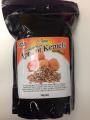
Australia: Aprisnax Australian Raw Apricot Kernels recall due to high levels of hydrocyanic acid.


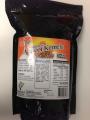
Apricot Kernel Image.JPGApricot Kernel Back of Package.JPG
Newstart Heath Supplies is conducting a recall of the above product which has been available for sale in the company’s online store and at health food shops nationally.
Identifying features are - Best Before NOV 2015 and Batch Number: B20414AAK
The recall is due to high levels of hydrocyanic acid. Food products containing high levels of hydrocyanic acid may cause illness if consumed.
The product was sold Nationally by  Health Food stores and via online sales.The supplier was Newstart Heath Supplies
Consumers should not eat this product and should return it to the place of purchase for a full refund. Any consumers concerned about their health should seek medical advice.For further information please contact: Newstart Heath Supplies on 0414 493 121 or vist the website www.oznatureshop.com.au

Tuesday, August 20, 2013

Multidrug-resistant Salmonella Found Home Aquariums

In a study in Australia they took samples of salmonella from patients gastroenteritis who owned ornamental tropical fish tanks.The type of salmonella found (Salmonella enterica serovar Paratyphi B dT+) was also found in their fish tank. This study  is the first definitive report showing that ornamental fish tanks are a reservoir for multidrug-resistant S. Paratyphi B dT+ which  causes severe disease in humans, particularly young children.


Infants and young children are much more susceptible to salmonella infection because a small number of bacteria  are needed to cause disease After a short incubation period of a few hours to one day, the bacteria multiply in the intestine causing an intestinal inflammation with diarrhea that is often has pus and  is bloody. In infants, dehydration can cause a  severe poisoning. The Salmonella can get outside the intestines causing meningitis,  inflammation of the bone and other illnesses in children.


These findings identify home aquariums containing tropical fish as the most important, but  not necessarily the only, source of multidrug-resistant S. Paratyphi B dT+.


12%–14% of Australian households have ornamental fish and as many as 12 million American and 1 million Canadian families own domestic aquariums. and because of the young age of most affected patients, multidrug-resistant S. Paratyphi B dT+ in home aquariums is a risk factor for Salmonella infection and thus becomes a public health issue.