Showing posts with label Breastfeeding. Show all posts

Thursday, December 24, 2015

Women's Health: Mothers-to-be, babies benefit from group prenatal care, ♦ Low zinc levels may suggest potential breastfeeding problems

Low zinc levels may suggest potential breastfeeding problems Zinc levels in breast milk may be able to serve as an indicator of breast function during lactation, according to health researchers who suggest that by identifying women with abnormally low levels of zinc in breast milk, they may be able to more quickly recognize mothers who might have trouble breast-feeding
Metformin has the potential to prevent and treat preeclampsia A commonly used drug for the treatment of diabetes, metformin, may have the potential to prevent and treat preeclampsia. Metformin has long been used to treat diabetes in both nonpregnant and pregnant patients, and is considered safe during pregnancy.
Mothers-to-be, babies benefit from group prenatal care, Group prenatal care can substantially improve health outcomes for both mothers and their infants. Women who received group -- rather than individual -- prenatal care were 33% less likely to have infants who were small for gestational age, had reduced risk for preterm delivery and low birthweight, and babies born to these women also spent fewer days in the neonatal intensive care unit.

Long-term outcomes of preventing premature menopause during chemotherapy Compared with receiving chemotherapy alone, women with breast cancer who also received the hormonal drug triptorelin to achieve ovarian suppression had a higher long-term probability of ovarian function recovery, without a statistically significant difference in pregnancy rate or disease-free survival,

Sunday, November 1, 2015

Women's Health: Association between breastfeeding, reduced risk of aggressive breast cancer ♦ Genetic tests of amniotic fluid could guide timing of delicate births

Association between breastfeeding, reduced risk of aggressive breast cancer Breastfeeding is associated with a lower risk of developing an aggressive form of breast cancer called hormone-receptor negative, a large international study shows. Hormone-receptor-negative (HRN) breast cancers are more likely to be aggressive and life-threatening. This subtype is more commonly diagnosed in women under age 50
More precise due dates for pregnant mothers Until now, measuring cervical length has been used to help detect women with a high chance of premature labor -- the shorter the cervix, the more likely labor is imminent. Now researchers suggests that a routine screening could help narrow the estimated date of delivery for pregnant women.
Genetic tests of amniotic fluid could guide timing of delicate births Analyzing gene expression of an expectant mother's amniotic fluid could give doctors an important tool for deciding when it is safe to deliver premature babies. Researchers report a way to test RNA and specific genetic signatures in amniotic fluid to see whether fetal lungs -- and potentially other organs -- are mature enough for a safe and viable delivery.
Researchers identify association between reproductive factors and risk of death Reproductive factors in women, such as a later starting age of menstruation, having children, breastfeeding and use of oral contraceptives, are associated with a reduced risk of death. A better understanding of how these factors can influence long-term health could help in the development of clinical strategies to improve women's health.

Monday, July 27, 2015

Many new mothers report no physician advice on infant sleep position, breastfeeding

Many new mothers do not receive advice from physicians on aspects of infant care such as sleep position, breastfeeding, immunization and pacifier use, according to a study funded by the National Institutes of Health.
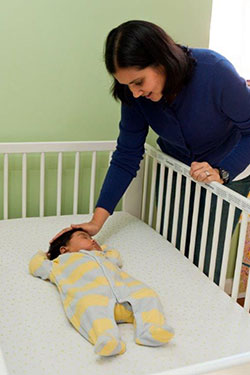
Woman with a sleeping baby
Infants should be placed to sleep alone, on their backs, on a firm sleep surface, such as in a mattress in a safety-approved crib , covered by a fitted sheet. Soft objects, toys, crib bumpers, quilts, comforters and loose bedding should be kept out of the baby’s sleep area.
Health care practitioner groups have issued recommendations and guidelines on all these aspects of infant care, based on research which has found that certain practices can prevent disease and even save lives.
The study authors surveyed a nationally representative sample of more than 1,000 new mothers, inquiring about infant care advice they received from doctors, nurses, family members and the news media.
Roughly 20 percent of mothers said they did not receive advice from their doctors regarding current recommendations on breastfeeding or on placing infants to sleep on their backs — a practice long proven to reduce the risk of sudden infant death syndrome (SIDS). More than 50 percent of mothers reported they received no advice on where their infants should sleep. Room-sharing with parents — but not bed-sharing — is the recommended practice for safe infant sleep.
The study appeared in Pediatrics and was conducted by researchers at Boston Medical Center, Boston University, and Yale University, New Haven, Connecticut.
“Earlier studies have shown that new mothers listen to their physicians,” said Marian Willinger, Ph.D.., of the Pregnancy and Perinatology Branch at NIH’s Eunice Kennedy Shriver National Institute of Child Health and Human Development, which funded the study. “This survey shows that physicians have an opportunity to provide new mothers with much-needed advice on how to improve infant health and even save infant lives.”
African American women, Hispanic women and first time mothers were more likely to receive advice from their physicians than were white women and mothers of two or more children.
“As a physician, these findings made me stop and really think about how we communicate important information to new parents,” said the study’s first author, Staci R. Eisenberg, M.D., a pediatrician at Boston Medical Center. “We may need to be clearer and more specific in telling new mothers about safe sleep recommendations. From a public health perspective, there is a real opportunity to engage families and the media to promote infant health.”
For the Study of Attitudes and Factors Affecting Infant Care Practices, the researchers enrolled new mothers at delivery from 32 hospitals around the country, with 1031 women eventually taking part in the study. The authors asked the women to complete questionnaires when the infant was between 2 and 6 months of age on advice they received from their infant’s doctor, birth hospital nurses, their family members, and the news media. In addition to finding out whether or not these sources had provided advice on infant care, the questionnaires sought to determine whether the advice was consistent with the recommendations of practitioner groups.
Image of a mother and child sharing a room
Room sharing — keeping the infant’s sleep area in the same room and next to where the caregiver sleeps — is recommended as a way to reduce the risk of SIDS and other sleep-related causes of infant death. Infants should not sleep in an adult bed, on a couch, or on a chair alone, with the parent or caregiver, with siblings or other small children, or with anyone else.
For example, the American Academy of Pediatrics (AAP) recommends that caregivers always place a baby on his or her back for sleep at night and for naps. The women in the study were asked whether they agreed or disagreed with a series of statements on sleep placement: “The nurses at the hospital where my baby was born think that I should place my baby to sleep on the [back, side or stomach.]” If the women agreed with the statement that the baby should be placed to sleep on his or her back, the researchers classified the response as consistent with the AAP recommendation. Agreement with statements on the other placement positions was considered inconsistent with the recommendation.
When it was given, advice from physicians tended to be consistent with recommendations.  However, 10 to 15 percent of the advice given on breastfeeding and pacifier use was not consistent with recommendations, and slightly more than 25 percent was not consistent with recommendations for sleep position or location. Interestingly, of the women who reported physician advice on sleep position that was inconsistent with recommendations, 85 percent reported being advised to place the infant on his or her back and at least one other position—usually the side (which confers increased risk for SIDS relative to back position). In comparison, of the more than 32 percent of mothers reporting family advice regarding infant sleep position that was inconsistent with recommendations, 51 percent had been told to place infants to sleep on their stomach (stomach sleeping has been associated with the greatest increased risk for SIDS).
Physicians and others in a position to offer advice to mothers may fail to do so because they do not know about recommendations or because they disagree with a recommendation, the study authors wrote. Physicians also may be reluctant to give a recommendation they believe is controversial or one that might lead to a lengthy conversation, especially if they are facing time constraints during busy office hours.

Tuesday, June 16, 2015

Women's Health: Women with lupus and APS at risk of reduced fertility ♦ Mutation in zinc transport protein may inhibit successful breastfeeding ♦ Dental implants result in better quality of life for osteoporotic women

Dental implants result in better quality of life for osteoporotic women With age, postmenopausal women with osteoporosis are at greater risk of losing their teeth. But what treatment for tooth loss provides women with the highest degree of satisfaction in their work and social lives?
Women with lupus and APS at risk of reduced fertility and pregnancy complication New recommendations for women's health and pregnancy in patients with systemic lupus erythematosus and/or antiphospholipid syndrome were recently developed. These evidence-based recommendations provide crucial guidance to support family planning, assisted reproduction, pregnancy and the menopause in these patients.
Endometriosis associated with a greater risk of complications in pregnancy Women with endometriosis are at an increased risk of miscarriage and ectopic pregnancy, according to results of a huge nationwide study. Moreover, women with a history of endometriosis whose pregnancies progressed beyond 24 weeks were found to be at a higher than average risk of complications, including hemorrhage (ante- and postpartum) and preterm birth.
New NICE thresholds for diabetes in pregnancy could miss up to 4,000 women per year in UK at risk of complications The new threshold for diabetes in pregnancy recently introduced by the UK's National Institute for Health and Care Excellence misses a significant number of women at risk of serious complications.
Mutation in zinc transport protein may inhibit successful breastfeeding It has long been known that zinc, an essential trace element, is passed to infants through mother's breast milk. The levels of zinc in mother's milk and the effects of zinc deficiency in infants have been previously studied, but the role of zinc in breast development and function in lactating mothers is a relatively new area of research. Now researchers have determined that zinc plays an important role in a woman's ability to successfully breastfeed her child.

Wednesday, May 27, 2015

Childrens Health:Breastfeeding protects against environmental pollution ♦ Babies can think before they can speak ♦ Teen e-cigarette usage triples

Breastfeeding protects against environmental pollution Living in a city with a high level of vehicle traffic or close to a steel works means living with two intense sources of environmental pollution. However, a study indicates that the harmful pollution particulate matter and nitrogen dioxide disappears in breastfed babies during the first four months of life. According to the results of the research, breastfeeding plays a protective role in the presence of these two atmospheric pollutants.
Parents are integral in stopping rise as teen e-cigarette usage triples Though many think e-cigarettes are helping to reduce the number of smokers in the US, research is showing the opposite is true when it comes to teens. Experts recently released data showing that in just one year the number of middle and high school students using e-cigarettes has tripled.
Earthquakes prove to be an unexpected help in interpreting brain activity of very premature babies Researchers have created a "brainstorm barometer" that allows computers to calculate the brain functions of very premature babies during their first hours of life. The new research method is based on the hypothesis that the brainstorms generated by the billions of neurons inside a baby's head are governed by the same rules as other massive natural phenomena, such as earthquakes, forest fires or snow avalanches.
Babies can think before they can speak Analogical ability -- the ability to see common relations between objects, events or ideas -- is a key skill that underlies human intelligence and differentiates humans from other apes. While there is considerable evidence that preschoolers can learn abstract relations, it remains an open question whether infants can as well.Researchers found infants are capable of learning the abstract relations of same and different after only a few examples.

Thursday, April 30, 2015

Women's Health:Breastfeeding reduced risk of breast cancer recurrence ♦ Traumatic events may threaten women's heart health ♦ Respiratory safety in women following childbirth

History of breastfeeding associated with reduced risk of breast cancer recurrence Women diagnosed with breast cancer who previously breastfed their babies had a 30 percent overall decreased risk of the disease recurring. In addition, researchers found that the protective effect of breastfeeding was more pronounced for tumors of particular genetic subtypes.
Elevated upper body position improves respiratory safety in women following childbirth Although obstructive sleep apnea (OSA) is less common in young women, sleep apnea was found in 4.9 percent in a cohort of pregnant women. In addition, OSA worsens as pregnancy progresses and is likely to persist into the early postpartum period. An elevated upper body position might improve respiratory safety in women early after childbirth without impairing sleep quality, a new study concludes
Traumatic events, financial struggles may threaten women's heart health Traumatic life events such as losing a child or a spouse increased the chances of a heart attack by more than 65 percent among middle-aged and older women regardless of heart disease risk factors or socioeconomic status.
Medical education risks becoming two-tiered unless strong research focus is preserved, argue medical leaders For more than 100 years, exposing students to basic and clinical research has been an essential component of a medical school education in the United States. However, today, new models of medical education in which research plays a minimal role are likely to create a two-tiered system of education, decrease the physician-scientist pipeline and diminish the application of scientific advances to patient care

Friday, April 17, 2015

Women's Health: Low Testosterone not just in males ♦ Domestic violence deters contraception ♦ Breastfeeding may prevent postpartum smoking relapse

Low Testosterone not just in males: Testosterone, atherosclerosis and obesity may be linked in females  While testosterone replacement therapies may be controversial in males, new research may extend this controversy to females too. That's because research involving mice suggests that there is an association between low levels of androgens, including testosterone, and atherosclerosis and obesity in female
Domestic violence deters contraception Women who are abused by their partner or ex-partner are much less likely to use contraception; this exposes them to sexually transmitted diseases and leads to more frequent unintended pregnancies and abortions.
A third of breast cancer patients concerned about genetic risk Many women diagnosed with breast cancer are concerned about the genetic risk of developing other cancers themselves or of a loved one developing cancer. Overall, 35 percent of women with breast cancer expressed a strong desire for genetic testing, but 43 percent of those women did not have a relevant discussion with a health care professional.
Breastfeeding may prevent postpartum smoking relapse While a large number of women quit or reduce smoking upon pregnancy recognition, many resume smoking postpartum. Previous research has estimated that approximately 70 percent of women who quit smoking during pregnancy relapse within the first year after childbirth, and of those who relapse, 67 percent resume smoking by three months, and up to 90 percent by six months. A new study indicates the only significant predictor in change in smoking behaviors for women who smoked during pregnancy was in those who breastfed their infant, finding that women who breastfed their infants for at least 90 days smoked less in the months following childbirth than women who breastfed for a shorter period of time or who did not breastfeed at all.

Tuesday, April 7, 2015

Health News: Lack Of Food Safety Kills 2.2 M every Year ♦ Breastfeeding women and sex ♦ Deadly protein in Huntington's disease patients' spinal fluid

Lack Of Food Safety Kills 2.2 M every Year LACK of government policies on food and water safety is causing the death of 2.2 million people, including children, every year across the globe. Pesticides and fertilisers in the past 50 years has grown nearly 170 times. As a consequence, persistent residues of the chemicals contaminate food and disperse in the environment
Breastfeeding women and sex: Higher sex drive or relationship management? New mothers in the Philippines spend more time in the bedroom with their partner in the first few weeks after giving birth than they did before they became pregnant. This might be a type of survival strategy to keep the relationships with the fathers of their new babies alive and well, to ensure continued support for their offspring.
New test measures deadly protein in Huntington's disease patients' spinal fluid A new test has been able to measure for the first time the build-up of a harmful mutant protein in the nervous system of patients during the progression of Huntington's disease (HD). HD is a genetic neurodegenerative disease that usually develops in adulthood and causes abnormal involuntary movements, psychiatric symptoms, and dementia. It is caused by a single gene mutation that results in the production of mutant huntingtin protein.
Middle-aged athletes at low risk for sudden cardiac arrest while exercising Middle-aged athletes are at low risk for having a sudden cardiac arrest while playing sports, and those who do have a greater chance of surviving the usually-fatal condition, shows a new study.
Consequences of driving drunk are paying off Punishments for drivers whose blood alcohol content is measured above legal thresholds for impairment have reduced the likelihood of repeat offenses, says an economist. To further discourage drunk driving, the researcher suggests lowering the thresholds and instituting harsher penalties based on blood alcohol content.

Friday, March 20, 2015

Childrens Health: Longer breastfeeding linked with higher IQ ♦ Better breakfast, better grades ♦ New measures approved for childhood sleep apnea + more

New quality measures approved for childhood sleep apnea  A work group of physicians from across the United States has developed new quality measures for the detection and treatment of childhood obstructive sleep apnea , a potentially morbid, life-altering condition that affects hundreds of thousands of children and adolescents nationwide. Continue Reading
Some things hugs can't fix: Parental warmth does not remove anxiety that follows punishment  A loving mom can't overcome the anxiety and aggression caused by corporal punishment, and  her otherwise warm demeanor may make it worse, according to recent research Continue Reading
Better breakfast, better grades The connection between good nutrition and good grades has been reinforced by new research that finds that free school breakfasts help students from low-income families perform better academically Continue Reading
Schools using out-of-school suspension drug policy show increased likelihood of marijuana use  Schools where administrators report using out-of-school suspension to enforce drug policy and where students report low policy enforcement, regardless of the type of drug policy adopted, show an increased likelihood of marijuana use, according to new research. Schools that used abstinence-based prevention and those that counseled students about the dangers of marijuana use showed a lower likelihood of marijuana use. Continue Reading
Longer duration of breastfeeding linked with higher adult IQ and earning ability  Longer duration of breastfeeding is linked with increased intelligence in adulthood, longer schooling, and higher adult earnings, a study following a group of almost 3,500 newborns for 30 years Continue Reading

Saturday, March 7, 2015

Childrens Health:Divorce fuels kids' sugary beverage consumption ♦ Link between adolescent obesity, high blood pressure ♦ Infant gut bacteria and food sensitization

Divorce fuels kids' sugary beverage consumption.  Children of recently separated or divorced families are likelier to drink sugar-sweetened beverages than children in families where the parents are married, putting them at higher risk for obesity later in life. Maintaining family routines such as eating a regular dinner or carving out time to talk each day, however, can protect children against developing unhealthy eating habits Continue Reading
Strong link between adolescent obesity, high blood pressure  Body mass index in healthy adolescents has a statistically significant association with both systolic blood pressures and diastolic blood pressures and it highlights the significance of the global trend of rapidly increasing adolescent obesity.Continue Reading
Infant gut bacteria and food sensitization: Associations in the first year of life  The research reveals that infants with a fewer number of different bacteria in their gut at three months of age are more likely to become sensitized to foods such as milk, egg or peanut by the time they are one year old. Continue Reading
Breastfeeding an ideal feeding pattern for infants  Human milk provides the best nutrition for most babies and breastfeeding provides the best nutrition for infants and very young children, according to an updated position paper. The paper also outlines the health risks of not breastfeeding, which include increased rates of infant and maternal morbidity and mortality, increased healthcare costs and significant economic losses.Continue Reading

Thursday, February 26, 2015

Childrens Health :Hand Washing Your Dishes Better For Kids' Health ♦ Baby formula poses higher arsenic ♦ Breastfeeding, shape immune system early in life

Hand Washing Your Dishes Could Be Better For Kids' Health   Doing dishes the old-fashioned way -- by hand -- might help curb a modern-day problem: Rising rates of childhood allergies, a new study suggests.Researchers in Sweden found that children living in families that hand-washed their dishes were about 40 percent less likely to develop allergies compared with kids in homes that used a dishwasher Continue Reading
Baby formula poses higher arsenic risk to newborns than breast milk  In the first US study of urinary arsenic in babies, researchers found that formula-fed infants had higher arsenic levels than breast-fed infants, and that breast milk itself contained very low arsenic concentrations Continue Reading
Experimenting preteens may have different brain processes   Preteens who experiment or explore new things may have brain processes that work differently than those of preteens who do not, according to a new study. Continue Reading
Teens from single-parent families leave school earlier   Individuals who live in single-parent families as teens received fewer years of schooling and are less likely to attain a bachelor's degree than those from two-parent families, a study concludes. Continue Reading
Breastfeeding, other factors help shape immune system early in life Researchers say that breastfeeding and other factors influence a baby's immune system development and susceptibility to allergies and asthma by what's in their gut.Continue Reading

Friday, December 12, 2014

12/12/14 Health News: RAW MILK-RELATED OUTBREAKS ON THE RISE♦ Chemicals linked with substantial drop in child IQ ♦ HOW TO STORE EGGS SAFELY

CDC STUDY: NUMBER OF RAW MILK-RELATED OUTBREAKS ON THE RISE
During the three years from 2007 to 2009, 30 foodborne illness outbreaks in the U.S. were connected to raw milk consumption. Yet, in the next three years, from 2010 to 2012, that number rose to 51, according to a new study published in the January issue of Emerging Infectious Diseases, a peer-reviewed monthly journal published... Continue Reading
Prenatal exposure to common household chemicals linked with substantial drop in child IQ
Children exposed during pregnancy to elevated levels of two common chemicals found in the home -- di-n-butyl phthalate and di-isobutyl phthalate -- had an IQ score, on average, more than six points lower than children exposed at lower levels, according to researchers. The study is the first to report a link between prenatal exposure to phthalates and IQ in school-age children. Continue Reading
HOW TO STORE EGGS SAFELY: IT’S DEPENDS ON HOW YOU LOOK AT THE DATA
The debate over how to store shell eggs has been going on ever since the chicken laid the first egg, if we assume the former came before the latter. Our ancestors looked at a range of techniques to preserve eggs, from burying them in lime to coating them with sodium silicate (water glass). The methods... Continue Reading
Boosting length of breastfeeding could save NHS more than £40 million every year
Doubling the number of mothers who breastfeed for 7-18 months in their lifetime and helping others to continue for at least four months could save the National Health Service more than £40 million every year, suggests new research Continue Reading

Sunday, November 16, 2014

11/16/14 Health News: Nasal spray for migraine relief ♦ Should pregnant & breastfeeding women ♦ Tumor-Attacking Virus ♦ Time spent cooking at home linked to healthier diet

First-in-class nasal spray demonstrates promise for migraine pain relief
Researchers are developing a novel prochlorperazine nasal spray formulation as a potential new treatment for migraines. Of the 100 million people that experience headaches in the United States, 37 million of them suffer from migraines Continue Reading
To eat fish or not to eat fish? That is the question for pregnant and breastfeeding women. An expert clarifies this complicated issue in a new article. Continue Reading
Tumor-Attacking Virus Strikes With 'One-Two Punch'
Cancer researchers developed a tumor-attacking virus that kills brain-tumor cells and blocks tumor blood-vessel growth. The research shows that viruses designed to kill cancer cells -- oncolytic ..Continue Reading

Spending less than one hour a day preparing food at home is associated with eating more fast food and spending more money eating out, finds new research. Not having time available may be one of the most significant barriers to achieving a healthy diet. Continue Reading

Saturday, September 6, 2014

9/6/14 Health News: MOST CHILDREN ARE EXPOSED TO FOOD DYES ♦ Breastfeeding Reduces Children’s risk of Infections and Allergies ♦ High-Tech Chopsticks

FDA ASSESSMENT: MOST CHILDREN ARE EXPOSED TO FOOD DYES
Exposure assessments conducted by the Food and Drug Administration find that most American kids are exposed to food dyes. FDA has not yet published the full results, but according to results presented Aug. 13 at the 248th National Meeting of the American Chemical Society, at least 96 percent of children aged 2-5 years are exposed to... Continue Reading
Breastfeeding can Reduce Children’s risk of Infections and Allergies
Update Date: Sep 03, 2014 11:32 AM EDT Children who were breastfed for nine or more months had a 53 percent reduced risk of contracting a sinus infection in comparison to children who were not breastfed for a long period of time. (Photo : Getty Images News/ Andrew Burton) Several studies have concluded that breastfeeding at the beginning of an infant's life can lead to many …  continue reading
Can High-Tech Chopsticks Improve Food Safety in China?

Gadgets that test food for "gutter oil" are part of a growing industry. Aly Song/Reuters Baidu, the Chinese Internet search giant, showed off an intriguing prototype at its annual Beijing conference yesterday. Baidu Kuaisou is a set of “smart chopsticks” that can tell you whether your food was cooked with potentially toxic recycled cooking oil—better known as “gutter oil … continue reading