Showing posts with label Hawaii. Show all posts

Wednesday, December 30, 2015

Health Research: Dengue Fever cases in Hawaii spiked over the holiday ♦ Food safety myths busted ♦ Childhood asthma may increase risks of shingles

Dengue Fever cases in Hawaii spiked over the holiday. The Hawaii Department of Health reported that as of December 24 the number of Dengue fever cases in the island State reached 180. Authorities believe that the outbreak could last months and urged residents and tourists to use repellant and seek medical attention if they feel ill.
Food safety myths busted This time of year,  most fridges are stocked up with food and drinks to share with family and friends. Let’s not make ourselves and our guests sick by getting things wrong when preparing and serving food. As the weather warms up, so does the environment for microorganisms in foods, potentially allowing them to multiply faster to hazardous levels. So, put the drinks on ice and
Being anxious could be good for you in a crisis New findings could help explain the apparent 'sixth sense' we have for danger in social situations, with the direction of a person's gaze being a crucial cue. People with non-clinical anxiety are particularly well poised for action
Childhood asthma may increase risks of shingles Nearly 1 million incidents of herpes zoster, which is also known as shingles, occur every year in the US, with an estimated one-third of all adults affected by age 80. Despite its prevalence, particularly between ages 50 and 59, it is still unclear why some individuals will develop shingles, and others will not

Sunday, December 13, 2015

Frozen, raw oysters recalled due to Norovirus

The Hawaii State Department of Health (DOH) is issuing a recall notice for frozen, raw oysters imported from Korea and sold in bulk to distributors and food establishments in Hawaii. The individually quick frozen (IQF) raw oysters on the half shell are packaged under the Dai One Food Company label. The shellfish harvest dates are Feb. 10, 11, 12, and 13, 2015 and are listed on the required shellfish identification tags for all bulk shellfish cases.
“The department has already conducted product trace-backs and embargoed all of the suspect product on Nov. 24 at various local shellfish distributors and restaurants,” said Peter Oshiro, “Although this product is not sold directly to the public, a recall has been issued as an additional safeguard to further notify anyone who may possess the product that it is unsafe and should be destroyed.”
A product embargo prohibits businesses from using a product suspected of causing illness until a determination is made on the safety of the product. The department received reports of sporadic illnesses (11 total) in September, October, and November of this year that appeared to be linked to the consumption of raw oysters. Samples of the suspect oysters were sent to U.S. Food and Drug Administration Gulf Coast Seafood Laboratory in Alabama for testing, and the samples tested positive for Norovirus. With the positive lab results, DOH has ordered all of the embargoed product held by distributors and restaurants to be destroyed.
Norovirus symptoms include nausea, vomiting, abdominal cramps, diarrhea, fever, and headaches with onset usually within 12-48 hrs after consuming contaminated food. Anyone experiencing these symptoms should consult a physician and if foodborne illness is suspected, report it to the DOH Disease Investigation Branch at (808) 586-4586.
Department of Health food rules effective February 2014 require a consumer advisory at the point of sale for any restaurant or eatery serving raw or undercooked foods.  The advisory states, “Consuming raw or undercooked meats, poultry, seafood, shellfish, or eggs may increase your risk of foodborne illness.” Pregnant or immunocompromised individuals are also advised not to consume any raw or undercooked foods.
For more information on the department’s new restaurant rules and food safety program go to http://health.hawaii.gov/san/

Friday, December 20, 2013

Marinated Chicken Recalled

Palama Holdings, LLC, a Kapolei, HI establishment, is recalling approximately 3,600 pounds of raw, frozen marinated chicken products because they may have experienced temperature abuse in the distribution chain, the U.S. Department of Agriculture’s Food Safety and Inspection Service (FSIS) announced today.
Label, recalled productThe products subject to recall include a 10-lb. cardboard boxes, containing 4 individual cryovac sealed packages of May’s Hawaii “Hawaiian Style, Boneless and Skinless Teriyaki Chicken Thighs.”
The products were produced Oct. 15, 2013 and Nov. 5, 2013 then were distributed for retail sale in the Hawaiian islands of Oahu, Maui and Kauai and to a nearby military commissary. The packages bear the establishment number “EST. P-11077” in the USDA mark of inspection on the package.
The problem was discovered during shipment when the company’s distributor observed boxes of product swollen with gases from the bagged chicken, an indication that there may have been temperature abuse during storage prior to product distribution.
FSIS and the company have received no reports of adverse reactions due to consumption of these products. Anyone concerned about a reaction should contact a healthcare provider.
Consumers with questions about the recall may contact Gary Hanagami, May’s Hawaii vice president of retail sales, at (808) 682-8300.
l

Friday, December 13, 2013

12/13/13: Health News: Food Poisoning in Hawaii, Hospital Prices Soar, Medical Technician Guilty of Spreading Hepatitis C

FOOD POISONING AFFECTS DOZENS OF CHILDREN IN HAWAII
Dozens of children in Waipahu, Hawaii are sick in an apparent case of food poisoning. About 40 students at Waipahu Elementary School became ill on Tuesday starting after lunch at about 1:15 pm. They were treated on campus by emergency medical services personnel and transported to area hospitals for further evaluation. Some were in serious condition... Continue Reading

As Hospital Prices Soar, a Stitch Tops $500
With blood oozing from deep lacerations, the two patients arrived at California Pacific Medical Center’s tidy emergency room. Deepika Singh, 26, had gashed her knee at a backyard barbecue. Orla Roche, a rambunctious toddler on vacation with her family, had tumbled from a couch, splitting open her forehead on a table. On a quiet Saturday in May, nurses in blue scrubs quickly ushered the two patients into treatment rooms. The wounds were cleaned, numbed and mended in under an hour. “It was great — they had good DVDs, the staff couldn’t have been nicer,” said Emer Duffy, Orla’s mother. Then the bills arrived. Ms. Singh’s three stitches cost $2,229.11. Orla’s forehead was sealed with a dab of skin glue for $1,696.continue reading

Medical Technician Sentenced in Hepatitis C Outbreak
A medical technician was sentenced to 39 years in prison for infecting at least 45 hospital patients with hepatitis C by contaminating their syringes. The technician, David M. Kwiatkowski, 34, pleaded guilty in August to 16 federal charges, including tampering with a consumer product and obtaining controlled substances through fraud. Prosecutors said that while he was working as a traveling medical technician in several states, including New Hampshire, Kansas and Maryland, Mr. Kwiatkowski injected himself with syringes of fentanyl, a powerful painkiller, then filled them with saline and put them back into circulation for patients continue reading

Wednesday, October 9, 2013

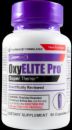
OxyElite Pro Associated With 29 Cases of Non-viral Hepatitis


OxyELITE Pro
The FDA, along with the Centers for Disease Control and Prevention (CDC) and the Hawaii Department of Health (DOH), are investigating a growing number of reports of acute non-viral hepatitis in Hawaii. The Hawaii DOH has reported that 24 of these cases share a common link to a dietary supplement product labeled as OxyElite Pro.
BACKGROUND: OxyElite Pro is distributed by USPlabs LLC of Dallas, Texas, and is sold nationwide through internet and retail stores that sell dietary supplements.
There have been 29 cases of acute non-viral hepatitis with an unknown cause identified in the state of Hawaii.  Eleven of the 29 cases have been hospitalized with acute hepatitis, two cases have received liver transplants and one person has died. CDC is also looking at other cases of liver injury nationwide that may be related. Symptoms of all types of hepatitis are similar and can include fever, fatigue, loss of appetite, nausea, vomiting, abdominal pain, dark urine, clay or gray-colored bowel movements, joint pain, yellow eyes, and jaundice.
The  investigation is being conducted by the Hawaii DOH and the CDC. As part of FDA’s associated investigation, the agency is reviewing the medical records and histories of patients identified by the Hawaii DOH. The FDA is also analyzing the composition of product samples that have been collected from some of these patients. Additionally, the FDA is inspecting the facilities involved in manufacturing the product and reviewing production and product distribution records. Because USPlabs LLC has informed FDA that it believes counterfeit versions of OxyElite Pro are being marketed in the US and have been on the US market for some time, FDA is also investigating whether counterfeit product is related to any of the cases of acute  hepatitis.
The FDA advises consumers to stop using any dietary supplement product labeled as OxyElite Pro while the investigation continues. Consumers who believe they have been harmed by using a dietary supplement should contact their healthcare practitioner.
Healthcare professionals and patients are encouraged to report adverse events or side effects related to the use of these products to the FDA's MedWatch Safety Information and Adverse Event Reporting Program:
  • Complete and submit the report Online: www.fda.gov/MedWatch/report.htm
  • Download form or call 1-800-332-1088 to request a reporting form, then complete and return to the address on the pre-addressed form, or submit by fax to 1-800-FDA-0178
Ten patients had liver biopsy data available at the time of this report. Seven had histology consistent with hepatitis from drug/toxic injury.. Three patients had liver biopsy findings of acute hepatitis associated with other etiologies such as autoimmune hepatitis. Eleven patients were hospitalized, with a median duration of seven days. One patient died, and two patients received liver transplants. Two remain hospitalized, and all other hospitalized patients have been discharged.
Of the 29 identified patients, 24 reported using OxyELITE Pro during the 60 days prior to illness onset. There was no other dietary supplement or medication use reported in common by more than two patients.
National case finding efforts have identified several individuals from states outside Hawaii with reported OxyELITE Pro or other weight loss or muscle building dietary supplement use prior to the development of acute hepatitis of unknown cause. CDC, in collaboration with state health departments, is collecting additional information from these individuals to determine if this outbreak is national in scope.
USPlabs LLC has agreed to stop distributing its energy and-fat burning supplement OxyElite Pro after Hawaii officials have linked it to 24 cases of acute non-viral hepatitis, FDA announced Tuesday.
Maui resident Jeanette Kaipo told the Honolulu Star-Advertiser that her 48-year-old sister Sonnette Marras died last week after taking OxyElite Pro for several weeks to lose weight that she gained during her last pregnancy.
The reported illnesses and epidemiological probe represent another setback for USPlabs, whose products containing a stimulant known as DMAA have been linked to more than 100 illnesses including six deaths.
Dallas-based USPlabs has told the press it stands by its product, which is distributed online and at retail stores.  

"The cluster of liver issues in Hawaii is a complete mystery and nothing like this has ever been associated with OxyELITE Pro in all of the years our products have been in the market," the company said in a statement released to the Honolulu Star-Advertiser. "We know of no credible evidence linking OxyELITE Pro to liver issues. The ingredients have been studied for safety, are consumed in the food supply and widely used in dietary supplements. The studies and consumption history show no negative liver issues."

Tuesday, July 30, 2013

Food Safety Tips for Hawaiians Affected by Tropical Storm Flossie

The U.S. Department of Agriculture’s (USDA) Food Safety and Inspection Service (FSIS) is issuing food safety guidance to those affected by Tropical Storm Flossie, especially those who have lost electricity as a result of the storm. Power outages and flooding that often result from weather emergencies compromise the safety of stored food, but there are steps that can minimize food waste and the risk of foodborne illness.

The publication “A Consumer’s Guide to Food Safety: Severe Storms and Hurricanes” can be downloaded and printed for reference during a power outage. FSIS’ YouTube video “Food Safety During Power Outages” also has instructions for keeping frozen and refrigerated food safe. 
FSIS will provide relevant food safety information as the storm progress from its Twitter feed @USDAFoodSafety. To get tweets about food recalls and weather-related food safety issues affecting only Hawaii, follow @HI_FSISAlert.
Steps to follow if the power goes out:
  • Keep refrigerator and freezer doors closed as much as possible.
  • A refrigerator will keep food cold for about 4 hours if you keep the door closed.
  • A full freezer will keep its temperature for about 48 hours (24 hours if half-full).
  • If the power is out for an extended period of time, buy dry or block ice to keep the refrigerator as cold as possible. Fifty pounds of dry ice should keep a fully-stocked 18-cubic-feet freezer cold for two days.
Steps to follow after a weather emergency:
  • Check the temperature in the refrigerator and freezer. If the thermometer reads 40° F or below, the food is safe.
  • If no thermometer was used in the freezer, check each package. If food still contains ice crystals or is at 40° F or below when checked with a food thermometer, it may be safely refrozen.
  • Discard any perishable food (such as meat, poultry, fish, soft cheeses, milk, eggs, leftovers and deli items) that have been kept in a refrigerator or freezer above 40° F for two hours or more.
  • Discard any food that is not in a waterproof container if there is any chance that it has come into contact with flood water. Containers that are not waterproof include those with screw-caps, snap lids, pull tops, and crimped caps. Discard wooden cutting boards, plastic utensils, baby bottle nipples and pacifiers.
  • Thoroughly wash all metal pans, ceramic dishes and utensils that came in contact with flood water with hot soapy water and sanitize by boiling them in clean water or by immersing them for 15 minutes in a solution of 1 tablespoon of unscented, liquid chlorine bleach per gallon of drinking water.
  • Undamaged, commercially prepared foods in all-metal cans and retort pouches (for example, flexible, shelf-stable juice or seafood pouches) can be saved. Follow the Steps to Salvage All-Metal Cans and Retort Pouches in the publication “Keeping Food Safe During an Emergency.” 
  • Use bottled water that has not been exposed to flood waters. If bottled water is not available, tap water can be boiled for safety.
  • Never taste food to determine its safety!
  • When in doubt, throw it out!
Steps to follow to prepare for a future weather emergency:
  • Keep an appliance thermometer in the refrigerator and freezer to help determine if food is safe during power outages. The refrigerator temperature should be 40° F or lower and the freezer should be 0° F or lower.
  • Store food on shelves that will be safely out of the way of contaminated water in case of flooding.
  • Group food together in the freezer — this helps the food stay cold longer.
  • Freeze refrigerated items such as leftovers, milk and fresh meat and poultry that you may not need immediately — this helps keep them at a safe temperature longer.
  • Have coolers on hand to keep refrigerator food cold if the power will be out for more than 4 hours.
  • Purchase or make ice and store in the freezer for use in the refrigerator or in a cooler. Freeze gel packs ahead of time for use in coolers.
  • Plan ahead and know where dry ice and block ice can be purchased.
Residents  in other places that have problems with power outages and flooding may want to make a copy of these food safty guidelines.