Showing posts with label Sodium. Show all posts

Tuesday, June 30, 2015

Health Research: Gel that can make drugs last longer ♦ New antibody weapons against Marburg virus ♦ 'Drink when thirsty' to avoid fatal drops in blood sodium levels during exercise

Gel that can make drugs last longer A drug-delivering hydrogel has been developed to treat chronic diseases such as hepatitis C, a liver disease that kills around 500,000 people worldwide every year
New antibody weapons against Marburg virus New immune molecules that protect against deadly Marburg virus, a relative of Ebola virus, have been identified by researchers. The research provides ingredients needed to develop treatments for future Marburg outbreaks, they say.
'Drink when thirsty' to avoid fatal drops in blood sodium levels during exercise For hikers, football players, endurance athletes, and a growing range of elite and recreational exercisers, the best approach to preventing potentially serious reductions in blood sodium level is to drink when thirsty, according to an updated consensus statement on exercise-associated hyponatremia (EAH).
Pioneering study may explain origin of several digestive diseases The tridimensional characterization of the calcium phosphate formed in the stomach is shown for the first time in a new study, revealing its internal structure, morphology and real functionality. This study has succeeded in taking one more step towards discovering the origin of certain diseases, although there is still a lot of work ahead before we can combat these diseases that would appear to be associated with a calcium deficiency.

Thursday, October 23, 2014

Naproxen Sodium Tablets Recalled Due to Packaging Mix-Up

Contract Packaging Resources, a drug repackaging company, is voluntarily recalling 11,640 boxes of Assured™ brand Naproxen Sodium tablets because some cartons actually contain bottles of Ibuprofen, a different pain reliever.
The Ibuprofen bottles were placed in the Naproxen Sodium boxes due to a packaging error. The affected products are: boxes of Assured™ brand Naproxen Sodium Tablets 220mg, 15 count (Lot #FH4102A) [SKU #122368/UPC #639277223685] containing bottles of Ibuprofen softgels in 200 mg strength.
Consumers who intentionally avoid using Ibuprofen due to allergy, or other medical conditions, should be advised that they may have inadvertently purchased Ibuprofen 200mg softgels, believing it was Naproxen Sodium 220mg tablets. Allergic reactions can range from mild irritation or hives to serious reactions such as anaphylaxes that may be life-threatening. The firm has not received any reports of adverse events related to this recall.
The recalled Assured brand drug products were distributed nationwide to Dollar Tree® and sold via the Dollar Tree® retail stores and internet site. Contract Packaging Resources is notifying its distributors and customers directly and arranging for replacement of all recalled products. Consumers may return the recalled products to the place of purchase or contact the firm by phone at 336-252-3422, on Monday – Friday from 8:00 am to 4:00 pm (Eastern).
Consumers should contact their physician or healthcare provider if they have experienced any problems that may be related to taking or using this drug product. Adverse reactions or quality problems experienced with the use of this product may be reported to the FDA's MedWatch Adverse Event Reporting program either online, by regular mail or by fax.
Photo: Naproxen Sodium 15 Tablet Carton and Ibuprofen 10 Softgels Bottle

Tuesday, September 9, 2014

Reducing Sodium in Children's Diets

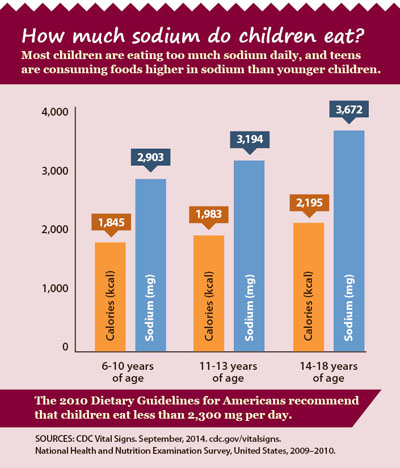
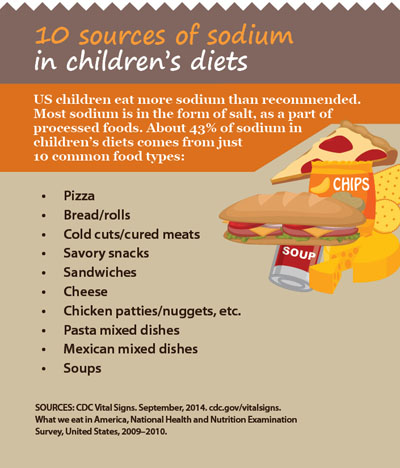
Charts: "How much sodium do children eat?" and "10 sources of sodium in children's diets".
A Salty Generation
Bar graph showing average daily calorie and sodium intake for children 6-11 (1,845 kcal and 2,903 mg of sodium), children 11-13 (1,983 kcal and 3,194 mg of sodium), and teens aged 14-18 (2,195 kcal and 3,672 mg of sodium).
10 sources of sodium in children's diets
List of the 10 common foods that contribute 43% of sodium to children's diets
  • Pizza
  • Bread/rolls
  • Cold cuts/cured meats
  • Savory snacks
  • Sandwiches
  • Cheese
  • Chicken patties/nuggets, etc.
  • Pasta mixed dishes
  • Mexican mixed dishes
  • Soups


Infographics: Great SALTernatives.
Great SALTernatives
A chalkboard graphic showing a typical day of sodium intake for children and what changes can be made to lower sodium.
Breakfast at home:
  • Whole-wheat toast (1 slice),
  • Egg (scrambled and salted),
  • Orange juice (4oz)
  • For 250 mg of sodium
  • Instead compare bread products when shopping to find lower sodium options. Try seasoning with pepper, parsley or thyme on eggs in place of salt to save 85 mg of sodium.
Morning snack:
  • Whole-grain graham crackers (8 squares),
  • Skim Milk (4oz)
  • For 250 mg of sodium
  • Instead cut the amount of graham crackers in half. Load up on fruit, naturally low-sodium. Pack a banana as a snack to save 150 mg of sodium.
Lunch at school:
  • School Lunch Pepperoni pizza (1 slice),
  • Sliced cucumbers (4oz), Gelatin cup
  • For 850 mg of sodium
  • Instead try the new pepperoni pizza that meets the sodium targets for National School Lunch Program and save 160 mg of sodium
Snack:
  • Crackers (about 16), Baby carrots (about 8),
  • Hummus (2 Tbsp)
  • For 450 mg of sodium.
  • Instead look for reduced sodium crackers at the grocery store. Compare brands of products, such as hummus, and pick the lowest in sodium to save 250 mg of sodium
Dinner on the go:
  • Fast food deli sandwich with meat, cheese and veggies, side of potato chips, Sports drink (12oz)
  • For 1585 mg of sodium.
  • Instead ask to see the nutrition facts before ordering. Skip the deli cheese and use less condiments. Swap chips for lower-sodium chip and choose water to save 490mg of sodium.
  • Total sodium before 3,285 mg of sodium. Total saved 1,135 mg of sodium
*Values were rounded to the nearest 5mg Sources: Packaged and restaurant food data collected from manufacturers' and retailers' websites, June 2014 Nutritional values for whole food products are available by the United States Department of Agriculture's National Nutrient Database for Standard Reference Nutritional values:http://ndb.nal.usda.gov/

Sodium consumption high among U.S. children

Sodium consumption high among U.S. children
More than 40 percent of sodium comes from 10 common types of food
Graphic:  How much sodium do children eat?
How much sodium do children eat?
More than 90 percent of U.S. children, aged 6-18 years, eat more sodium than recommended, putting them at risk for developing high blood pressure and heart disease later in life, according to a new CDC Vital Signs report.
This report provides the most recent data detailing how much sodium school-age children eat and where it comes from. Using data from CDC’s 2009-2010 National Health and Nutrition Examination Survey, CDC researchers determined that about 43 percent of sodium eaten by children comes from the 10 foods they eat most often: pizza, bread and rolls, cold cuts/cured meats, savory snacks, sandwiches, cheese, chicken patties/nuggets/tenders, pasta mixed dishes, Mexican mixed dishes, and soups.
“Too many children are consuming way too much sodium, and the result will be risks of high blood pressure and heart disease in the future,” said CDC Director Tom Frieden, M.D., M.P.H. “Most sodium is from processed and restaurant food, not the salt shaker.  Reducing sodium intake will help our children avoid tragic and expensive health problems.”
Key findings in the Vital Signs report include:
  • U.S. children aged 6 to 18 years eat an average of about 3,300 mg of sodium a day before salt is added at the table. The 2010 Dietary Guidelines for Americans recommend that children eat less than 2,300 mg per day total.
  • Most sodium is already in food before it is purchased or ordered.  Approximately 65 percent comes from store foods, 13 percent from fast food and pizza restaurant foods, and 9 percent from school cafeteria foods.
Graphic: 10 sources of sodium in children's diets
To help reduce the amount of sodium children are consuming daily, parents and caregivers, as well as schools, communities, and places that sell, make or serve food, are all encouraged to take steps  to ensure more low-sodium options. For example, parents can establish healthy eating habits in their children by providing a diet high in fruits and vegetables without added sodium.
Schools and school districts can implement food purchasing policies and standards that reduce sodium in foods and put lower-sodium alternatives in vending machines, school stores and cafeterias. They can also strive to meet or exceed the United States Department of Agriculture’s (USDA) Nutrition Standards for foods served during the school day.
“Thanks to the Healthy, Hunger-free Kids Act and the work of schools across the country, students are now receiving healthier meals and snacks featuring less sodium, sugar and fat and more whole grains, fruits and vegetables, lean protein and low-fat dairy,” said Under Secretary for USDA’s Food, Nutrition, and Consumer Services, Kevin Concannon, “This report demonstrates the importance of continuing to move forward in our efforts to improve nutrition in schools, and to ensure that children and teens nationwide have access to safe, nutritious meals and snacks during the school day.”

Friday, January 24, 2014

Reducing Sodium in Restaurant Foods is an Opportunity for Choice

Communities reduce, replace, reformulate to offer lower-sodium options
Americans eat out at fast food or dine-in restaurants four or five times a week. Just one of those meals might contain more than an entire day’s recommended amount of sodium.  CDC has strategies for health departments and restaurants to work together to offer healthier choices for consumers who want to lower their sodium intake.  The report, “From Menu to Mouth: Opportunities for Sodium Reduction in Restaurants,” is published in today’s issue of CDC’s journal, Preventing Chronic Disease.
On average, foods from fast food restaurants contain 1,848 mg of sodium per 1,000 calories and foods from dine-in restaurants contain 2,090 mg of sodium per 1,000 calories. The U. S. Dietary Guidelines recommend the general population limit sodium to less than 2,300 mg a day. Too much sodium can cause high blood pressure, one of the leading causes of heart disease and stroke.
“The bottom line is that it’s both possible and life-saving to reduce sodium, and this can be done by reducing, replacing and reformulating,” said CDC Director Tom Frieden, M.D., M.P.H. “When restaurants rethink how they prepare food and the ingredients they choose to use, healthier options become routine for customers.”
The report outlines several ways health departments and restaurants have worked together to offer lower-sodium choices:
  • Health department dietitians help restaurants analyze the sodium content of their foods and recommend lower-sodium ingredients.
  • Restaurants clearly post nutrition information, including sodium content, at the order counter and on menus or offer lower-sodium items at lower cost.
  • Health departments and restaurants explain to food service staff why lower sodium foods are healthier and how to prepare them.
The report also features examples of sodium reduction successes.  In Philadelphia, the health department worked with 206 restaurants to create the “Philadelphia Healthy Chinese Take-out Initiative.”  After evaluating menus for sodium content, participating restaurants began choosing lower sodium ingredients and creating lower sodium recipes. After nine months, analyses of two popular dishes offered by 20 of the restaurants showed sodium was reduced by 20 percent.  
“The story in Philadelphia shows what can be done,” Dr. Frieden said. “It’s not about giving up the food you love, but providing lower sodium options that taste great.”
To learn more about sodium and how it affects health, visit www.cdc.gov/salt.  Reducing sodium is one way that Million Hearts, a national public-private initiative to prevent a million heart attacks and strokes by 2017, is working with communities to keep people healthier and less likely to need health care www.millionhearts.hhs.gov.