Showing posts with label Dietary Guidelines. Show all posts

Friday, October 2, 2015

Food Research: Dried plums can reduce risk of colon cancer ♦ Breakthrough in understanding sugar uptake ♦ Arsenic found in many American red wines

Dried plums can reduce risk of colon cancer,A diet containing dried plums can positively affect microbiota, also referred to as gut bacteria, throughout the colon, helping reduce the risk of colon cancer.
New research exposes health risks of fructose, sugary drinks There is compelling evidence that drinking too many sugar-sweetened beverages, which contain added sugars in the form of high fructose corn syrup or table sugar (sucrose), can lead to excess weight gain and a greater risk of developing type 2 diabetes and cardiovascular disease.
Arsenic found in many American red wines, but health risks depend on total diet A new study that tested 65 wines from America's top four wine-producing states -- California, Washington, New York and Oregon -- found all but one have arsenic levels that exceed US drinking water standards. But health risks from that naturally-occurring toxic element depend on how many other high-arsenic foods and beverages, such as apple juice, rice, or cereal bars, an individual person eats.
New dietary guidelines must be sustainable, regardless of politics The new iteration of the Dietary Guidelines for Americans must incorporate sustainability considerations -- both for the health and wellbeing of Americans and the world in which we live.
Breakthrough in understanding sugar uptake Researchers have reached a breakthrough in understanding how fructose is transported into our cells. This could be a potential benefit for the development of novel treatments against some forms of cancer, obesity and diabetes

Wednesday, June 10, 2015

Food Research:Are the data underlying the U.S. dietary guidelines flawed? ♦ New microscopy technique could speed identification of deadly bacteria ♦ The food-waste paradox

New microscopy technique could speed identification of deadly bacteria A new way of rapidly identifying bacteria, may change the way doctors approach treatment for patients who develop potentially deadly infections and help the food industry screen against contamination with harmful pathogens.
Accentuate the positive when it comes to nutrition education If you want people to choose healthier foods, emphasize the positive, says a study. The study showed that when it comes to nutrition education, dos work a lot better than don'ts.
The food-waste paradox Food wasted means money wasted which can be an expensive. A new study shows that the top causes of food waste in such homes include buying too much, preparing in abundance, unwillingness to consume leftovers, and improper food storage.

;Are the data underlying the U.S. dietary guidelines flawed? U.S. government-issued dietary recommendations continue to evolve over time. In a new article, an obesity theorist and cardiovascular health researchers claim that the main source of dietary information used by the U.S. Government’s 2015 Dietary Guidelines Advisory Committee (DGAC) is scientifically flawed because the underlying data are primarily informed by memory-based dietary assessment methods (M-BMs) (eg, interviews and surveys).

Tuesday, September 9, 2014

Sodium consumption high among U.S. children

Sodium consumption high among U.S. children
More than 40 percent of sodium comes from 10 common types of food
Graphic:  How much sodium do children eat?
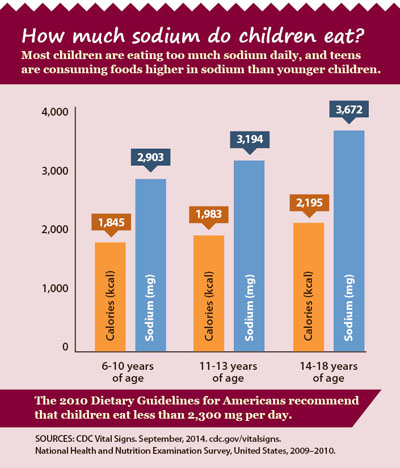
How much sodium do children eat?
More than 90 percent of U.S. children, aged 6-18 years, eat more sodium than recommended, putting them at risk for developing high blood pressure and heart disease later in life, according to a new CDC Vital Signs report.
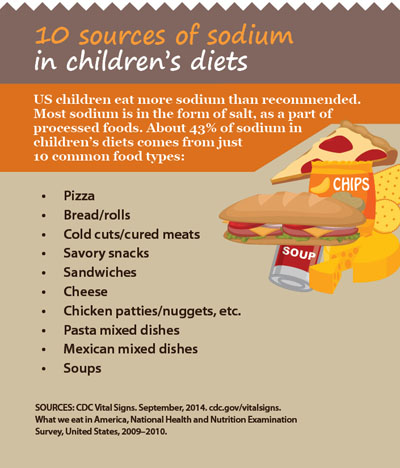
This report provides the most recent data detailing how much sodium school-age children eat and where it comes from. Using data from CDC’s 2009-2010 National Health and Nutrition Examination Survey, CDC researchers determined that about 43 percent of sodium eaten by children comes from the 10 foods they eat most often: pizza, bread and rolls, cold cuts/cured meats, savory snacks, sandwiches, cheese, chicken patties/nuggets/tenders, pasta mixed dishes, Mexican mixed dishes, and soups.
“Too many children are consuming way too much sodium, and the result will be risks of high blood pressure and heart disease in the future,” said CDC Director Tom Frieden, M.D., M.P.H. “Most sodium is from processed and restaurant food, not the salt shaker.  Reducing sodium intake will help our children avoid tragic and expensive health problems.”
Key findings in the Vital Signs report include:
  • U.S. children aged 6 to 18 years eat an average of about 3,300 mg of sodium a day before salt is added at the table. The 2010 Dietary Guidelines for Americans recommend that children eat less than 2,300 mg per day total.
  • Most sodium is already in food before it is purchased or ordered.  Approximately 65 percent comes from store foods, 13 percent from fast food and pizza restaurant foods, and 9 percent from school cafeteria foods.
Graphic: 10 sources of sodium in children's diets
To help reduce the amount of sodium children are consuming daily, parents and caregivers, as well as schools, communities, and places that sell, make or serve food, are all encouraged to take steps  to ensure more low-sodium options. For example, parents can establish healthy eating habits in their children by providing a diet high in fruits and vegetables without added sodium.
Schools and school districts can implement food purchasing policies and standards that reduce sodium in foods and put lower-sodium alternatives in vending machines, school stores and cafeterias. They can also strive to meet or exceed the United States Department of Agriculture’s (USDA) Nutrition Standards for foods served during the school day.
“Thanks to the Healthy, Hunger-free Kids Act and the work of schools across the country, students are now receiving healthier meals and snacks featuring less sodium, sugar and fat and more whole grains, fruits and vegetables, lean protein and low-fat dairy,” said Under Secretary for USDA’s Food, Nutrition, and Consumer Services, Kevin Concannon, “This report demonstrates the importance of continuing to move forward in our efforts to improve nutrition in schools, and to ensure that children and teens nationwide have access to safe, nutritious meals and snacks during the school day.”