Showing posts with label arrhythmias. Show all posts

Wednesday, September 30, 2015

Cardiovascular Research: Unsaturated fats, high-quality carbs lower risk of heart disease ♦ Predicting arrhythmias so as to prevent them ♦ Help physicians manage deep vein blood clots

Self-assembling material that grows, changes shape could lead to artificial arteries Researchers have developed a way of assembling organic molecules into complex tubular tissue-like structures without the use of moulds or techniques like 3-D printing.
Predicting arrhythmias so as to prevent them Researchers have discovered how to predict some cardiac arrhythmias several steps before they even occur. It's a finding that could lead to an improved cardiac device, with equipment designed to detect when arrhythmias are about to occur and then act to prevent them.
New guideline aims to help physicians manage deep vein blood clots in patients A new Canadian guideline aims to help physicians identify and manage blood clots, specifically iliofemoral deep vein thrombosis, in the groin and thigh.
Unsaturated fats, high-quality carbs lower risk of heart disease While eliminating saturated fats can improve heart health.It makes a difference which foods are used in their place. A study shows that replacing saturated fats with unsaturated fats and high-quality carbohydrates has the most impact on reducing the risk of heart disease. When saturated fats were replaced with highly processed foods, there was no benefit.

Saturday, June 27, 2015

Health News: 86 children sickened, Staph found in daycare food samples ♦ Analysis reveals link between suicide, inflammation ♦ Arthritis drug restores skin color

86 children sickened, Staph found in daycare food samples Eighty-six children may have been sickened by a Staphylococcus aureus toxin found in food served at the Montgomery, AL, daycares they attended. Of those children, 30 were hospitalized and, as of Friday, two were reportedly still there. The Alabama Department of Public Health found the toxin in food products served at both daycare center locations in Montgomery
For vitiligo patient, arthritis drug restores skin color A medication for treating rheumatoid arthritis has restored skin color in a patient suffering from vitiligo, according to dermatologists. The disfiguring condition is best known as the disease that plagued late pop star Michael Jackson.
Consensus paper on patient preferences for arrhythmias management published A unique consensus paper on patient preferences for arrhythmias management has been published. Cardiac arrhythmias can have a big impact on quality of life. Patients with ventricular arrhythmias, for example, may be banned from sports and driving. Those with an implantable cardioverter defibrillator (ICD) need to weigh the longevity they would gain with the device against the potential for a protracted death from progressive heart failure when deciding whether or not to have it switched off towards the end of life
Inflaming the drive for suicide: Analysis reveals link between suicide, inflammation One American dies from suicide every 12.8 minutes, making suicide the tenth leading cause of death in the United States. There is consensus that if we could better predict who was at risk for suicide, then we could more effectively intervene to reduce this terrible burden on individuals, families and public health.
Study identifies characteristics of patients likely to have a potential living liver donor Younger patients, those who are married, and those with Child-Pugh C disease—the most severe measure of liver disease—are more likely immigrants, divorced patients and those at the lowest income levels were less likely to have a potential live donor volunteer for liver donation.With a limited supply of deceased donor organs, livers from living donors provide a much needed, life-saving option for those with end-stage liver disease. Despite evidence suggesting that the 5-year recipient survival from the time of wait listing is estimated to be 20% higher with a live donor compared with deceased donor, living donor liver transplantation accounts for only a few percent

Thursday, June 25, 2015

Cardiovascular Research: Nanoparticle 'wrapper' delivers chemical that stops fatty buildup ♦ Fewer than one in 10 older heart patients get life-saving defibrillators ♦ Uninterrupted vitamin K antagonists recommended during ablation

Nanoparticle 'wrapper' delivers chemical that stops fatty buildup in rodent arteries In what may be a major leap forward in the quest for new treatments of the most common form of cardiovascular disease, scientists report they have found a way to halt and reverse the progression of atherosclerosis in rodents by loading microscopic nanoparticles with a chemical that restores the animals' ability to properly handle cholesterol.
Uninterrupted vitamin K antagonists recommended during ablation, device implantation Experts have recommended uninterrupted anticoagulation with vitamin K antagonists during ablation and device implantation. Dramatic changes in the field during the last five years demanded a revision, they say.
Fewer than one in 10 older heart patients get life-saving defibrillators Heart attack patients age 65 and older who have reduced heart function might still benefit from implanted defibrillators, according to a study. But fewer than 1 in 10 eligible patients actually get a defibrillator within a year of their heart attacks,
First ESC recommendations for arrhythmias, chronic kidney disease published Significant interactions occur between the heart and kidney, and even mild kidney disease is associated with an increased risk of cardiovascular disease. Sudden cardiac death is the most common cause of death in dialysis patients including children, accounting for 50% of cardiac deaths and 25% of all deaths.
Uninterrupted NOAC therapy during AF ablation appears safe Uninterrupted treatment with novel oral anticoagulants during catheter ablation of atrial fibrillation is safe, suggests new research. Continuation of NOAC therapy was not associated with periprocedural bleeding or thromboembolic complications.

Thursday, March 12, 2015

UltraZx,weight loss suppliment recalled - it contained a cancer causing drug

UltraZx, Labs, L.L.C. is voluntarily recalling “UltraZx” weight loss supplements. This product has been found to contain undeclared Sibutramine and phenolphthalein.
FDA laboratory analysis of confirmed that UltraZx contains sibutramine and phenolphthalein. Sibutramine is a controlled substance that was removed from the market in October 2010 for safety reasons. The product poses a threat to consumers because sibutramine is known to substantially increase blood pressure and/or pulse rate in some patients and may present a significant risk for patients with a history of coronary artery disease, congestive heart failure, arrhythmias or stroke. Phenolphthalein is a chemical that is not an active ingredient in any approved drug in the United States. Studies have indicated that it presents a cancer causing risk. This product may also interact, in life-threatening ways, with other medications a consumer may be taking.
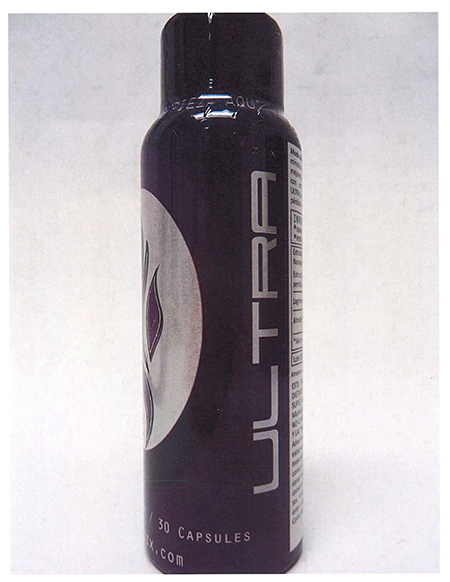
Ultra ZX LABS, L.L.C. has not received any reports of adverse events related to this recall. UltraZx weight loss supplement is marketed as a dietary supplement used as a weight loss aid and is packaged in bottles of thirty (30) capsules of 300mg. The affected UltraZx weight loss supplement, includes all lots/bottles/packages. The products were distributed from September 2014 until February 2015.
UltraZx Labs, L.L.C. is notifying its distributors and customers by letter and is arranging for return of all recalled products. Consumers and distributors that have product which is being recalled should stop using the product and return the product to UltraZx Labs, L.L.C.
Consumers with questions regarding this recall can contact UltraZx Labs, L.L.C. at (305) 904-9393, Monday through Friday from 9:00am – 5:00pm EST. Consumers should contact their physician or healthcare provider if they have experienced any problems that may be related to taking or using this product.
This recall is being conducted with the knowledge of the Food and Drug Administration (FDA).
Adverse reactions or quality problems experienced with the use of this product may be reported to the FDA's MedWatch Adverse Event Reporting program either online, by regular mail or by fax.
Label, Front display panel of bottle
Label, Side view, ULTRA