Showing posts with label Stroke. Show all posts

Thursday, January 7, 2016

Excess Sodium Intake Remains Common in the United States

Nearly all Americans – regardless of age, race, gender or whether they have high blood pressure (hypertension) – consume more sodium than is recommended for a healthy diet. That is the conclusion of a new report published by the Centers for Disease Control and Prevention (CDC) in today’sMorbidity and Mortality Weekly Report (MMWR).
According to the latest findings, more than 90 percent of children and 89 percent of adults aged 19 and older eat too much sodium, that is, more than the recommended limits in the 2015-2020 Dietary Guidelines for Americans, not including salt added at the table. The newly released guidelines – which are developed around current scientific evidence and released every five years – recommend limiting sodium to less than 2,300 mg per day for people over the age of 14 and less for those younger. Evidence links excess sodium intake to high blood pressure and other health problems.
“The finding that nine of ten adults and children still consume too much salt is alarming,” said CDC Director Tom Frieden, MD, MPH. “The evidence is clear: too much sodium in our foods leads to high blood pressure, a major risk factor for heart disease and stroke. Reducing sodium in manufactured and restaurant foods will give consumers more choice and save lives.”
CDC researchers analyzed dietary data from the 2009-2012 National Health and Nutrition Examination Surveys (NHANES) to calculate how much sodium Americans are eating. Nearly 15,000 people were included in this study.
Sodium consumption high among those at risk of heart disease
Excess sodium intake is a problem across gender, race, and health status. Some differences were seen:
  • Among adults, a larger proportion of men (98 percent) than women (80 percent) consume too much sodium.
  • About 90 percent of adult whites consume excess sodium compared with 85 percent of blacks.
  • Estimated sodium and calorie consumption peaks between the ages of 19 and 50.
  • Among people at greater risk of developing heart disease or stroke – such as people age 51 and older, African Americans and individuals with high blood pressure or pre-hypertension (blood pressure higher than normal but not in the “high” range) – more than three out of four exceed 2,300 mg per day.
  • Adults with hypertension consume slightly less sodium than other adults, and may be trying to follow physicians’ advice to reduce sodium. However, 86 percent of adults with hypertension still consume too much.
These new findings show that little has changed in sodium consumption over the past decade. More than three quarters of sodium in the American diet is estimated to come from processed and restaurant food, which gives consumers little choice when it comes to lowering daily intake. A key strategy for lowering population-wide sodium intake is gradually reducing sodium in the food supply. Some food companies have begun to voluntarily reduce sodium in their products and others are being encouraged to take similar steps.
The report also highlights the important role healthcare professionals can play in advising patients on how to limit salt in the diet. About one in three U.S. adults – or about 70 million people – already have high blood pressure and only half have it under control. Heart disease, stroke, and other cardiovascular diseases kill more than 800,000 Americans each year and cost nearly $320 billion a year in health care and lost productivity.
“Sodium reduction is a key part of preventing heart disease and stroke,” said Sandra Jackson, an author of the report and an epidemiologist in CDC’s Division for Heart Disease and Stroke Prevention. “Reducing sodium is an achievable and effective strategy to improve heart health for everyone, but it’s going to take all of us working together to make it possible.”

Wednesday, December 23, 2015

Heart structural gene causes sudden cardiac death in animal model ♦ Drugging the microbiome may treat heart disease ♦ Hypertension-related visits to emergency rooms on rise in US

Heart structural gene causes sudden cardiac death in animal model The presence or absence of the CAP2 gene causes sudden cardiac death in mice. In particular, the absence of the gene interrupts the animal's ability to send electrical signals to the heart to tell it to contract, a condition called cardiac conduction disease. Since humans have the same CAP2 gene, what we learn from the mice could advance our understanding of heart disease.
Drugging the microbiome may treat heart disease A first-of-a-kind drug that interferes with the metabolic activity of gut microbes could one day treat heart disease in humans, according to a mouse study. Dietary supplementation with a compound that is naturally abundant in red wine and olive oil prevented gut microbes from turning unhealthy foods into metabolic byproducts that clog arteries
Hypertension-related visits to emergency rooms on rise in US The number and percentage of patients treated at emergency departments for hypertension are on the rise across the United States.
Chances of good outcome after stroke reduced by delays in restoring blood flow Delays in restoring blood flow after a stroke were associated with decreased benefits of intra-arterial clot-busting treatment and reduced chances for a good outcome.

Friday, December 18, 2015

Senior's Health:Shingles increases short-term risk of stroke in older adults ♦ Genes associated with extreme longevity identified ♦ Aging warps our perception of time

Aging warps our perception of time A recent study found that seniors have a harder time distinguishing the order of events than younger adults. When researchers presented them with both a light and sound at the same or different times, they found that young and older adults could determine whether they occurred simultaneously with similar accuracy. But when asked to determine which appeared first, the light or the sound, older adults performed much worse.
Shingles increases short-term risk of stroke in older adults A new study determined that adults 50 and older are at a 50% increased risk for stroke for 90 days following a shingles episode.
New genes associated with extreme longevity identified Centenarians show successful aging as they remain active and alert at very old ages. Scientists have begun to unravel the basis for longevity by finding genetic loci associated with extreme longevity. A new study uses a new statistical method (termed 'informed GWAS') to identify five longevity loci that provide clues about physiological mechanisms for successful aging
Safety net fails grandmother caregivers living in severe poverty The number of grandmothers raising their grandchildren spiked during the Great Recession, but those living in poverty often struggle with a public assistance system not designed to meet their unique needs

Thursday, December 17, 2015

Health Research:In US, poverty dampens genetic influence on IQ ♦ Patients can safely self-administer long-term IV antibiotics, reducing hospital stays

Surgery is more effective than drug in hyperparathyroidism post-kidney transplantation A new study compared the results of surgery with drug therapy in patients with tertiary hyperparathyroidism, i.e., after a kidney transplant.
In US, poverty dampens genetic influence on IQ The influence of genes on intelligence varies according to people's social class in the US, but not in Western Europe or Australia.
Patients can safely self-administer long-term IV antibiotics, reducing hospital stays Uninsured patients can be trained to safely and efficiently self-administer long-term intravenous antibiotics, physicians have found, a result that may have profound implications for patient treatment at public hospitals across the country.
Herpes zoster is linked to increased rates of both stroke and myocardial infarction Herpes zoster (also called 'shingles') is linked to a transient increased risk of stroke and myocardial infarction in the months following initial zoster diagnosis.

Wednesday, December 9, 2015

Cardiovascular research: Electric assistance for stroke recovery ♦ Blood thinner, antidiabetic drug mix increases hospitalizations ♦Sense of purpose in life linked to lower mortality and cardiovascular risk

Sense of purpose in life linked to lower mortality and cardiovascular risk  People who have a higher sense of purpose in life are at lower risk of death and cardiovascular disease, reports a pooled data analysis
Electric assistance for stroke recovery Robotic therapy works better if stroke patients’ brains are stimulated by electricity
New clinical practice guidelines recommend use of arteries rather than veins in heart bypass surgery New clinical practice guidelines have been released that recommend expanding the use of arteries from the chest and forearm rather than using veins from the leg when performing coronary artery bypass grafting (CABG) surgery in certain patients
Blood thinner, antidiabetic drug mix increases hospitalizations A common blood thinner warfarin can have a potent interaction in patients treated for diabetes that may land them in the hospital, researchers have discovered.

Friday, November 27, 2015

Cardiovascular Research: New technology promises fast, accurate stroke diagnosis ♦ Overweight, obesity early in life increase risk of cardiac death

Ultrasound examinations can identify patients at risk of stroke Ultrasound, a non-invasive technique commonly used to study the presence of atherosclerosis disease in blood vessels, can be used to identify patients at increased risk of future stroke who could benefit from surgery. Since surgical treatment to prevent stroke is only considered beneficial to some, ultrasound can prove useful in preventing unnecessary surgical intervention.
Heart disease patients who sit a lot have worse health even if they exercise Patients with heart disease who sit a lot have worse health even if they exercise, reveals research. Patients in the study wore an activity monitor during their waking hours for nine days. The monitors allowed the researchers to measure how long patients spent being sedentary, or doing light, moderate or vigorous levels of physical activity. The researchers also assessed various markers of health including body mass index and cardiorespiratory fitness.
New technology promises fast, accurate stroke diagnosis A new approach to identifying biomarkers in blood has proven successful in helping diagnose stroke, and the technology could be expanded to diagnose such conditions as concussion, some forms of dementia, and some types of cancer and heart disease.
Overweight, obesity early in life increase risk of cardiac death Overweight and obesity throughout adulthood, and especially elevated weight in early adulthood, were associated with increased risk of sudden cardiac death in a 32-year study of more than 72,000 women.

Saturday, November 21, 2015

Cardiovascular Research:African-Americans with depression more likely to have strokes, heart attack ♦ Link between air pollution, heart disease confirmed

African-Americans with depression more likely to have strokes, heart attack Major depressive symptoms -- perceived stress, neuroticism, life dissatisfaction -- are associated with nearly twice the increased risk of stroke and coronary heart disease among African-Americans. African-Americans with depressive symptoms suffered more chronic conditions, exercised less, and had lower levels of education and income.
Social and practical barriers keep HF patients from benefits of exercise therapy Lack of social support and barriers to exercise (such as lack of transportation) reduce the amount of time heart-failure patients exercise. Assessing and eliminating barriers to exercise may reduce hospitalizations and heart disease deaths in people with heart failure.
Link between air pollution, heart disease confirmed A link between higher levels of a specific kind of air pollution in major urban areas and an increase in cardiovascular-related hospitalizations such as for heart attacks in people 65 and older has been uncovered by scientists.
Speaking multiple languages linked to better cognitive functions after stroke Bilingual patients were twice as likely as those who spoke one language to have normal cognitive function after a stroke. Bilingual patients performed better than single language patients on attention, information retrieval and organization.

Monday, November 9, 2015

Molecule proves key to brain repair after stroke

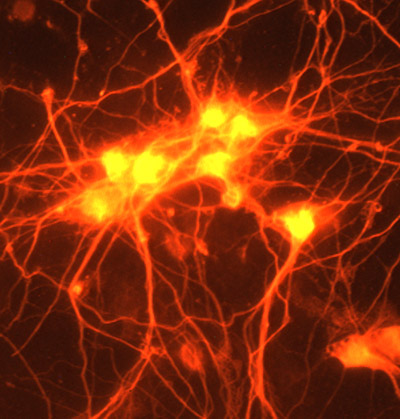
Neurons.
Neurons that have been exposed to GDF10 grow more connections as a result.UCLA
Stroke occurs when blood flow to the brain is disrupted. Without oxygen- and nutrient-rich blood, brain cells start to die. Recovery after stroke depends on a process called axonal sprouting, in which healthy neurons send out new projections, or extensions. These “sprouts” generate new connections between brain cells or reestablish some of the connections that were lost or damaged during stroke, resulting in partial recovery.
Previous studies suggested that a protein called growth and differentiation factor 10 (GDF10) was involved in the early stages of axonal sprouting. Dr. S. Thomas Carmichael and his colleagues at the University of California, Los Angeles, took a closer look at GDF10 to identify how it contributes to the process. Their work was supported in part by NIH’s National Institute of Neurological Disorders and Stroke (NINDS). The findings were published online on October 26, 2015, inNature Neuroscience.
By examining animal models of stroke as well as brain tissue from human autopsies, the team found that GDF10 was activated very early after stroke. Using rodent neurons and human neurons derived from stem cells, the researchers showed that GDF10 stimulated axonal growth and increased the length of the axons.
To see whether GDF10 is important for functional recovery after stroke, the researchers treated mouse models of stroke with GDF10 in a biopolymer hydrogel, which releases the protein to the site of injury over a 2- to 3-week period. Treated animals performed various motor tasks significantly faster and with fewer errors after stroke than control animals. In contrast, when the researchers blocked GDF10 production, the animals didn’t perform as well on the motor tasks, suggesting that repair mechanisms were impaired without GDF10.
To understand the pathways by which GDF10 might be working, the researchers isolated cortical neurons after stroke and examined their gene expression profiles. To see if the mechanisms of repair are similar to axonal sprouting during normal development when mice are forming new connections, they also examined cortical neurons from young mice. The analysis revealed that GDF10 affected a set of genes after stroke that was distinct from those involved in development.
“We found that regeneration is a unique program in the brain that occurs after injury. It is not simply Development 2.0, using the same mechanisms that take place when the nervous system is forming,” Carmichael says.
“These findings help to elucidate the mechanisms of repair following stroke,” says Dr. Francesca Bosetti, stroke program director at NINDS. “Identifying this key protein further advances our knowledge of how the brain heals itself from the devastating effects of stroke, and may help to develop new therapeutic strategies to promote recovery.”

Cardiovascular Research: Bang for the buck in stroke prevention: New and old drugs ♦ Weight is significant factor in the recurrence of atrial fibrillation

Bang for the buck in stroke prevention: New and old drugs When it comes to preventing stroke, millions of Americans with irregular heartbeats face a choice: Take one of the powerful but pricey new pills they see advertised on TV, or a much cheaper 60-year-old drug can be a hassle to take, and doesn't prevent stroke as well. It doesn't seem like much of a contest -- until you do the math.
MRI-based screening improves assignment of stroke patients to endovascular treatment A new system for determining which patients with severe strokes are most likely to benefit from catheter-based systems for blood clot removal led to a greater percentage of screened patients receiving treatment and to outcomes similar to recent studies that found significant treatment benefits.
Lowering blood pressure below current targets benefits a wide range of patients Using intensive treatment to lower blood pressure below currently recommended targets significantly reduces rates of major cardiovascular events like stroke and heart attack among a wide range of high-risk patients, according to a large meta-analysis involving almost 45000 individuals.
Weight is significant factor in the recurrence of atrial fibrillation, Researchers have found that the recurrence of atrial fibrillation increases in patients who are overweight and decreases when patients are able to lose weight, and keep it off, following a cardiac ablation, according to two new studies

Thursday, November 5, 2015

Brain Research: Righting a wrong? Right side of brain can compensate for post-stroke loss of speech ♦ Formation of new blood vessels may explain intractable symptoms of Parkinson's disease

Swedish diagnostic method for Alzheimer's becomes international standard Researchers have developed a reference method for standardized measurements that diagnose Alzheimer's disease decades before symptoms appear. The method has now formally been classified as the international reference method, which means that it will be used as the standard in Alzheimer's diagnostics worldwide.
Brain's hippocampus is essential structure for all aspects of recognition memory. The hippocampus, a brain structure known to play a role in memory and spatial navigation, is essential to one’s ability to recognize previously encountered events, objects, or people – a phenomenon known as recognition memory.
Righting a wrong? Right side of brain can compensate for post-stroke loss of speech After a debate that has lasted more than 130 years, researchers have found that loss of speech from a stroke in the left hemisphere of the brain can be recovered on the back, right side of the brain. This contradicts recent notions that the right hemisphere interferes with recovery.
Formation of new blood vessels may explain intractable symptoms of Parkinson's disease Unwanted formation of blood vessels (angiogenesis) in the brain is likely to be the cause of intractable walking and balance difficulties for people who suffer from Parkinson's disease.

Wednesday, November 4, 2015

Cardiovascular Research: Study suggests potential connection between low blood sugar and cardiovascular problems ♦ New path to treat stroke

Drug-device combination opens potential new path to treat stroke Scientists developing novel nanotherapeutics for clearing obstructed blood vessels have teamed up stroke researchers to develop a new, highly effective drug-device combination for treating life-threatening blood clots in patients with stroke
Taking cholesterol medication before aneurysm repair improves outcomes Rupture of an abdominal aortic aneurysm is one of the most dramatic medical emergencies a person can face. It usually strikes without warning, killing approximately 50 percent of those who experience it before they reach a hospital. Of those who do get to a health facility alive, only about 50 percent survive. Now, researchers have found that patients who took cholesterol-lowering medications before endovascular surgery experienced fewer complications and better outcomes
Endovascular intervention compared to standard treatment for stroke In a meta-analysis of randomized clinical trials for the treatment of acute ischemic stroke, an endovascular intervention (such as use of a very small catheter to remove a blood clot) compared to standard medical care (administration of a clot dissolving agent) was associated with improved functional outcomes and higher rates of functional independence at 90 days, but no significant difference in symptomatic intracranial hemorrhage (bleeding in the brain) or all-cause mortality.
Study suggests potential connection between low blood sugar and cardiovascular problems Studies have shown an association between strict control of blood sugar and increased mortality. They have also suggested that a consequence of this control is low blood sugar (hypoglycemia), which may have adverse effects on the heart. researchers examined the effects of hypoglycemia on cardiovascular autonomic control. They found that in their experimental model of hypoglycemia, there was a clear change in the body's responses to cardiovascular stress


Monday, November 2, 2015

Brain Research: Long-term aerobic exercise prevents age-related brain changes ♦ Scientists identify main component of brain repair after stroke

Treatment outcomes of brain hemorrhage after thrombolysis for stroke Treating brain hemorrhage after clot-busting thrombolysis for stroke was not associated with a reduced likelihood of in-hospital death or expansion of the hematoma but shortening time to diagnosis and treatment may be key to improving outcomes.
Brain imaging can predict success of large public health campaigns Brain activity in 50 smokers in Michigan was able to predict the outcome of an anti-smoking advertising campaign sent to 800,000 in New York, demonstrating the promise of neuroscience to inform and improve public health campaigns.
Long-term aerobic exercise prevents age-related brain changes A study of the brains of mice shows that structural deterioration associated with old age can be prevented by long-term aerobic exercise starting in mid-life. Structural changes that make the blood-brain barrier leaky and result in inflammation of brain tissues in old mice can be mitigated by allowing the animals to run regularly, providing a potential explanation for the beneficial effects of exercise on dementia in humans
Scientists identify main component of brain repair after stroke Looking at brain tissue from mice, monkeys and humans, scientists have found that a molecule known as growth and differentiation factor 10 is a key player in repair mechanisms following stroke. The findings suggest that GDF10 may be a potential therapy for recovery after stroke.

Sunday, November 1, 2015

Brain Research: The brain forgets in order to conserve energy ♦ Discovery could lead to better recovery after stroke ♦ Studies tie the hormone to brain's 'pleasure' center

The brain forgets in order to conserve energy Our brains not only contain learning mechanisms but also forgetting mechanisms that erase "unnecessary" learning. A research has now been able to describe one of these mechanisms at the cellular level.
New role for insulin: Studies tie the hormone to brain's 'pleasure' center Insulin, the hormone essential to all mammals for controlling blood sugar levels and a feeling of being full after eating, plays a much stronger role than previously known in regulating release of dopamine, a neurotransmitter that helps control the brain's reward and pleasure centers
Discovery could lead to better recovery after stroke Researchers have identified a molecule that, after a stroke, signals brain tissue to form new connections to compensate for the damage and initiate repairs to the brain
How Alzheimer's-associated protein tangles spread through brain Investigators have discovered a mechanism behind the spread of neurofibrillary tangles -- one of the two hallmarks of Alzheimer's disease -- through the brains of affected individuals.

Wednesday, October 28, 2015

Scientists identify main component of brain repair after stroke

NIH-funded research pinpoints protein that sprouts into action, activating stroke repair
Looking at brain tissue from mice, monkeys and humans, scientists have found that a molecule known as growth and differentiation factor 10 (GDF10) is a key player in repair mechanisms following stroke. The findings suggest that GDF10 may be a potential therapy for recovery after stroke. The study, published in Nature Neuroscience, was supported by the National Institute of Neurological Disorders and Stroke (NINDS), part of the National Institutes of Health.
Image of neurons in a dish treated with GDF10
Sprouting connections in the brain: Adding GDF10 to neurons in a dish results in the formation of new connections between brain cells. This process may lead to recovery after stroke. Image courtesy of S. Thomas Carmichael, M.D., Ph.D., David Geffen School of Medicine at the University of California Los Angeles.
“These findings help to elucidate the mechanisms of repair following stroke. Identifying this key protein further advances our knowledge of how the brain heals itself from the devastating effects of stroke, and may help to develop new therapeutic strategies to promote recovery,” said Francesca Bosetti, Ph.D., stroke program director at NINDS.
Stroke can occur when a brain blood vessel becomes blocked, preventing nearby tissue from getting essential nutrients. When brain tissue is deprived of oxygen and nutrients, it begins to die. Once this occurs, repair mechanisms, such as axonal sprouting, are activated as the brain attempts to overcome the damage. During axonal sprouting, healthy neurons send out new projections (“sprouts”) that re-establish some of the connections lost or damaged during the stroke and form new ones, resulting in partial recovery. Before this study, it was unknown what triggered axonal sprouting.
Previous studies suggested that GDF10 was involved in the early stages of axonal sprouting, but its exact role in the process was unclear. S. Thomas Carmichael, M.D., Ph.D., and his colleagues at the David Geffen School of Medicine at the University of California Los Angeles took a closer look at GDF10 to identify how it may contribute to axonal sprouting.
Examining animal models of stroke as well as human autopsy tissue, Dr. Carmichael’s team found that GDF10 was activated very early after stroke. Then, using rodent and human neurons in a dish, the researchers tested the effect of GDF10 on the length of axons, the neuronal projections that carry messages between brain cells. They discovered that GDF10 stimulated axonal growth and increased the length of the axons.
“We found that GDF10 caused many different neurons in a dish to grow, including human neurons that were derived from stem cells,” said Dr. Carmichael.
His group also found that GDF10 may be important for functional recovery after stroke. They treated mouse models of stroke with GDF10 and had the animals perform various motor tasks to test recovery. The results suggested that increasing levels of GDF10 were associated with significantly faster recovery after stroke. When the researchers blocked GDF10, the animals did not perform as well on the motor tasks, suggesting the repair mechanisms were impaired — and that the natural levels of GDF10 in the brain represent a signal for recovery.
“We were surprised by how consistently GDF10 caused new connections to form across all of the levels of analysis. We looked at rodent cortical neurons and human neurons in dish as well as in live animals. It’s a demanding gauntlet to run, but the effects of GDF10 held up in all of the levels that we tested,” said Dr. Carmichael.
It has been widely believed that mechanisms of brain repair are similar to those that occur during development. Dr. Carmichael’s team conducted comprehensive analyses to compare the effects of GDF10 on genes related to stroke repair with genes involved in development and learning and memory, processes that result in connections forming between neurons.
Surprisingly, there was little similarity. The findings revealed that GDF10 affected entirely different genes following stroke than those involved in development or learning and memory.
“We found that regeneration is a unique program in the brain that occurs after injury. It is not simply Development 2.0, using the same mechanisms that take place when the nervous system is forming,” said Dr. Carmichael.
More research is necessary to determine whether GDF10 can be a potential treatment for stroke recovery.

Friday, October 2, 2015

Children's Health:Colds, flu may temporarily increase stroke risk in kids ♦ Children with severe obesity may be at higher risk for heart disease and diabetes

Early intervention improves preschoolers' heart healthy habits Introducing healthy lifestyle behaviors to children in preschool improves their knowledge, attitude and habits toward healthy diet and exercise and can lead to reduced levels of body fat, according to a study. Researchers predict early intervention in children will not only translate to a lifelong understanding of healthy habits but will also serve to encourage their parents to adopt healthier lifestyles.
New predictor of health complications can identify high-risk preemies Premature infants have heightened risks of deadly diseases because their organs and immune systems are not fully developed. Necrotizing enterocolitis (NEC), a major gastrointestinal disease that causes the intestines to die, is a leading cause of death among these infants and is the most the common disease for babies born before 32 weeks. Now, researchers have found that the early and persistent presence of white blood cells during NEC, known as blood eosinophilia, is a predictor of life-threatening complications for preemies
Cognitive-behavioral prevention program for teens at-risk of depression shows benefit A cognitive-behavioral prevention program for depression among at-risk youth showed benefit more than 6 years after the implementation of the intervention, according to a new article
Colds, flu may temporarily increase stroke risk in kids Stroke is very rare in children, but colds, flu and other minor infections may temporarily increase stroke risk in children The study also found routine childhood vaccines may decrease the risk of stroke

Children with severe obesity may be at higher risk for heart disease and diabetes A direct correlation has been found between more severe forms of obesity in children and related risk factors for developing heart disease and diabetes--particularly in boys. It is estimated that there are more than 3 million children in the United States who are severely obese.

Thursday, October 1, 2015

Health Research:About the risks of water intoxication ♦ Novel tool can identify COPD ♦ Researchers link spatial neglect after stroke with poor outcomes

How the retina marches to the beat of its own drum New research sheds light on how the retina sets its own biological rhythm using a novel light-sensitive pigment, called neuropsin, found in nerve cells at the back of the eye.
Researchers link spatial neglect after stroke with poor outcomes Spatial neglect among inpatients with stroke is common, researchers say. At the conclusion of a recent study, the investigators said that affected patients had a higher risk for falls, longer lengths of stay and lesser likelihood of returning home after discharge.
About the risks of water intoxication Knowing the warning signs and responding with the right treatment to of water intoxication can save lives, according to a new report. Exercise-associated hyponatremia (EAH), also known as water intoxication, results in an extreme, and potentially fatal, sodium imbalance. As outdoor endurance recreation grows in popularity, so does the risk of EAH.
Novel tool can identify COPD A novel approach for the identification of chronic obstructive pulmonary disease (COPD) has been developed by a team of researchers. COPD is underdiagnosed, and previous screening tools have relied on smoking history and patient report of cough and sputum. COPD is often uncovered during exacerbations and after significant loss of lung function.
Scientists identify promising drug candidate to treat chronic itch, avoid side effects In a new study, scientists describe a class of compounds with the potential to stop chronic itch without the adverse side effects normally associated with medicating the condition.


Thursday, September 24, 2015

Women's Health: Birth control pills pose small but significant stroke risk ♦ New data on risks of labor anesthesia ♦ Silicone vaginal rings deliver antiviral drugs,

Birth control pills pose small but significant stroke risk Birth control pills cause a small but significant increase in the risk of the most common type of stroke, according to a comprehensive report. Worldwide, more than 100 million women currently use oral contraceptives or have used them in the past.
Pregnancy complications may signal later risk of heart disease death Women who experience pregnancy complications, especially those with multiple complications, are at greater risk of dying from heart attack and other cardiovascular diseases later in life. Researchers suggest women who experience complicated pregnancies should be targeted for early, aggressive preventive cardiovascular disease intervention.
Silicone vaginal rings deliver antiviral drugs, protect women against HIV Researchers have succeeded in developing a vaginal silicone ring that delivers molecules that act on both HIV and herpes virus.
New data on risks of labor anesthesia in women with low platelet counts Can women with low platelet counts safely undergo epidural/spinal anesthesia during labor? Available evidence suggests a low rate of complications related to abnormal blood clotting for this large group of patients.

Wednesday, September 9, 2015

Cardiovascular Research: Switch for health heart muscle ♦ Half-dose combo of common diuretics a 'win-win' for hypertension ♦Potential value of antidepressant in some stroke victims

Research in mice shows potential value of antidepressant in some stroke victims Working with mice, researchers have added to evidence that a commonly prescribed antidepressant called fluoxetine helps stroke victims improve movement and coordination, and possibly why.
Switch for health heart muscle Researchers have discovered a protein, called Mel18, that regulates the development of heart muscle. Faults in the production of Mel18 in early cardiac cells may play a role in heart defects. The findings could help grow cardiac cells in the laboratory from induced pluripotent stem cells (iPS).
Depressed patients have more frequent chest pain even in the absence of coronary artery disease Depressed patients have more frequent chest pain even in the absence of coronary artery disease, according to results. The findings suggest that pain and depression may share a common neurochemical pathway
Half-dose combo of common diuretics a 'win-win' for hypertension The combination of two commonly used diuretics, each at half dose, can significantly reduce blood pressure without the side-effects caused by full doses of either alone.

Spironolactone 'a clear winner' for resistant hypertension In patients with poor blood pressure control despite treatment with a combination of three drugs (‘resistant hypertension’), addition of the diuretic spironolactone was significantly more effective than adding other blood pressure lowering drugs.

Friday, August 28, 2015

Cardiovascular Research: New test for heart disease is noninvasive ♦ Supercomputers listen to the heart ♦ E-health vital in battle against heart disease say cardiology leader

Supercomputers listen to the heart New supercomputer models have come closer than ever to capturing the behavior of normal human heart valves and their replacements, according to recent studies. The studies focused on how heart valve tissue responds to realistic blood flow. The new models can help doctors make more durable repair and replacement of heart valves
Tests used to measure internal bleeding for patients taking two popular drugs may not be reliable While internal bleeding may be uncommon as a result of taking blood thinners such as Xarelto® (rivaroxaban) and Eliquis® (apixaban), the normal coagulation tests physicians use to check for the side effect of bleeding may not be reliable.
Spouses of stroke survivors face lingering health issues Caregiver spouses of stroke survivors are at an increased risk of mental and physical health issues that may continue for years after stroke. Spouses of stroke survivors reported lower scores in several mental and physical areas -- more health issues affecting their lives, less vitality, and reduced social function -- not only during the first years after stroke but also in the long-term.
New test for heart disease is noninvasive A new, noninvasive technology employs CT scans to detect coronary artery disease. The system calculates how much blood is flowing through diseased coronary arteries that have narrowed due to a buildup of plaque. The patient does not need an invasive angiogram that involves threading a catheter to the heart.
E-health vital in battle against heart disease say cardiology leaders E-health is vital to winning the battle against heart disease, cardiology leaders said. The novel paper outlines how the ESC will exploit e-health in education and research, while tackling issues of quality control and data security.

Thursday, July 30, 2015

Cardiovascular Research:Can we restart the heart? ♦ Some stroke treatments proven to reduce healthcare costs ♦ Blood pressure reduction role of commonly prescribed drug

One in four patients with defibrillators experiences boost in heart function over time A study of outcomes among 1,200 people with implanted defibrillators — devices intended to prevent sudden cardiac death from abnormal heart rhythms — shows that within a few years of implantation, one in four experienced improvements in heart function substantial enough to put them over the clinical threshold that qualified them to get a defibrillator in the first place.
Some stroke treatments proven to reduce healthcare costs Use of mechanical thrombectomy on qualifying stroke patients could result in major savings to the healthcare economy in the United Kingdom and other western countries with a similar healthcare structure.
Can we restart the heart? What if you could use the proliferative and survival properties of cancer-prone cells to rejuvenate cardiac progenitor cells and get them dividing again, without forming tumors? Researchers are exploring the results of taking an enzyme, Pim, known to be associated with growth and survival of certain types of cancer cells, and causing it to be overexpressed in cardiac progenitor cells in mice.
Blood pressure reduction role of commonly prescribed drug A drug commonly prescribed to conserve potassium in the blood also significantly lowers blood pressure when taken in conjunction with a diuretic frequently prescribed to patients with hypertension, a new big data study has found. The combination of the two drugs, both available as generics, has been shown to consistently amplify the blood pressure reduction in patients with or without the presence of other antihypertensive agents such as ACE inhibitors and calcium channel blockers.