Showing posts with label nuts. Show all posts

Saturday, July 11, 2015

Cashew nuts recalled due to salmonella

Maya Overseas Foods Inc. of Maspeth, NY, is recalling approximately 8000 lbs. of Cashew Split because it has the potential to be contaminated with Salmonella, an organism which can cause serious and sometimes fatal infections in young children, frail or elderly people, and others with weakened immune systems. Healthy persons infected with Salmonella often experience fever, diarrhea (which may be bloody), nausea, vomiting and abdominal pain. In rare circumstances, infection with Salmonella can result in the organism getting into the bloodstream and producing more severe illnesses such as arterial infections (i.e., infected aneurysms), endocarditis and arthritis.
The Cashew Split was distributed between February 18, 2015 and March 20, 2015 to retailers and restaurants located in New York, New Jersey, Connecticut, Pennsylvania, Massachusetts, and Florida by direct trucking and delivery.
Maya brand Cashew Split was sold uncoded in 7 oz. (UPC 020843230389), 14 oz. (UPC 020843230716), 28 oz. (UPC 020843230327) and 5 lbs. (UPC 020843230303) clear plastic pouches. The Cashew Split was also sold in bulk 50 lbs. tins.
No illnesses have been reported to date.
The recall was as the result of routine FDA sampling at our supplier which revealed that the bulk Cashew Split contained the bacteria. The company has ceased the production and distribution of the product as FDA and the supplier continue their investigation as to what caused the problem.
Consumers who have purchased Maya brand Cashew Split are urged not to consume the product and to return it to the place of purchase for a full refund. Consumers with questions may contact the company at 718-894-5145, Monday - Friday, 9 am - 5 pm ET.
Label, Maya Cashew Split 5 lbs.
Label, Maya Cashew Split 7 oz.

Friday, June 12, 2015

Food Research: Nuts, peanuts, but not peanut butter, may protect against death from cancer ♦ High salt prevents weight gain in mice on a high-fat die ♦ Large doses of antioxidants may be harmful to neuronal stem cells

Nuts, peanuts, but not peanut butter, may protect against death from cancer, heart disease, respiratory disease, and other major causes A study confirms a link between peanut and nut intake and lower mortality rates, but finds no protective effect for peanut butter. Men and women who eat at least 10 grams of nuts or peanuts per day have a lower risk of dying from several major causes of death than people who don't consume nuts or peanuts.
Regular soda, please: Hormone that differentiates sugar, diet sweeteners could exist in humans We've all been there: We eat an entire sleeve of fat-free, low-calorie cookies and we're stuffing ourselves with more food 15 minutes later. One theory to explain this phenomenon is that artificial sweeteners don't contain the calories or energy that evolution has trained the brain to expect from sweet-tasting foods, so they don't fool the brain into satisfying hunger. However, until now, nobody understood how organisms distinguish between real sugar and artificial sweetener.
High salt prevents weight gain in mice on a high-fat diet In a study that seems to defy conventional dietary wisdom, scientists have found that adding high salt to a high-fat diet actually prevents weight gain in mice. The findings highlight the profound effect non-caloric dietary nutrients can have on energy balance and weight gain, and suggest that public health efforts to continue lowering sodium intake may have unexpected and unintended consequences.
Large doses of antioxidants may be harmful to neuronal stem cells Stem cells are especially sensitive to oxygen radicals and antioxidants shows new research.

Saturday, April 11, 2015

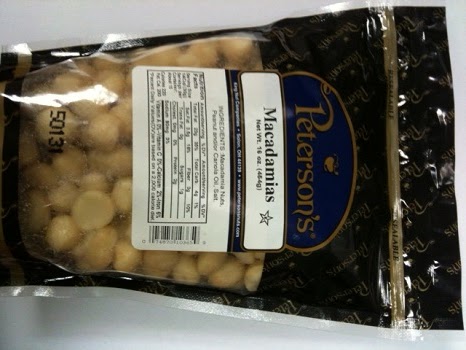
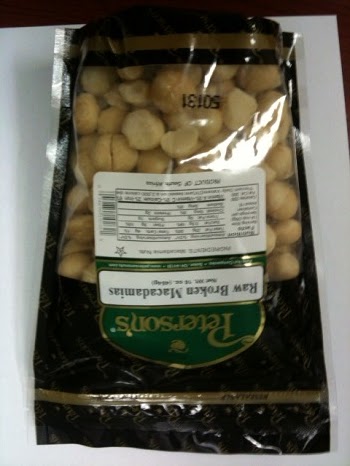
Petersons Macadamias Nuts Recalled due to Salmonella contamination

Kanan Enterprises announces the voluntary recall of macadamia nuts due to potential contamination with salmonella.  The supplier of the macadamia nuts has asked us to issue this recall because it has the potential to be contaminated with Salmonella, an organism which can cause serious and sometimes fatal infections in young children, frail or elderly people, and others with weakened immune systems. No illnesses have been reported in connection with this recall.
Peterson’s Macadamias in 16 ounce stand up pouches, were distributed only through the Peterson Nut Store in Cleveland, Ohio and King Nut Factory outlet in Solon, Ohio.  The product was sold between 11/26/14 and 3/27/15. A list of affected products and code dates is listed below:
Product
Size
SKU
Code Date
Peterson’s Macadamias
16 oz
0 7487010365 9
4330 1
Peterson’s Macadamias
16 oz
0 7487010365 9
4364 2
Peterson’s Macadamias
16 oz
0 7487010365 9
5013 1
Consumers with this recalled product should not consume this product. They should destroy it or return it to the point of purchase.  Consumers with questions should call 1-800-860-5464, 8:15 am – 5:00pm EST, Monday – Friday.
Front Package - Peterson's Macadamia Nuts, 16 oz
Front Package - Peterson's Raw Broken Macadamias, 16 oz

Wednesday, November 5, 2014

11/5/14 Health News: Fecal testing in colorectal cancer screening ♦ Fruit, vegetables,whole grains and nuts lower stroke risk ♦ BPA exposure by infants ♦ Craving in alcoholics

Support for fecal testing in familial colorectal cancer screening
Fecal immunochemical tests may be as effective as colonoscopies when it comes to detecting colorectal cancer among first-degree relatives of patients with colorectal cancer, according to a new study Continue Reading
Diets high in fruit, vegetables, whole grains and nuts among factors to lower first-time stroke risk
Eating Mediterranean or DASH-style diets, regularly engaging in physical activity and keeping your blood pressure under control can lower your risk of a first-time stroke, experts say. Additionally, these experts not updated prevention guidelines that focus on lowering stroke risk among women Continue Reading,
BPA exposure by infants may increase later risk of food intolerance
Scientists show, for the first time, that there is a link between perinatal exposure to Bisphenol A (BPA) at low doses and the risk to develop food intolerance in later life. "We may look back one day and see BPA exposure as one of the more important public health problems of our time," said one expert. "We know that too much exposure is bad, but exactly how much exposure is too much is still up for debate.Continue Reading
Breakdown in gut barriers to bacteria may promote inflammation and craving in alcoholics

Bacteria in the GI tract fulfill many vital functions and are critical for digestion. Yet, these same bacteria can induce strong inflammatory responses by the immune system if they penetrate the gut and enter the bloodstream. Prior research has established the involvement of inflammatory processes in the development of psychiatric disorders, including major depression and alcohol dependence, but the origins of such inflammation have remained unclear. Now, researchers have found that inflammatory pathways are stimulated in alcohol-dependent patients by bacteria that escape the gut barrier, which correlated with alcohol craving. Continue Reading