Wednesday, February 4, 2015

58 million nonsmokers in US are still exposed to secondhand smoke

The Surgeon General has concluded that there is no safe level of exposure to SHS, which contains over 7,000 chemicals including about 70 that can cause cancer. It is a known cause of Sudden Infant Death Syndrome, respiratory infections, ear infections, and asthma attacks in infants and children, as well as heart disease, stroke, and lung cancer in adult nonsmokers. Each year exposure to SHS causes more than 41,000 deaths from lung cancer and heart disease among non-smoking adults and 400 deaths from Sudden Infant Death Syndrome, as well as about $5.6 billion annually in lost productivity.
Although secondhand smoke (SHS) exposure in the United States dropped by half between 1999 to 2000 and 2011 to 2012, one in four nonsmokers -- 58 million people -- are still exposed to SHS, according to a new Vital Signs report from the Centers for Disease Control and Prevention.
Data from the National Health and Nutrition Examination Survey show that declines in exposure to SHS have been slower and exposure remains higher among children, blacks, those who live in poverty, and those who live in rental housing. The report finds two in every five children aged three to 11 years are still exposed to SHS. The study assessed exposure using cotinine, a marker of SHS found in the blood.
“Secondhand smoke can kill. Too many Americans, and especially too many American children, are still exposed to it,” said CDC Director Tom Frieden, M.D., M.P.H. “That 40 percent of children -- including seven in 10 black children -- are still exposed shows how much more we have to do to protect everyone from this preventable health hazard.”
Additional key findings in the Vital Signs report include that:
  • Nearly half of black nonsmokers are exposed to SHS.
  • More than two in five nonsmokers who live below the poverty level are exposed to SHS.
  • More than one in three nonsmokers who live in rental housing are exposed to SHS.
The study used rental status as a way of identifying people who live in multiunit housing, which is an environment where the issue of SHS exposure is of particular concern.
“About 80 million Americans live in multiunit housing, where secondhand smoke can seep into smoke-free units and shared areas from units where smoking occurs,” said Brian King, Ph.D., acting deputy director for research translation in CDC’s Office on Smoking and Health. “The potential of exposure in subsidized housing is especially concerning because many of the residents -- including children, the elderly, and people with disabilities -- are particularly sensitive to the effects of secondhand smoke.”
The report credits the overall decline in SHS exposure to several factors. To date, 26 states, the District of Columbia, and almost 700 cities have passed comprehensive smoke-free laws prohibiting smoking in worksites, restaurants, and bars. These state and local laws currently cover almost half the US population. In addition, a growing number of households have adopted voluntary smoke-free home rules, increasing from 43 percent in 1992-1993 to 83 percent in 2010-2011. Also, cigarette smoking has declined significantly in the last two decades and smoking around nonsmokers has become much less socially acceptable.

2/3/15 Health News: Drug For Treating Nuclear fallout ♦ Arizona patients exposed to measles ♦ Cancellation of certain insecticide ♦ Family voices, stories speed coma recovery


Arizona patients exposed to measles.
Health officials reported February 2 that 18 patients at the Phoenix Children’s Hospital’s East Valley Center in Arizona were exposed to a measles outbreak that originated from California Disney parks January 11, Continue Reading
EPA announces voluntary cancellation of certain insecticide uses.
The U.S. Environmental Protection Agency reached an agreement with the manufacturers of the insecticide methomyl January 29 to voluntarily cancel certain uses of carbamate in an effort to reduce risks to drinking water. Under the agreement, manufacturers will stop making and selling .Continue Reading
AUSSIE HEALTH OFFICIALS WANT CONSISTENT APPROACH TO RAW MILK BAN
Doug Powell, the former Kansas State University professor who reports from Down Under on his popular Barfblog, says that while raw milk is legally sold in Australia as “bath milk” in stores alongside pasteurized milk, those days may be drawing to an end. Michael Baird, premier of New South Wales and leader of the New... Continue Reading
Family voices, stories speed coma recovery
'Can he hear me?' Family members are desperate to know when a loved one with a traumatic brain injury is in a coma. A new study shows the recorded voices of loved ones telling the patient familiar stories stored in his long-term memory help awaken the unconscious brain and speed recovery from the coma. Continue Reading
Drug For Treating Nuclear fallout
A drug candidate called DBIBB that increases the survival of mice suffering from radiation syndrome, even when treatment started three days after radiation exposure, has been identified by scientists. The findings suggest that DBIBB shows promise for becoming the first drug capable of treating acute radiation syndrome caused by the high levels of radiation released by nuclear explosions  Continue Reading

Tuesday, February 3, 2015

Engineering New Tissues and Organs

Whimsical illustration of a heart being repaired by construction workers.


How can you mend a broken heart? Or repair a damaged liver, kidney, or knee? NIH-funded scientists are exploring innovative ways to fix faulty organs and tissues or even grow new ones. This type of research is called tissue engineering. Exciting advances continue to emerge in this fast-moving field.
Tissue engineering could allow doctors to repair or replace worn-out tissues and organs with living, working parts. Most important, tissue engineering might help some of the 120,000 people on the waitlist to receive donated kidneys, livers, or other organs.
Doctors have long used tissue-engineered skin to heal severe burns or other injuries. But most tissue engineering methods are still experimental. They’ve been tested only in laboratory dishes and sometimes in animals, but only a few new approaches have been tested in people. Several clinical studies (involving human volunteers) are in the early stages of testing newly developed tissues.
“With this approach, scientists are combining engineering and biology to restore a damaged organ or tissue, whether it’s been damaged by disease or injury or something else,” says Dr. Martha Lundberg, an NIH expert in heart-related tissue engineering.
Some scientists are creating special net-like structures, or scaffolds, in desired shapes and then coaxing cells to grow within them. Some use a mixture of natural substances called growth factors, which direct cells to grow and develop in certain ways.
“Other scientists are using different 3-D bioprinting technologies—some are like fancy inkjet printers—to create new tissues or organs,” Lundberg says. They’ve printed 3-D kidneys and other organs that look like the real thing. But while most of these printed body parts have the right shape, they’re not fully functional.
“Scientists haven’t yet figured out how to print an organ that includes the correct blood vessel patterns, nerve connections, and other components that come together in a mature organ,” Lundberg says. “When creating a new organ, if it can perform the right job and functions, it may not need to look like the real thing.”
Many tissue engineering methods use stem cells, which can be nudged to turn into different cell types. One research team guided human stem cells to become a 3-D structure that can respond to light. The method might one day lead to new therapies for eye disorders. Other stem cell approaches may lead to improved treatment for spinal cord injuries, diabetes, and more.
Another approach, called decellularization, involves removing all the cells from an organ. What’s left behind is a thin, pale framework that contains the organ’s natural structural proteins, including the pathways for tiny blood vessels and nerves. By infusing new cells into this mesh-like matrix, some researchers have successfully created working animal kidneys, livers, hearts, lungs, and other organs.
The decellularization technique was used by Dr. Martin Yarmush and his colleagues to create a functional rat liver that included a network of working blood vessels. Yarmush is a biomedical engineer at Rutgers University and the Massachusetts General Hospital. The engineered livers his team created were kept alive in the laboratory for days and functioned for several hours after transplantation into rats. The researchers are now working to help those transplanted livers survive even longer. They’re also scaling up the methods to create a decellularized human liver that can be repopulated with functional cells.
“A parallel effort we are pursuing involves taking a donated organ that is not considered transplantable for a particular reason, and then using a reconditioning solution and perhaps even stem cells to revitalize the organ so it becomes transplantable,” Yarmush says.
Other researchers are working to repair damaged body parts that are still in the body. At the University of Washington in Seattle, Dr. Charles Murry and colleagues are searching for ways to fix injured hearts. One of their latest studies used human stem cells to repair damaged hearts in monkeys. The stem cells were coaxed to become early-stage heart cells, which were then infused near the heart injury.
The new cells made their way into the damaged heart muscle and organized into muscle fibers in all of the treated monkeys. The infused stem cells replaced nearly half of the damaged heart tissue and began beating in sync with the heart. Still, the scientists note they need years of research before this type of therapy might be tried in people.
Some methods are already being tested in humans. Dr. Martha Murray, a surgeon at Boston Children’s Hospital, is exploring new ways to heal a common knee injury known as a torn ACL (anterior cruciate ligament). Athletes who do a lot of twisting and turning, as in basketball or soccer, are at risk for damaging the ACL.
“Typical treatment today, called ACL reconstruction, works well, and it gets patients back to the playing field at a relatively high rate,” Murray says. But the surgery involves removing a piece of tendon from elsewhere in the body and using that to replace the ACL. “So it involves making 2 injuries that the body has to heal from. And even with this treatment, patients still develop arthritis in the knee 15 to 20 years later,” Murray adds. “We wanted to find a better therapy—something less invasive.”
After testing several biomaterials, Murray’s team found that stitching a bioengineered sponge between the torn ends of an injured ACL allows blood to clot and collect around the damaged ligament. Because blood naturally contains stem cells and growth factors, the blood-soaked sponge acts as a “bridge” that encourages ACL healing. The sponge is made of some of the same proteins normally found in ligaments, and it dissolves after a few weeks.
Studies in large animals showed that the bioengineered sponge was much less likely to lead to arthritis, and it healed ACL injuries as well as standard reconstruction surgery. The U.S. Food and Drug Administration recently approved human safety testing of the sponge in 10 people with ACL injuries.
Metal, plastic, and other non-biological devices can also replace or enhance malfunctioning body parts. One promising possibility still in development is an artificial kidney that could be implanted in the body and used in place of dialysis to treat end-stage kidney disease. Scientists are also studying a synthetic glue modeled after a natural adhesive that might help to repair tissues in the body.

What You Need To Know Gallbladder?

Your Tiny, Hard-Working Digestive Organ
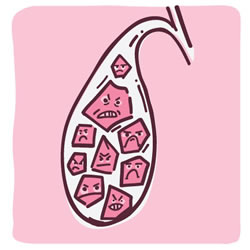
Illustration of gallstones inside a gallbladder.
Most of us give little thought to the gallbladder, a pear-sized organ that sits just under the liver and next to the pancreas. The gallbladder may not seem to do all that much. But if this small organ malfunctions, it can cause serious problems. Gallbladder disorders rank among the most common and costly of all digestive system diseases. By some estimates, up to 20 million Americans may have gallstones, the most common type of gallbladder disorder.
The gallbladder stores bile, a thick liquid that’s produced by the liver to help us digest fat. When we eat, the gallbladder’s thin, muscular lining squeezes bile into the small intestine through the main bile duct. The more fat we eat, the more bile the gallbladder injects into the digestive tract.
Bile has a delicate chemical balance. It’s full of soluble cholesterol produced by the liver. This is a different type of cholesterol than the kind related to cardiovascular disease. If the chemical balance of bile gets slightly off, the cholesterol can crystalize and stick to the wall of the gallbladder. Over time, these crystals can combine and form gallstones.
Gallstones can range from the size of a grain of sand to that of a golf ball. When the gallbladder injects bile into the small intestine, the main bile duct can become blocked by these crystalline stones. That may cause pressure, pain, and nausea, especially after meals. Gallstones can cause sudden pain in the upper right abdomen, called a gallbladder attack (or biliary colic). In most cases, though, people with gallstones don’t realize they have them.
The causes of gallstones are unclear, but you’re more likely to have gallstone problems if you have too much body fat, especially around your waist, or if you’re losing weight very quickly. Women, people over age 40, people with a family history of gallstones, American Indians, and Mexican Americans are also at increased risk for gallstones.
“For the average person with an average case, the simplest way to diagnose a gallstone is by an ultrasound,” says Dr. Dana Andersen, an NIH expert in digestive diseases.
If left untreated, a blocked main bile duct and gallbladder can become infected and lead to a life-threatening situation. Gallbladder removal, called a cholecystectomy, is the most common way to treat gallstones. The gallbladder isn’t an essential organ, which means you can live normally without it.
Gallbladder removal can be done with a laparoscope, a thin, lighted tube that shows what’s inside your abdomen. The surgeon makes small cuts in your abdomen to insert the surgical tools and take out the gallbladder. The surgery is done while you are under general anesthesia, asleep and pain-free. Most people go home on the same day or the next.
Researchers have long investigated medications that can prevent gallstones from forming, but these therapies are currently used only in special situations.
It’s uncommon for the gallbladder to cause problems other than gallstones. Gallbladder cancer is often difficult to treat, as it’s usually diagnosed at an advanced stage. But such cancers are relatively rare.
While the gallbladder may not be the star of the digestive system, it still plays an important role. Treat it well by maintaining a healthy diet and getting regular exercise, and the little bag of bile should do its job. Don’t ignore pain or symptoms, and see your doctor if you’re in discomfort, especially after eating.

Monday, February 2, 2015

2/2/15 Health News: Synthetic Marijuana Contaminated Holiday Bread ♦ Effect of BPA and estradiol on sperm ♦ Breast cancer ♦ Prescription painkillers, widely double birth defects

Tests Show Synthetic Drug Contaminated Holiday Bread From CA Bakery
Independent lab tests of the holiday bread sold in early January by a Santa Ana, CA, bakery and linked to reports of dizziness, palpitations and other symptoms show that it was probably deliberately contaminated with synthetic cannabinoid, Continue Reading
Effect of BPA and estradiol on sperm development seen by researchers
A direct link between bisphenol A, or BPA, and disrupted sperm production has been discovered by researchers. They say the chemical disrupts the delicate DNA interactions needed to create sperm. This work may have unearthed the physiological mechanism that could account for decreased sperm counts seen in several human studies.Continue Reading
Breast cancer prevention drug benefit varies among at-risk women, study finds
The findings of study may help women and their doctors make decisions about who may get the most benefit out of a breast cancer prevention drug Continue Reading
Prescription painkillers, widely used by childbearing age women, double birth defects  
Women unaware that prescription opioid-based medications such as codeine, oxycodone, hydrocodone, or morphine, used to treat severe pain, may increase the risk for serious birth defects of the baby's brain, spine, and heart, as well as preterm Continue Reading
New links between obesity, cardiovascular disease found
Novel methods have been applied in a recent study to detect binding of fatty acids to CD36 and their effect on internalization of oxidized LDL. Continue Reading

Immune System Shaped by Environment More Than Genes

The immune system is a complex network of cells, tissues, and organs that work together to protect our bodies from infection. The system must fight off invading microbes, infected cells, and tumors while ignoring healthy tissues.
Portrait of mixed race twin sisters.
Blood samples from healthy twins helped reveal how the environment affects the immune system. Credit: Feverpitched/iStock/Thinkstock.
There can be significant variation in immune system function between people. It’s not known how much of the variation is caused by genetic differences (heritable) and how much is due to exposure to environmental (non-heritable) factors such as microbes.
To determine the basis of immune system variation, a team led by Dr. Mark M. Davis at Stanford University School of Medicine applied the most recent advances in immune monitoring technologies to a classic research model: studying twin pairs. The study was funded in part by NIH’s National Institute of Allergy and Infectious Diseases (NIAID). Results appeared in Cell on January 15, 2015.
In twin studies, researchers compare identical (monozygotic) twins, who share almost all of their genes, with fraternal (dizygotic) twins, who share about half of their genes. Twin pairs share the same prenatal environment and usually have a similar childhood environment. Thus if identical twins show more similarity on a given trait compared to fraternal twins, it suggests that genes significantly influence that trait.
The team took blood samples from 210 healthy twins, ranging in age from 8 to 82, who were part of a twin registry. Of the 105 twin pairs, 78 were identical and 27 were fraternal. The researchers measured more than 200 different immune system parameters, including the frequency of different immune cell types—such as B cells and T cells—and levels of 43 cytokines, chemokines, and other serum proteins that modulate the immune response. The team assessed the impact of heritable versus non-heritable factors overall, after receiving the seasonal influenza vaccine, and during a microbial infection.
The researchers found that non-heritable influences outweighed heredity in about 75% of all the immune parameters, and almost exclusively determined more than half of the parameters. Some of the immune measures showed more variability with age, suggesting that over time environmental factors drive many immune system variations.
In the seasonal flu vaccine analysis, no detectable contributions from heritable factors were seen in the resulting antibody responses, suggesting that antibody responses are likely due to environmental factors such as previous vaccinations or infections.
To assess the effects of microbial exposure, the team surveyed immune responses to cytomegalovirus (CMV), which infects 50% to 80% of all adults in the U.S. by the age of 40. Identical twins with only one twin positive for CMV had much greater immune system variation between them than identical twins who were both negative for CMV. This demonstrates how a single microbial exposure can affect the immune system of a healthy person.
“The immune system has to think on its feet,” Davis says. “A healthy human immune system continually adapts to its encounters with hostile pathogens, friendly gut microbes, nutritional components and more, overshadowing the influences of most heritable factors.”
—by Carol Torgan, Ph.D.

Sunday, February 1, 2015

2/1/15 health News: 90 Percent of Home Chefs Contaminate Food ♦ Travelers Add to Spread of Superbugs ♦ Improving antibiotics to treat staph ♦ Alzheimer's disease

90 Percent of Home Chefs Contaminate Food
If you're gearing up for a big Super Bowl bash, you might want to consult the best food-handling practices before preparing that feast. New research from Kansas State University finds that most home chefs drop the ball on food safety. Continue Reading
Antibiotic Use by Travelers May Add to Global Spread of Superbugs
Taking antibiotics for diarrhea may put travelers visiting developing parts of the world at higher risk for contracting superbugs and spreading these daunting drug-resistant bacteria to their home countries. A study’s authors call for greater caution in using antibiotics for travelers' diarrhea, except in severe cases,. Continue Reading
Lead negatively impacts cognitive functions of boys more than girls
Female hormones estrogen and estradiol help ward off the effects of lead for young girls, explaining why boys, are shown to suffer more  Continue Reading
Improving antibiotics to treat staph infections
New information about how antibiotics like azithromycin stop staph infections has been uncovered, including why staph sometimes becomes resistant to drugs. Staphylococcus aureus is a strain of bacteria that frequently has become resistant to antibiotics,  Continue Reading


Inflammation has long been studied in Alzheimer's, but in a counter-intuitive finding reported by researchers has uncovered the mechanism by which anti-inflammatory processes may trigger the disease. Continue Reading