Showing posts with label Genetic. Show all posts

Thursday, October 15, 2015

Scientists develop genetic blueprint of inner ear cell development

Two studies in mice use new technique to provide insight into cell development critical for hearing, balance
Using a sensitive new technology called single-cell RNA-seq on cells from mice, scientists have created the first high-resolution gene expression map of the newborn mouse inner ear. The findings provide new insight into how epithelial cells in the inner ear develop and differentiate into specialized cells that serve critical functions for hearing and maintaining balance. Understanding how these important cells form may provide a foundation for the potential development of cell-based therapies for treating hearing loss and balance disorders. The research was conducted by scientists at the National Institute on Deafness and Other Communication Disorders (NIDCD), part of the National Institutes of Health.
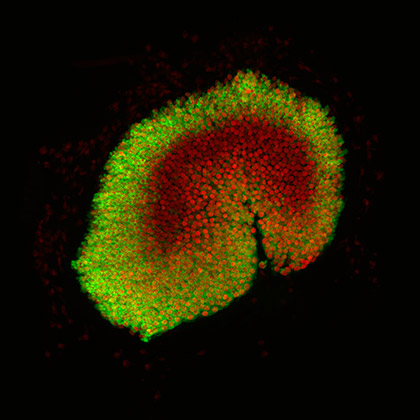
Image of balancing apparatus of the inner ear
Hair cells (red) and associated supporting cells (green) in the sensory patch of a mouse utricle, part of the balancing apparatus of the inner ear. Credit: Joseph Burns, Ph.D., NIDCD.
In a companion study led by NIDCD-supported scientists at the University of Maryland School of Medicine and scientists at the Sackler School of Medicine at Tel Aviv University, researchers used a similar technique to identify a family of proteins critical for the development of inner ear cells. Both studies were published online on October 15 in the journal Nature Communications.
“Age-related hearing loss occurs gradually in most of us as we grow older. It is one of the most common conditions among older adults, affecting half of people over age 75,” said James F. Battey, Jr., M.D., Ph.D., director of the NIDCD. “These new findings may lead to new regenerative treatments for this critical public health issue.”
Specialized sensory epithelial cells in the inner ear include hair cells and supporting cells, which provide the hair cells with crucial structural and functional support. Hair cells and supporting cells located in the cochlea — the snail-shaped structure in the inner ear — work together to detect sound, thus enabling us to hear. In contrast, hair cells and supporting cells in the utricle, a fluid-filled pouch near the cochlea, play a critical role in helping us maintain our balance. These cells detect how we move our heads and how our heads are positioned; this information tells our brain, for example, whether we are standing or lying down. The utricle is one of several structures and organs in the body that provide our sense of balance; together, they comprise the vestibular system.
Hair cells and supporting cells can be damaged by medications, infections or disease, injury, or aging, leading to hearing loss and balance problems. In humans, these cells cannot naturally repair themselves, so effective treatments are limited.
In addition, there are only a few thousand of these sensory cells; they are tucked deep in a bony channel, making them difficult to study.
To gain a better understanding of inner ear cell development, Matthew Kelley, Ph.D., chief of the Section on Developmental Neuroscience at the  NIDCD, and his research team used single-cell RNA-seq, a new technology that can extract comprehensive gene activity data from just one cell. Other methods for obtaining this type of data typically require thousands of cells. Knowing which genes are active can tell scientists a lot about a cell’s individual characteristics and function.
Kelley’s team analyzed 301 cells — some hair cells and some supporting cells—taken from the cochlea and utricle of newborn mice. By comparing the cells’ gene activity profiles, the researchers found unique patterns in hair cells and supporting cells. They also uncovered evidence for subgroups of cells within each of these classes. While little is known about these subgroups, the researchers speculate that the cells’ distinct gene activity patterns may reflect specialized functions.
The data also allowed the scientists to identify distinct developmental patterns of gene activity. Cells in the vestibular part of the inner ear develop at somewhat different rates, so each cell was at a slightly different point in its maturity when the researchers examined it. By analyzing the cells’ gene activity profiles, the scientists were able to identify genes that are active at each stage of development, bringing to light important clues about how the specialized hair cells are formed.
“Using this single-cell profiling technique provides a new option to identify the genetic activity of cells, particularly in systems with limited numbers of cells, like the inner ear,” said Kelley, senior author of the study. “Identifying the gene expression maps for the development of inner ear cells is essential to understanding how they form, and may help us create ways to regenerate these cells.”
In the second study, researchers also took advantage of RNA-seq technology. Researchers used a computational-experimental approach to search for common regulatory regions in the genes expressed in the hair cells. The scientists found that a group of gene regulators called Regulatory Factor Xs (RFX) helps to drive genes that are preferentially active in hair cells.
The researchers also showed that RFX genes have an essential role in hearing. Mice lacking two RFX proteins began to lose their hair cells and their hearing about two weeks after birth. After three months, these mice were completely deaf. The researchers concluded that the RFX gene regulators, while not crucial early in the development of hair cells, are necessary for the cells’ maturation and long-term survival.

Tuesday, September 29, 2015

Inuit Genetic Adaptations to Diet and Climate

At the genetic level, any 2 people are more than 99% the same. The variations that exist can be as small as a difference in a single DNA building block—called a single nucleotide polymorphism (SNP)—or as large as whole sections of the genome being copied or moved. These variations may underlie differences in susceptibility to disease, response to drugs, or reaction to environmental factors.
Portrait of a senior Inuit man smiling.
Genetic variations may reflect adaptations to the specific diet and climate Inuit ancestors have experienced for thousands of years. Image credit: Purestock/Thinkstock.
An international team of scientists led by Dr. Rasmus Nielsen of the University of California, Berkeley, wondered whether the genomes of people who live in a challenging environment for a long period of time show adaptations to that environment.
The Inuit, natives of Greenland, live in extremely cold conditions that can hover in the negative digits in winter. They eat a specialized diet, including seals and whales, that’s rich in protein and omega-3 polyunsaturated fatty acids. Although their ancestors arrived in Greenland less than 1,000 years ago, they lived for thousands of years before that under similar conditions in the Arctic.
The scientists analyzed SNPs from 191 Inuit (once known as Eskimos) and compared them with SNPs from 60 Europeans and 44 Han Chinese that were part of other genetic variation studies. The research was funded in part by NIH’s National Human Genome Research Institute (NHGRI). Results were published on September 18, 2015, in Science.
Homes in Kulusuk, Greenland. Image credit: Koonyongyut/iStock/Thinkstock.
The team found marked differences in a cluster of genes that code for proteins that help process dietary fatty acids. One SNP was the same in almost all the Inuit, but only about 2% of the Europeans and 16% of the Han Chinese had it. Some variants were significantly associated with the fat composition of red blood cell membranes, which had previously been measured in a group of Inuit. These membranes reflect how fatty acids were processed from foods eaten during the past 2 to 4 months.
The team found another region of genetic variation common to the Inuit that includes genes thought to be involved in the regulation of brown and brite fat cells. These cells affect heat production in response to cold exposure.
The scientists noted that several of the genetic differences in the Inuit were associated with other characteristics, including a lower height and weight and lower levels of fasting insulin and LDL cholesterol levels, which could potentially protect against heart disease and diabetes.
The original focus on fish oil and omega-3s came from studies of Inuit, Nielsen explains. They seemed quite healthy on their traditional diet, which is rich in fat from marine mammals, so many thought that fish oil might protect against cardiovascular disease.
“We’ve now found that they have unique genetic adaptations to this diet, so you cannot extrapolate from them to other populations,” Nielsen says. “A diet that is healthy for the Inuit may not necessarily be good for the rest of us.”
—by Carol Torgan, Ph.D.

Saturday, August 1, 2015

Health Research:New treatment of type 1 diabetes ♦ Starvation effects handed down for generations ♦ Perfectionism linked to burnout at work, school and sports,

Promising progress for new treatment of type 1 diabetes New research shows promising progress in the use of anti-inflammatory cytokine for treatment of type 1 diabetes. The study reveals that administration of interleukin-35 (a protein made by immune cells) to mice with type 1 diabetes, reverses or cures the disease by maintaining a normal blood glucose level and the immune tolerance
Affordable genetic diagnostic technique for target DNA analysis developed A technique to analyze various target DNAs has been developed using an aptamer, a DNA fragment that can recognize and bind to a specific protein or enzyme.
Perfectionism linked to burnout at work, school and sports, Perfectionistic concerns have a positive relationship with overall burnout and symptoms of burnout, research has found. Perfectionistic concerns can create stress, interfere with relationships and more.
Starvation effects handed down for generations Starvation early in life can alter an organism for generations to come, according to a new study in nematodes. The epigenetic effects are a 'bet-hedging strategy.' Famine survivors are smaller and less fertile, and they acquire a toughness that lasts at least two generations. The mechanism of the epigenetic inheritance has not been identified, however.
Self-assembling, biomimetic membranes may aid water filtration A synthetic membrane that self assembles and is easily produced may lead to better gas separation, water purification, drug delivery and DNA recognition, according to an international team of researchers

Tuesday, June 30, 2015

Immune System Research: New genetic immune disorder identified ♦ Keeping a lid on inflammation ♦ Rare disorder found to have a common form

Rare disorder found to have a common form A hereditary autoimmune disease that was thought to be exceedingly rare may have a less severe form that affects one in 1,000 people or even more, according to new research. The results of this research suggest that a number of different autoimmune diseases and syndromes may be tied to mutations in a single gene. Among other things, these findings may help provide new means of diagnosing and treating autoimmune disorders.
Keeping a lid on inflammation Although critically important for shaping the immune response and maintaining self-tolerance, how regulatory T cells (Treg cells) hold on to their immunosuppressive powers had remained unclear. Now, for the first time, researchers have identified a molecular pathway that maintains the stability and function of Treg cells.
New genetic immune disorder identified A new immune disorder has been identified -- DOCK2 deficiency -- named after the mutated gene responsible for the disease. An international team of collaborators studied five children, four boys and one girl, from different ethnic backgrounds who had experienced debilitating infections early in life. The children were diagnosed with combined immunodeficiency, which refers to a group of inherited disorders distinguished by defects in immune system cells called T cells. CIDs also may affect other cells of the immune system, including B cells
Too exhausted to fight, immune system may harm the body they are supposed to protect An 'exhausted' army of immune cells may not be able to fight off infection, but if its soldiers fight too hard they risk damaging the very body they are meant to be protecting.

Monday, July 21, 2014

Common Gene Variants Account for Most Genetic Risk for Autism


Most of the genetic risk for autism comes from versions of genes that are common in the population rather than from rare variants or spontaneous glitches, researchers funded by the National Institutes of Health have found. Heritability also outweighed other risk factors in this largest study of its kind to date.About 52 percent of the risk for autism was traced to common and rare inherited variation, with spontaneous mutations contributing a modest 2.6 percent of the total risk.
Chart showing Population-Based Autism Genetics and Environment Study
The bulk of risk, or liability, for autism spectrum disorders (ASD) was traced to inherited variations in the genetic code shared by many people. These and other (unaccounted) factors dwarfed contributions from rare inherited, non-additive and spontaneous (de novo) genetic factors. Source: Population-Based Autism Genetics and Environment Study
“Genetic variation likely accounts for roughly 60 percent of the liability for autism, with common variants comprising the bulk of its genetic architecture,” explained Joseph Buxbaum, Ph.D., of the Icahn School of Medicine at Mount Sinai (ISMMS), New York City. “Although each exerts just a tiny effect individually, these common variations in the genetic code add up to substantial impact, taken together.”
Buxbaum, and colleagues of the Population-Based Autism Genetics and Environment Study (PAGES) Consortium, report on their findings in a unique Swedish sample in the journal Nature Genetics, July 20, 2014.
“Thanks to the boost in statistical power that comes with ample sample size, autism geneticists can now detect common as well as rare genetic variation associated with risk,” said Thomas R. Insel, M.D., director of the NIH’s National Institute of Mental Health (NIMH). “Knowing the nature of the genetic risk will reveal clues to the molecular roots of the disorder. Common variation may be more important than we thought.”
Although autism is thought to be caused by an interplay of genetic and other factors, including environmental, consensus on their relative contributions and the outlines of its genetic architecture has remained elusive. Recently, evidence has been mounting that genomes of people with autism are prone to harboring rare mutations, often spontaneous, that exert strong effects and can largely account for particular cases of disease.
More challenging is to gauge the collective impact on autism risk of numerous variations in the genetic code shared by most people, which are individually much subtler in effect. Limitations of sample size and composition made it difficult to detect these effects and to estimate the relative influence of such common, rare inherited, and rare spontaneous variation.
Differences in methods and statistical models also resulted in sometimes wildly discrepant estimates of autism’s heritability – ranging from 17 to 50 percent.
Meanwhile, recent genome-wide studies of schizophrenia have achieved large enough sample sizes to reveal involvement of well over 100 common gene variants in that disorder. These promise improved understanding of the underlying biology – and even development of risk-scores, which could help predict who might benefit from early interventions to nip psychotic episodes in the bud.
With their new study, autism genetics is beginning to catch up, say the researchers. It was made possible by Sweden’s universal health registry, which allowed investigators to compare a very large sample of about 3,000 people with autism with matched controls. Researchers also brought to bear new statistical methods that allowed them to more reliably sort out the heritability of the disorder. In addition, they were able to compare their results with a parallel study in 1.6 million Swedish families, which took into account data from twins and cousins, and factors like age of the father at birth and parents’ psychiatric history. A best-fit statistical model took form, based mostly on combined effects of multiple genes and non-shared environmental factors.
“This is a different kind of analysis than employed in previous studies,” explained Thomas Lehner, Ph.D., chief of NIMH’s Genomics Research Branch. “Data from genome-wide association studies was used to identify a genetic model instead of focusing just on pinpointing genetic risk factors. The researchers were able to pick from all of the cases of illness within a population-based registry.”
Now that the genetic architecture is better understood, the researchers are identifying specific genetic risk factors detected in the sample, such as deletions and duplications of genetic material and spontaneous mutations. Even though such rare spontaneous mutations accounted for only a small fraction of autism risk, the potentially large effects of these glitches makes them important clues to understanding the molecular underpinnings of the disorder, say the researchers.
“Within a given family, the mutations could be a critical determinant that leads to the manifestation of ASD in a particular family member,” said Buxbaum. “The family may have common variation that puts it at risk, but if there is also a de novo [spontaneous} mutation on top of that, it could push an individual over the edge. So for many families, the interplay between common and spontaneous genetic factors could be the underlying genetic architecture of the disorder.”

Friday, March 21, 2014

Genetic Marker for Stroke and Cardiovascular Disease Discovered.

Scientists studying the genomes of nearly 5,000 people have pinpointed a genetic variant tied to an increased risk for stroke, and have also uncovered new details about an important metabolic pathway that plays a major role in several common diseases. Together, their findings may provide new clues to underlying genetic and biochemical influences in the development of stroke and cardiovascular disease, and may also help lead to new treatment strategies.
“Our findings have the potential to identify new targets in the prevention and treatment of stroke, cardiovascular disease and many other common diseases,” said Stephen R. Williams, Ph.D., a postdoctoral fellow at the University of Virginia Cardiovascular Research Center and the University of Virginia Center for Public Health Genomics, Charlottesville.
Stroke is the fourth leading cause of death and a major cause of adult disability in this country, yet its underlying genetics have been difficult to understand. Numerous genetic and environmental factors can contribute to a person having a stroke. “Our goals were to break down the risk factors for stroke,” Dr. Williams said.
The researchers focused on one particular biochemical pathway called the folate one-carbon metabolism (FOCM) pathway. They knew that abnormally high blood levels of the amino acid homocysteine are associated with an increased risk of common diseases such as stroke, cardiovascular disease and dementia. Homocysteine is a breakdown product of methionine, which is part of the FOCM pathway. The same pathway can affect many important cellular processes, including the methylation of proteins, DNA and RNA. DNA methylation is a mechanism that cells use to control which genes are turned on and off, and when.
But clinical trials of homocysteine-lowering therapies have not prevented disease, and the genetics underlying high homocysteine levels – and methionine metabolism gone awry – are not well defined.
Dr. Williams and his colleagues conducted genome-wide association studies of participants from two large long-term projects: the Vitamin Intervention for Stroke Prevention (VISP), a trial looking at ways to prevent a second ischemic stroke, and the Framingham Heart Study (FHS), which has followed the cardiovascular health and disease in a general population for decades. They also measured methionine metabolism – the ability to convert methionine to homocysteine – in both groups. In all, they studied 2,100 VISP participants and 2,710 FHS subjects.
In a genome-wide association study, researchers scan the genome to identify specific genomic variants associated with a disease. In this case, the scientists were trying to identify variants associated with a trait – the ability to metabolize methionine into homocysteine.
Investigators identified variants in five genes in the FOCM pathway that were associated with differences in a person’s ability to convert methionine to homocysteine. They found that among the five genes, one – the ALDH1L1 gene – was also strongly associated with stroke in the Framingham study. When the gene is not working properly, it has been associated with a breakdown in a normal cellular process called programmed cell death, and cancer cell survival.
They also made important discoveries about the methionine-homocysteine process. “GNMT produces a protein that converts methionine to homocysteine. Of the five genes that we identified, it was the one most significantly associated with this process,” Dr. Williams said. “The analyses suggest that differences in GNMT are the major drivers behind the differences in methionine metabolism in humans.”
“It’s striking that the genes are in the same pathway, so we know that the genomic variants affecting that pathway contribute to the variability in disease and risk that we’re seeing,” he said. “We may have found how genetic information controls the regulation of GNMT.”
The group determined that the five genes accounted for 6 percent of the difference in individuals’ ability to process methionine into homocysteine among those in the VISP trial. The genes also accounted for 13 percent of the difference in those participants in the FHS, a remarkable result given the complex nature of methionine metabolism and its impact on cerebrovascular risk. In many complex diseases, genomic variants often account for less than 5 percent of such differences.
“This is a great example of the kinds of successful research efforts coming out of the GARNET program,” said program director Ebony Madden, Ph.D. “GARNET scientists aim to identify variants that affect treatment response by doing association studies in randomized trials. These results show that variants in genes are associated with the differences in homocysteine levels in individuals.”
The association of the ALDH1L1 gene variant with stroke is just one example of how the findings may potentially lead to new prevention efforts, and help develop new targets for treating stroke and heart disease, Dr. Williams said.
“As genome sequencing becomes more widespread, clinicians may be able to determine if a person’s risk for abnormally high levels of homocysteine is elevated,” he said. “Changes could be made to an individual’s diet because of a greater risk for stroke and cardiovascular disease.”
The investigators plan to study the other four genes in the pathway to try to better understand their potential roles in stroke and cardiovascular disease risk.

Saturday, January 18, 2014

1/18/14 Health News: Man Suing Grocery Over Tainted Beef Death - New Genetic Risk Factor for Type 2 Diabetics - Embryonic Stem Cell Rejection Fixed

Edmonton man suing grocery chain over tainted-beef death

An Edmonton-area man has launched a $480,000 lawsuit against Save-On-Foods after alleging his wife died as a result of eating E. Coli-tainted beef bought there.According to a statement of claim filed in Court of Queen’s Bench on Jan. 8, Nancy Yauk became “extremely ill” with E. Coli on Oct. 2, 2012, after consuming beef products purchased from Save-On-Foods and died.Continue reading

A Surprising Genetic Risk Factor for Type 2 Diabetes is Discovered
All environmental factors being equal, Mexican Americans and other Latinos are at nearly twice the risk of developing Type 2 diabetes than any other ethnic group. Now, an international research group known as the SIGMA (Slim Initiative in Genomic Medicine for the Americas) Type 2 Diabetes Consortium, may be a step closer to understanding why.  In the largest ever genetic study of its kind conducted a DNA analysis of more than 8,000 residents of Mexico and people who lived in Latin America and discovered a gene variant that highly correlates to developing the disease. People who carry one copy of the variant of this gene, named SLC16A11, have a 25 percent greater risk of developing Type 2 diabetes, while those who inherit the gene variant from both parents -- meaning they have two copies of it -- have a correlating 50 percent risk of developing the disease..Continue Reading

Embryonic Stem Cell Rejection Problem Fixed, Study Says
One of the toughest problems facing embryonic stem cell therapy, immune rejection of transplanted cells, may have been solved, according to a UC San Diego-led research team. The cells can be made invisible to the immune system by genetically engineering them to make two immune-suppressing molecules..Continue Reading