Showing posts with label Obese. Show all posts

Thursday, December 24, 2015

Children's Health: Bones of obese children may be in trouble ♦ Child-pedestrian behaviors that lead to auto accidents '♦ Handle with care: Car seats and newborns

Handle with care: Car seats and newborns In 2013, car accidents resulted in approximately 8,500 infants requiring hospitalization or emergency department visits and 135 infant deaths. When used properly, car seats can reduce the risk of infant death and injury by 71 percent. Researchers found that most families with newborns made at least one serious error in the use and installation of their car safety seat.
Child-pedestrian behaviors that lead to auto accidents 'These results can serve as a tool to construct a hazard perception training intervention for youngsters,' Meir says. 'Moreover, the differences that emerged between the various children age groups reinforce that child pedestrians cannot be trained as a group, but rather the training needs to be adjusted to the level of experience the child has gained.'
Bones of obese children may be in trouble Obese children tend to have more muscle, but recent research on the muscle and bone relationship shows that excess body fat may compromise other functions in their bodies, such as bone growth.
Parent touch, play and support in childhood vital to well-being as an adult Did you receive affection, play freely and feel supported in childhood? Childhood experiences like these appear to have a lot to do with well-being and moral capacities in adulthood.

Tuesday, December 15, 2015

Children's Health:Bullying exposure associated with adult psychiatric disorders ♦ Poorer children nearly three times as likely to be obese ♦ Behavioral problems in youths are associated with differences in the brain

Bullying exposure associated with adult psychiatric disorders requiring treatment Exposure to bullying as a child was associated with psychiatric disorders in adulthood that required treatment in a study of Finnish children, according to an article published online by JAMA Psychiatry
Behavioral problems in youths are associated with differences in the brain Young people with behavioral problems, such as antisocial and aggressive behavior, show reduced grey matter volume in a number of areas of the brain, according to a new study.
Poorer children nearly three times as likely to be obese A new study has questioned why poorer children are at higher risk of obesity compared to their better-off peers. The link between relative poverty and childhood obesity turned out to be quite stark. At age 5, poor children were almost twice as likely to be obese compared with their better off peers. 6.6% of children from families in the poorest fifth of the sample were obese while the figure for the richest fifth is just 3.5%. By the age of 11 the gap has widened, nearly tripling.
Early childhood exposure to farm animals, pets modifies immunological responses Exposure to farm animals in early childhood modifies the key allergy-related immunological mechanisms, shows a recent study, which provides new insight into the role of dendritic cells and cytokine production in particular.

Wednesday, December 2, 2015

Children's Health: Parental absence affects brain development in children ♦ Herniated disks in children, ♦ First language wires brain for later language-learning

Recommended levels of activity rarely achieved by obese children and those with liver disease Nonalcoholic fatty liver disease is most common form of chronic liver disease in children and adolescents in western countries, and yet new research indicates that obese children rarely achieve recommended levels of activity.
Parental absence affects brain development in children Researchers have found that children who have been left without direct parental care for extended periods of time show larger gray matter volumes in the brain.
Herniated disks in children, teens linked to lower spine malformations Most children and adolescents with herniated disks in the lower (lumbar) spine have some sort of malformation of the spinal vertebrae, reports a study. Herniated disks in the lumbar spine are common in adults, typically related to repetitive overloading and age-related degeneration. But this type of wear and tear can't explain the uncommon occurrence in children and teens.
First language wires brain for later language-learning You may believe that you have forgotten the Chinese you spoke as a child, but your brain hasn't. Moreover, that "forgotten" first language may well influence what goes on in your brain when you speak English or French today.

Tuesday, November 3, 2015

Food Research: Diet lacking soluble fiber promotes weight gain, mouse ♦ Vitamin D pill a day may improve exercise performance and lower risk of heart disease

Diet lacking soluble fiber promotes weight gain, mouse A new study highlights the importance of the gut microbiome in maintaining intestinal and metabolic health and suggests that eating more foods high in soluble fiber may help prevent metabolic disease and obesity.
Vitamin D pill a day may improve exercise performance and lower risk of heart disease Taking vitamin D supplements can improve exercise performance and lower the risk of heart disease.
Obese people need more vitamin E, but actually get less Obese people with metabolic syndrome face an unexpected quandary when it comes to vitamin E -- they need more than normal levels of the vitamin because their weight and other problems are causing increased oxidative stress, but those same problems actually cause their effective use of vitamin E to be reduced.
Even a little is too much: One junk food snack triggers signals of metabolic disease We hate to ruin Thanksgiving, but a new report suggests that for some people, overindulgence at the dinner table or at snack time is enough to trigger signs of metabolic disease

Women's Health: Obese pregnant women who lose weight have healthier newborns ♦ Increasing vitamin D supplementation in elderly women ♦ Substantial differences in obstetric care for First Nations women in Canada

Obese pregnant women who lose weight save money, have healthier newborns, Severely obese women who maintained or lost weight during pregnancy had healthier babies and lower healthcare costs. The work compared 82 severely obese pregnant women with 85 healthy weight women. The obese mothers experienced more medical problems during pregnancy, higher medical costs and longer lengths of hospital stay. Twenty-six percent of the obese mothers maintained or lost weight during pregnancy.
Exercise Could Provide a Margin of Safety for Women Who Want to Delay Preventive Mastectomy, Penn Study Shows Regular physical activity could play a role in helping women at high-risk of breast cancer delay the need for drastic preventive measures such as prophylactic mastectomy. Results of the study help clarify the emerging connection between exercise and breast cancer risk. The authors suggest that women who have an elevated breast cancer risk or worry about having such risk should consider doing 30 to 60 minutes of aerobic activity per day for five days per week.
Increasing vitamin D supplementation in elderly women Elderly women should take in more vitamin D than previously recommended during the winter months.
Substantial differences in obstetric care for First Nations women in Canada There are substantial differences in obstetric care provided to First Nations women compared with women in the general population, and these differences may contribute to higher infant mortality in First Nations populations.

Friday, October 30, 2015

Weight Loss Research: Could your job be making you obese? ♦ Count your bites, count down the pounds ♦ Low-fat diet not most effective in long-term weight loss

Count your bites, count down the pounds People who counted bites over a month's time lost roughly four pounds -- just about what the CDC recommends for 'healthy' weight loss. Those in the pilot test counted the number of bites they took each day and then committed to taking 20 to 30 percent less bites over the next four weeks. Participants who stuck with the task saw results despite changing nothing else about their routine.
Could your job be making you obese? Research reveals link between having to make lots of decisions at work and increased BMI. The findings suggest for the first time that these two psychological measures of control at work may actually have very different effects on our waistlines, so should be assessed separately
New incretin-based medicines will allow weight, diabetes control with a single weekly dose The new generation of incretin-based medicines will allow a coordinated action against the combination diabetes/obesity, also known as diabesity, in some cases with only a single weekly dose, and with the likelihood of additional beneficial effects on other health complications related to this condition, such as cardiovascular and neurodegenerative diseases.
Low-fat diet not most effective in long-term weight loss The effectiveness of low-fat diet on weight-loss has been debated for decades, and hundreds of randomized clinical trials aimed at evaluating this issue have been conducted with mixed results. New research finds that low-fat interventions were no more successful than higher-fat interventions in achieving and maintaining weight loss for periods longer than one year.
Molecular switch generates calorie-burning brown fat A molecular switch capable of converting unhealthy white fat into healthy, energy-burning brown fat has been discovered in mice,

Wednesday, October 28, 2015

Children's Health: Pupils learn poorly when using most computer programs ♦ Obese children's health rapidly improves with sugar reduction unrelated to calories

The American Academy of Pediatrics tackles youth football injuries With football remaining one of the most popular sports for children and teens, the American Academy of Pediatrics is issuing new recommendations to improve the safety of all players while on the field.
Pupils learn poorly when using most computer programs  “Most digital learning tools used in schools are unsatisfactory and only test the knowledge the pupils already have”, says Björn Sjödén, who has reviewed a large number of computer programs in his doctoral thesis “What Makes Good Educational Software?”
Obese children's health rapidly improves with sugar reduction unrelated to calories Reducing consumption of added sugar has the power to reverse a cluster of chronic metabolic diseases in children in as little as 10 days
Limited use of general anesthesia with an infant does not cause developmental problems for the child. Limited use of general anesthesia with an infant does not cause developmental problems for the child, an international team of researchers is reporting. The study is the largest of its kind and the first randomized study to compare whether general anesthesia in infancy has any effect on neurodevelopmental outcome.

Tuesday, July 21, 2015

Scotland: Deep Fried Mars Bar Debate

"It is not for me to comment on the aesthetic aspects of the banner in the deep fried Mars Bar debate, but reference to this as a Scottish “icon” and a “delicacy”. (The Times, 21.07.15) simply confirms how much there is to do to improve the Scottish diet and attitudes to diet and nutrition in Scotland. 

The 1200 kcal content represents more than half the daily requirement for an average healthy weight woman (2000 kcal) and just under half the daily requirement for an average healthy weight man (2500 kcal). While, for some, protection of this “icon” may seem a laudable aim, we are deceiving ourselves if we don’t see the link between the promotion of calorie dense foods like this and Scotland’s weight and obesity problem. This isn’t about being a killjoy, nor am I getting this out of perspective, but it is about being realistic.

With 68% of Scotland’s adults overweight or obese - from a health perspective, there is nothing to celebrate here."

Sunday, July 19, 2015

Weight Loss Research: Low chance of obese people recovering normal body weight ♦ Eating habits most important in weight gain in children ♦ Exercising 300 minutes a week better for reducing total fat in postmenopausal women

Low chance of obese people recovering normal body weight The chance of an obese person attaining normal body weight is 1 in 210 for men and 1 in 124 for women, increasing to 1 in 1,290 for men and 1 in 677 for women with severe obesity, according to a new study. The findings suggest that current weight management programs focused on dieting and exercise are not effective in tackling obesity at population level.
Exercising 300 minutes per week better for reducing total fat in postmenopausal women Postmenopausal women who exercised 300 minutes per week were better at reducing total fat and other adiposity measures, especially obese women, during a one-year clinical trial, a noteworthy finding because body fat has been associated with increased risk of postmenopausal breast cancer.
Taxing the dose of calories in sugary drinks could help reduce obesity A tax on sugary drinks that depends on the number of calories or amount of sugar per liter could help fight obesity, suggests new research. While a few countries are already trialing a tax on sugary drinks, taxing the dose would encourage drinks companies to offer low-calorie alternatives Worldwide, an estimated 1.9 billion adults are overweight, and of these 600 million are obese. Obesity increases the risk of diseases like type 2 diabetes; in the US alone, obesity-related healthcare costs around $200 billion a year.
Eating habits most important in weight gain in children Some children gain weight faster than others. What make some children gain weight faster than others? Eating habits seem to have far more to say than physical activity.

Saturday, June 6, 2015

Prenatal Research: Higher risk of preterm delivery for women born preterm ♦ Acetaminophen lower testosterone in unborn boys ♦ Mothers of sons more likely to develop diabetes during pregnancy

Higher risk of preterm delivery for women born preterm Women who were born preterm have a higher risk of giving birth to preterm children,. Until now, it was known that low birth weight increased the risk of preterm delivery. But what about babies whose weights are low but still normal for preemies born at this age?
Acetaminophen in pregnancy may lower testosterone in unborn boys Prolonged acetaminophen (paracetamol) use by pregnant women may reduce testosterone production in unborn baby boys.Findings could help to explain reported links between acetaminophen use in pregnancy and reproductive health problems in young boys
Mothers of sons more likely to develop diabetes during pregnancy Gestational diabetes occurs when a pregnant woman has higher levels of glucose, or blood sugar, in the bloodstream than normal. New research suggests that an unborn child’s gender can affect the mother’s risk of developing gestational diabetes or Type 2 diabetes later in life.
Increased risks in pregnancy for obese mothers and their babies Women with obesity have a range of increased health risks in pregnancy, both for them and their babies, compared with those in the healthy weight category.
Helping pregnant moms with depression doesn't help kids A long-term study of mother-child pairs in Pakistan has found that the children turn out pretty much the same, whether or not their mothers received treatment for depression during pregnancy. An earlier study of the same population found that the mothers themselves benefited from the treatment with less depression, and demonstrating related healthy behaviors with their newborns, such as breastfeeding.

Thursday, May 7, 2015

Children's Health: Blood markers predict outcome of infant heart surgery ♦ Plant toxin causes biliary atresia in animal model ♦ changes to childcare 'mandatory' sleep rules in daycare

Parents often misperceive their obese children as 'about the right weight' Although rates of childhood obesity have risen over the last several decades, a vast majority of parents perceive their kids as “about the right weight”. The authors believe it is the first study to examine the lack of change over time of parents’ perception of their preschool child’s weight.
Using fresh whole blood lowers children's' donor exposure risk in heart surgery Children who undergo heart surgery are better off receiving fresh whole blood transfusions from a single donor, rather than receiving component blood from multiple donors. Limiting donor exposures reduces the patient's' risk of complications.
Blood markers could help predict outcome of infant heart surgery It may be possible to predict an infant's progress following surgery for congenital heart disease by analysing a number of important small molecules in the blood.
New study calls for changes to childcare 'mandatory' sleep rules in daycare Findings from a new study have put to bed the idea of mandatory sleep times in licensed child care settings. The study found that children who were exposed to more than 60 minutes mandatory sleep at childcare slept worse at night which continued when they started school.
Plant toxin causes biliary atresia in animal model A new study is a classic example of how seemingly unlikely collaborators can come together to make surprising discoveries. An international team of gastroenterologists, pediatricians, natural products chemists, and veterinarians, working with zebrafish models and mouse cell cultures have discovered that a chemical found in Australian plants provides insights into the cause of a rare and debilitating disorder affecting newborns called biliary atresia, is the most common indication for a liver transplant in children.

Prenatal Research: Babies born with drug withdrawal symptoms on the rise ♦ Screening for bacteriuria in pregnant women ♦ Research unlocks critical early nutrient supply for embryos

Screening for bacteriuria in pregnant women It remains unclear whether screening for asymptomatic bacteriuria in pregnant women causes more benefit or harm. The results of studies from the 1960s are not applicable to the current situation.
Research unlocks critical early nutrient supply for embryos The mechanism by which embryos receive nutrition during the first 11 weeks of pregnancy has been revealed by scientists. The new study explains some of how this crucial stage of development operates, suggesting not just that a healthy diet during the first 11 weeks of pregnancy is essential, but that as nutrients are stored in the gland cells before pregnancy, it is also important to get this right before conception
Babies born with drug withdrawal symptoms on the rise The number of infants born in the United States with drug withdrawal symptoms, also known as neonatal abstinence syndrome (NAS), nearly doubled in a four-year period. By 2012, one infant was born every 25 minutes in the U.S. with the syndrome, accounting for $1.5 billion in annual health care charges, according to a new study.
When mom gains too much weight during pregnancy, her child is more likely to be obese A new study has found that when an expecting mother gains more weight than recommended, does not exercise or smokes during pregnancy, the probability that her child will be overweight or obese at the age of eight sharply increases.

Thursday, March 12, 2015

Childrens Health:Autistic features linked to prenatal exposure fire retardants ♦ Weight loss surgery can be a safe option for children ♦ Poverty, not the 'teenage brain,' accounts for high rates of teen crime

Autistic features linked to prenatal exposure to commonly found fire retardants, phthalates  Exposure during pregnancy to a combination of fire retardant chemicals and phthalate chemicals -- both present in the average home -- can contribute to autistic-like behaviors in the offspring, according to an animal study. Continue Reading
Family interventions reduce rates in children, adolescents  A global review into the effectiveness of family-based programs has found these programs can be highly effective in stopping children from taking up smoking. "Preventing children from starting to smoke is important to avoid a lifetime of addiction, poor health, and social and economic consequences." Continue Reading
Weight loss surgery can be a safe option for obese children, experts say  Weight loss surgery does not stunt the growth of obese children when applied within a clinical pathway. It is a safe option to use and provides hope for youngsters who are unable to shed pounds through weight management programs that include counseling and lifestyle changes, Continue Reading
Simple sideline test shown effective in diagnosing concussion in student athletes as young as 5 years old  An easy-to-administer vision test has shown effective in diagnosing concussion in student athletes as young as 5 years old..Continue reading
Poverty, not the 'teenage brain,' accounts for high rates of teen crime  While many blame the 'teenage brain' for high rates of teen crime, violence, and driving incidents, an important factor has been ignored: teenagers as a group suffer much higher average poverty rates than do older adults. A new study finds that teenagers are no more naturally crime-prone than any other group with high poverty rates. Continue Reading

Health News:100,s of students exposed to TB ♦ Highest rate of poultry food poisoning ♦ Smoking when pregnant increases cancer risk for daughters ♦ plus More

100,s of students exposed to TB at 2 Elk Grove Schools. School District officials announced that about 100 Franklin Elementary and 300 Franklin High School students will undergo skin tests for TB exposure the week of March 16. Continue Reading
Ireland has highest rate of poultry food poisoning bacteria in Europe  A report this week by Ella McSweeney,The Consumer Show has revealed a bacteria that can cause lethal food poisoning in humans is present on more than 98% of Irish chicken. The bacteria, campylobacter, is a potentially lethal food poisoning bacteria and 98% of Irish chickens tested positive for it when they were assessed Continue Reading
Male partner's healthier lifestyle may help infertile obese female conceive  Male partners of infertile obese females may increase the odds of conceiving a child by improving their own weight and dietary habits, Continue Reading
Exposure to endocrine disruptors during pregnancy affects the brain two generations later  Prenatal exposure to low doses of the environmental contaminants polychlorinated biphenyls, or PCBs, change the developing brain in an area involved in metabolism, Continue Reading
Smoking when pregnant increases cancer risk for daughters  Women who smoke when pregnant are putting their daughters at a greater risk of developing ovarian and breast cancer later in life, a new study has determined. Findings also demonstrated that mothers who reported smoking most days while pregnant had daughters who had an earlier age of first menstruation, or menarche Continue Reading

Tuesday, September 9, 2014

Eating habits, body fat related to differences in brain chemistry

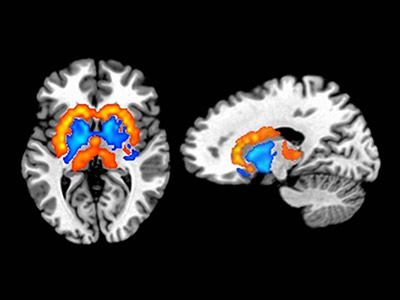
People who are obese may be more susceptible to environmental food cues than their lean counterparts due to differences in brain chemistry that make eating more habitual and less rewarding, according to a National Institutes of Health study published in Molecular Psychiatry .
Researchers at the NIH Clinical Center found that, when examining 43 men and women with varying amounts of body fat, obese participants tended to have greater dopamine activity in the habit-forming region of the brain than lean counterparts, and less activity in the region controlling reward. Those differences could potentially make the obese people more drawn to overeat in response to food triggers and simultaneously making food less rewarding to them. A chemical messenger in the brain, dopamine influences reward, motivation and habit formation.
“While we cannot say whether obesity is a cause or an effect of these patterns of dopamine activity, eating based on unconscious habits rather than conscious choices could make it harder to achieve and maintain a healthy weight, especially when appetizing food cues are practically everywhere,” said Kevin D. Hall, Ph.D., lead author and a senior investigator at National Institute of Diabetes and Digestive and Kidney Diseases (NIDDK), part of NIH. “This means that triggers such as the smell of popcorn at a movie theater or a commercial for a favorite food may have a stronger pull for an obese person — and a stronger reaction from their brain chemistry — than for a lean person exposed to the same trigger.”
Study participants followed the same eating, sleeping and activity schedule. Tendency to overeat in response to triggers in the environment was determined from a detailed questionnaire. Positron emission tomography (PET) scans evaluated the sites in the brain where dopamine was able to act.
Image of brain
Dopamine signaling is thought to play a central role in orchestrating the processes of reward, motivation and habit formation. The depicted orange/yellow regions indicate where brain dopamine activity was positively related to obesity. These areas include the dorsolateral striatum which mediates the process of habit formation. The blue regions show where dopamine activity was negatively related to obesity and includes the ventromedial striatum, a brain region that controls reward and motivation.
According to the Centers for Disease Control and Prevention, more than one-third of U.S. adults are obese. Obesity-related conditions include heart disease, type 2 diabetes and certain types of cancer, some of the leading causes of preventable death.
“These findings point to the complexity of obesity and contribute to our understanding of how people with varying amounts of body fat process information about food," said NIDDK Director Griffin P. Rodgers, M.D. "Accounting for differences in brain activity and related behaviors has the potential to inform the design of effective weight-loss programs.”
The study did not demonstrate cause and effect among habit formation, reward, dopamine activity, eating behavior and obesity. Future research will examine dopamine activity and eating behavior in people over time as they change their diets, physical activity, and their weight.

Saturday, April 19, 2014

4/19/14 Health News: FOOD-SAFETY TIPS FOR EASTER EGGS ♦ Anti-vaccine Movement is Giving Diseases a 2nd Life ♦ Overweight/Obese Youth May Not Receive Needed Lab Screening

FOOD-SAFETY TIPS FOR EASTER EGGS
Easter Sunday is coming right up, so here are some important food-safety tips to remember this time of year when you’re decorating, cooking and/or hiding Easter eggs: Be sure and inspect the eggs before purchasing them, making sure they are not dirty or cracked. Dangerous bacteria may enter a cracked egg. Store eggs in their... Continue Reading   

Anti-vaccine Movement is Giving Diseases a 2nd Life
Recent measles outbreaks in New York, California and Texas are examples of what could happen on a larger scale if vaccination rates dropped, says Anne Schuchat, the CDC's director of immunizations and respiratory diseases. Officials declared measles, which causes itchy rashes and fevers, eradicated in the United States in 2000. Yet this year, the disease is on track to infect three times as many people as in 2009. That's because in most cases people who have not been vaccinated are getting infected by others traveling into the United States. Then, Schuchat says, the infected spread it in their communities.Continue Reading

Patients Nationwide Now Have Direct Access to Lab Test Results Through Quest Diagnostics
Quest Diagnostics has launched MyQuest by Care360 at QuestDiagnostics.com/MyQuest, a secure patient portal that enables patients to view copies of their lab test reports from Quest Diagnostics. Quest Diagnostics provides direct patient access to lab information through a range of free channels which include a patient portal and mobile health app as well as traditional mail, fax and email. Quest has provided several channels for patients to request and receive their lab reports in select states where direct patient access had been allowed prior to the new federal rule.Continue Reading


Overweight/Obese Youth May Not Receive Needed Lab Screening

Maryland Medicaid/Children's Health Program providers are inadequately coding diagnoses of overweight and obesity in children and adolescents, according to a CDC study published in the April 11 issue of the Morbidity and Mortality Weekly Report. Furthermore, at-risk overweight and obese children and adolescents are not receiving recommended laboratory screening tests for obesity-related conditions.Source:Continue Reading