Showing posts with label mental health. Show all posts

Tuesday, December 22, 2015

Health Research: Multiplying teeth, literally ♦ Could peroxisomes be key to stopping West Nile and Dengue viruses? ♦ New generation of synthetic bone grafts created

Multiplying teeth, literally Researchers have found a way to--literally--multiply teeth. In mice, they were able to extract teeth germs--groups of cells formed early in life that later develop into teeth, split them into two, and then implant the teeth into the mice's jaws, where they developed into two fully functional teeth.
Mental health status prior to bladder cancer surgery can indicate risk of complications A patient's mental health prior to surgery can influence postoperative outcomes. Removal of the bladder, or radical cystectomy  is an effective treatment for locally advanced bladder cancer, but complications occur in as many as 66% of patients Researchers found that patients whose self-assessment of mental health was low suffered more high grade complications in the 30 days following surgery than patients with higher self-assessments
Could peroxisomes be key to stopping West Nile and Dengue viruses? A new discovery could open the door to one day treat or prevent diseases caused by West Nile virus and Dengue virus infections. Together the viruses are the cause of tens of millions of infections each year. Currently there are no treatments or vaccines available.
New generation of synthetic bone grafts created A new type of synthetic bone graft has been developed, which boosts the body's own ability to regenerate bone tissue and could produce better outcomes for patients. The research found that the new type of graft called Inductigraft was able to guide bone tissue regeneration in as little as four weeks.

Friday, November 20, 2015

Health Research: .How to eliminate pain tied to tooth decay ♦ 3-D mapping a new drug-delivery too ♦ Gene mutation linked to reckless drunken behavior

Gene mutation linked to reckless drunken behavior Researchers of the University of Helsinki, Finland, have identified a genetic mutation which renders carriers susceptible to particularly impulsive and reckless behavior when drunk
.How to eliminate pain tied to tooth decay An abundance of sweets during the holidays increases the threat of cavities and tooth sensitivity. Researchers have found a way to regrow enamel to protect teeth. Perhaps one day their gel could be used as teeth strips or in a mouth guard.
3-D mapping a new drug-delivery tool Scientists have developed a new method that can 'see' inside dispersed cubosomes (dispersed cubic liquid crystalline phases) with unprecedented detail. The breakthrough can help to improve their design significantly for better drug or nutrient delivery.
Tougher disability benefit assessment may have taken 'serious' toll on mental health The introduction of a more stringent test to assess eligibility for disability benefit in England may have taken a 'serious' toll on the nation's mental health.

Friday, September 25, 2015

Health News: Human Poo found in kebab shop food ♦ German egg farmer arrested in fatal UK salmonella outbreak ♦FDA: be careful of unpasteurized apple cider this fall

Human Poo found in kebab shop food  More than 140 kebab shop customers picked up a rare form of food poisoning and one girl nearly died, after unknowingly eating human poo. Traces of human feces were detected in food served at a kebab shop owned by Mohammad Abdul Basit and Amjad Bhatti. The pair have been forced to pay more than £28,000 in compensation after 142 people became ill.
German egg farmer arrested in fatal UK salmonella outbreak  German egg farmer whose contaminated eggs caused a Salmonella outbreak at a hospital in Birmingham, England, has reportedly been arrested in connection with the death of an Austrian man. Five patients died at Heartlands Hospital in the Bordesley Green area of Birmingham, and the bacteria were traced back to eggs from the Bayern Ei (Bavarian Egg)
FDA: be careful of unpasteurized apple cider this fall  It’s PSL season again. For the uninitiated, this means that Starbucks is again selling its beloved Pumpkin Spice Latte (PSL), and you can barely look at Pinterest and food blogs without seeing recipes for various pumpkin-flavored treats. This time of year is also sometimes referred to as fall or autumn. But apple cider also pops
Negative spiritual beliefs associated with more pain and worse physical, mental health Individuals who blame karma for their poor health have more pain and worse physical and mental health, according to a new study. Targeted interventions to counteract negative spiritual beliefs could help some individuals decrease pain and improve their overall health.
If you’re sitting down, don’t sit still, new research suggests New research suggests that the movements involved in fidgeting may counteract the adverse health impacts of sitting for long periods.

Sunday, September 13, 2015

Women's Health How childhood stress can affect female fertility ♦ Fewer women getting minimally invasive hysterectomies ♦ tress main cause of smoking after childbirth

Stress main cause of smoking after childbirth Mothers who quit smoking in pregnancy are more likely to light up again after their baby is born if they feel stressed. Researchers studied more than 1,000 new mothers and found that the stress of caring for a newborn, sleepless nights, social pressure, and the idea that they no longer need to protect the baby -- all contribute to relapse.They also found that women who felt they were being supported by a partner were less likely to start smoking again.
How childhood stress can affect female fertility Can events you endured as a child really impact your ability to have children yourself? New research examines the mechanism by which adverse experiences in childhood impact female fertility. Researchers explore the hypothesis that negative experiences in childhood can result in menstrual cycle irregularities, which consequently impact fertility. They relate their hypothesis to life-history theory, which talks of balancing the preservation of one’s health and the production of offspring that will survive to reproduce themselves.
Postnatal mental health: Are women getting the support they need? There is a need for postnatal support that encompasses all mental health issues, not only postnatal depression, new research suggests. Common postnatal mental health symptoms include tearfulness, anxiousness, feeling stressed, isolated, lonely, angry and other emotions.
Fewer women getting minimally invasive hysterectomies since FDA guidelines A nearly quarter increase in hospital readmissions and 27 percent increase has been found in major postoperative complications after hysterectomies in Michigan following FDA communication on morcellation.

Thursday, September 10, 2015

Seniors Health: Anti-aging tricks from dietary supplement ♦ Early warning gene signature for Alzheimer's ♦ New directions in mental health care for older adults

Anti-aging tricks from dietary supplement seen in mice The dietary supplement alpha lipoic acid can stimulate telomerase, the enzyme that lengthens chromosomes' protective caps, with positive effects in a mouse model of atherosclerosis, scientists report. The discovery highlights a potential avenue for the treatment for chronic diseases.
Men, people over 65 sleep better when they have access to nature Men and persons age 65 and older who have access to natural surroundings, whether it's the green space of a nearby park or a sandy beach and an ocean view, report sleeping better
Early warning gene signature for Alzheimer's A 'gene signature' that could be used to predict the onset of diseases, such as Alzheimer's, years in advance has been developed by scientists. The study aimed to define a set of genes associated with 'healthy aging' in 65 year olds. Such a molecular profile could be useful for distinguishing people at earlier risk of age-related diseases.
New directions in mental health care for older adults The aging of the population, shifting diagnostic criteria, and new health care policy initiatives are some of the factors driving changes in mental health treatment for older Americans, according to new research.

Tuesday, August 11, 2015

Children's Health:Childhood physical, sexual abuse linked to ulcerative colitis ♦ Depressed teens at risk of heart disease,♦ Identifying children at risk for sleep-disordered breathing

Kindergarten boys less interested in language activities A Norwegian study of kindergarten children reveals that girls are more interested in language activities than boys. As a result boys may receive less linguistic stimulation and become less prepared for school than girls.
Childhood physical, sexual abuse linked to ulcerative colitis Adults who were exposed to childhood physical or sexual abuse were approximately twice as likely to have ulcerative colitis.
Depressed teens at risk of heart disease, early monitoring urged Teens with major depression or bipolar disorder are at high risk of early heart and blood vessel disease. For the first time, experts urge early monitoring and assertive intervention to reduce risk factors for heart and blood vessel disease among teens with major depression or bipolar disorder.
Anesthesia professionals key to identifying children at risk for sleep-disordered breathing prior to surgery Knowing which risks may come into play before or during surgery is especially important where children are concerned. Implementation of a screening questionnaire helps anesthesia professionals identify children with symptoms of sleep-disordered breathing (SDB) before undergoing a general anesthetic
Kids, teens win when mental health providers team with family doctors Children and adolescents who receive integrated mental health and medical treatment are 66 percent more likely to have a good outcome than those who receive more traditional primary care.

Senior Health: Getting to the bottom of aging ♦ Seniors at high risk for readmission after ambulatory surgery ♦ Many seniors overestimate their mobility

Picking up the phone to improve mental health in seniors Therapy provided via telephone for older adults in rural areas is effective in treating anxiety disorder, a new study has demonstrated. Experts write that the health-care system lacks the capacity to help the growing elderly population and that relying too heavily on sedative medications isn’t the answer.
Many seniors overestimate their mobility Many seniors who visit emergency departments require more assistance with physical tasks than they think they do, which may lead to hospital readmission later on.
Seniors at high risk for readmission after ambulatory surgery Patients 65 and older who have ambulatory surgery are 54 percent more likely to be readmitted to the hospital within 30 days than younger patients, regardless of their health before surgery, reports a large national study. The likely cause, based on previous research, is difficulty understanding medication dosing and discharge instructions, as well as cognitive impairment among older patients. About 9 million ambulatory surgeries annually are performed on patients 65 and older.
Out-of-home activities may promote older persons' physical activity It is beneficial to stimulate older people to leave home to increase their level of physical activity, suggests a new study that showed that older people were more physically active on the days when they left home and went further away
Getting to the bottom of aging The question of why we age is one of the most fascinating questions for humankind, but nothing close to a satisfactory answer has been found to date. Scientists have now taken one step closer to providing an answer. They have conducted a study in which, for the first time, they have shown that a certain area of the cell, the so-called endoplasmic reticulum, loses its oxidative power in advanced age. If this elixir of life is lost, many proteins can no longer mature properly. At the same time, oxidative damage accumulates in another area of the cell, the cytosol. This interplay was previously unknown and now opens up a new understanding.

Sunday, July 19, 2015

Autism Research: Mechanism for altered pattern of brain growth in autism spectrum disorder discovered ♦ Mechanism for altered pattern of brain growth in autism spectrum disorder discovered

Dads' parenting of children with autism improves moms' mental health Fathers who read to, care for children with autism at 9 months reduce mothers' levels of depression and stress when children reach age 4.
Mechanism for altered pattern of brain growth in autism spectrum disorder discovered Scientists have uncovered how mutations in a specific autism risk gene alter the basic trajectory of early brain development in animal models.
Review examines nutritional issues related to autism spectrum disorder There is consensus that children with autism have selective eating patterns, food neophobia, limited food repertoire, and sensory issues. Researchers now report that there are inconsistent results about the extent and type of nutrient deficiencies.
Miniature brains made from patient skin cells reveal insights into autism Understanding diseases like autism and schizophrenia that affect development of the brain has been challenging due to both the complexity of the diseases and the difficulty of studying developmental processes in human tissues. Researchers have now made steps toward overcoming these challenges by converting skin cells from autism patients into stem cells and growing them into tiny brains in a dish, revealing unexpected mechanisms of the disease.

Potential target pathway may pave way for new therapeutic approaches for fragile X syndrome, autism The protein APP plays a significant role in the development of fragile X syndrome (FXS) at young stages, a new study suggests. Researchers identified an unexpected biological pathway as a promising target to ameliorate deficits associated with FXS and autism.

Tuesday, July 7, 2015

Health Research:Crowd computing to improve water filtration ♦ Many physicians, clinicians work sick despite risk to patient ♦ Restraint, confinement still an everyday practice in mental health settings

New insights into the genetics of drug-resistant fungal infections A study offers new insights into how virulent fungi adapt through genetic modifications to fight back against the effects of medication designed to block their spread, and how that battle leaves them temporarily weakened. These insights may provide clues to new ways to treat notoriously difficult-to-cure fungal infections like thrush and vaginitis.
Restraint, confinement still an everyday practice in mental health settings Providers of mental-health services still rely on intervention techniques such as physical restraint and confinement to control some psychiatric hospital patients, a practice that can cause harm to both patients and care facilities.
Crowd computing to improve water filtration Scientists propose a novel nanotechnology-based strategy to improve water filtration. The project was an experiment in crowdsourced computing -- carried out by over 150,000 volunteers who contributed their own computing power to the research.
Researchers develop world's most sensitive test to detect infectious disease, superbugs Infectious diseases such as hepatitis C and some of the world's deadliest superbugs -- C. difficile and MRSA among them -- could soon be detected much earlier by a unique diagnostic test, designed to easily and quickly identify dangerous pathogens, experts report after developing the world's most sensitive detection test.
Many physicians, clinicians work sick despite risk to patients, survey finds Many physicians and advanced practice clinicians, including registered nurse practitioners, midwives and physician assistants, reported to work while being sick despite recognizing this could put patients at risk.

Monday, May 18, 2015

Controlling Brain Circuits

Researchers developed a tool that can turn specific sets of neurons on and off in mice to affect behavior.This technology will help scientists study how various brain circuits affect complex mental functions, including those involved in mental health and disorders.
In 2007, a team led by Dr. Bryan L. Roth of the University of North Carolina School of Medicine developed a technology dubbed DREADD—Designer Receptors Exclusively Activated by Designer Drugs. DREADDs are protein receptors altered in a lab so that only a specific synthetic chemical can bind and activate them. Scientists can then create genetically modified animals in which only a specific set of neurons contains the receptor. Only neurons expressing the DREADD respond to the compound. Thus, scientists can explore what happens when those particular neurons are turned on or off.
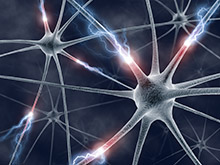
Neurons firing.
DREADD technology allows researchers to use chemicals to switch neuron firing on and off. Image credit: ktsimage/iStockphoto.
Until recently, all DREADDs were activated by a chemical called clozapine-N-oxide (CNO). As a result, scientists could only use them to control neuron firing in one direction—either increasing or decreasing. Creating a new type of DREADD activated by a different chemical would permit scientists to influence neurons in 2 different directions in the same animal.
A team of researchers led by Roth developed a new DREADD by changing the structure of a naturally occurring receptor called the κ-opioid receptor (KOR). The work was supported by the NIH BRAIN Initiative, which is managed and funded by several NIH components. The study was published online on April 30, 2015, in Neuron.
To create a KOR DREADD, or KORD, the researchers mutated KOR so that it was activated by a synthetic chemical called salvinorin B. This chemical could only bind very weakly to KOR and not at all to other receptors in the body.
When the team gave salvinorin B to genetically modified mice that had KORD-expressing neurons, only those neurons were affected. When neurons related to movement expressed KORD, salvinorin B caused the mice to move around more. When neurons related to appetite expressed KORD, salvinorin B changed the amount the mice ate. When salvinorin B was given to mice that lacked KORD-expressing neurons, the chemical had no effect on behavior.
The researchers next created genetically modified mice whose brains contained a set of neurons expressing both KORD and a CNO-activated DREADD called hM3Dq. Both movement and feeding could be altered by giving the mice either salvinorin B or CNO. For the first time, scientists could use chemicals to control a neuronal circuit in 2 directions in the same animal.
“With its new push-pull control, this tool sharpens the cutting edge of research aimed at improving our understanding of brain circuit disorders, such as schizophrenia and addictive behaviors,” says NIH Director Dr. Francis S. Collins.

Saturday, May 9, 2015

Childrens Health: Possible role of gut bacteria in autism ♦ Children's sleep, mental health are related ♦ Fracture' prints, not fingerprints, help solve child abuse cases

Children's sleep, mental health are related Toddlers who take a long time to fall asleep or wake up many times during the night have put many a desperate mom and dad to the test. Tired parents are often told that night waking is part of toddlerhood, and that it will soon pass on its own, but this is not the case for everyone.
Fracture' prints, not fingerprints, help solve child abuse cases Much like a finger leaves its own unique print to help identify a person, researchers are now discovering that skull fractures leave certain signatures that can help investigators better determine what caused the injury
Possible role of gut bacteria in autism Autism:  for a condition that continues to confound researchers and physicians alike, a doctor believes that research into the role of the microbiome could hold a key to new treatments and understanding of autism.
Clinical decision tools in electronic medical records can reduce childhood radiation exposure Childhood exposure to ionizing radiation increases lifetime malignancy risk, but a team of researchers has found that with just a little bit of education, the risk can be significantly reduced. Currently, up to 40% of computed tomography, or CT, scans are ordered unnecessarily

Thursday, April 23, 2015

Brain Research:Improve effectiveness of transcranial magnetic stimulation ♦ New tactic targets brain tumors ♦ Guideline advises when to treat a first seizure

New guideline advises when to treat a first seizure A new guideline found that administering an antiepileptic medication immediately after a first seizure reduces the risk of having another seizure within two years
New tactic targets brain tumors Patients who are obese, diabetic or both have the highest incidence of brain tumors, and they offer a clue that insulin is a factor for some glioblastoma patients. But a new study suggests drugs tested on such tumors targeted the wrong molecules.
Researchers show how blood-brain barrier is maintained In a new study, researchers have made insights into how the blood-brain barrier, or BBB, is maintained, identifying a protein key to the process. Delivering this protein to mice with the rodent equivalent of MS improved their symptoms.
Lessons to be learned from Caribbean treatment of mental health With Caribbean people in the UK nine times more likely than white British counterparts to be diagnosed with schizophrenia, a mental health researcher has visited Jamaica and Barbados to find out what lessons can be learned.
New brain mapping model could improve effectiveness of transcranial magnetic stimulation Brain researchers have developed a new brain mapping model that could improve the success rate of transcranial magnetic stimulation in treating conditions including depression, neuropathic pain, and stroke. The model helps pinpoint target sites during TMS, a procedure that uses magnetic fields to stimulate nerve cells in the brain to alleviate or eliminate symptoms of stroke, depression, and attention disorders.