Showing posts with label Tumors. Show all posts

Wednesday, January 6, 2016

Cancer Research: Three hits to fight lung cancer ♦ Novel RNA delivery system may treat incurable blood cancers ♦ Quickly identifying tumors by using antibodies

New breast cancer drug may be effective against other types of cancer Palbociclib, a new oral drug whose efficacy in combating breast cancer has been demonstrated alone and in combination with endocrine therapy, also has potential to combat other types of cancer, according to a literature review and additional original research.
Quickly identifying tumors by using antibodies Antibodies combat viruses and bacteria. They also attach themselves to cancer cells – in a typical, characteristic way. Scientists are using this property to detect cancer cells in tissue samples. Such rapid tests can already be applied by surgeons during operations – within a few minutes and without expensive equipment.
Three hits to fight lung cancer Cancers with KRAS-related gene mutations might benefit from a triple therapy with two experimental drugs plus radiation therapy, a new study in mice has shown
Novel RNA delivery system may treat incurable blood cancers Mantle Cell Lymphoma is considered the most aggressive known blood cancer, and available therapies are scarce. A new study offers tangible hope of curing the currently incurable cancer -- and others like it.

Tuesday, December 22, 2015

Cancer Research:'Metal' drugs to fight cancer ♦ Prostate cancer discovery may make it easier to kill cancer cells ♦ Tumors hijack export pathway to resist chemotherapy

Scientists study single 'transformer' proteins with role in cancer A new study shows how a protein involved in cancer twists and morphs into different structures. This protein when mutated, has been shown to interfere with cells' suppressing ability
Tumors hijack export pathway to resist chemotherapy A novel strategy that aggressive sarcomas use to promote drug resistance and cancer's spread has been uncovered by researchers. They've discovered evidence of how to reverse the process.
'Metal' drugs to fight cancer. The mechanism of action of metal-based chemotherapy drugs (the most widely used for treating common cancers like testicular or ovarian cancer
More than one-third of patients with metastatic cancer continue to work A new analysis indicates that many patients continue working after being diagnosed with metastatic cancer, but a heavy burden of symptoms may prevent them.. The study illustrates the need to treat difficult symptoms so that patients can maintain their employment
Prostate cancer discovery may make it easier to kill cancer cells A newly discovered connection between two common prostate cancer treatments may soon make prostate cancer cells easier to destroy. Drugs that could capitalize on the discovery are already in the pipeline

Saturday, November 14, 2015

Health Research: New vaccine could prevent high cholesterol ♦ Novel stem cell line avoids risk of introducing transplanted tumors ♦ Hospital patients given anti-heartburn drugs have higher risk of dying

First, do no harm: Hospital patients given anti-heartburn drugs have higher risk of dying Right now, in any US hospital, about half of the patients have a prescription for an acid-reducing drug to reduce heartburn or prevent bleeding in their stomach and gut. But that well-intentioned drug may actually boost their risk of dying during their hospital stay, by opening them up to infections that pose more risk than bleeding would.
Novel stem cell line avoids risk of introducing transplanted tumors A new “progenitor cell” capable of unlimited expansion and differentiation into mature kidney cells, but without the risk of forming tumors.
New vaccine could prevent high cholesterol A new cholesterol-lowering vaccine leads to reductions in 'bad' LDL cholesterol in mice and macaques, according to new research.The authors of the study say the vaccine has the potential to be a more powerful treatment than statins alone
Global health team pioneers development of a new antimalarial drug screening model A new screening model to classify antimalarial drugs and to identify drug targets for the most lethal strain of malaria, Plasmodium falciparum, has been developed by a group of scientists

Friday, November 6, 2015

CDC researchers link cancer cells from parasite to human tumors

Unique case raises questions about misdiagnosis and treatment
Scientists at the Centers for Disease Control and Prevention have discovered cancer cells originating in a common tapeworm may take root in people with weakened immune systems, causing cancer-like tumors. It is the first known case of a person becoming ill from cancer cells that arose in a parasite – in this case, Hymenolepis nana, the dwarf tapeworm.
The report, in the Nov. 5 issue of the New England Journal of Medicine, raises concern that other similar cases, if they occur, may be misdiagnosed as human cancer – especially in less developed countries where this tapeworm and immune-system-suppressing illnesses like HIV are widespread.
“We were amazed when we found this new type of disease – tapeworms growing inside a person essentially getting cancer that spreads to the person, causing tumors,” said Atis Muehlenbachs, M.D., Ph.D., staff pathologist in CDC’s Infectious Diseases Pathology Branch (IDPB) and lead author of the study. “We think this type of event is rare. However, this tapeworm is found worldwide and millions of people globally suffer from conditions like HIV that weaken their immune system. So there may be more cases that are unrecognized. It’s definitely an area that deserves more study.”

Wednesday, November 4, 2015

Technique distinguishes brain tumors at the margins

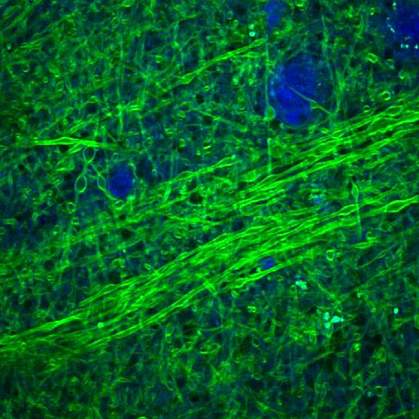
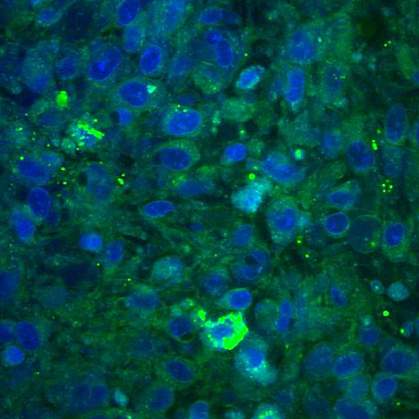
Brain tissue.
Brain tumor tissue with cells in a disordered pattern.SRS microscope images, with lipid in green and protein in blue. Normal brain contains sparse cells with bundles of nerve fibers, called axons (top), but brain tumor tissue is full of cells in a disordered pattern (bottom). These are difficult to differentiate during surgery, making it hard for a surgeon to know where the tumor stops.University of Michigan Health System
Recognizing where tumors end and normal brain tissue begins is a major challenge during surgery. Removing healthy tissue can cause neurologic problems, but leaving tumor tissue behind can allow the cancer to spread again.
Researchers have been testing different ways to tell the difference between tumors and normal tissue during surgery. One promising approach is called stimulated Raman scattering (SRS) microscopy. Certain chemical bonds in molecules can produce unique patterns of scattered light called Raman spectra. Shining lasers on tissues can excite particular Raman frequencies without causing harm. The weak light signals the tissues emit depend on their mix of molecules, such as lipids and proteins. SRS microscopy could potentially be used to generate images during surgery, eliminating the time-consuming process of removing and then analyzing the tissue.
In past work, an NIH-funded research team led by Dr. Sunney Xie at Harvard University and Dr. Daniel Orringer at the University of Michigan Medical School showed that SRS microscopy could recognize the difference between tumors and normal brain tissue in living mice. It could also be used in excised surgical samples to detect human glioblastoma, a diffuse form of malignant brain cancer for which tumor margins can’t be easily discerned.
In their latest study, the researchers evaluated the ability of SRS microscopy to detect tumor infiltration in tissue samples from 22 people with a range of brain and spinal tumors. The scientists collected SRS images at 2 Raman frequencies selected to detect proteins and lipids. For comparison, they froze the samples and stained them with hematoxylin and eosin (H&E), the current approach used to diagnose brain tumors. The work appeared on October 14, 2015, in Science Translational Medicine.
The group had neuropathologists rate 75 SRS images and 75 similar H&E images. They found the techniques were equally effective at detecting tumor infiltration.
The team next set out to create an automated method to detect tumor infiltration during surgery. They built a program that quantified the number of cell nuclei, density of nerve cells, and protein/lipid ratio in each image based on the SRS imaging data. The resulting “classifier” program consistently agreed with pathologists in distinguishing tumor-infiltrated brain tissue.
The team also showed that SRS microscopy could detect tumor infiltration up to 10 mm beyond the gross margin of a glioblastoma tumor, where it would be undetectable to a surgeon.
“The ability to determine tumor margins without having to send samples to a pathologist could increase patient safety and improve outcomes by shortening the length of surgeries and reducing the number of cases where cancer cells are left behind,” says Dr. Richard Conroy of NIH’s National Institute of Biomedical Imaging and Bioengineering (NIBIB), which helped fund the study.
The researchers are now working to develop methods for using SRS microscopes in the operating room to improve the accuracy and safety of brain tumor surgery.
—by Harrison Wein, Ph.D.

Thursday, October 15, 2015

Cancer Research; Prostate cells undergo 'reprogramming' to form tumors ♦ UV light robots cut C. diff transmissions by 25 percent on cancer patient floors ♦ Malaria vaccine provides hope for a general cure for cancer

Prostate cells undergo 'reprogramming' to form tumors Researchers link early prostate cancer to alterations in a program controlled by a 'master regulator' of cell growth. These epigenetic changes point to new avenues for preventing and treating prostate cancer.
UV light robots cut C. diff transmissions by 25 percent on cancer patient floors New research from infection control specialists found that ultraviolet robots helped reduce the rates transmission of the common bacterial infection known as Clostridium difficile among cancer inpatients -- mostly blood cancer patients, a group more vulnerable to hospital-acquired infections -- by 25 percent. The interventions also saved about $150,000 in annual direct medical costs.
Malaria vaccine provides hope for a general cure for cancer The hunt for a vaccine against malaria in pregnant women has provided an unexpected side benefit for researchers, namely what appears to be an effective weapon against cancer. The scientists behind the vaccine aim for tests on humans within four years
The dilemma of screening for prostate cancer Primary care providers are put in a difficult position when screening their male patients for prostate cancer -- some guidelines suggest that testing the general population lacks evidence whereas others state that it is appropriate in certain patients. Now a new perspective piece offers some guidance on when to screen patients and how to involve them in decisions about screening and treatment.
Lack of referrals for suspected cancer leads to more deaths Deaths are higher in cancer patients whose GPs do not regularly send patients through the two-week urgent referral route for suspected cancer, suggests a British study

Thursday, September 17, 2015

Children's Health: Smoke from forest fires aggravates respiratory health of children.♦ New drugs could stop growth of drug-resistant childhood tumors

Researchers document self-reported use of new, uncommon synthetic drugs by teens, young adults This is the first study reporting on use of a variety of new drugs in a nationally representative U.S. sample. Researchers are confident that use was severely underreported, as the subjects were not asked about most of these new drugs specifically. The researchers advocate for health surveys to ask about use of new drugs, in addition to traditional drugs such as marijuana and cocaine, in order to quickly pick up on potential drug epidemics.
New drugs could stop growth of drug-resistant childhood tumors New drugs are needed to treat the most common type of childhood brain tumor and could also be effective against skin cancer, scientists report. They tested a drug called Roflumilast in mice with a brain tumor that is resistant to Vismodegib, the drug in current use. Roflumilast is normally used to treat inflammatory lung diseases. It dramatically inhibited tumor growth from the first day of treatment.
Smoke from forest fires aggravates respiratory health of children. Air pollution from forest fires aggravates the respiratory health of children.Researchers conclude that this study provides scientific evidence that wildfires, such as those that devastated a large part of the province of Valencia, Spain in 2012, affect the health of children, especially of those who are more susceptible.
Video game warnings fall far short in rating tobacco content Video games are not adequately rated for tobacco content video gamers are being widely exposed to tobacco imagery
Solo grandparents raising grandchildren at greater risk than parents for serious health problems Single grandparents raising grandchildren are more vulnerable to poor physical and mental health than are single parents. These caregivers may be at greater risk for diminished physical capacity and heightened prevalence of depression.

Friday, August 28, 2015

Health Research: How language shapes our ability to process information ♦ Advance toward more effective, long-lasting flu vaccine ♦ Antibiotic use linked to type 2 diabetes diagnosis

Bilingualism and the brain: How language shapes our ability to process information In an increasingly globalised world, there are many practical benefits to speaking two languages rather than one. Even in the US, which is largely monolingual, more than 20 percent of the population is now thought to speak a second language
Major advance toward more effective, long-lasting flu vaccine Medical researchers have found a way to induce antibodies to fight a wide range of influenza subtypes -- work that could one day eliminate the need for repeated seasonal flu shots.
Flu vaccinations make sense for elderly, study suggests Amid debate about whether flu vaccination really helps the elderly, a new study provides fresh evidence that it does. Researchers found vaccines well matched to the year's flu strain significantly reduce deaths and hospitalizations compared to when the match is poor, suggesting that vaccination indeed makes a difference. They project that well-matched vaccines saves thousands of lives every flu season.
Blood vessel cells help tumors evade the immune system A new study is the first to suggest that cells in the tumor blood vessels contribute to a local environment that protects the cancer cells from tumor-killing immune cells. The results can contribute to the development of better immune-based cancer therapies.
Antibiotic use linked to type 2 diabetes diagnosis People who developed type 2 diabetes tended to take more antibiotics in the years leading up to the diagnosis than people who did not have the condition.

Saturday, June 27, 2015

Cancer Research: Targeting telomeres could improve chemotherapy ♦ New colon cancer culprit found in gut microbiome ♦ DNA shed from head and neck tumors detected in blood, saliva

Current blood cancer drug prices not justified The costs associated with cancer drug prices have risen dramatically over the past 15 years, which is of concern to many top oncologists.Researchers concluded that the majority of existing treatments for hematologic, or blood, cancers are currently priced too high to be considered cost-effective in the United States
DNA shed from head and neck tumors detected in blood, saliva On the hunt for better cancer screening tests, scientists led a proof of principle study that successfully identified tumor DNA shed into the blood and saliva of 93 patients with head and neck cancer.
Targeting telomeres, the timekeepers of cells, could improve chemotherapy Telomeres, specialized ends of our chromosomes that dictate how long cells can continue to duplicate themselves, have long been studied for their links to the aging process and cancer. Researchers show how disabling telomere protection during cell division prompts cell death.
Tiny particles in blood useful for early diagnosis of pancreatic cancer A protein encoded by the gene glypican-1 (GPC1) present on cancer exosomes may be used as part of a potential non-invasive diagnostic and screening tool to detect early pancreatic cancer, potentially at a stage amenable to surgical treatment,

New pancreatic cancer culprit found in gut microbiome Changes in the gut bacteria of colon cancer patients indicate that some virulent bacteria could be linked to the progression of the disease. The findings could eventually be used to identify a virulence signature in these cancers and help doctors predict how bacterial changes in patients' guts could affect their prognosis.

Tuesday, May 26, 2015

Cancer Research: Nanotherapy effective in mice with multiple myelom ♦ Researchers unveil new gene subgroup in prostate canc ♦ Removing mutant p53 significantly regresses tumors


Nanotherapy effective in mice with multiple myeloma A nanoparticle-based therapy is effective in treating mice with multiple myeloma, a cancer of immune cells in the bone marrow. Targeted specifically to the malignant cells, these nanoparticles protect their therapeutic cargo from degradation in the bloodstream and greatly enhance drug delivery into the cancer cells.
36-percent increase in pediatric patients treated with proton therapy, new survey shows survey indicates a steady increase in the number of pediatric patients who are being treated with proton radiation therapy for cancerous and noncancerous tumors. Based on a survey of all proton therapy centers in the U.S, the number of pediatric patients treated with proton therapy grew to 722 in 2013
Ovarian cancer-specific markers set the stage for early diagnosis, personalized treatments Six mRNA isoforms (bits of genetic material) produced by ovarian cancer cells but not normal cells have been identified by scientists, opening up the possibility that they could be used to diagnose early-stage ovarian cancer
Researchers unveil new gene subgroup in prostate cancer Prostate cancer researchers have drawn a molecular portrait that provides the first complete picture of localized, multifocal disease within the prostate and also unveils a new gene subgroup driving it.
Removing mutant p53 significantly regresses tumors, improves cancer survival For two decades cancer researchers have looked unsuccessfully for ways to develop compounds to restore the function of mutant p53 proteins. Now a team of researchers has discovered that eliminating the abnormally stabilized mutant p53 protein in cancer in vivo has positive therapeutic effects, showing that tumors regress significantly and survival increases.

Thursday, May 21, 2015

Cancer Research: Organic nanoparticles, more lethal to tumors ♦ Study discovers how pancreatic cancer spreads to the liver ♦ Non-invasive colon cancer screening for African-Americans

Smoking induces early signs of cancer in cheek swabs DNA damage caused by smoking can be detected in cheek swabs. The study provides evidence that smoking induces a general cancer program that is also present in cancers which aren't usually associated with it -- including breast and gynecological cancers.
Study discovers how pancreatic cancer spreads to the liver Investigators has illuminated the precise molecular steps that enable pancreatic cancer to spread to the liver -- the event that makes the most common form of the disease lethal. By understanding this process, their discovery can lead to targeted treatments that delay metastasis, and offer clinicians a new biomarker to test for the earliest signs of pancreatic cancer.
Non-invasive colon cancer screening may be promising for African-Americans, Stool DNA (sDNA) testing, a new non-invasive technology for colon cancer screening, is a promising alternative to colonoscopy for African Americans.  sDNA sensitivity and specificity of advanced lesions and all adenomas (polyps) in African Americans was similar to or exceeded that of other racial group.
Chemo before surgery benefits patients with advanced ovarian cancer Women with advanced ovarian cancer have fewer side effects and tend to have a better quality of life if given chemotherapy before surgery. Delaying surgery also reduced the amount of time spent in the hospital after surgery.
Organic nanoparticles, more lethal to tumors Carbon-based nanoparticles could be used to sensitize cancerous tumours to proton radiotherapy and induce more focused destruction of cancer cells, a new study shows. Radiotherapy used in cancer treatment is a promising treatment method, albeit rather indiscriminate. Indeed, it affects neighboring healthy tissues and tumors alike. Researchers have thus been exploring the possibilities of using various radio-sensitizers; these nanoscale entities focus the destructive effects of radiotherapy more specifically on tumor cells.

Saturday, May 16, 2015

Cancer Research: Starving cancer instead of feeding it poison ♦ Drug micro-factory engineered to attack tumors ♦ Men benefit from vaccinating girls against HPV

Starving cancer instead of feeding it poison An enzyme drug can remove asparagine, an essential nutrient for some cancers, but it also degrades glutamine, necessary for all human cells. But an induced mutation in the drug permits it to reduce asparagine without affecting glutamine.
Men benefit from vaccinating girls against HPV but remain at risk of some cancers Men benefit indirectly from vaccinating girls against human papillomavirus, but remain at risk of cancers associated with the virus. Human papillomavirus is one of the most common sexually transmitted infections and many countries vaccinate girls to protect them against cervical cancer in later life.
Campaign increases mouth and throat cancer screenings among low-income rural Floridians Raising awareness of the dangers of mouth and throat cancer increased the number of black men in some of Florida's poorest counties who sought screening opening the door to improved survival rates through early detection and treatment
Drug micro-factory engineered to attack tumors A team of investigators has engineered therapeutic cells encapsulated in nanoporous capsules to secrete antitumor molecules from within the tumor.

Scientists discover new molecules that kill cancer cells and protect healthy cells Molecules could treat cervical, breast, ovarian, and lung cancers, new research in mice suggests. Scientists have found a new family of molecules that kill cancer cells and protect healthy cells, which could be used to treat a number of different cancers. Research shows that as well as targeting and killing cancer cells, the molecules generate a protective effect against toxic chemicals in healthy cells

Wednesday, May 6, 2015

Cancer Research: Telomere changes predict cancer ♦ Surgery for terminal cancer patients still common ♦ statin use may lower risk of lung cancer death

Prolonged statin use may lower risk of lung cancer death Lung cancer patients who used statins in the year prior to a lung cancer diagnosis or after a lung cancer diagnosis had a reduction in the risk of death from the disease.
Surgery for terminal cancer patients still common The number of surgeries performed on terminally ill cancer patients has not dropped in recent years, despite more attention to the importance of less invasive care for these patients to relieve symptoms and improve quality of life
Telomere changes predict cancer A distinct pattern in the changing length of blood telomeres, the protective end caps on our DNA strands, can predict cancer many years before actual diagnosis. The pattern, which spanned 13 years before cancer diagnosis, could yield a new biomarker to predict cancer development with a blood test. This is the first reported trajectory of telomere changes over the years in people developing cancer.
Racial differences in male breast cancer outcomes While black and white men under age 65 diagnosed with early-stage breast cancer received similar treatment, blacks had a 76 percent higher risk of death than whites. Male breast cancer is a rare disease, accounting for less than 1% of all cancers in men and approximately 2% of all breast cancers in the United States. Black men have a higher incidence of breast cancer and are more likely to be diagnosed with breast cancer at a younger age.
Scientists dramatically improve method for finding common genetic alterations in tumors Scientists have developed a significantly better computer tool for finding genetic alterations that play an important role in many cancers but were difficult to identify with whole-genome sequencing. The tool is an algorithm called CONSERTING.

Monday, May 4, 2015

Devices Assess Cancer Drugs in Tumors

Although numerous drugs are available to treat cancers, determining which ones to use can be challenging. As tumors grow, they often become resistant to treatments. Cancer cells mutate quickly, which can help them adapt and survive. Other factors are also involved in resistance, including various aspects of the tumor’s microenvironment. Because these complex factors are challenging to recreate outside of the body, it’s difficult to test and predict how patient’s tumors will respond to different treatments.
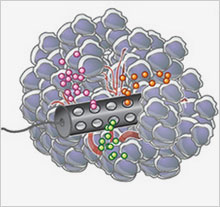
Illustration of cylindrical device inside a tumor.
An implantable device can release microdoses of up to 16 different drug treatments into a tumor. Image by Jonas et al., courtesy of Science Translational Medicine.
Two separate research groups set out to address this problem by creating tiny devices that can test how tumors within a patient respond to various drugs.
A team led by Drs. Oliver Jonas and Robert Langer at the Massachusetts Institute of Technology developed a small device—only 4 mm long and 820 μm in diameter—that can be implanted using a standard biopsy needle. The device contains reservoirs that release tiny doses of up to 16 individual drugs or drug combinations into distinct regions. After 24 hours, a second biopsy needle is used to retrieve the device, along with a small column of tissue around it. The tissue is then examined to assess the effects of the drugs on the tumor.
Using established mouse models of human melanoma, breast cancer, and prostate cancer, the researchers demonstrated that the device could accurately predict how effective treatments would be when used system-wide. Based on these results, the scientists are planning to launch a clinical trial in breast cancer patients next year.
“The approach that we thought would be good to try is to essentially put the lab into the patient,” Jonas says. “It’s safe and you can do all of your sensitivity testing in the native microenvironment.”
A microinjection device can deliver several candidate therapeutics into a tumor. On the left, a scan after injection with a 5-needle array. On the right, the column-like distribution of a tracking dye signal from a single needle in a tumor.Images by Klinghoffer et al., courtesy of Science Translational Medicine.
Another device was developed by a team led by Dr. Jim Olson at Fred Hutchinson Cancer Research Center and Dr. Richard Klinghoffer at Presage Biosciences, a company founded by Olson. Called CIVO, the device features an array of up to 8 needles that can inject small amounts of candidate drugs directly into tumors. The drugs are delivered as the needles are retracted, leaving column-like tracks of the drugs though the tumor. After 24-72 hours, tumor samples are taken and processed. The tumor’s response to each drug is assessed with a sophisticated image analysis system.
The researchers tested the microinjection system in mouse models of human lymphomas and lung cancers, as well as in canines. The cellular changes around the drug tracks predicted the animals’ response to the drugs. A screen of 97 compounds in mice also revealed a new anti-cancer agent for a type of resistant tumor. These results show that CIVO could potentially be used to identify drugs to treat resistant tumors.
The scientists tested CIVO in a clinical setting in 4 human lymphoma patients. No serious adverse events were reported in the small pilot study. Ongoing testing of the system now continues in a clinical trial.
“This sets the stage for a new type of pre-phase 1 clinical study in which multiple drugs or drug combinations can be tested simultaneously, directly in a patient’s own tumor, without toxicity associated with systemic drug delivery,” Klinghoffer says.


—by Harrison Wein, Ph.D.

Tuesday, April 28, 2015

Cancer Research: Cancer rates among patients with hepatitis C are increased ♦ New proton therapy technique brings hope ♦ Chance and circumstance tip immune control of cancer

Chance and circumstance tip immune control of cancer Researchers developed a new computational model that elucidates the dynamic interplay between cancer and the immune system.
Cancer rates among patients with hepatitis C are increased compared to those not infected New results show that cancer rates in patients with the hepatitis C virus (HCV) were significantly increased compared to the non-HCV cohort. The researchers suggest an extrahepatic manifestation of HCV may be an increased risk of cancer.
Brachytherapy improves survival for inoperable early stage endometrial cancer Women who have early stage endometrial cancer and are inoperable tend to live longer if they have been treated with brachytherapy with or without external beam radiation, according to new research

New proton therapy technique brings hope of more effective treatment for tumors without causing collateral damage Researchers have succeeded in making a model of breathing movement that allows for the precise measurement of narrow beams to a dummy tumor in the lung by simulating the motion and physical properties of the chest anatomy in a model, thereby taking a large step towards maximizing the targeting of treatment in mobile organs

Thursday, April 23, 2015

Brain Research:Improve effectiveness of transcranial magnetic stimulation ♦ New tactic targets brain tumors ♦ Guideline advises when to treat a first seizure

New guideline advises when to treat a first seizure A new guideline found that administering an antiepileptic medication immediately after a first seizure reduces the risk of having another seizure within two years
New tactic targets brain tumors Patients who are obese, diabetic or both have the highest incidence of brain tumors, and they offer a clue that insulin is a factor for some glioblastoma patients. But a new study suggests drugs tested on such tumors targeted the wrong molecules.
Researchers show how blood-brain barrier is maintained In a new study, researchers have made insights into how the blood-brain barrier, or BBB, is maintained, identifying a protein key to the process. Delivering this protein to mice with the rodent equivalent of MS improved their symptoms.
Lessons to be learned from Caribbean treatment of mental health With Caribbean people in the UK nine times more likely than white British counterparts to be diagnosed with schizophrenia, a mental health researcher has visited Jamaica and Barbados to find out what lessons can be learned.
New brain mapping model could improve effectiveness of transcranial magnetic stimulation Brain researchers have developed a new brain mapping model that could improve the success rate of transcranial magnetic stimulation in treating conditions including depression, neuropathic pain, and stroke. The model helps pinpoint target sites during TMS, a procedure that uses magnetic fields to stimulate nerve cells in the brain to alleviate or eliminate symptoms of stroke, depression, and attention disorders.

Tuesday, April 21, 2015

Food Research: Dietary supplements linked to increase cancer risk ♦ Soy foods reduces breast cancer recurrence ♦ Oral milk thistle extract stops colorectal cancer:

Seafood samples had no elevated contaminant levels from oil spill Following the Deepwater Horizon Oil Spill in 2010, many people were concerned that seafood was contaminated by either the oil or dispersants used to keep the oil from washing ashore. A new study found that all seafood tested so far has shown “remarkably low contaminant levels,”
Animal study shows why long-time consumption of soy foods reduces breast cancer recurrence Women diagnosed with breast cancer are often told not to eat soy foods or soy-based supplements because they can interfere with antiestrogen treatment. But new research could eventually impact that advice, because in animals, a long history of eating soy foods boosts the immune response against breast tumors,
Excessive use of dietary supplements linked to increase cancer risk While dietary supplements may be advertised to promote health, new research shows a link between consumption of over-the-counter supplements and increased cancer risk, if the supplements are taken in excess of the recommended dietary amount.
Oral milk thistle extract stops colorectal cancer stem cells from growing tumors A new study shows that orally administering the chemical silibinin, purified from milk thistle, slows the ability of colorectal cancer stem cells to grow the disease. When stem cells from tumors grown in silibinin-fed conditions were re-injected into new models, the cells failed to develop equally aggressive tumors even in the absence of silibinin.

Friday, April 17, 2015

NIH study finds genetic link for rare intestinal cancer

Heredity accounts for up to 35 percent of small intestinal carcinoid, a rare digestive cancer, according to findings from a team at the National Institutes of Health. The researchers examined families with a history of the disease. Because the disease has long been considered randomly occurring rather than inherited, people with a family history are not typically screened. Results were published recently in Gastroenterology
“Small intestinal carcinoid tumors usually grow slowly without symptoms. It is often too late to reverse the condition once people seek medical attention,” said lead author Stephen Wank, M.D., senior investigator at the NIH’s National Institute of Diabetes and Digestive and Kidney Diseases (NIDDK), which supported the trial. “Our findings suggest that people with a family history of the disease should be screened for it. We hope this research empowers thousands of at-risk people with a way to prevent these tumors from becoming a devastating disease.”
Conducted at the NIH Clinical Center, the study screened 181 people from 33 families, each with at least two cases of small intestinal carcinoid. The researchers discovered the disease in 23 people who had not yet developed symptoms, and successfully removed all tumors in 21 of those people.
Genetic linkage analysis revealed a target DNA region shared by all affected members of a particularly large family. Genome sequencing narrowed that finding to a gene defect passed from one generation to the next, suggesting that the gene is an inherited risk factor for the disease. “Studying entire families gave us a unique insight into the genetic factors that can increase risk of small intestinal carcinoid,” said Wank.
“This innovative study embodies NIH’s unmatched leadership in rare disease research,” said NIDDK Director Griffin P. Rodgers, M.D. “Our new understanding of small intestinal carcinoid tumors gives scientists and health care providers a stronger platform to continue to develop proactive approaches in treatment, diagnosis and prevention.”
About 30,000 Americans have small intestinal carcinoid tumors. Like most cancers, early treatment greatly increases survival rates and quality of life. People with a family history of small intestinal carcinoid interested in joining NIH genetic studies may call 1-866-444-2214 or visit http://www.clinicaltrials.gov (Clinical Trial # NCT00646022 for information.

Cancer Research: Genomics tool predicts tumor aggressiveness ♦ Prediction of early form of breast cancer ♦ Blood test can predict future breast cancer

New blood test can predict future breast cancer By analyzing a simple blood sample, scientists have succeeded in predicting if a woman will get breast cancer within two to five years. The method -- a metabolic blood profile -- is still in the early stages but over time the scientists expect it could be used to predict breast cancer and more generally to predict chronic disease
Potential for prediction of progression for early form of breast cancer Scientists have identified a way to potentially predict which patients with an early form of breast cancer will experience disease progression. Ductal carcinoma in situ (DCIS) is a precursor of breast cancer where the cancerous cells are contained within the milk-making ducts. Without treatment, commonly a combination of breast-conserving surgery and radiotherapy, up to a half of patients will have their disease come back, either as DCIS or as invasive breast cancer
Tumors prefer the easy way out  Researchers describe a new way that cancer cells invade other parts of the body, identifying a new treatment target that may be more effective than current drugs. "We are looking for novel ways of preventing cancer cells of the primary tumor from spreading to other parts of the body. Our study points to potential therapeutic targets that could be inhibited to halt tumor cell movement,"
New genomics tool could help predict tumor aggressiveness, treatment outcomes A new method for measuring genetic variability within a tumor might one day help doctors identify patients with aggressive cancers that are more likely to resist therapy, according to a study. Researchers used a new scoring method they developed called MATH (mutant-allele tumor heterogeneity) to measure the genetic variability among cancer cells within tumors from 305 patients with head and neck cancer. High MATH scores corresponded to tumors with many differences among the gene mutations present in different cancer cells.