Tuesday, March 3, 2015

Cancer Research: Tackling 'untreatable/ brain tumors ♦ Decline in smoking rates may increase lung cancer mortality ♦ New prostate cancer treatment ♦ Improved radiation therapy for cancer

Nanotechnology and genetic interference may tackle 'untreatable/ brain tumors There are no effective available treatments for sufferers of Glioblastoma multiforme, the most aggressive and devastating form of brain tumor. Now a study may offer hope to the tens of thousands diagnosed with gliomas every year, using a nanomedical treatment first engineered to tackle ovarian cancer tumors. Continue Reading
Decline in smoking rates may increase lung cancer mortality due to inadequate screening guidelines A decline in smoking rates may mean that many people who could have benefited from early detection of lung cancer are dying because they don’t qualify for low-dose CT scans. Continue Reading
New target for prostate cancer treatment  A promising new therapeutic target for prostate cancer has been found by researchers, offering evidence that a newly discovered member of a family of cell surface proteins called G-protein coupled receptors promotes prostate cancer cell growth. Continue Reading
'DNA spellchecker' means that genes aren't all equally likely to mutate  A study that examined 17 million mutations in the genomes of 650 cancer patients concludes that large differences in mutation rates across the human genome are caused by the DNA repair machinery. 'DNA spellchecker' is preferentially directed towards more important parts of chromosomes that contain key genes. The study illustrates how data from medical sequencing projects can answer basic questions about how cells work.Continue Reading

Effect improves radiation therapy for patients with cancer The complex parts of the blue light known as the Cherenkov Effect can be measured and used in dosimetry to make therapies safer and more effective, scientists report. Continue Reading

3/3/15 Health News:Soft drink tax could improve health ♦ Disease-carrying fleas abound on New York City's rats ♦ nitrate supplementation may increase athletic performance

Soft drink tax could improve health of the nation  An excise tax on sugar-sweetened drinks would be an effective way to improve the health of heavy consumers, new research shows. Australian researchers compared the impact that a 20 per cent sales tax and a 20 cents per litre excise tax on beverages such as carbonated non-diet soft drinks, cordials and fruit drinks would have on moderate and high consumers  Continue Reading
Disease-carrying fleas abound on New York City's rats  In the first study of its kind since the 1920s, rats in New York City were found to carry a flea species capable of transmitting plague pathogens. Among them: 500-plus Oriental rat fleas, notorious for their role in transmitting the bubonic plague, also known as the Black Death  Continue Reading
Why nitrate supplementation may increase athletic performance   Walk down the aisles of any food supplement store and you'll see that the use of nitrate supplements by athletes and fitness buffs has been popular for years. The hope is that these supplements will increase endurance, and possibly other performance/health benefits, by improving the efficiency at which muscles use oxygen. Now, a research study helps explain how some of these supplements may work Continue Reading

Monday, March 2, 2015

Mozzarella, Tomato & Basil Pierogies Recalled

, Mrs. T’s Pierogies, of Shenandoah, PA, announced the voluntary recall of specific lots of its Mozzarella, Tomato & Basil variety of pierogies, due to safety concerns. The affected product was distributed to a limited number of retail customers and is being recalled due to plastic contamination in the product which may be a choke hazard.
The specific product in question is the 16-ounce box of Mrs. T’s Mozzarella, Tomato & Basil Pierogies (UPC 4116400042), sold in retail grocery outlets in New England, New York, Pennsylvania, New Jersey, Delaware, Maryland, Washington DC, Virginia and Illinois, and that have the following Best By information:
  • Product with “Best By 05/20/16”
  • Product with “Best By 07/15/16”
To date, Mrs. T’s has not received reports of any adverse events associated with this issue for this lot and no other varieties or lots of Mrs. T’s Pierogies are impacted by this voluntary recall.
The recall was initiated after plastic was found in the filling of the product during production by a Quality Assurance check.
Mrs. T’s Pierogies has taken immediate action to voluntarily recall this product in order to ensure the safety of its consumers. Mrs. T’s Pierogies is dedicated to providing the highest quality products, and the safety of our customers is our number one priority.
Consumers who purchased this product are welcome to return it to the place of purchase for a full refund, or to contact Mrs. T’s Pierogies at 1-800-743-7649 from 8am to 4:30pm EST Monday through Friday.
product image Mrs. T’s Pierogies, Mozzarella, Tomato & Basil

3/2/15 Health News: High UK chicken Campylobacter levels ♦ Antibiotic in veal ♦ Outbreak from raw goat’s milk ♦ Break the migraine cycle ♦ chronic fatigue syndrome is a biological illness

High UK chicken Campylobacter levels renew discussion about using chemical washes. Last week’s “fame and shame” about the high percentage of Campylobacter-contaminated fresh chickens sold by retail stores in the United Kingdom is being followed by renewed discussions about interventions their poultry industry should try to reduce the U.K.’s most common cause of bacterial gastrointestinal disease. Continue Reading
FDA warning letters : Antibiotic in veal calf  The antibiotic known as Lincomycin is supposed to be used to treat only serious bacterial infections when other medicines are not an option. It should not be found in the kidney tissue of a recently slaughtered veal calf. But, according to a Feb. 19 warning letter from the U.S. Food and Drug Administration’s New York Continue Reading
CDC: Outbreak from raw goat’s milk sickened 11 in Idaho At least 11 people in Idaho were sickened with Cryptosporidiosis in August 2014 after consuming unpasteurized goat’s milk, according to a new report from the U.S. Centers for Disease Control and Prevention (CDC). This is the first public announcement of outbreak. The outbreak first came to the attention of health authorities when two siblings, both younger Continue Reading
Image-guided treatment shown to break the migraine cycle An innovative interventional radiology treatment has been found to offer chronic migraine sufferers sustained relief of their headaches, according to new research. Clinicians have used a treatment called image-guided, intranasal sphenopalatine ganglion blocks to give patients enough ongoing relief that they required less medication to relieve migraine pain. Continue Reading
Robust evidence that chronic fatigue syndrome is a biological illness Researchers have identified distinct immune changes in patients diagnosed with chronic fatigue syndrome, known medically as myalgic encephalomyelitis or systemic exertional intolerance disease. The findings could help improve diagnosis and identify treatment options for the disabling disorder, in which symptoms range from extreme fatigue and difficulty concentrating to headaches and muscle pain.  Continue Reading

Sunday, March 1, 2015

3/1/15 Health News: Statins reduced risk of liver cancer ♦ Can coffee reduce your risk of MS? ♦ Type 2 diabetes, fatty liver disease reversed in Rats ♦ Plus More

Statin use associated with reduced risk of liver cancer  In a nested-case control study of individuals living in the UK, a part of the world with a relatively low incidence of liver cancer, statin use is associated with a decreased risk of liver cancer Continue Reading
Can coffee reduce your risk of MS?   Drinking coffee may be associated with a lower risk of developing multiple sclerosis (MS), according to a new study  Continue Reading
Type 2 diabetes, fatty liver disease reversed in rats  A controlled-release oral therapy has been developed by scientists that reversed type 2 diabetes and fatty liver disease in rats, according to a study. "Given these promising results in animal models of  type 2 diabetes we are pursuing additional preclinical safety studies to take this mitochondrial protonophore approach to the clinic" said the researchers.Continue Reading
African Americans who fled the South during great migration led shorter lives  Millions of African Americans moved from the South in the early 20th century to seek better job opportunities and higher wages, but a new study on the historic Great Migration shows that with improved economic conditions came a greater risk of mortality Continue Reading
GLP-1 secretion is reduced in overweight, pre-diabetes and type 2 diabetes  The world's largest study looking at the secretion of the gut hormone GLP-1 has found that the secretion is reduced among overweight and obese people, people with pre-diabetes and newly diagnosed people with type 2 diabetes. Continue Reading

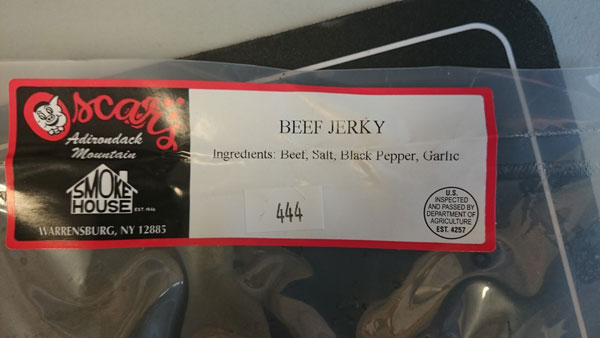
Oscar's Beef Jerky Recalled

Oscar’s Hickory House Inc., a Warrensburg, N.Y. establishment, is recalling approximately 32 pounds of beef jerky product due to a processing deviation, the U.S. Department of Agriculture’s Food Safety and Inspection Service (FSIS) announced today.
The following product is subject to recall: 4-oz and 8 oz. cryovac packages of “Oscar’s Adirondack Mountain Smokehouse Beef Jerky” with code 420 on the label
The product, which bears the establishment number “EST. 4257” inside the USDA mark of inspection, was produced on December 26, 2014 and sold by one retailer in New York. The product was also sold via the internet.
The problem was discovered by FSIS inspectors during a food safety assessment; it was found that the product is susceptible to environmental pathogens and therefore potentially harmful if consumed.
FSIS and the company have received no reports of adverse reactions due to consumption of the product. Anyone concerned about an injury or illness should contact a healthcare provider.  
FSIS routinely conducts recall effectiveness checks to verify recalling firms notify their customers of the recall and that steps are taken to make certain that the product is no longer available to consumers. When available, the retail distribution list(s) will be posted on the FSIS website at www.fsis.usda.gov/recalls.
Consumers and media with questions about the recall can contact Joq Quintal at (518) 623-3431 ext. 2.

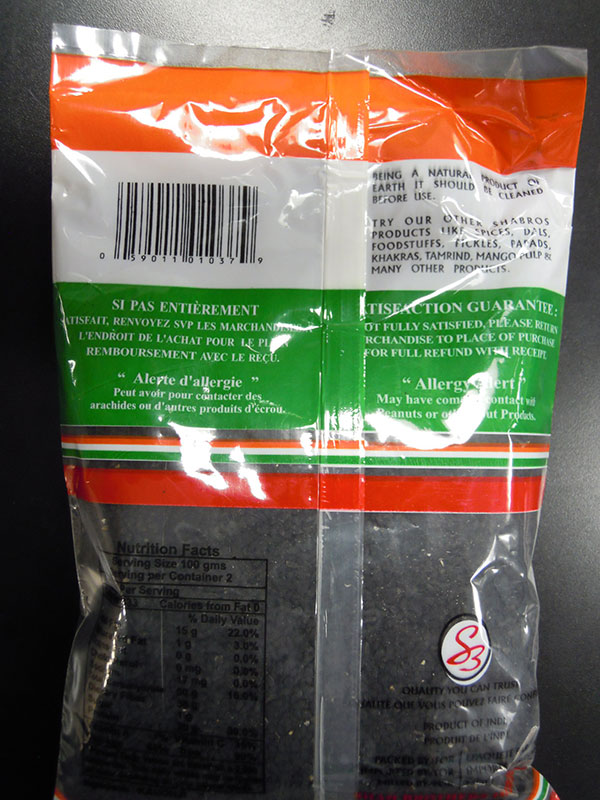
Canada: Shabros brand Kalonji Whole recalled due to Salmonella

Shah Brothers Imports is recalling Shabros brand Kalonji Whole from the marketplace due to possible Salmonella contamination. Consumers should not consume the recalled product described below.
The following product has been sold nationally.
Brand Name
Common Name
Size
Code(s) on Product
UPC
Reason for Recall
Shabros
Kalonji Whole
170 g
Batch #597
0 59011 01037 9
Microbiological - Salmonella
Check to see if you have recalled products in your home. Recalled products should be thrown out or returned to the store where they were purchased.
Food contaminated with Salmonella may not look or smell spoiled but can still make you sick. Young children, pregnant women, the elderly and people with weakened immune systems may contract serious and sometimes deadly infections. Healthy people may experience short-term symptoms such as fever, headache, vomiting, nausea, abdominal cramps and diarrhea. Long-term complications may include severe arthritis.

Kalonji Whole - 170 g