Showing posts with label milk. Show all posts

Thursday, July 23, 2015

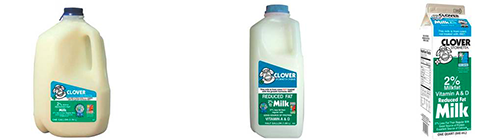
Clover Milk Recalled due to Plastic Contamination

Clover Stornetta Farms has issued a voluntary recall of the three items described below because they may contain small pieces of food grade  plastic.
The items were distributed throughout Northern California.
Clover Stornetta Farms’ top priority is the safety of our customers. For this reason we are issuing this voluntary recall out of an abundance of caution.
No complaints have been reported in connection with these products, and no other Clover products are being recalled.
Item Description
Pack Size
Lot Codes
UPC Code
Clover 2% Reduced Fat Milk
Gallon
JUL 29
07085284
Clover 2% Reduced Fat Milk
Quart
JUL 29
070852-193007
Clover 2% Reduced Fat Milk
Plastic Half Gallon
JUL 29
070852-990828
2
Consumers who have purchased an item mentioned above should return it to their grocery store for a full refund.
If you have any questions, please contact Clover at askclo@cloverstornetta.com

Source: Clover Stornetta Farms website

Thursday, May 21, 2015

If you have milk allergies is it safe to eat dark chocolate

If you’re allergic to milk and you love dark chocolate, how do you know whether you can indulge in a candy bar without having an allergic reaction? That’s what the Food and Drug Administration (FDA) wanted to learn, especially after receiving reports that consumers had harmful reactions after eating dark chocolate.
Milk is a permitted ingredient in dark chocolate, but it is also one of eight major food allergens (substances that can cause reactions that are sometimes dangerous). U.S. law requires manufacturers to label food products that are major allergens, as well as food products that contain major allergenic ingredients or proteins. Allergens contained in a food product but not named on the label are a leading cause of FDA requests for food recalls, and undeclared milk is the most frequently cited allergen. Chocolates are one of the most common sources of undeclared milk associated with consumer reactions.
FDA tested nearly 100 dark chocolate bars for the presence of milk. Earlier this year, the agency issued preliminary findings, and is now releasing more information about its research. The bars tested by FDA were obtained from different parts of the U.S., and each bar was unique in terms of product line and/or manufacturer. Bars were divided into categories based on the statements on the labels.
The bottom line? Unfortunately, you can’t always tell if dark chocolate contains milk by reading the ingredients list. FDA researchers found that of 94 dark chocolate bars tested, only six listed milk as an ingredient. When testing the remaining 88 bars that did not list milk as an ingredient, FDA found that 51 of them actually did contain milk. In fact, the FDA study found milk in 61 percent of all bars tested.
In part, that’s because milk can get into a dark chocolate product even when it is not added as an ingredient. Most dark chocolate is produced on equipment that is also used to produce milk chocolate. In these cases, it is possible that traces of milk may inadvertently wind up in the dark chocolate.
Read ‘May’ as ‘Likely’
To inform consumers that dark chocolate products may contain milk even if not intentionally added, many chocolate manufacturers print “advisory” messages on the label. There’s quite a variety of advisory messages, such as:
  • “may contain milk”
  • “may contain dairy”
  • “may contain traces of milk”
  • “made on equipment shared with milk”
  • “processed in a plant that processes dairy”
  • “manufactured in a facility that uses milk”
FDA found that milk was present in 3 out of every 4 dark chocolate products with one of these advisory statements. Some products had milk levels as high as those found in products that declared the presence of milk.
When the National Confectioners Association (NCA) was asked for its advice, a spokesperson said that “consumers with milk allergies should not consume dark chocolate products that come with advisory statements, since these products may indeed contain milk proteins.”
Another problem is that advisory messages may appear to be conflicting if they are accompanied by dairy-free or vegan statements. “Even a consumer who carefully reads the label may be confused by a statement such as “vegan” (which implies that no animal-derived products were used) along with an advisory—or “may contain” statement—referring to the presence of milk,” says Stefano Luccioli, M.D., a senior medical advisor at FDA.
Not Quite ‘Dairy Free’
In addition to these advisory statements, labels for chocolate bars may make other claims. Some say “dairy-free” or “lactose free,” but FDA found milk in 15% of the dark chocolates with this label. And 25% of dark chocolate products labeled only “vegan” were found to contain milk.
No Message Doesn’t Mean No Milk
You shouldn’t assume that dark chocolate contains no milk if the label does not mention it at all. “Milk-allergic consumers should be aware that 33% of the dark chocolates with no mention of milk anywhere on the label were, in fact, found to contain milk,” says Luccioli.
What Consumers Can Do
  1. Consumers who are sensitive or allergic to milk should know that dark chocolate products are a high-risk food if you’re highly milk-allergic.
  2. Start by checking the ingredients list to see if it includes milk.
  3. Read all the label statements on dark chocolate products and avoid those with an advisory statement for milk, even if these products feature also other (and conflicting) statements, such as “dairy-free” or “vegan”.
  4. View even products with dairy-free claims or without any mention of milk with caution, unless the manufacturer is a trusted source and/or uses dedicated equipment for making milk-free chocolate products.
“The chocolate industry will continue to make every effort to understand the needs of allergic consumers and communicate the potential presence of milk allergens in dark chocolate through advisory labeling,” says Laura Shumow, director of scientific and regulatory affairs at NCA.
FDA is evaluating the study findings and considering options for addressing the issues identified in the study. Further, allergen contamination is included in the preventive and risk-based controls mandated by the FDA Food Safety Modernization Act (FSMA). Under the proposed Preventive Controls for Human Food rule that is scheduled to become final this fall, food manufacturers would be required to implement a food safety plan that identifies safeguards in place to prevent or significantly reduce such hazards as food allergens.
The proposed rule includes provisions to prevent unintended cross-contact between foods that contain allergens and those not intended to contain them. Firms covered by the final rule would have from one to three years after the rule becomes final to comply, depending on the size of the firm.

Milk Detected in Individual Dark Chocolate Products
Label/Package Statement
Total number of dark chocolate products
Number and percent (%) of dark chocolate products testing positive for milk
Milk (or milk-derived component1)
6
6 (100%)
Advisory Statements2 (alone or combined)
59
44 (75%)
Dairy-free or lactose-free3statements alone
13
2 (15%)
Vegan statement alone
4
1 (25%)
No statement regarding milk
12
4 (33%)
TOTAL
94
57 (61%)
  1. Some examples of milk components include cream, milk fat, and sodium caseinate.
  2. Advisory statements refers to statements regarding the possible presence of milk, such as “may contain milk (or dairy)”, “made on equipment shared with milk,” “processed in a plant that processes dairy”, or “manufactured in a facility that uses milk.” This category also includes “may contain traces” statements, as well as advisory statements combined with either a vegan or dairy-free or lactose statement.
  3. Lactose-free chocolates are grouped with dairy-free products although the statement “lactose-free” does not necessarily indicate that the product is free from milk. This is because lactose is a “milk sugar,” and its removal does not mean that milk proteins are removed as well.


Food Research: Drinking chamomile decreases risk of death ♦ Physicians can play key role in preventing foodborne illness ♦ Fresh milk, off the grid

Fresh milk, off the grid Milk preservation depends upon refrigeration and boiling, but in developing countries these methods are costly and often impractical due to the sporadic availability of continuous electricity. New research now finds that short pulsed electric fields can be used to kill milk-contaminating bacteria. This process can prevent bacteria
How people defend eating meat Meat eaters who justify their eating habits feel less guilty and are more tolerant of social inequality say researchers. They found that the vast majority of omnivores defend consuming animals by rationalizing their behavior using one of four rationalizations, which they call the 4Ns.
Drinking chamomile decreases risk of death in older Mexican American women Drinking chamomile tea was associated with a decreased risk of death from all causes in Mexican-American American women over 65, a new study has shown. Chamomile is one of the oldest, most-widely used medicinal plants in the world and has been recommended for a variety of healing applications. It is currently widely used as an herbal remedy in Mexico and among Mexican-Americans.
Physicians can play key role in preventing foodborne illness Food safety awareness is key to understanding the food safety issues on the horizon, and clinicians at hospitals and doctors' offices play a key role in ensuring consumers are aware of the threats of foodborne illness, says an expert.

Tuesday, April 14, 2015

Health News: FDA, unauthorized health clams, unsafe food additives ♦ PCBs found in fat-rich fish ♦ The frightening facts about food outlets

Reports find safety gap in controls at milk plants   Gaps in safety controls at Irish milk-processing plants have been highlighted in a Food Safety Authority of Ireland report. The recent audit report found that the Department of Agriculture failed to notify its local veterinary office of repeated findings of antibiotic traces in milk This meant, follow-up
The frightening facts about food outlets More than two dozen schools principals are hospitalised and others are still falling ill from Salmonella poisoning, after eating at the Brisbane Convention Centre Microscopic view of Salmonella bacteria. Source: Supplied HUNDREDS of Brisbane restaurants, cafes, bakeries and caterers are operating below legal safety standards, risking
FDA  warning letters, unauthorized health clams, unsafe food additives, seafood hazards The latest round of warning letters from the FDA went out to major food manufacturer Post Foods, two seafood companies, a juice processor, and a beverage company allegedly found to be using an unsafe food additive. FDA found that Post Foods has mislabeled its Post Great Grains...
New evidence for how green tea, apples could protect health A new study that adds more to the growing body of evidence that certain compounds found naturally in foods have specific effects that help prevent chronic diseases. Researchers have uncovered a mechanism by which polyphenols in green tea and apples affect a key signalling molecule, which could explain other studies that have shown how polyphenol-rich foods reduce risks of chronic diseases
PCBs still found in fat-rich fish near Spain; Consumption linked to increased risk of cancer in males  Scientists have demonstrated that the exposure to a chemical pollutant called PCB-153 is positively associated to the risk of suffering from cancer in males. This agent, which has been banned in Spain since the 1980s, can still be found in some fat-rich food, such as large fat-rich fish (tuna, salmon, swordfish), since it is highly resistant to degradation

Friday, March 27, 2015

Health News: Nanoparticle therapy promotes wound healing ♦ Preserving milk using pulsed electric field processing ♦ Laparoscopic hysterectomy may be safer

Nanoparticle therapy promotes wound healing  An experimental therapy successfully tested in mice cut in half the time it takes to heal wounds compared to no treatment at all. "We envision that our nanoparticle therapy could be used to speed the healing of all sorts of wounds,  Continue Reading
Preserving milk using energy efficient pulsed electric field processing  High voltage, short pulsed electric fields selectively damage cell membrane directly killing the contaminating bacteria by a process known as electroporation. Continue Reading
Laparoscopic hysterectomy may be safer than abdominal procedure  A study has compared the relative risks of laparoscopic hysterectomy (with morcellation) with abdominal surgery for hysterectomy in premenopausal women for presumed uterine fibroids. Examining short- and long-term complications,they found that abdominal surgery carries a higher risk of complications Continue Reading
Malaria-infected cells produce odors attractive to mosquitoes   The malaria parasite Plasmodium falciparum produces chemical compounds called terpenes that give off odors that attract mosquitoes, according to new research. The study might explain why the insects are more likely to bite humans or animals infected with the organism. Continue Reading
Soils retain radioactivity in Fukushima  The soil's physical and chemical properties in rice fields around the Fukushima site have been the focus of recent study. Researchers examined factors affecting soil-to-plant transfer of radioactive cesium in the Fukushima area. Continue Reading

Thursday, March 26, 2015

Brain Research:Carbon nanotube fibers make superior links to brain ♦ Research into brain's ability to heal itself ♦ Milk could be good for your brain + more

Research into brain's ability to heal itself offers hope for novel treatment of traumatic brain injury Innovative angles of attack in research that focus on how the human brain protects and repairs itself will help develop treatments for one of the most common, costly, deadly and scientifically frustrating medical conditions worldwide: traumatic brain injury. Continue Reading
Milk could be good for your brain  A correlation between milk consumption and the levels of a naturally-occurring antioxidant called glutathione in the brain has been discovered in older, healthy adults Continue Reading
Brain tumor cells decimated by mitochondrial 'smart bomb'  An experimental drug that attacks brain tumor tissue by crippling the cells' energy source called the mitochondria has passed early tests in animal models and human tissue cultures, say scientists.Continue Reading
Carbon nanotube fibers make superior links to brain  Carbon nanotube fibers may provide the best way to communicate directly with the brain. The research could enable new strategies for treating neurological disorders like Parkinson's Continue Reading

Nanorobotic agents open the blood-brain barrier, offering hope for new brain treatments Magnetic nanoparticles can open the blood-brain barrier and deliver molecules directly to the brain. This barrier runs inside almost all vessels in the brain and protects it from elements circulating in the blood that may be toxic.The research is important as currently 98% of therapeutic molecules are also unable to cross the blood-brain barrier. Continue Reading

Monday, March 23, 2015

Raw milk & raw cream recalled due to campylobacter bacteria contamination

Raw milk, raw nonfat milk and raw cream produced by Claravale Farm of San Benito County are the subject of a statewide recall and quarantine order announced by California State Veterinarian Dr. Annette Whiteford. The quarantine order came following the confirmed detection of campylobacter bacteria in raw cream.
Consumers are strongly urged to dispose of any product remaining in their refrigerators with code dates of “MAR 27” and earlier, and retailers are to pull those products immediately from their shelves.
On March 19th, Claravale Farm voluntarily ceased distribution of its products after CDFA made a preliminary positive finding of campylobacter in raw cream. The stoppage of distribution included goat milk, as well. No illnesses have been definitively attributed to the products at this time. However, the California Department of Public Health (CDPH) is currently conducting an epidemiological investigation of reported clusters of campylobacter illness where consumption of raw milk products may have occurred.
According to CDPH, symptoms of campylobacteriosis include diarrhea, abdominal cramps, and fever. Most people with campylobacteriosis recover completely. Illness usually occurs 2 to 5 days after exposure to campylobacter and lasts about a week. The illness is usually mild and some people with campylobacteriosis have no symptoms at all. However, in some persons with compromised immune systems, it can cause a serious, life-threatening infection. A small percentage of people may have joint pain and swelling after infection. In addition, a rare disease called Guillain-Barre syndrome that causes weakness and paralysis can occur several weeks after the initial illness.

Monday, March 2, 2015

3/2/15 Health News: High UK chicken Campylobacter levels ♦ Antibiotic in veal ♦ Outbreak from raw goat’s milk ♦ Break the migraine cycle ♦ chronic fatigue syndrome is a biological illness

High UK chicken Campylobacter levels renew discussion about using chemical washes. Last week’s “fame and shame” about the high percentage of Campylobacter-contaminated fresh chickens sold by retail stores in the United Kingdom is being followed by renewed discussions about interventions their poultry industry should try to reduce the U.K.’s most common cause of bacterial gastrointestinal disease. Continue Reading
FDA warning letters : Antibiotic in veal calf  The antibiotic known as Lincomycin is supposed to be used to treat only serious bacterial infections when other medicines are not an option. It should not be found in the kidney tissue of a recently slaughtered veal calf. But, according to a Feb. 19 warning letter from the U.S. Food and Drug Administration’s New York Continue Reading
CDC: Outbreak from raw goat’s milk sickened 11 in Idaho At least 11 people in Idaho were sickened with Cryptosporidiosis in August 2014 after consuming unpasteurized goat’s milk, according to a new report from the U.S. Centers for Disease Control and Prevention (CDC). This is the first public announcement of outbreak. The outbreak first came to the attention of health authorities when two siblings, both younger Continue Reading
Image-guided treatment shown to break the migraine cycle An innovative interventional radiology treatment has been found to offer chronic migraine sufferers sustained relief of their headaches, according to new research. Clinicians have used a treatment called image-guided, intranasal sphenopalatine ganglion blocks to give patients enough ongoing relief that they required less medication to relieve migraine pain. Continue Reading
Robust evidence that chronic fatigue syndrome is a biological illness Researchers have identified distinct immune changes in patients diagnosed with chronic fatigue syndrome, known medically as myalgic encephalomyelitis or systemic exertional intolerance disease. The findings could help improve diagnosis and identify treatment options for the disabling disorder, in which symptoms range from extreme fatigue and difficulty concentrating to headaches and muscle pain.  Continue Reading

Tuesday, December 23, 2014

Increased Outbreaks Associated with Unpasteurized Milk,

Elisabeth A. Mungai , Casey Barton Behravesh, and L. Hannah Gould
The number of US outbreaks caused by unpasteurized milk increased from 30 during 2007–2009 to 51 during 2010–2012. Most outbreaks were caused by Campylobacter spp. (77%) and by unpasteurized milk purchased from states in which unpasteurized milk sale was legal (81%). Regulations to prevent distribution of unpasteurized milk should be enforced.
Pasteurization is an effective way to improve milk safety; however, in the United States, illness related to consumption of unpasteurized milk continues to be a public health problem. The first statewide requirements that dairy products be pasteurized were enacted in Michigan in 1948 . In 1987, the US Food and Drug Administration banned the interstate sale or distribution of unpasteurized milk.
However, the laws regulating intrastate sales are set by each state. Regulations for intrastate sales of unpasteurized milk vary from complete bans to permitting sales from farms or retail outlets. Even in states in which sale of unpasteurized milk is illegal, milk can often be obtained through other means. For example, some states allow cow-share or herd-share agreements, in which buyers pay farmers a fee for the care of a cow in exchange for a percentage of the milk produced
Consumption of unpasteurized milk has been associated with serious illnesses caused by several pathogens, including Campylobacter spp., Shiga toxin–producing Escherichia coli, and Salmonella enterica serotype Typhimurium Despite the health risks associated with consuming unpasteurized milk, the demand forunpasteurized milk has increased. Recently, many state legislatures have considered relaxing restrictions on the sale of unpasteurized milk. We report that the number of outbreaks associated with unpasteurized milk increased from 2007 through 2012.
State and local health departments voluntarily report outbreaks to the Foodborne Disease Outbreak Surveillance System of the Centers for Disease Control and Prevention through a standard web-based form (http://www.cdc.gov/nors). We reviewed outbreaks reported during 2007–2012 in which the food vehicle was unpasteurized milk. Outbreaks attributed to consumption of other dairy products made with unpasteurized milk, such as cheese, were excluded. We analyzed outbreak frequency, number of illnesses, outcomes (hospitalization, death), pathogens, and age groups of patients. Data on the legal status of unpasteurized milk sales in each state were obtained from the National Association of State Departments of Agriculture and an online search of state regulations. The sources from which unpasteurized milk was obtained or purchased were categorized according to the description from the state outbreak reports, when available.
During 2007–2012, a total of 81 outbreaks associated with unpasteurized milk were reported from 26 states. These outbreaks resulted in 979 illnesses and 73 hospitalizations. No deaths were reported. The causative agent was reported for all outbreaks. Of the 78 outbreaks with a single etiologic agent, Campylobacter spp. was the most common pathogen, causing 62 (81%) outbreaks, followed by Shiga toxin–producing E. coli (13 [17%]),Salmonella enterica serotype Typhimurium (2 [3%]), and Coxiella burnetii[1%]). Three outbreaks were caused by multiple pathogens. The number of outbreaks increased from 30 during 2007–2009 to 51 during 2010–2012. During 2007–2009, outbreaks associated with unpasteurized milk accounted for ≈2% of outbreaks with an implicated food; during 2010–2012, this percentage increased to 5%. The number of outbreaks of Campylobacter spp. infection also increased, from 22 during 2007–2009 to 40 during 2010–2012
Conclusions
Within this 6-year period, the number of outbreaks associated with nonpasteurized milk increased. The number of outbreaks caused by Campylobacter spp. nearly doubled. The average number of outbreaks associated with unpasteurized milk was 4-fold higher during this 6-year period (average 13.5 outbreaks/year) than that reported in a review of outbreaks during 1993–2006 (3.3 outbreaks/year) This increase was concurrent with a decline in the number of states in which the sale of unpasteurized milk was illegal, from 28 in 2004 to 20 in 2011 and with an increase in the number of states allowing cow-share programs (from 5 in 2004 to 10 in 2008) The decision to legalize the sale of unpasteurized milk or allow limited access through cow-share programs may facilitate consumer access to unpasteurized milk The higher number of outbreaks in states in which the sale of unpasteurized milk is legal has been reported elsewhere
The legal status of unpasteurized milk sales in 1 state can also lead to outbreaks in neighboring states. In a 2011 outbreak of Campylobacter spp. infections associated with unpasteurized milk in North Carolina, where sales of this product were prohibited, milk was purchased from a buying club in South Carolina, where sales were legal. Another outbreak of Campylobacter spp. infection in 2012 implicated unpasteurized milk from a farm in Pennsylvania, where sales are legal; cases from this outbreak were reported from Maryland, West Virginia, and New Jersey, all of which prohibit sale of raw milk  All patients residing outside Pennsylvania had traveled to Pennsylvania to purchase the milk
Outbreaks associated with unpasteurized milk continue to pose a public health challenge. Legalization of the sale of unpasteurized milk in additional states would probably lead to more outbreaks and illnesses. This possibility is especially concerning for vulnerable populations, who are most susceptible to the pathogens commonly found in unpasteurized milk (e.g., children, senior citizens, and persons with immune-compromising conditions). Public health officials should continue to educate legislators and consumers about the dangers associated with consuming unpasteurized milk.
Ms. Mungai is a surveillance epidemiologist at the Atlanta Research and Education Foundation and at the Centers for Disease Control and Prevention. Her interests include infectious disease epidemiology and food safety.
Wednesday, October 29, 2014

Great Britain: Milk Recalled is Contaminated With Cleaning Fluid

Dairy Crest Ltd has recalled certain date codes of Morrisons and Supervalu from Budgens Whole British Milk on a precautionary basis, because the products may have become contaminated with cleaning fluid during its production. If you have bought this product with the 'use by' dates shown below, do not consume it. The FSA has issued a Product Recall Product details
Pack size: 6 pints
‘Use by’ dates: 5 Nov 2014 and 7 Nov 2014
Dairy Crest Ltd is recalling the above products. Product recall notices will be displayed in Morrisons and Budgens stores, explaining to consumers why the recall is happening and what they can do if they have bought an affected product.
If you have bought any of the above products, do not consume them. Instead, return them to the Morrisons or Budgens store where you bought it for a full refund.

Thursday, October 23, 2014

Bacteria in Dairy Products in Baggage of Incoming Travelers, Brazil

International air travel can lead to the rapid global dissemination of infectious agents. Unlike products and byproducts of animal origin imported between countries under agreements that legally establish sanitary standards, products introduced into a country illegally or irregularly do not follow specific standards and can come from any source, thereby posing a risk to the health status of a country.
Animal products transported clandestinely in baggage can contain infectious agents harmful to animal and human health. We investigated Brucella spp., Mycobacterium bovis, and Mycobacterium avium subsp. paratuberculosis (MAP) in dairy products seized from baggage of passengers on flights at the 2 main international airports in Brazil.
During 2010–2011, 12 missions were instigated by the International Agriculture Surveillance in airports to detect and seize unauthorized dairy products carried by passengers; 195 products were collected from multiple flights from different destinations. Baggage was scanned by using an x-ray machine and, on detection of a product, was opened by the owner in the presence of a federal agriculture inspector. To avoid contamination, the products were not opened and were sent to the designated Ministry of Agriculture, Livestock and Food Supply Laboratory in their original packaging. All seized products were packed according to the International Air Transport Association standards (5) and transported by commercial aviation with official monitoring to the laboratory.
Three containers of liquid milk from the United States were collected and analyzed .. Five containers of powdered milk were seized: Brucella was detected in 1 container from Chile; Brucella and M. bovis were found in 1 container from Angola. Four containers of yogurt were seized. MAP was detected in those from Angola and South Africa, and the yogurt from South Africa also showed Brucella.
We analyzed samples from 147 cheeses that were confiscated from baggage owned by travelers. M. bovis was identified in 18 MAP was amplified in specimens from 13 cheeses.. Brucella was detected in 62 of the cheeses.
Both M. bovis and Brucella were detected in 13 (8.8%) cheeses.Brucella and MAP were detected in 4 Co-amplification of the 3 genes (Brucella + MAP + M. bovis) occurred in 3 (2%) cheeses. Among the cheeses analyzed, 84 had genes for the 3 bacteria examined.
Cheeses were the most seized products and had the highest number of Brucella-positive results. Brucella was detected in dairy products that originated in Argentina, Spain, France, Iraq, Israel, Italy, Lebanon, Portugal, and Turkey; M. bovis was detected in dulce de leche from Argentina, powdered milk from Chile, and in cheeses from Spain, Netherlands, Italy, Lebanon, Morocco, Norway, and Portugal.
Bacteria can be introduced into a country through contaminated animal products that are brought across borders illegally. The risk may be even greater when these products are carried in passengers’ baggage on international flights because of the growing number of international travelers and the wide range of origins of these passengers. Greater attention should be given to agricultural surveillance at airports to mitigate the risk for introduction of these products.