Showing posts with label campylobacter. Show all posts

Thursday, January 7, 2016

Bacteria Research: Monitoring chicken flock behaviour could help combat leading cause of food poisoning ♦ Antibiotics pave way for C. diff infections by killing bile acid-altering bacteria

Efficacy of major chlamydia drug confirmed In one of the most tightly controlled trials ever conducted of drugs used to treat sexually transmitted infections, researchers have confirmed that azithromycin remains effective in the treatment of urogenital chlamydia.
Ecologist finds another cause of antibiotic resistance One researcher is concerned that there's more to the problem of antibiotic-resistant bacteria than the misuse of common medications. A senior research ecologist, this scientist believes environmental contaminants may be partly to blame for the rise in bacterial resistance, and he tested this hypothesis in streams on the US Department of Energy's Savannah River Site
Antibiotics pave way for C. diff infections by killing bile acid-altering bacteria Bile acids, which are altered by bacteria normally living in the large intestine, inhibit the growth of Clostridium difficile, new research indicates. The work sheds light on the ways in which some commonly used antibiotics can promote C. diff infections by killing off the bile acid-altering microbes.
Monitoring chicken flock behaviour could help combat leading cause of food poisoning A new technique that monitors the movement of chickens can be used to predict which flocks are at risk of becoming infected with Campylobacter -- the most common bacterial source of food poisoning in humans in the UK.

Monday, December 7, 2015

Health News: The Dirtiest Places in every Supermarket ♦ About 30 sickened with Campylobacter at NJ boarding school ♦ Error correction strategies of cells

About 30 sickened with Campylobacter at NJ boarding school About 30 people were sickened by Campylobacter at Blair Academy, reports the New Jersey Herald. The school is private boarding and day school for high school students located in Blairstown, NJ. “In mid November, our health center saw an increased incidence of gastrointestinal-related illness and we alerted all parents by email on November 20.
The Dirtiest Places in every Supermarket Let’s face it: Everything around us is pretty dirty. Even if we wash our hands regularly and make sure that our living and working spaces are clean, the world is still an insanely germy place. Unfortunately, the same can be said for where we buy (and eat) our food.
Error correction strategies of cells Error correction of cells have been reviewed by researchers who have investigated the importance of crosstalk and its effects, and propose an alternative model that suppresses erroneous initiation.
Rudeness at work is contagious, Workplace incivility should be treated with the utmost seriousness. This is the finding of three psychologists who surveyed nearly 6,000 people on the social climate in the workplace. Their studies show that being subjected to rudeness is a major reason for dissatisfaction at work and that unpleasant behavior spreads if nothing is done about it.

Monday, October 19, 2015

Health News: Milk Recalled in California for Campylobacter Contamination ♦ Nanodiamonds might prevent tooth loss after root canals ♦ The end is in sight for reading glasses

Milk Recalled in California for Campylobacter Contamination Raw milk produced by Organic Pastures Dairy of Fresno County with a code date of OCT 24 is the subject of a statewide recall and quarantine order announced by California State Veterinarian Dr. Annette Jones. The quarantine order followed the confirmed detection of Campylobacter bacteria in raw whole milk. No illnesses have been reported at this time.
Researchers' cure of metastatic skin cancer revealed Metastatic Merkel-cell carcinoma is often fatal and there is no effective treatment. Now a researcher is reporting some positive results from treating this illness with a drug called idelalisib.
The end is in sight for reading glasses A researcher is developing a new eye lens, made from the same material found in smartphone and TV screens, which could restore long-sightedness in older people.
DNA sun protection UV radiation often damages our DNA. Researchers have now seen for the first time what happens in DNA building blocks when they are stimulated by ultraviolet light, and what they do to prevent themselves from being destroyed. The results show the molecules use the absorbed energy to set off a completely harmless reaction which prevents the genes being altered.

Nanodiamonds might prevent tooth loss after root canals Nanodiamonds may help patients that have had the dreaded root canal. Dental researchers have developed a nanodiamond-reinforced version of gutta percha, the compound that is used to fill void spaces in dental root canals to prevent infection that can lead to tooth loss. Tested in patient-extracted teeth, the nanodiamond-embedded polymer was substantially stronger than conventional gutta percha. In addition, the scientists tested gutta percha with nanodiamonds that had been loaded with antibiotics and found that the compound effectively prevented bacterial infection.

Monday, June 29, 2015

Barbecue and food poisoning in Scotland

Barbecue and food poisoning: how bad habits in the sun put thousands of Scots indoors - The Four C’s from Food Standards Scotland aim to reduce Scotland’s 43,000 annual cases of foodborne illness Thousands of Scots unwittingly put their families at risk of falling ill from a dangerous food poisoning bug by overlooking basic food safety practices when barbecuing.
Foodborne illness causes around 43,000 infections, 5,800 GP visits and 500 hospital admissions across Scotland every year. New research carried out by Food Standards Scotland (FSS) revealed that more than one in four adults (26%) believe washing chicken before it is cooked on a barbecue is the best way to ensure it is safe to eat, but this is a practice that can spread Campylobacter which can be a particularly nasty bug, thought to be responsible for more than half the cases of foodborne illness in Scotland. And 16% of people who cook meat on a barbecue use the same utensils for raw and cooked meat without washing them in between. Nearly one in five of Scots who cook meat on the barbecue (17%) admit to not washing their hands after touching uncooked meat and only just over two in five wash their barbecue every time they use it (41%).
A recent survey showed that around three quarters of fresh chickens sold by major retailers are contaminated with Campylobacter, yet a third of Scots (32%) could not correctly identify the name of the bug that can cause abdominal pain, severe diarrhoea, vomiting and at its worst, in very rare cases, can kill. Food Standards Scotland will be at the Royal Highland Show (18-21 June) to spread the word and urge people to stop washing raw chicken to reduce the risk of contracting Campylobacter poisoning.

To help people eat safe this summer, FSS will be sharing its advice on the “Four C’s”, backed by celebrity chefs such as Jean Christophe Novelli to drive home the key steps to safe barbecuing: Cleaning, Cooking, Chilling and avoiding Cross-contamination.

Tuesday, June 9, 2015

Antibiotic Resistance in Foodborne Germs is an Ongoing Threat

The news about trends in antibiotic resistance in foodborne germs is mixed. According to human illness data posted online today by CDC, the ongoing public health threat of antibiotic resistance in foodborne germs continued to show both positive and challenging trends in 2013. The National Antimicrobial Resistance Monitoring System (NARMS) tracks changes in the antibiotic resistance of six types of common foodborne germs found in sick people, retail meats, and food animals.
The good news from the 2013 NARMS Annual Human Isolates Report is that multidrug resistance (resistance to three or more classes of antibiotics) in Salmonella has not increased, remaining at 10% of infections. However, resistance in some types of Salmonella is increasing. For example, multidrug resistance in a common Salmonella serotype called I4,[5],12:i:- was 46%, more than double the rate from two years before.Campylobacter, another germ that is transmitted by food, showed one in four samples from sick people are still resistant to quinolones like ciprofloxacin.

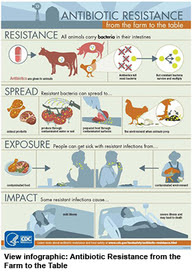
Antibiotic resistance--from farm to table

Most Salmonella and Campylobacter infections cause diarrheal illness that resolves within a week without antibiotics. However, these germs can also cause infection of the bloodstream and other sites. When germs are resistant, antibiotics may be ineffective, increasing the chance of a severe illness.
NARMS is a collaboration among state and local public health departments, CDC, the U.S. Food and Drug Administration (FDA), and the U.S. Department of Agriculture (USDA). NARMS helps protect public health by providing information about bacterial resistance, the ways in which resistance is spread, and how resistant infections differ from susceptible infections. Understanding frequency and trends in antibiotic resistance helps doctors to prescribe effective treatment and public health officials to investigate outbreaks faster.
The FY 2016 President’s Budget requests additional funding for CDC to improve early detection and tracking of drug-resistant Salmonella and other urgent antibiotic resistance threats.  The proposed initiative would allow CDC to check nearly every Salmonella sample and many more Campylobacter samples for resistance more quickly.

Sunday, May 31, 2015

Health News:Campylobacter cases linked to raw milk ♦ Zero tolerance for pesticide in baby food ♦ DNA: Expanding code of life with new 'letters'

Several Campylobacter cases linked to raw milk Campylobacter cases have been reported in several children younger than 2. Some of the cases have been linked to drinking unpasteurized, or raw, milk. Bacteria such as E. coli O157, Campylobacter and Salmonella can contaminate milk  
New Zealand group seeks zero tolerance for pesticide in baby food A petition seeking zero tolerance for pesticide residues in baby food was discussed Friday by a committee of the New Zealand parliament, but members reportedly took no action on it. The Safe Food Campaign, which is sponsoring the petition, noted that the European Commission has mandated no detectable pesticide levels.
America's research funding squeeze imperils patient care Constraints in federal funding, compounded by declining clinical revenue, jeopardize more than America's research enterprise. These twin pressures have created a "hostile working environment" that erodes time to conduct research, "discourages innovative high-risk science" and threatens to drive scientists out of the field. And this in turn undermines patient care.
Hallucinations and delusions more common than thought Scientists have found that hearing voices and seeing things (that others cannot) impacts about 5 percent of the general population during their lives.
DNA: Expanding code of life with new 'letters' The DNA encoding all life on Earth is made of four building blocks called nucleotides, commonly known as 'letters,' that line up in pairs and twist into a double helix. Now, two groups of scientists are reporting for the first time that two new nucleotides can do the same thing -- raising the possibility that entirely new proteins could be created for medical uses.

Saturday, May 30, 2015

Health News: FBI investigating Johnson & Johnson ♦ Supermarkets with worst records on contaminated chickens ♦ Nearly indestructible virus yields tool to treat diseases

FBI investigating Johnson & Johnson The FBI is questioning makers of a surgical device that can spread cancer cells in female patients, asking Johnson & Johnson officials what the manufacturing giant knew about the tool before yanking it out of service in 2014. The FBI's Newark
Supermarkets with worst records on contaminated chickens THE CONTAMINATION of nearly three-quarters of supermarket chickens with a potentially deadly bug is now the biggest food safety concern in the UK, the Food Standards Agency said. The watchdog said it was putting pressure on supermarkets to take action after a year-long study found all the major retailers failed to reach industry targets for reducing rates of campylobacter
Nearly indestructible virus yields tool to treat diseases By unlocking the secrets of a bizarre virus that survives in nearly boiling acid, scientists have found a blueprint for battling human disease using DNA clad in near-indestructible armor.
Study identifies Ebola virus's Achilles' heel The molecular "lock" that the deadly Ebola virus must pick to gain entry to cells has been identified by researchers. The findings, made in mice, suggest that drugs blocking entry to this lock could protect against Ebola infection
Herpes offers big insights on coughing -- and potential new remedies Cough treatments could change dramatically after the herpesvirus helped researchers discover that the respiratory tract links to two different parts of the nervous system.

Thursday, May 14, 2015

CDC data show progress in reducing some foodborne infections

While some diseases decreased, overall infections from foodborne illness remain the same
In 2014, rates of infection from a serious form of E. coli and one of the more common Salmonella serotypes decreased compared with the baseline period of 2006-2008. Meanwhile, some other less common types of Salmonella increased. Campylobacter and Vibrio rose again in 2014, continuing the increase observed during the past few years, according to data published today by the Centers for Disease Control and Prevention. Today’s report summarizes the rates of infection per 100,000 population and tracks illness trends for key foodborne illnesses.
Infection with Shiga-toxin producing E. coli O157, which can sometimes lead to kidney failure, decreased 32 percent when compared with 2006-2008 and 19 percent when compared with the most recent three years. These infections are often linked to consumption of undercooked ground beef and raw leafy vegetables. Salmonella Typhimurium, which has been linked to poultry, beef, and other foods, was 27 percent lower than it was in 2006-2008, continuing a downward trend begun in the mid-1980s. Two other less common types of Salmonella, Javiana and Infantis, more than doubled for reasons that are unclear. Salmonella Javiana is concentrated in the southeastern United States, but has been spreading within the Southeast and to other areas of the country. However, when all Salmonella serotypes are combined, there was no change in 2014. Campylobacter increased 13 percent and Vibrio increased 52 percent compared with 2006-2008. Yersinia has declined enough to meet the Healthy People 2020 goal.
The data are from FoodNet, CDC’s active surveillance system that tracks nine common foodborne pathogens in 10 states and monitors trends in foodborne illness in about 15 percent of the U.S. population. Today’s report compares the 2014 frequency of infection with the frequency in the baseline period 2006-2008 and in the three most recent years. Overall in 2014, FoodNet logged just over 19,000 infections, about 4,400 hospitalizations, and 71 deaths from the nine foodborne germs it tracks. Salmonella and Campylobacter were by far the most common– accounting for about 14,000 of the 19,000 infections reported.
“We’re cautiously optimistic that changes in food safety practice are having an impact in decreasing E.coli and we know that without all the food safety work to fight Salmonella that more people would be getting sick with Salmonella than we are seeing now,,” said Robert Tauxe, M.D., deputy director of CDC’s Division of Foodborne Waterborne and Environmental Diseases. “The increasing use of whole genome sequencing to track foodborne illness cases will also help; however, much more needs to be done to protect people from foodborne illness.”  
The recent decline in the incidence of Shiga toxin-producing E. coli (STEC) O157 follows several years of increasing scrutiny for beef products. Since 1994, the Food Safety and Inspection Service of the U.S. Department of Agriculture has taken STEC O157:H7 extremely seriously and made a number of changes in its regulatory oversight of the beef industry to protect public health.
"We are encouraged by the reduction of STEC O157:H7 illnesses, which reflects our science-based approach to beef inspection, and we look forward to seeing further reductions in Salmonella and Campylobacter infections as our improved standards for poultry take effect later this year, " said Al Almanza, Deputy Under Secretary for Food Safety at USDA. "Data sources like FoodNet allow us to be strategic in developing our food safety policies, and we will do everything within our power to keep reducing cases of foodborne illness from all meat and poultry products."
Under the provisions of the FDA Food Safety Modernization Act, the U.S. Food and Drug Administration is planning to publish major new regulations in 2015. The regulations are geared toward ensuring produce safety, implementing preventive controls on processed foods, and improving the safety of imported foods.
“Prevention of illness is the fundamental goal of our new rules under the FDA Food Safety Modernization Act,” said Michael Taylor, deputy commissioner for Foods and Veterinary Medicine at FDA.  “We have worked with a wide range of stakeholders to devise rules that will be effective for food safety and practical for the many diverse elements of our food system. Once the rules are fully implemented, FoodNet will help us evaluate their impact.”
The FoodNet report also includes results of culture-independent diagnostic tests (a new method for diagnosing intestinal illnesses without needing to grow the bacteria) done in the many hospital laboratories in the FoodNet sites. In 2014, the results of more than 1,500 such tests were reported. More than two-thirds of the tests were for Campylobacter. Other tests performed were for STEC, Salmonella, Shigella and Vibrio. Some of the tests had a positive result. However, the infections were not confirmed by culture, and so CDC experts did not include them in the overall FoodNet results for 2014.
For more information on avoiding illnesses from food, please visit www.foodsafety.gov

Friday, May 1, 2015

Health News:Salmonella and Campylobacter in poultry ♦ New material for creating artificial blood vessels ♦ Facts about our microbial menagerie

Salmonella and Campylobacter in poultry Last summer’s preliminary data from Salmonella and Campylobacter testing of raw meat and poultry for USDA’s Food Safety and Inspection Service (FSIS) are out, and there were mixed results. During the July-September quarter, FSIS collected and tested 3,985 samples for its Salmonella and Campylobacter.
Students break new ground in understanding genetic diversity of bacteriophages Over the last seven years, thousands of undergraduate students have sequenced and analyzed the genomes of bacteria-infecting viruses, known as bacteriophages. Those genomes are now the focal point of a new study that examined the genetic diversity of 627 phages isolated from a single species of bacteria. The study shows
Facts about our microbial menagerie Trillions of microorganisms inhabit us -- inside and out. Scientists are surveying these microbial metropolises to learn more about their role in health. Here are a few details of what researchers have learned so far
New material for creating artificial blood vessels Blocked blood vessels can quickly become dangerous. It is often necessary to replace a blood vessel – either by another vessel taken from the body or even by artificial vascular prostheses. Researchers have developed artificial blood vessels made from a special elastomer material,. Over time, these artificial blood vessels are replaced by endogenous material a natural, fully functional vessel is once again. The method has already been used successfully
Challenging work tasks may have an upside for the brain Professionals whose jobs require more speaking, developing strategies, conflict resolution and managerial tasks may experience better protection against memory and thinking decline in old age than their co-workers.

Thursday, March 12, 2015

Raw Milk Found to Contain Harmful Bacteria

A report published today by the Food Safety Authority of Ireland (FSAI) shows that raw milk can contain harmful bacteria and therefore, the consumption of raw (unpasteurised) milk increases the risk of developing foodborne illness.  The FSAI continues to recommend that the sale of raw milk for direct human consumption should be prohibited in Ireland and advises that the most effective way to protect public health is to ensure that all milk is effectively heat-treated (e.g. pasteurised or boiled), especially when served to infants, children, pregnant women, older people and those with a weakened immune system or those suffering from a chronic disease.
The report details the results of an FSAI microbiological survey confirming the presence of pathogens in raw milk and the in-line filters used in the milking equipment.  For raw milk samples, detection rates of Listeria monocytogenes and Campylobacter were 7% and 3%, respectively.  However, detection rates in milk filter samples were considerably higher at 20% and 22% 0pasturizationrespectively, which suggests a greater potential for contamination of raw milk.  In addition, Salmonella was detected in 1% of raw milk filters and 0.5% of raw milk samples, while E. coli O26 (VTEC) was detected in 6% of raw milk filter samples showing its potential to contaminate raw milk.
Dr Wayne Anderson, Director of Food Science and Standards, FSAI, states: “Almost all milk on sale in Ireland is pasteurised and pasteurisation is the simplest and most reliable method to ensure that milk is safe to drink.  While the market for raw milk is small, it remains a serious concern given the well-documented public health risks posed by the presence of pathogens in raw milk.  We are therefore recommending that raw milk should be avoided by consumers, but for those who still wish to drink it, they should, at a minimum, boil the milk before drinking it to kill any potentially harmful bacteria.”

Commenting on the ongoing risk to farm families who continue to consume raw milk in their own homes, Dr Anderson states: “The FSAI is aware that any ban on the sale of raw milk would not affect those farm families who choose to consume raw milk.  But farm families should be particularly aware of the risk to young children and pregnant women posed by drinking raw milk and also the fact that farm visitors may not be aware that they are consuming raw milk. We therefore continue to recommend the use of home pasteurisers to ensure milk is safe.”  

Monday, March 2, 2015

3/2/15 Health News: High UK chicken Campylobacter levels ♦ Antibiotic in veal ♦ Outbreak from raw goat’s milk ♦ Break the migraine cycle ♦ chronic fatigue syndrome is a biological illness

High UK chicken Campylobacter levels renew discussion about using chemical washes. Last week’s “fame and shame” about the high percentage of Campylobacter-contaminated fresh chickens sold by retail stores in the United Kingdom is being followed by renewed discussions about interventions their poultry industry should try to reduce the U.K.’s most common cause of bacterial gastrointestinal disease. Continue Reading
FDA warning letters : Antibiotic in veal calf  The antibiotic known as Lincomycin is supposed to be used to treat only serious bacterial infections when other medicines are not an option. It should not be found in the kidney tissue of a recently slaughtered veal calf. But, according to a Feb. 19 warning letter from the U.S. Food and Drug Administration’s New York Continue Reading
CDC: Outbreak from raw goat’s milk sickened 11 in Idaho At least 11 people in Idaho were sickened with Cryptosporidiosis in August 2014 after consuming unpasteurized goat’s milk, according to a new report from the U.S. Centers for Disease Control and Prevention (CDC). This is the first public announcement of outbreak. The outbreak first came to the attention of health authorities when two siblings, both younger Continue Reading
Image-guided treatment shown to break the migraine cycle An innovative interventional radiology treatment has been found to offer chronic migraine sufferers sustained relief of their headaches, according to new research. Clinicians have used a treatment called image-guided, intranasal sphenopalatine ganglion blocks to give patients enough ongoing relief that they required less medication to relieve migraine pain. Continue Reading
Robust evidence that chronic fatigue syndrome is a biological illness Researchers have identified distinct immune changes in patients diagnosed with chronic fatigue syndrome, known medically as myalgic encephalomyelitis or systemic exertional intolerance disease. The findings could help improve diagnosis and identify treatment options for the disabling disorder, in which symptoms range from extreme fatigue and difficulty concentrating to headaches and muscle pain.  Continue Reading

Monday, February 23, 2015

2/23/15 Health News: Dairy’s permit suspended after Campylobacter outbreak--FDA warning letters: Drug residues-- Salmonella linked to cucumbers-- plus more

WI Dairy’s permit suspended after Campylobacter outbreak  A dairy farm’s Grade A permit is being suspended for 30 days, by the Wisconsin Department of Agriculture, Trade and Consumer Protection. The farm, owned by Roland and Diana Reed supplied the raw milk that caused 38 Campylobacter jejuni infections last September. Continue Reading
FDA warning letters: Drug residues  The U.S. Food and Drug Administration sent warnings to three beef producers, one pork producer, a seafood processor and a biscuit manufacturer in its latest round of warning letters. FDA wrote to Oak Hill Farms about selling a bob veal calf with tissue samples later revealed.. Continue Reading
Salmonella linked to VA cucumbers killed 1, sickened 275 At least 275 people in 29 states and Washington, D.C., were sickened and one man died in a Salmonella outbreak linked to cucumbers grown in the Delmarva region of Virginia, according to a report from the U.S. Centers for Disease Control and Prevention. Continue Reading
Dental researcher demonstrates how T cells cause inflammation  A dental researcher has discovered a new way to model how infection-fighting T cells cause inflammation. The process could lead to identifying and testing new drugs to replace antifungal medicines that have become ineffective  because of resistance. Continue Reading
Diabetes, depression predict dementia risk in people with slowing minds People with mild cognitive impairment are at higher risk of developing dementia if they have diabetes or psychiatric symptoms such as depression, finds a new review. Mild cognitive impairment is a state between normal aging and dementia, where someone's mind is functioning less well than would be expected for their age. Continue Reading


Sunday, February 8, 2015

Apple Valley Creamery Recalled their Raw Milk

Apple Valley Creamery of Pennsylvania is issuing a recall on all raw milk.A routine lab test has shown this raw milk has tested positive for campylobacter. Campylobacter is a foodborne pathogen that can result in an upset stomach and diarrhea, especially in people with weakened immune systems, the elderly, and young children.
Apple Valley Creamery sells directly to customers at an on-farm retail store and through home delivery services. Several retail facilities in Adams, Cumberland, Dauphin and Perry counties also carry the creamery’s products. The packaged raw milk is sold under the Apple Valley Creamery label in half gallon and quart glass containers with the sell-by dates of Feb. 9 and Feb. 11. It is labeled as “raw milk.”

If you have purchased raw milk with this date, please discard any unused portion or return it to Apple Valley Creamery for a full refund.Their pasteurized milk is safe to drink because the pasteurization process kills any harmful bacteria.
Pennsylvania has had three raw milk recalls sense 2012. One of them sickened 81 people. In the US 97% of milk recalls are from raw milk even thought only a small portion of the population drinks raw milk.

Thursday, January 22, 2015

New Rules Make Chicken Safer ♦ Idiosyncratic' brain patterns in autism ♦ Increase in falls among the elderly ♦ Citrus scent inhibits liver cancer

FSIS RELEASES NEW SALMONELLA, CAMPYLOBACTER PERFORMANCE STANDARDS FOR POULTRY
The U.S. Department of Agriculture estimates that its new pathogen performance standards for Salmonella and Campylobacter in ground poultry and chicken parts will prevent about 50,000 illnesses each year. USDA’s Food Safety and Inspection Service’s (FSIS) proposed changes to the Salmonella and Campylobacter Verification Testing Program create brand-new standards for Salmonella and Campylobacter in chicken breasts, legs and wings, and.. Continue Reading
Researchers discover 'idiosyncratic' brain patterns in autism
New research suggests that the various reports -- of both over- and under-connectivity -- may, in fact, reflect a deeper principle of brain function. The study shows that the brains of individuals with autism display unique synchronization patterns, something that could impact earlier diagnosis of the disorder and future treatments Continue Reading
Study suggests increase in falls among the elderly
Over a 12-year period, the prevalence of falls among older adults appeared to be on the rise, a new American nationally representative study says Continue Reading
Citrus scent inhibits liver cancer

As main component of essential oils, terpenes can inhibit the growth of different cancer cells. Researchers have analyzed this process in liver cancer cells in detail. Their shed light upon the molecular mechanisms that resulted in cancer cells stop growing, following the application of (-)-citronellal, and they proved that the olfactory receptor OR1A2 is the crucial molecule for that purpose. In future, the olfactory receptor could serve as target for liver cancer diagnosis and therapy Continue Reading

Wednesday, January 21, 2015

Raw milk recalled for possible Campylobacter contamination

Raw milk from Old Silvana Creamery in Arlington, Washington state is being recalled for possible Campylobacter contamination. Raw milk with expiration dates of January 23 and January 24, 2015 is recalled. The product is sold in 15 stores in western Washington state including The Woolley Market in Sedro-Woolley, Cost Cutter in Blaine, Camano IGA on Camano Island, Manna Mills Natural Market in Mountlake Terrace and Bridle Trails Red Apple in Kirkland.

An independent lab discovered the pathogenic bacteria in a sample that is sent weekly for testing. No illnesses have been reported to date.

Symptoms of a Campylobacter infection include abdominal cramps, diarrhea, pain, and fever. They usually occur within a few days after exposure. Serious complications from Campylobacter infections include Guillain-Barre syndrome, which can lead to paralysis. The CDC estimates that approximately 76 persons with Campylobacter infections die each year.

If you purchased this milk, do not drink it. Discard or return to the place of purchase for a refund.
Most people who become ill from the bacteria get diarrhea, cramping, abdominal pain, and fever within two to five days after exposure, according to the federal Centers for Disease Control and Prevention. Campylobacter is one of the most common causes of diarrheal illness in the United States, according to the federal health agency.It can cause the most serious illness among young children, the elderly and people with weakened immune systems.

Tuesday, December 23, 2014

Increased Outbreaks Associated with Unpasteurized Milk,

Elisabeth A. Mungai , Casey Barton Behravesh, and L. Hannah Gould
The number of US outbreaks caused by unpasteurized milk increased from 30 during 2007–2009 to 51 during 2010–2012. Most outbreaks were caused by Campylobacter spp. (77%) and by unpasteurized milk purchased from states in which unpasteurized milk sale was legal (81%). Regulations to prevent distribution of unpasteurized milk should be enforced.
Pasteurization is an effective way to improve milk safety; however, in the United States, illness related to consumption of unpasteurized milk continues to be a public health problem. The first statewide requirements that dairy products be pasteurized were enacted in Michigan in 1948 . In 1987, the US Food and Drug Administration banned the interstate sale or distribution of unpasteurized milk.
However, the laws regulating intrastate sales are set by each state. Regulations for intrastate sales of unpasteurized milk vary from complete bans to permitting sales from farms or retail outlets. Even in states in which sale of unpasteurized milk is illegal, milk can often be obtained through other means. For example, some states allow cow-share or herd-share agreements, in which buyers pay farmers a fee for the care of a cow in exchange for a percentage of the milk produced
Consumption of unpasteurized milk has been associated with serious illnesses caused by several pathogens, including Campylobacter spp., Shiga toxin–producing Escherichia coli, and Salmonella enterica serotype Typhimurium Despite the health risks associated with consuming unpasteurized milk, the demand forunpasteurized milk has increased. Recently, many state legislatures have considered relaxing restrictions on the sale of unpasteurized milk. We report that the number of outbreaks associated with unpasteurized milk increased from 2007 through 2012.
State and local health departments voluntarily report outbreaks to the Foodborne Disease Outbreak Surveillance System of the Centers for Disease Control and Prevention through a standard web-based form (http://www.cdc.gov/nors). We reviewed outbreaks reported during 2007–2012 in which the food vehicle was unpasteurized milk. Outbreaks attributed to consumption of other dairy products made with unpasteurized milk, such as cheese, were excluded. We analyzed outbreak frequency, number of illnesses, outcomes (hospitalization, death), pathogens, and age groups of patients. Data on the legal status of unpasteurized milk sales in each state were obtained from the National Association of State Departments of Agriculture and an online search of state regulations. The sources from which unpasteurized milk was obtained or purchased were categorized according to the description from the state outbreak reports, when available.
During 2007–2012, a total of 81 outbreaks associated with unpasteurized milk were reported from 26 states. These outbreaks resulted in 979 illnesses and 73 hospitalizations. No deaths were reported. The causative agent was reported for all outbreaks. Of the 78 outbreaks with a single etiologic agent, Campylobacter spp. was the most common pathogen, causing 62 (81%) outbreaks, followed by Shiga toxin–producing E. coli (13 [17%]),Salmonella enterica serotype Typhimurium (2 [3%]), and Coxiella burnetii[1%]). Three outbreaks were caused by multiple pathogens. The number of outbreaks increased from 30 during 2007–2009 to 51 during 2010–2012. During 2007–2009, outbreaks associated with unpasteurized milk accounted for ≈2% of outbreaks with an implicated food; during 2010–2012, this percentage increased to 5%. The number of outbreaks of Campylobacter spp. infection also increased, from 22 during 2007–2009 to 40 during 2010–2012
Conclusions
Within this 6-year period, the number of outbreaks associated with nonpasteurized milk increased. The number of outbreaks caused by Campylobacter spp. nearly doubled. The average number of outbreaks associated with unpasteurized milk was 4-fold higher during this 6-year period (average 13.5 outbreaks/year) than that reported in a review of outbreaks during 1993–2006 (3.3 outbreaks/year) This increase was concurrent with a decline in the number of states in which the sale of unpasteurized milk was illegal, from 28 in 2004 to 20 in 2011 and with an increase in the number of states allowing cow-share programs (from 5 in 2004 to 10 in 2008) The decision to legalize the sale of unpasteurized milk or allow limited access through cow-share programs may facilitate consumer access to unpasteurized milk The higher number of outbreaks in states in which the sale of unpasteurized milk is legal has been reported elsewhere
The legal status of unpasteurized milk sales in 1 state can also lead to outbreaks in neighboring states. In a 2011 outbreak of Campylobacter spp. infections associated with unpasteurized milk in North Carolina, where sales of this product were prohibited, milk was purchased from a buying club in South Carolina, where sales were legal. Another outbreak of Campylobacter spp. infection in 2012 implicated unpasteurized milk from a farm in Pennsylvania, where sales are legal; cases from this outbreak were reported from Maryland, West Virginia, and New Jersey, all of which prohibit sale of raw milk  All patients residing outside Pennsylvania had traveled to Pennsylvania to purchase the milk
Outbreaks associated with unpasteurized milk continue to pose a public health challenge. Legalization of the sale of unpasteurized milk in additional states would probably lead to more outbreaks and illnesses. This possibility is especially concerning for vulnerable populations, who are most susceptible to the pathogens commonly found in unpasteurized milk (e.g., children, senior citizens, and persons with immune-compromising conditions). Public health officials should continue to educate legislators and consumers about the dangers associated with consuming unpasteurized milk.
Ms. Mungai is a surveillance epidemiologist at the Atlanta Research and Education Foundation and at the Centers for Disease Control and Prevention. Her interests include infectious disease epidemiology and food safety.