Showing posts with label Microbes. Show all posts

Saturday, November 7, 2015

Health News: 13 E. coli illnesses linked to recalled apple juice ♦ Researchers want to turn acid-loving microbes into safe drug-carriers ♦ Scarlet fever making a comeback

13 E. coli illnesses in California linked to recalled apple juice As of Friday, Nov. 6, 2015, there were 13 confirmed cases of E. coli O111 infection being linked to unpasteurized apple juice from High Hill Ranch near Placerville, CA. An investigation by state and county health and environmental officials is continuing into the source of the problem.
Researchers want to turn acid-loving microbes into safe drug-carriers Usually the microbe S. islandicus is found in hot and acidic volcanic springs, but now the microbe has also found its way to science labs. Here researchers have for the first time showed that the exotic microbe is capable of delivering drugs to the human body.
Business leaders should re-think how they treat team members, Business leaders who oversee teams need to find a middle ground in how they treat team members -- or risk hurting team performance -- new findings from an international team of researchers suggest. Specifically, the researchers found that treating some team members much better than others can adversely affect performance -- as can treating all team members the same way.
Scarlet fever making a comeback An international study has tracked the re-emergence of a childhood disease which had largely disappeared over the past 100 years. Researchers have used genome sequencing techniques to investigate a rise in the incidence of scarlet fever-causing bacteria and an increasing resistance to antibiotics.

Saturday, April 11, 2015

Health News: NASA: Synthetic Muscle Ready for Launch ♦ Radon in Pennsylvania homes--fracking ♦ Being underweight in middle age linked to dementia risk

NASA: Synthetic Muscle Ready for Launch NASA plans to send advanced material into space on Monday, April 13. The Synthetic Muscle™ has been developed to adhere to metal, and could be used in robotics in deep space travel such as travel to Mars because of its radiation resistance, "Based on the good results we had on planet Earth, the next step is to see how it behaves in a space environment,"
Increased levels of radon in Pennsylvania homes--fracking Researchers say that levels of radon in Pennsylvania homes -- where 42 percent of readings surpass what the U.S. government considers safe -- have been on the rise since 2004, around the time that the fracking industry began drilling natural gas wells in the state
Microbes disprove long-held assumption that all organisms share a common vocabulary Some microorganisms found in nature and not grown in the laboratory reinterpret the instructions coded into their DNA. Short segments of DNA that signal other organisms to stop adding building blocks or amino acids to a protein are instead interpreted as "add another amino acid,"
Nitric oxide joining oxygen and carbon dioxide in respiratory cycle Latest findings regarding nitric oxide have the potential to reshape fundamentally the way we think about the respiratory system. Scientific dogma has the respiration process involving only two elements -- oxygen and carbon dioxide. Recently published information demonstrates that nitric oxide is essential for the delivery of oxygen to the cells and tissues that need it.
Being underweight in middle age associated with increased dementia risk Middle-aged people who are underweight (with a Body Mass Index [BMI] less than 20 kg/m2) are a third more likely to develop dementia than people of similar age with a healthy BMI, according to new research.

Wednesday, March 4, 2015

3/4/15 Health News:E.coli in two Elementary Schools ♦ Food poisoning hits 175 ♦ Infection rates Lower with more Public health spending ♦ Bans don't help smokers quit♦ High-salt diet protects against microbes

E. COLI CONFIRMED IN TWO CALIFORNIA ELEMENTARY SCHOOL STUDENTS  Two students at Reese Elementary School in Lodi, CA, have reportedly tested positive for E. coli, and a seven-year-old boy was hospitalized. Lab tests are being done to identify other potential cases. According to the San Joaquin County Health Department in Stockton, CA, an inspection of the school was inconclusive. Questionnaires to pinpoint a common... Continue Reading
Food poisoning hits 175 Queensland school principals  Queensland Health is investigating an outbreak of food poisoning. Photo: Supplied Salmonella is believed to be the culprit behind one of Queensland's worst mass food poisonings. Queensland Health says 175 school principals have contracted food poisoning after attending a conference at the Brisbane Convention and Exhibition Centre Continue Reading
 STUDY: INFECTION RATES CORRELATE WITH PUBLIC HEALTH SPENDING  Local government spending on food safety and sanitation programs may significantly influence the number of illnesses occurring in the surrounding areas, according to a new study led by researchers from the University of Washington School of Nursing. Continue Reading
Bans don't help smokers quit.  No significant change in home habits of smokers have been observed in the aftermath of a ban on smoking in public spaces, researchers report. Greater inspiration to kick the habit likely comes from having friends or family who set an example by giving up cigarettes themselves, the authors write. Continue Reading

High-salt diet could protect against invading microbes   Most people consume more salt than they need and therefore have a higher risk of heart disease and stroke, which are the two leading causes of death worldwide. But a new study reveals that dietary salt could have a biological advantage: Defending the body against invading microbes. A high-salt diet increased sodium accumulation in the skin of mice, thereby boosting their immune response to a skin-infecting parasite. Continue Reading

Monday, February 23, 2015

Mapping the Microbes in New York City’s Subway System

The human body is host to trillions of microbes that include bacteria, fungi, and viruses. They influence our health and disease and are, in turn, influenced by the environment. At the same time, the environment itself—everything that surrounds us—hosts an extensive assortment of bacteria, which we’re exposed to every day.
People holding onto handles on subway.
The researchers created a city-scale molecular profile of DNA collected from New York City’s subway system and other public areas. Credit: Feel Pic/iStock/Thinkstock.
To learn more about environmental microbes and the DNA that surrounds us, a team of researchers led by Dr. Christopher E. Mason at Weill Cornell Medical College tracked and characterized the genetic material of microorganisms in New York City, particularly in its subway system. Used by 1.7 billion people a year, it’s the largest mass-transit system in the world.
The scientists used sterile swabs to collect 1,457 samples across 468 subway stations, covering 24 lines in 5 boroughs. The team sampled turnstiles, wooden and metal benches, stairway handrails, trashcans, emergency exits, and card kiosks. On trains, they sampled doors, poles, handrails, and seats. They also sampled railway stations and public parks in the city. They developed a mobile app to map the exact location and time of each sample.
The team extracted DNA from each sample, sequenced it, then classified and characterized it, using several existing databases. The study was funded in part by NIH’s National Institute of General Medical Sciences (NIGMS). Results appeared online on February 5, 2015, in Cell Systems.
The researchers found that almost half of the DNA analyzed (48%) did not match any known organism, hinting at how many species remain to be identified. They determined that 47% of the DNA came from bacteria, 0.03% came from viruses, and the rest from fungi and other organisms.
“PathoMap,” an interactive heatmap of the study data. Map by Cem Meydan. Data by Mason Lab, Weill Cornell Medical College.
Bacterial signatures could reveal a station’s history. Marine-associated bacteria were found in the closed station that was flooded during Hurricane Sandy. The Bronx stations showed the greatest bacterial diversity, while Staten Island had the lowest diversity. By comparing their data with data from the 2010 U.S. Census, the researchers found that the predicted ancestry of human DNA left on subway surfaces echoed the U.S. Census demographic data. The team also found shifts in microbes during the course of the day after collecting samples from Penn Station every hour during a weekday.
The group detected some DNA fragments associated with known pathogens, including bubonic plague and anthrax. They hypothesize that these pathogens may normally exist at low levels that don’t cause disease or that they are indistinguishable from related bacteria using the study’s techniques. The researchers also detected bacteria that are resistant to standard antibiotics.
“Our data show evidence that most bacteria in these densely populated, highly trafficked transit areas are neutral to human health, and much of it is commonly found on the skin or in the gastrointestinal tract,” Mason says. “These bacteria may even be helpful, since they can out-compete any dangerous bacteria.”
The team has created “PathoMap,” an interactive heatmap of their data. “We can now monitor for changes and potential threats to this balanced microbial ecosystem,” Mason says.
—by Carol Torgan, Ph.D.

Thursday, February 19, 2015

2/19/15 Health News: A Superbug Nightmare--Microbes prevent malnutrition--Winter weather depriving vitamin D-- Type 2 diabetes caused worse scores cognitive testing--Gut Microbes ro9le in obesity

A Superbug Nightmare Is Playing Out at an LA Hospital  In today's terrifying health news, the LA Times reports that two medical scopes used at UCLA's Ronald Reagan Medical Center may have been contaminated with the potentially deadly, antibiotic-resistant bacteria Carbapenem-Resistant Enterobacteriaceae  Two patients have died and authorities believe that 179 more patients have been exposed. Continue Reading
Microbes prevent malnutrition in fruit flies, and maybe humans, too A new study sheds significant new light on a surprising and critical role that microbes may play in nutritional disorders such as protein malnutrition. Continue Reading
Winter weather depriving city dwellers of vitamin D Residents of snowy, northern U.S. cities are at risk of vitamin D deficiency and worse, may not even know it. During Buffalo's winter months, nearly 50 percent of people have insufficient amounts of vitamin D and 25 percent may be considered deficient. Continue Reading
Type 2 diabetes linked to worse performance on cognitive testing Type 2 diabetes is associated with worse performance on cognitive tests measuring abilities involved in the control of emotions, behaviors and thought, says a new study Continue Reading.
Mapping the gut microbiome to better understand its role in obesity Several recent science studies have claimed that the gut microbiome -- the diverse array of bacteria that live in the stomach and intestines -- may be to blame for obesity. But one expert says it is not that simple. Continue Reading

Tuesday, October 28, 2014

10/28/14 Health News:How microbes build a powerful antibiotic ♦ AN ALMOST BAN ON MOST MARIJUANA EDIBLES ♦ Hidden truth about the health of homeless people


Team discovers how microbes build a powerful antibiotic
Researchers have made a breakthrough in understanding how a powerful antibiotic agent is made in nature. Their discovery solves a decades-old mystery, and opens up new avenues of research into thousands of similar molecules, many of which are likely to be medically useful.Continue Reading
AN ALMOST BAN ON MOST MARIJUANA EDIBLES
When history is written about Colorado’s 10-month-old experiment with recreational marijuana, events of the past week should be good for at least a chapter. Dr. Larry Wolk, the state’s chief medical officer and the executive director of the Colorado Department of Public Health and Environment (CDPHE), came out for a ban on most marijuana-infused products... Continue Reading
Hidden truth about the health of homeless people

As many as 4 million Europeans and 3.5 million Americans experience homelessness every year, and the numbers are rising. Homeless people “are the sickest in our society”, but just treating ill health might not be enough to help get people off the streets, according to a new two-part Series on homelessness in high-income countries.Continue Reading

Monday, September 29, 2014

Scientists destroy specific DNA sequences in harmful bacteria


Scientists designed a way to target and destroy specific DNA sequences in microbes, thus removing harmful bacterial genes.The approach might be used to develop therapies against pathogenic bacteria, including those resistant to multiple antibiotics.
Over time, many bacteria have adapted to the drugs designed to kill them, making antibiotics less effective. Diseases such as tuberculosis, gonorrhea, and a variety of healthcare-associated infections are now difficult to treat when they’re caused by multidrug-resistant bacteria. New approaches are needed to address this growing problem.
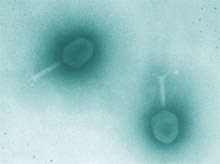
Bacteriophages.
Bacteriophages (pictured) can be used to deliver the CRISPR-Cas system into bacterial cells. Image by David Gregory and Debbie Marshall, Wellcome Images. All rights reserved by Wellcome Images.
Antibiotics work by disrupting bacteria’s ability to grow and replicate. These drugs tend to be broad spectrum, affecting both beneficial and harmful bacteria. Dr. Timothy K. Lu at the Massachusetts Institute of Technology, with graduate students Robert Citorik and Mark Mimee, set out to develop a way to specifically target harmful bacteria.
Bacteria have evolved systems to protect themselves against invaders. One of these, the CRISPR-Cas immune system, features clusters of short, repeated DNA sequences separated by other short stretches called spacers. These spacer sequences are created from the genetic material of bacteriophages (viruses that attack bacteria) and plasmids (pieces of DNA exchanged between bacteria) that the cell or an ancestor encountered. The spacers provide immunity to future exposure by directing enzymes called nucleases—encoded by cas (CRISPR-associated) genes—to destroy those specific genetic sequences.
The researchers reasoned that they could modify the spacers to target specific genetic sequences associated with bacterial virulence or antibiotic resistance. The work was funded in part by an NIH Director’s New Innovator Award and NIH’s National Institute of General Medical Sciences (NIGMS). Results appeared online on September 21, 2014, in Nature Biotechnology.
The team used a CRISPR-Cas system to successfully target antibiotic resistance genes in E. coli. Components of the system could be delivered either by bacteriophages or by other bacteria via conjugation (a process by which bacteria exchange genetic material). Both effectively spread throughE. coli populations. The system could target genes on bacterial chromosomes or plasmids.
The team also tested whether they could target a known virulence factor that allows the pathogen E. coli O157:H7 to colonize intestines. Using bacteriophage to deliver a CRISPR-Cas system against the gene, they saw a 20-fold reduction in viable E. coli cells. The team tested this system in greater wax moth larvae, an infection model often used to predict virulence in mammals. The system significantly improved survival in larvae infected with E. coli O157:H7.
The researchers were able to target multiple resistance genes at once by including 2 spacers with DNA from 2 different antibiotic resistance genes. In addition, the system could discriminate between targets that differed by only a single nucleotide. Finally, the team showed that the system could be used to selectively kill a specific E. coli strain in a population based on its genetic content while leaving others untouched.
“This is a pretty crucial moment when there are fewer and fewer new antibiotics available, but more and more antibiotic resistance evolving,” Lu says. “We've been interested in finding new ways to combat antibiotic resistance.” The researchers are now working to further improve delivery of the CRISPR-Cas system components.
—by Harrison Wein, Ph.D.

Tuesday, November 26, 2013

Possible New Cause for Rheumatoid Arthritis


Gut Microbes Linked to Rheumatoid Arthritis The presence of a specific type of gut bacteria correlates with rheumatoid arthritis in newly diagnosed, untreated people. The finding suggests a potential role for the bacteria in this autoimmune disease.

Rheumatoid arthritis is a chronic inflammatory disorder that can cause pain, swelling, stiffness, and loss of function in the finger, wrist, and other joints throughout the body. It occurs when the immune system mistakenly attacks the body’s own tissue, such as the membranes that line the joints.
The causes of rheumatoid arthritis aren’t completely known. Genes tied to the immune system may contribute. Environmental factors, such as cigarette smoking, diet and stress, may also play a role in triggering the disease. Treatments include medications to relieve pain and reduce inflammation.
The immune system is influenced by the microbiome, a network of microorganisms that live in and on the human body. These microbes outnumber the body’s cells by 10 to 1. Trillions of microbes—both helpful and harmful—reside in the digestive tract. The gut microbiome has been linked to arthritis in animal studies.
To see if these microbes might also be associated with rheumatoid arthritis in humans, Dr. Dan Littman of NYU School of Medicine led a team of researchers that examined DNA in 114 stool samples from both healthy people and those who had rheumatoid or psoriatic arthritis. The team identified gut bacteria by extracting DNA from the samples and then analyzing a bacteria-specific gene called the 16S ribosomal RNA gene. The research was funded in part by NIH’s National Institute of Arthritis and Musculoskeletal and Skin Diseases (NIAMS), National Institute of Allergy and Infectious Diseases (NIAID), and National Human Genome Research Institute (NHGRI). Results appeared online on November 5, 2013, in eLife.
The researchers found that 75% of people with new-onset, untreated rheumatoid arthritis had the bacterium Prevotella copri in their intestinal microbiome. In comparison, it was present in 12% of people with chronic, treated rheumatoid arthritis, 38% of people with psoriatic arthritis, and 21% of those in the control group. Increased levels of P. copri correlated with reductions in several groups of beneficial microbes, such as Bacteroides. The researchers performed more complete DNA sequencing on a subset of samples and identified unique Prevotella genes that correlated with rheumatoid arthritis.
To test whether P. copri could influence inflammation, the team administered the bacteria to healthy mice so that the bacteria became part of their gut microbiome. Mice were then given a chemical that induced colitis, a model of gut inflammation. Animals with P. copri developed more severe symptoms than the mice that hadn't received the bacteria. The finding provides further evidence for a potential role for P. copri in inflammation.
“Our own results in mouse studies encouraged us to take a closer look at patients with rheumatoid arthritis, and we found this remarkable and surprising association,” Littman says. “At this stage, however, we cannot conclude that there is a causal link between the abundance of P. copri and the onset of rheumatoid arthritis. We are developing new tools that will hopefully allow us to ask if this is indeed the case.”
Originally Published by NIH

Thursday, November 21, 2013

11/22/13 Health News, 3 in 10 Lab tests Unnecessary,New Antibiotic Gives Hope Against Superbugs ,Microbes, Associated With Tumors, Black Heart Disease.

Three in 10 Laboratory Blood Tests Unnecessary
Nearly a third of all laboratory blood tests are unnecessary while a similar number of tests that could prove to be useful are not being conducted, a new study published in the journal PLOS ONE and conducted by researchers at Beth Israel Deaconess Medical Center (BIDMC), who analyzed more than 1.6 million results from 46 of medicine's 50 most commonly ordered lab tests, reveals. "While working with my clinical colleagues around the hospital, I often found myself wondering about the appropriateness or inappropriateness of all of these tests. In developing this study, my coauthors and I wanted to learn more about overall lab test utilization so that we could better understand how and where errors were occurring in this extremely high-volume activity."
Their findings revealed a stark problem: Not only was there a 30 percent overall rate of test over use and there was a similar rate of under use continue reading

A Valuable Weapon in War Against Drug-resistant Superbugs: Antibiotic Offers Hope
A new kind of antibiotic that causes microbes to digest themselves has been developed by scientists who believe it could become a valuable weapon in the war against drug-resistant “superbugs”. Laboratory tests show that the drug is effective against persistent strains of the Staphylococcus bacterium and is able to cure laboratory mice of the same kind of chronic bacterial infections that have killed hospital patients. continue reading
Microbes in the Gut Help Determine Risk of Tumors
Transferring the gut microbes from a mouse with colon tumors to germ-free mice makes those mice prone to getting tumors as well, according to the results of a study published in mBio®, the online open-access journal of the American Society for Microbiology. The work has implications for human health because it indicates the risk of colorectal cancer may well have a microbial component. continue reading

Clotting Gene Gives Clue to Black Heart Disease
Black Americans are twice as likely to develop heart disease as white Americans, and a gene may yield a clue as to why, a new study has found.continue reading


Wednesday, August 28, 2013

Microbes can Feed the World

A greater emphasis on the role of microbiology in agriculture combined with new technologies can help stop potential food shortages associated with the increase of the world population according to a new report from the American Academy of Microbiology.
Microbes are essential partners in all aspects of plant physiology, but the man's efforts to improve plant productivity focused only on plants, "says Ian Sanders of the University of Lausanne, President the conference that produced the report. "  Optimize the microbial communities living in, on and around the plants, can significantly reduce the need for chemical fertilizers, pesticides and herbicides.  "
The report, "  How Microbes can Help Feed the World  "is based on the deliberations of a group of scientists who met for two days in Washington in December 2012 to review a series of questions about how interactions plants microorganisms could be used to increase agricultural productivity in an environmentally and economically responsible.
It begins with a startling statistic: In order to feed the estimated 9 billion by 2050 world population, agricultural yields will increase by 70-100%.
A better understanding of the interactions plant-microorganisms has the potential to increase crop productivity by 20% while reducing the need for fertilizers and pesticides by 20% within 20 years, according to the report. These estimates are based on the recognition that all plants rely on microbial partners to secure nutrients, pathogens and discourage resistance to environmental stress.
"  New technologies make ecosystems plants microorganisms easier to study and investment in this area of research could have important benefits  , "said Marilynn Roossinck, Pennsylvania State University, who helped organize the conference.