Showing posts with label CDC. Show all posts

Thursday, January 7, 2016

Excess Sodium Intake Remains Common in the United States

Nearly all Americans – regardless of age, race, gender or whether they have high blood pressure (hypertension) – consume more sodium than is recommended for a healthy diet. That is the conclusion of a new report published by the Centers for Disease Control and Prevention (CDC) in today’sMorbidity and Mortality Weekly Report (MMWR).
According to the latest findings, more than 90 percent of children and 89 percent of adults aged 19 and older eat too much sodium, that is, more than the recommended limits in the 2015-2020 Dietary Guidelines for Americans, not including salt added at the table. The newly released guidelines – which are developed around current scientific evidence and released every five years – recommend limiting sodium to less than 2,300 mg per day for people over the age of 14 and less for those younger. Evidence links excess sodium intake to high blood pressure and other health problems.
“The finding that nine of ten adults and children still consume too much salt is alarming,” said CDC Director Tom Frieden, MD, MPH. “The evidence is clear: too much sodium in our foods leads to high blood pressure, a major risk factor for heart disease and stroke. Reducing sodium in manufactured and restaurant foods will give consumers more choice and save lives.”
CDC researchers analyzed dietary data from the 2009-2012 National Health and Nutrition Examination Surveys (NHANES) to calculate how much sodium Americans are eating. Nearly 15,000 people were included in this study.
Sodium consumption high among those at risk of heart disease
Excess sodium intake is a problem across gender, race, and health status. Some differences were seen:
  • Among adults, a larger proportion of men (98 percent) than women (80 percent) consume too much sodium.
  • About 90 percent of adult whites consume excess sodium compared with 85 percent of blacks.
  • Estimated sodium and calorie consumption peaks between the ages of 19 and 50.
  • Among people at greater risk of developing heart disease or stroke – such as people age 51 and older, African Americans and individuals with high blood pressure or pre-hypertension (blood pressure higher than normal but not in the “high” range) – more than three out of four exceed 2,300 mg per day.
  • Adults with hypertension consume slightly less sodium than other adults, and may be trying to follow physicians’ advice to reduce sodium. However, 86 percent of adults with hypertension still consume too much.
These new findings show that little has changed in sodium consumption over the past decade. More than three quarters of sodium in the American diet is estimated to come from processed and restaurant food, which gives consumers little choice when it comes to lowering daily intake. A key strategy for lowering population-wide sodium intake is gradually reducing sodium in the food supply. Some food companies have begun to voluntarily reduce sodium in their products and others are being encouraged to take similar steps.
The report also highlights the important role healthcare professionals can play in advising patients on how to limit salt in the diet. About one in three U.S. adults – or about 70 million people – already have high blood pressure and only half have it under control. Heart disease, stroke, and other cardiovascular diseases kill more than 800,000 Americans each year and cost nearly $320 billion a year in health care and lost productivity.
“Sodium reduction is a key part of preventing heart disease and stroke,” said Sandra Jackson, an author of the report and an epidemiologist in CDC’s Division for Heart Disease and Stroke Prevention. “Reducing sodium is an achievable and effective strategy to improve heart health for everyone, but it’s going to take all of us working together to make it possible.”

Tuesday, November 24, 2015

CDC wants to increase awareness of a daily pill that can prevent HIV infection


Approximately 1 in 4 gay, bisexual men; 1 in 5 people who inject drugs; and 1 in 200 heterosexuals should be counseled about pre-exposure prophylaxis (PrEP)
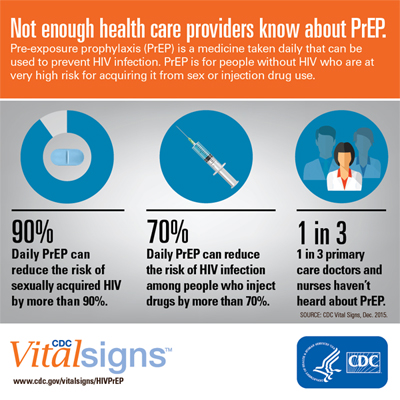
Not enough health care providers know about PrEP.
A new report published today estimates that 25 percent of sexually active gay and bisexual adult men, nearly 20 percent of adults who inject drugs, and less than 1 percent of heterosexually active adults are at substantial risk for HIV infection and should be counseled about PrEP, a daily pill for HIV prevention.
PrEP for HIV prevention was approved by the Food and Drug Administration in 2012. When taken daily, it can reduce the risk of sexually acquired HIV by more than 90 percent. Daily PrEP can also reduce the risk of HIV infection among people who inject drugs by more than 70 percent. However, according to recent studies, some primary health care providers have never heard of PrEP. Increasing awareness of PrEP and counseling for those at substantial risk for HIV infection is critical to realizing the full prevention potential of PrEP.
“PrEP isn’t reaching many people who could benefit from it, and many providers remain unaware of its promise,” said CDC Director Tom Frieden, M.D., M.P.H. “With about 40,000 HIV infections newly diagnosed each year in the U.S., we need to use all available prevention strategies.”
PrEP is one essential component in the nation’s high-impact prevention strategy
While PrEP can fill a critical gap in America’s prevention efforts, all available HIV prevention strategies must be used to have the greatest impact on the epidemic. These include treatment to suppress the virus among people living with HIV; correct and consistent use of condoms; reducing risk behaviors; and ensuring people who inject drugs have access to sterile injection equipment from a reliable source.
“PrEP has the potential to dramatically reduce new HIV infections in the nation,” says Jonathan Mermin, M.D., M.P.H, director of CDC’s National Center for HIV/AIDS, Viral Hepatitis, STD, and TB Prevention. “However, PrEP only works if patients know about it, have access to it, and take it as prescribed.”

Monday, September 21, 2015

Diabetes Problems in the U.S. Population

Diabetes is a disorder in how the body uses glucose, a sugar that serves as the body’s fuel. In type 1 diabetes, the body doesn’t make insulin, a hormone that triggers cells throughout the body to take up glucose from blood. In type 2 diabetes—the most common type—the body doesn’t make or use insulin well. Both types can lead to heart, kidney, nerve, and eye diseases over time.
Grainy image of pedestrians.
Diabetes is a potentially devastating disease, but it can be treated. This research serves as a reminder for those at risk to get screened. Image credit: Digital Vision/Photodisc/Thinkstock.
To assess how common diabetes is, researchers at NIH’s National Institute of Diabetes and Digestive and Kidney Diseases (NIDDK) analyzed data collected in CDC’s National Health and Nutrition Examination Survey (NHANES). NHANES is a periodic survey of a representative sample of the U.S. population. Recent surveys included blood tests and other measurements. The researchers, led by Drs. Andy Menke and Catherine Cowie, examined data gathered from almost 2,800 people during the 2011-2012 survey cycle. The study was published on September 8, 2015, in the Journal of the American Medical Association.
The scientists found that the overall prevalence of diabetes in the U.S. population was 12-14%, depending on the definition of diabetes used. Of those with diabetes, 25-36% may be undiagnosed. In addition, 36-38% had prediabetes, in which blood glucose levels are higher than normal but not high enough for a diagnosis of diabetes.
When the researchers compared the new data to previous NHANES results, they found that the prevalence of diabetes in the overall population climbed steeply between 1988-1994 and 2007-2008 but leveled off after that. The percentage of undiagnosed diabetes decreased from the first survey period, except for in the youngest age group and in Mexican Americans. This general drop may be due to better screening.
Hispanic Americans had the highest prevalence of diabetes in the 2011-2012 survey at 19-23%, with up to 49% of that undiagnosed. About 21-22% of non-Hispanic black adults had diabetes, with up to 37% undiagnosed. Non-Hispanic whites had the lowest prevalence of diabetes at 10-11%. They also had the lowest proportion of undiagnosed cases, at 25-32%.
The 2011-2012 NHANES gathered enough data for the researchers to quantify diabetes prevalence for Asian Americans for the first time. Diabetes was found to be common in this group, at 17-21%. Asian Americans had the highest proportion of undiagnosed diabetes among all ethnic and racial subgroups studied, at 40-51%.
“The large proportion of people with undiagnosed diabetes points to both a greater need to test for type 2 diabetes and a need for more education on when to test for type 2 diabetes, especially since populations such as Asian Americans may develop type 2 at a lower body mass than other groups,” Cowie says.
Menke points out that the Asian population is diverse, and NHANES doesn’t yet have data on differences within that population. “Getting more specific data on Asian and other subgroups may help better pinpoint education and diagnosis efforts,” he says.

Saturday, September 5, 2015

Prescription drug overdose epidemic

CDC commits $20 million to advance prevention on multiple fronts
Today, the Centers for Disease Control and Prevention (CDC) announced the launch of Prescription Drug Overdose: Prevention for States, a new program to help states end the ongoing prescription drug overdose epidemic. The Prevention for States program, as part of the U.S. Department of Health and Human Services’ Opioid Initiative, will make a strong investment in 16 states, giving them the resources and expertise they need to help prevent overdose deaths related to prescription opioids. The program builds upon the infrastructure of CDC’s Prevention Boost and Core Violence and Injury Prevention programs.
Through a competitive application process, CDC selected 16 states to receive funds through the program: Arizona, California, Illinois, Kentucky, Nebraska, New Mexico, North Carolina, Ohio, Oklahoma, Oregon, Pennsylvania, Rhode Island, Tennessee, Utah, Vermont, and Wisconsin.
“The prescription drug overdose epidemic requires a multifaceted approach, and states are key partners in our efforts on the front lines to prevent overdose deaths,” said Secretary Sylvia M. Burwell. “With this funding, states can improve their ability to track the problem, work with insurers to help providers make informed prescribing decisions, and take action to combat this epidemic.”
In FY2015, CDC is committing $20 million to launch this program in 16 states.  Over the next four years, CDC plans to give the states annual awards between $750,000 and $1 million each year, subject to the availability of funds, to advance prevention, including in these areas:
Enhancing prescription drug monitoring programs (PDMPs).
  • Putting prevention into action in communities nationwide and encouraging education of providers and patients about the risk of prescription drug overdose.
  • Working with health systems, insurers, and professional providers to help them make informed decisions about prescribing pain medication.
  • Responding to new and emerging drug overdose issues through innovative projects, including developing new surveillance systems or communications campaigns.
States can also use the funding to:
  • Better understand and respond to the increase in heroin overdose deaths.
  • Investigate the connection between prescription opioid abuse and heroin use.
The President’s Budget for 2016 includes a request from Secretary Burwell for the resources needed to expand CDC’s state efforts to all 50 states and launch a national program that will focus on prevention and prescription drug overdose surveillance.
A national epidemic
Since 1999, overdose deaths involving prescription opioids have quadrupled in the U.S. More than 16,000 people died from prescription opioid overdoses in 2013. Heroin deaths have also been on the rise, with more than 8,000 overdose deaths involving heroin in 2013—a nearly three-fold increase since 2010.
The amount of opioids prescribed and sold in the United States has increased four-fold since 1999, but there has not been an overall change in the amount of pain that Americans report.
“The prescription drug overdose epidemic is tragic and costly, but can be reversed,” said CDC Director Tom Frieden, MD, MPH.  “Because we can protect people from becoming addicted to opioids, we must take fast action now, with real-time tracking programs, safer prescribing practices, and rapid response.  Reversing this epidemic will require programs in all 50 states.”

Friday, August 28, 2015

Health News: Intractable pain may find relief in tiny gold rods ♦ Millions of lives blighted by smokeless tobacco ♦ US hospitals flout CDC recommendations that prevent infections


Intractable pain may find relief in tiny gold rods Scientists have developed a technique that could lead to therapies for pain relief in people with intractable pain, potentially including cancer-related pain. The team coated gold nanorods with a special type of protein that transports fat within the body known as a lipoprotein. This allowed the nanorods to bind efficiently to nerve cell membranes bearing a pain receptor. Gold nanorods are tiny rods that are 1-100 nanometers wide and long. In comparison, a human hair is 100,000 nanometers wide.
Something to chew on: Millions of lives blighted by smokeless tobacco More than a quarter of a million people die each year from using smokeless tobacco, researchers have concluded. The study estimates that in 2010 alone smokeless tobacco resulted in more than 62,000 deaths due to cancers of the mouth, pharynx and esophagus and accounted for more than 200,00 deaths from heart disease.
US hospitals flout CDC recommendations that prevent infections There is significant variability regarding how clinicians manage catheters placed in the arteries of patients in intensive care units, research shows. Some practices may increase risk of infection associated with these catheters. Fewer than half of those surveyed complied with current Centers for Disease Control and Prevention infection prevention guidelines for arterial catheter insertions.
Influenza vaccines provide moderate protection throughout the entire flu season Individuals who received the flu vaccine were protected for up to 6 months post-vaccination, the duration of most flu seasons.

Monday, August 3, 2015

Health News: Viagra in alcohol latest food scare in China ♦ CDC: 358 Cyclospora cases in 26 states linked to cilantro ♦ Heating and cooling with light leads to ultrafast DNA diagnostics

Viagra in alcohol latest food scare in China Chinese police are investigating if two distillers added Viagra to their liquor in the country’s latest food-safety scare. The Liuzhou Food and Drug Administration said that it found the Guikun Alcohol Plant and the Deshun Alcohol Plant, both located in the southwest of China, were putting Sildenafil, more commonly known as Viagra, into three of their baijiu products.
CDC: 358 Cyclospora cases in 26 states linked to cilantro According to an update posted Friday, July 31, 2015, as of July 30, the U.S. Centers for Disease Control and Prevention (CDC) had been notified of 358 ill persons with confirmed Cyclospora infection from 26 states so far this year.
Parents inclined to misjudge child happiness based on personal feelings Parents' estimations of their children's happiness differ significantly from the child's own assessment of their feelings, according to a new study. Research showed parents of 10 and 11-year-olds consistently overestimated their child's happiness, while those with 15 and 16-year-olds were inclined to underestimate

Heating and cooling with light leads to ultrafast DNA diagnostics Researchers used LEDs and a thin film of gold to turbocharge the heating and cooling cycles of the PCR test so results are ready in minutes, not hours. The innovation greatly expands the clinical and research applications of a workhorse lab tool used in forensics, medical diagnostics and more.

Send Children Back To School Protected From Serious Diseases

Back-to-school season is here. It’s time for parents to gather school supplies and backpacks. It’s also the perfect time to make sure children are up to date on their vaccines.
To celebrate the importance of immunizations for people of all ages and make sure adolescents are protected with all the vaccines they need; recognizing August as National Immunization Awareness Month.
“Getting children all of the vaccines recommended by CDC’s immunization schedule is one of the most important things parents can do to ensure a healthy future for their child,” said Barbara Philips, nurse educator for the Department of Health immunization program. “If you haven’t done so already, now is the time to check with your doctor to find out what vaccines your child needs.”
Adolescent vaccines protect against serious and potentially life-threatening diseases, including meningitis, septicemia and cancers caused by HPV.
When children are not vaccinated, they are at increased risk for diseases and can also spread diseases to others in their classrooms and community – including babies who are too young to be fully vaccinated, and people with weakened immune systems due to cancer or other health conditions.
Preteens and teens need Tdap (tetanus, diphtheria and pertussis) vaccine, meningococcal vaccine, and HPV (human papillomavirus) vaccine when they are 11 to 12. In addition, yearly flu vaccines are recommended for everyone 6 months or older—not just preteens and teens, but for their parents too.
Parents can find out more about the recommended immunization schedule at

Thursday, May 14, 2015

CDC data show progress in reducing some foodborne infections

While some diseases decreased, overall infections from foodborne illness remain the same
In 2014, rates of infection from a serious form of E. coli and one of the more common Salmonella serotypes decreased compared with the baseline period of 2006-2008. Meanwhile, some other less common types of Salmonella increased. Campylobacter and Vibrio rose again in 2014, continuing the increase observed during the past few years, according to data published today by the Centers for Disease Control and Prevention. Today’s report summarizes the rates of infection per 100,000 population and tracks illness trends for key foodborne illnesses.
Infection with Shiga-toxin producing E. coli O157, which can sometimes lead to kidney failure, decreased 32 percent when compared with 2006-2008 and 19 percent when compared with the most recent three years. These infections are often linked to consumption of undercooked ground beef and raw leafy vegetables. Salmonella Typhimurium, which has been linked to poultry, beef, and other foods, was 27 percent lower than it was in 2006-2008, continuing a downward trend begun in the mid-1980s. Two other less common types of Salmonella, Javiana and Infantis, more than doubled for reasons that are unclear. Salmonella Javiana is concentrated in the southeastern United States, but has been spreading within the Southeast and to other areas of the country. However, when all Salmonella serotypes are combined, there was no change in 2014. Campylobacter increased 13 percent and Vibrio increased 52 percent compared with 2006-2008. Yersinia has declined enough to meet the Healthy People 2020 goal.
The data are from FoodNet, CDC’s active surveillance system that tracks nine common foodborne pathogens in 10 states and monitors trends in foodborne illness in about 15 percent of the U.S. population. Today’s report compares the 2014 frequency of infection with the frequency in the baseline period 2006-2008 and in the three most recent years. Overall in 2014, FoodNet logged just over 19,000 infections, about 4,400 hospitalizations, and 71 deaths from the nine foodborne germs it tracks. Salmonella and Campylobacter were by far the most common– accounting for about 14,000 of the 19,000 infections reported.
“We’re cautiously optimistic that changes in food safety practice are having an impact in decreasing E.coli and we know that without all the food safety work to fight Salmonella that more people would be getting sick with Salmonella than we are seeing now,,” said Robert Tauxe, M.D., deputy director of CDC’s Division of Foodborne Waterborne and Environmental Diseases. “The increasing use of whole genome sequencing to track foodborne illness cases will also help; however, much more needs to be done to protect people from foodborne illness.”  
The recent decline in the incidence of Shiga toxin-producing E. coli (STEC) O157 follows several years of increasing scrutiny for beef products. Since 1994, the Food Safety and Inspection Service of the U.S. Department of Agriculture has taken STEC O157:H7 extremely seriously and made a number of changes in its regulatory oversight of the beef industry to protect public health.
"We are encouraged by the reduction of STEC O157:H7 illnesses, which reflects our science-based approach to beef inspection, and we look forward to seeing further reductions in Salmonella and Campylobacter infections as our improved standards for poultry take effect later this year, " said Al Almanza, Deputy Under Secretary for Food Safety at USDA. "Data sources like FoodNet allow us to be strategic in developing our food safety policies, and we will do everything within our power to keep reducing cases of foodborne illness from all meat and poultry products."
Under the provisions of the FDA Food Safety Modernization Act, the U.S. Food and Drug Administration is planning to publish major new regulations in 2015. The regulations are geared toward ensuring produce safety, implementing preventive controls on processed foods, and improving the safety of imported foods.
“Prevention of illness is the fundamental goal of our new rules under the FDA Food Safety Modernization Act,” said Michael Taylor, deputy commissioner for Foods and Veterinary Medicine at FDA.  “We have worked with a wide range of stakeholders to devise rules that will be effective for food safety and practical for the many diverse elements of our food system. Once the rules are fully implemented, FoodNet will help us evaluate their impact.”
The FoodNet report also includes results of culture-independent diagnostic tests (a new method for diagnosing intestinal illnesses without needing to grow the bacteria) done in the many hospital laboratories in the FoodNet sites. In 2014, the results of more than 1,500 such tests were reported. More than two-thirds of the tests were for Campylobacter. Other tests performed were for STEC, Salmonella, Shigella and Vibrio. Some of the tests had a positive result. However, the infections were not confirmed by culture, and so CDC experts did not include them in the overall FoodNet results for 2014.
For more information on avoiding illnesses from food, please visit www.foodsafety.gov

Wednesday, April 1, 2015

National study on use of behavioral therapy, medication and dietary supplements for ADHD in children


CDC publishes first national study on use of behavioral therapy, medication and dietary supplements for ADHD in children
ADHD medication and behavioral therapy among children with ADHD (ages 4-17) with special health care needs 
The first national study to look at behavioral therapy, medication, and dietary supplements to treat attention-deficit/hyperactivity disorder (ADHD) among children ages 4-17 shows that less than one half of children with ADHD were receiving behavioral therapy in 2009-2010. The Centers for Disease Control and Prevention (CDC) study, “Treatment of Attention-Deficit/Hyperactivity Disorder among Children with Special Health Care Needs,” published today in The Journal of Pediatrics provides a snapshot into how ADHD was treated just before the release of the 2011 clinical guidelines for treatment of ADHD from the American Academy of Pediatrics (AAP).
According to the study, among children 4-17 years of age, about 4 in 10 children with ADHD were treated with medication alone, 1 in 10 received behavioral therapy alone, 3 in 10 were treated with both medication and behavioral therapy, and 1 in 10 received neither medication nor behavioral therapy.  Overall, about 1 in 10 children took dietary supplements for ADHD.
The data show that 1 in 2 preschoolers ages 4-5 with ADHD received behavioral therapy and about 1 in 2 were taking medication for ADHD. Almost 1 in 4 preschoolers were treated with medication alone.  Among children ages 6-17 with ADHD, fewer than 1 in 3 received both medication and behavioral therapy.
“We do not know what the long-term effects of psychotropic medication are on the developing brains and bodies of little kids. What we do know is that behavioral therapy is safe and can have long-term positive impacts on how a child with ADHD functions at home, in school, and with friends,” said CDC Principal Deputy Director Ileana Arias, Ph.D. “Because behavioral therapy is the safest ADHD treatment for children under the age of 6, it should be used first, before ADHD medication for those children.”
In 2011, AAP released ADHD treatment guidelines recommending behavioral therapy alone for treatment of preschoolers and combination therapy of medication and behavioral therapy for children with ADHD between the ages of 6-17.
“Treatment decisions for ADHD in children can be complex. Parents, health professionals, psychologists, and educators can work together to ensure that children receive the best treatment available,” said Susanna Visser, DrPH, M.S., epidemiologist with CDC’s National Center on Birth Defects and Developmental Disabilities. She added, “The good news is that we now have strong clinical guidelines to support the more than 5 million children living with ADHD.”
The study shows significant state-to-state variability in the type of treatment used to treat ADHD in children 4-17 years of age. On average, states with higher behavioral therapy rates had lower medication treatment rates and vice versa. Rates of medication treatment among children with ADHD ranged from a low of 57 percent in California to a high of 88 percent in Michigan. Rates of behavioral therapy among children with ADHD ranged from a low of 33 percent in Tennessee to 61 percent in Hawaii. This analysis was from parent reported data from the 2009-2010 National Survey of Children with Special Health Care Needs.
Additional Information on ADHD:
ADHD is one of the most common chronic conditions of childhood. It often persists into adulthood. Children with ADHD may have trouble paying attention and/or controlling impulsive behaviors. When children diagnosed with ADHD receive proper treatment, they have the best chance of thriving at home, doing well at school, and making and keeping friends.
CDC monitors the number of children who have been diagnosed with ADHD through national survey data and community based studies. Including questions about ADHD on national or regional surveys helps CDC learn more about the number of children with ADHD, their use of ADHD treatments, and the impact of ADHD on children and their families. Learn more at www.cdc.gov/adhd.
For more information on the American Academy of Pediatrics guidelines on diagnosing, evaluating and treating ADHD visithttp://www.cdc.gov/ncbddd/adhd/guidelines.html
The National Resource Center on ADHD, a program of CHADD (Children and Adults with Attention-Deficit/Hyperactivity Disorder) and supported by CDC, is the national clearinghouse for the latest evidence-based information on ADHD. The Center provides comprehensive information and support to individuals with ADHD, their families and friends, and the professionals involved in their lives, www.help4adhd.org

Health News: Pesticides in fruit and vegetables linked to semen quality ♦ Supermarkets fined for selling mouldy food ♦ outbreak determined to late to warn the public + more


Supermarkets fined for selling mouldy food  Australia’s biggest supermarkets have been ashamed for trying to sell mouldy and out-of-date food. Source: News Limited IGA Nabiac sold potato salad and herb bread two weeks out of date Woolworths had expired milk on shelves at Caltex in Blacktown Coles copped fines for failing to display food at correct temperature
CDC: Source of cucumber linked outbreak determined to late to warn the public In late February, the U.S. Centers for Disease Control and Prevention (CDC) released a detailed report describing a summer 2014 outbreak of Salmonella linked to cucumbers grown in the Delmarva region of Maryland. The outbreak resulted in 275 confirmed illnesses and the death of one man. Considering that CDC estimates only one in 30 Salmonella cases are confirmed
Pesticides in fruit and vegetables linked to semen quality  The first study to investigate the relationship between eating fruit and vegetables containing pesticide residues and the quality of men's semen has shown a link with lower sperm counts
Date syrup shows promise for fighting bacterial infections  Date syrup – a thick, sweet liquid derived from dates that is widely consumed across the Middle East – shows antibacterial activity against a number of disease-causing bacteria,
3-D human skin maps aid study of relationships between molecules, microbes and environment Researchers have produced 3-D maps of molecular and microbial variations across the body. These maps provide a baseline for studies of the interplay between the molecules that make up our skin, our microbiomes, our personal hygiene routines and other environmental factors. The study may help further our understanding of the skin's role in hu

Friday, March 13, 2015

Blue Bell Ice Cream recalled - Three Dead From Listeriosis

The U.S. Food and Drug Administration along with the Centers for Disease Control and Prevention (CDC) and state and local officials are investigating an outbreak of listeriosis potentially linked to certain Blue Bell Creameries single serving ice cream products. Listeriosis is caused by the bacterium Listeria monocytogenes.
According to the CDC and the Kansas Department of Health and Environment, five patients who were treated in a single hospital in Kansas were infected with one of four rare strains of Listeria monocytogenes. Three of these strains, which are highly similar, have also been found in products manufactured at the Blue Bell Creameries production facility in Brenham, Texas. Illness onset dates range from January 2014 to January 2015.
FDA was notified that these three strains and four other rare strains of Listeria monocytogenes were found in samples of Blue Bell Creameries single serving Chocolate Chip Country Cookie Sandwich and the Great Divide Bar ice cream products collected by the South Carolina Department of Health & Environmental Control during routine product sampling at a South Carolina distribution center, on February 12, 2015. These products are manufactured at Blue Bell Creameries’ Brenham facility.
The Texas Department of State Health Services, subsequently, collected product samples from the Blue Bell Creameries Brenham facility. These samples yielded Listeria monocytogenes from the same products tested by South Carolina and a third single-serving ice cream product, Scoops, which is also made on the same production line.
According to the Kansas Department of Health and Environment, hospital records available for four patients show that all were served ice cream from Blue Bell Creameries’ prepackaged, single-serving products and milkshakes made from these products. The hospital receives ice cream manufactured by Blue Bell Creameries, although it is not confirmed that the hospital receives ice cream only from the Brenham facility.
All five case patients are adults. Three deaths have been reported.
Blue Bell Creameries reports that it has removed the affected ice cream products from the market (see section below “What Products are Involved?”) by picking it up directly from the retailers and hospital settings it serves. The company has also shut down the production line where the products were made.
The FDA has moved quickly to investigate this issue and learn as much as possible to prevent additional people from becoming ill. We recognize that people will be concerned about these illnesses, and we will continue to provide updates and advice.
What are the Symptoms of Listeriosis?
Listeriosis is a rare but serious illness caused by eating food contaminated with the bacteria called Listeria monocytogenes. Anyone who experiences fever and muscle aches, sometimes preceded by diarrhea or other gastrointestinal symptoms, or develops fever and chills after eating the ice cream should seek medical care and tell their healthcare provider about any history of eating the ice cream. Symptoms can appear from a few days up to a few weeks after consumption of the contaminated food.
Who is at Risk?
Listeriosis can be fatal, especially in certain high-risk groups. These groups include the elderly, and people with weakened immune systems and certain chronic medical conditions (such as cancer). In pregnant women, listeriosis can cause miscarriage, stillbirth, premature labor, and serious illness or death in newborn babies.
What Products Are Involved?
Blue Bell Creameries reports that the following products were removed from the market. This action includes only the products listed below and does not include Blue Bell cups, pints or half gallons.
Product Name
Product Code
Chocolate Chip Country Cookie
SKU # 196
Great Divide Bar
SKU #108
Sour Pop Green Apple Bar
SKU #221
Cotton Candy Bar
SKU #216
Scoops
SKU #117
Vanilla Stick Slices
SKU #964
Almond Bars
SKU #156
6 pack Cotton Candy Bars
SKU #245
6 pack Sour Pop Green Apple Bars
SKU #249
12 pack No Sugar Added Mooo Bars*
SKU #343
*The regular Mooo Bars, available at grocery stores, are not subject to recall.
What Do Consumers Need To Do?
Consumers should not eat any of the products listed above.  If these ice cream products are in your freezer, they should be thrown away, even if some of them have been eaten without anyone becoming ill.
Recommendations for preventing listeriosis are available at the CDC Listeria website:http://www.cdc.gov/listeria/prevention.html.   
Listeria monocytogenes can grow at refrigerator temperatures, as low as 40 degrees Fahrenheit (4 degrees Celsius). The longer ready-to-eat refrigerated foods are stored in the refrigerator, the more opportunity Listeria has to grow.
For refrigerators and other food preparation surfaces and food cutting utensils that may have come in contact with the potentially contaminated ice cream, it is very important that the consumers thoroughly clean these areas
  • Wash the inside walls and shelves of the refrigerator, cutting boards and countertops; then sanitize them with a solution of one tablespoon of chlorine bleach to one gallon of hot water; dry with a clean cloth or paper towel that has not been previously used.
Consumers should follow these simple steps:
  • Wash hands with warm water and soap for at least 20 seconds before and after handling food.
  • Wipe up spills in the refrigerator immediately and clean the refrigerator regularly.
  • Always wash hands with warm water and soap following the cleaning and sanitization process.
What Do Institutions and Retailers Need To Do?  
Institutions and retailers should not sell or serve any products listed above.  They should also take the following steps:
  • Wash and sanitize display cases and refrigerators where potentially contaminated products were stored.
  • Wash and sanitize cutting boards, surfaces, and utensils used to cut, serve, or store potentially contaminated products.
  • Wash hands with warm water and soap following the cleaning and sanitation process.
  • Retailers, restaurants, and other food service operators who have processed and packaged any potentially contaminated products need to be concerned about cross contamination of cutting surfaces and utensils through contact with the potentially contaminated products.
  • Regular frequent cleaning and sanitizing of cutting boards and utensils used in processing may help to minimize the likelihood of cross-contamination.
Listeria can grow at refrigeration temperatures. Retailers, restaurants, and other food service operators may wish to consider whether other foods available for sale could have been cross-contaminated from the potentially contaminated products, and should be discarded.  
Who Should be Contacted?
The FDA encourages consumers with questions about food safety to call 1-888-SAFEFOOD Monday through Friday between 10 a.m. and 4 p.m. Eastern time, or to consult http://www.fda.gov.