Showing posts with label repair. Show all posts

Monday, November 9, 2015

Molecule proves key to brain repair after stroke

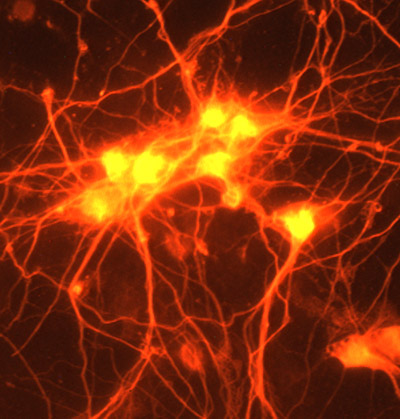
Neurons.
Neurons that have been exposed to GDF10 grow more connections as a result.UCLA
Stroke occurs when blood flow to the brain is disrupted. Without oxygen- and nutrient-rich blood, brain cells start to die. Recovery after stroke depends on a process called axonal sprouting, in which healthy neurons send out new projections, or extensions. These “sprouts” generate new connections between brain cells or reestablish some of the connections that were lost or damaged during stroke, resulting in partial recovery.
Previous studies suggested that a protein called growth and differentiation factor 10 (GDF10) was involved in the early stages of axonal sprouting. Dr. S. Thomas Carmichael and his colleagues at the University of California, Los Angeles, took a closer look at GDF10 to identify how it contributes to the process. Their work was supported in part by NIH’s National Institute of Neurological Disorders and Stroke (NINDS). The findings were published online on October 26, 2015, inNature Neuroscience.
By examining animal models of stroke as well as brain tissue from human autopsies, the team found that GDF10 was activated very early after stroke. Using rodent neurons and human neurons derived from stem cells, the researchers showed that GDF10 stimulated axonal growth and increased the length of the axons.
To see whether GDF10 is important for functional recovery after stroke, the researchers treated mouse models of stroke with GDF10 in a biopolymer hydrogel, which releases the protein to the site of injury over a 2- to 3-week period. Treated animals performed various motor tasks significantly faster and with fewer errors after stroke than control animals. In contrast, when the researchers blocked GDF10 production, the animals didn’t perform as well on the motor tasks, suggesting that repair mechanisms were impaired without GDF10.
To understand the pathways by which GDF10 might be working, the researchers isolated cortical neurons after stroke and examined their gene expression profiles. To see if the mechanisms of repair are similar to axonal sprouting during normal development when mice are forming new connections, they also examined cortical neurons from young mice. The analysis revealed that GDF10 affected a set of genes after stroke that was distinct from those involved in development.
“We found that regeneration is a unique program in the brain that occurs after injury. It is not simply Development 2.0, using the same mechanisms that take place when the nervous system is forming,” Carmichael says.
“These findings help to elucidate the mechanisms of repair following stroke,” says Dr. Francesca Bosetti, stroke program director at NINDS. “Identifying this key protein further advances our knowledge of how the brain heals itself from the devastating effects of stroke, and may help to develop new therapeutic strategies to promote recovery.”

Wednesday, October 28, 2015

Scientists identify main component of brain repair after stroke

NIH-funded research pinpoints protein that sprouts into action, activating stroke repair
Looking at brain tissue from mice, monkeys and humans, scientists have found that a molecule known as growth and differentiation factor 10 (GDF10) is a key player in repair mechanisms following stroke. The findings suggest that GDF10 may be a potential therapy for recovery after stroke. The study, published in Nature Neuroscience, was supported by the National Institute of Neurological Disorders and Stroke (NINDS), part of the National Institutes of Health.
Image of neurons in a dish treated with GDF10
Sprouting connections in the brain: Adding GDF10 to neurons in a dish results in the formation of new connections between brain cells. This process may lead to recovery after stroke. Image courtesy of S. Thomas Carmichael, M.D., Ph.D., David Geffen School of Medicine at the University of California Los Angeles.
“These findings help to elucidate the mechanisms of repair following stroke. Identifying this key protein further advances our knowledge of how the brain heals itself from the devastating effects of stroke, and may help to develop new therapeutic strategies to promote recovery,” said Francesca Bosetti, Ph.D., stroke program director at NINDS.
Stroke can occur when a brain blood vessel becomes blocked, preventing nearby tissue from getting essential nutrients. When brain tissue is deprived of oxygen and nutrients, it begins to die. Once this occurs, repair mechanisms, such as axonal sprouting, are activated as the brain attempts to overcome the damage. During axonal sprouting, healthy neurons send out new projections (“sprouts”) that re-establish some of the connections lost or damaged during the stroke and form new ones, resulting in partial recovery. Before this study, it was unknown what triggered axonal sprouting.
Previous studies suggested that GDF10 was involved in the early stages of axonal sprouting, but its exact role in the process was unclear. S. Thomas Carmichael, M.D., Ph.D., and his colleagues at the David Geffen School of Medicine at the University of California Los Angeles took a closer look at GDF10 to identify how it may contribute to axonal sprouting.
Examining animal models of stroke as well as human autopsy tissue, Dr. Carmichael’s team found that GDF10 was activated very early after stroke. Then, using rodent and human neurons in a dish, the researchers tested the effect of GDF10 on the length of axons, the neuronal projections that carry messages between brain cells. They discovered that GDF10 stimulated axonal growth and increased the length of the axons.
“We found that GDF10 caused many different neurons in a dish to grow, including human neurons that were derived from stem cells,” said Dr. Carmichael.
His group also found that GDF10 may be important for functional recovery after stroke. They treated mouse models of stroke with GDF10 and had the animals perform various motor tasks to test recovery. The results suggested that increasing levels of GDF10 were associated with significantly faster recovery after stroke. When the researchers blocked GDF10, the animals did not perform as well on the motor tasks, suggesting the repair mechanisms were impaired — and that the natural levels of GDF10 in the brain represent a signal for recovery.
“We were surprised by how consistently GDF10 caused new connections to form across all of the levels of analysis. We looked at rodent cortical neurons and human neurons in dish as well as in live animals. It’s a demanding gauntlet to run, but the effects of GDF10 held up in all of the levels that we tested,” said Dr. Carmichael.
It has been widely believed that mechanisms of brain repair are similar to those that occur during development. Dr. Carmichael’s team conducted comprehensive analyses to compare the effects of GDF10 on genes related to stroke repair with genes involved in development and learning and memory, processes that result in connections forming between neurons.
Surprisingly, there was little similarity. The findings revealed that GDF10 affected entirely different genes following stroke than those involved in development or learning and memory.
“We found that regeneration is a unique program in the brain that occurs after injury. It is not simply Development 2.0, using the same mechanisms that take place when the nervous system is forming,” said Dr. Carmichael.
More research is necessary to determine whether GDF10 can be a potential treatment for stroke recovery.

Friday, October 23, 2015

Cardiovascular Research: Cardiac experts find novel approach to treat heart failure ♦ Blood pressure medication can't undo all damage ♦ Cardiac muscle cells as good as progenitors for heart repair

Blood pressure medication can't undo all damage Patients on antihypertensive medications are still at greater risk of cardiovascular disease, despite controlled numbers. A new study sought to determine whether effective treatment of hypertension could lower the risk of cardiovascular disease to that seen in people who have always had ideal blood pressure levels.
Two lefts make it right: Cardiac experts find novel approach to treat heart failure A teenage girl faced with sudden rapid heart deterioration, a man in the prime years of his life suffering from debilitating heart failure and a former NFL athlete crippled by end-stage heart failure were all successfully treated with a surgical approach recently pioneered in California.
Effect of duration of storage of red blood cells transfused for cardiac surgery Although some studies have suggested that transfusion of stored red blood cell (RBC) concentrates may be harmful, as blood undergoes several physiological changes during storage, an analysis of patients who underwent cardiac surgery in Sweden over a 16-year period found no association between duration of RBC storage and risk of death or serious complications.
Cardiac muscle cells as good as progenitors for heart repair Stem cell therapies for post-heart attack tissue repair have had modest success at best. Clinical trials have primarily used bone marrow cells, which can promote the growth of new blood vessels, but many studies have shown no benefit. A better alternative may be to use human heart muscle cells

Thursday, April 24, 2014

Adult Stem Cell Research Shows Promise

Scientists sporting white coats and safety gloves are working in a bright Food and Drug Administration (FDA) lab on an incredible project.
They are part of FDA’s MSC Consortium, a large team of FDA scientists studying adult mesenchymal stem cells (MSCs)—cells that could eventually be used to repair, replace, restore or regenerate cells in the body, including those needed for heart and bone repair.
The scientists’ investigational work is unprecedented: Seven labs at FDA's Center for Biologics Evaluation and Research formed the consortium to fill in gaps in knowledge about how stem cells function.
“This research aims to facilitate development of this important class of innovative medical products,” explains Carolyn A. Wilson, Ph.D., associate director for research at the center. “It’s the first time we’ve done anything like this, and it’s proven to be a very useful approach. It’s worked so well because this is a huge, complicated project that requires expertise in many different technologies and methods.”
The research could ultimately be key to the advancement of personalized medicine, the practice in which medical treatment is tailored to the needs of an individual patient. “It’s not science fiction,” says Steven R. Bauer, Ph.D., chief of the Cellular and Tissue Therapy Branch in FDA’s Office of Cellular Tissue and Gene Therapies. “For me, regenerative medicine is the most exciting part of what we regulate in our office.”
So What Are Stem Cells?
There are two basic kinds of stem cells that are currently useful in the field of regenerative medicine: multipotent and pluripotent stem cells. Multipotent stem cells are generally taken from adults and can divide and develop into many different cell types. Pluripotent stem cells can develop into any type of cell in the body. Both types could divide to replenish cells damaged by injury, illness or normal wear. When stem cells divide, the new cells can either remain stem cells or develop into a new type of cell with a more specific function.
Two types of pluripotent stem cells exist: human embryonic stem cells and induced pluripotent stem cells, which are created by reprogramming adult cells that had already changed into a mature type of cell.
FDA’s MSC Consortium is not studying stem cells taken from embryos. “We’re looking at a particular kind of multipotent adult stem cell—the MSC—which is being used in a lot of regenerative medicine clinical trials,” adds Bauer.
The group is currently studying eight unique cell lines, each acquired from commercial sources and sourced to one of eight distinct, adult donors. (Males and females age 22 to 47 donated stem cells from bone marrow.)
The cells under study are multipotent: “They can differentiate (mature into) at least three cell types: bone, fat and cartilage, primarily,” Bauer explains. “They can also differentiate into nerve cells, liver cells and a kind of cell called ‘stroma’ that is in the bone marrow and supports blood forming cells. Then, for investigational clinical uses, they’ve been used for repairing hearts, repairing bone and repairing cartilage.”
Why Is FDA Studying These Cells?
In addition to differentiating into a variety of replacement cell types, MSCs can limit a patient’s immune response. So they can potentially be taken from one human donor and placed into a different recipient with less possibility of rejection.
But growing stem cells and making sure they are safe and effective is challenging, which is one reason why stem-cell based clinical trials have not yet resulted in a marketed product.
“The major challenge is that cells are much more complex than traditional products that FDA regulates. And they have the ability to respond to their environment,” Bauer explains. “Taking them out of the body and manufacturing them—that is, growing large numbers of them—or isolating them can change their biology. And it can change the way they behave if they are put back into the patient.”
For instance, if cells are manufactured in large quantities outside their natural environment, they may become ineffective or develop harmful characteristics. For example, they can produce tumors, severe immune reactions or growth of unwanted tissue. So FDA is trying to develop methods that would predict with more certainty how manufactured or isolated adult stem cells will behave in patients.
What's Being Done?
In the labs, cells are suspended in a nutrient liquid solution and grown in sterile containers called tissue culture flasks. Cells then multiply and go through three, five or seven generations of growth.
FDA scientists are using a variety of cutting-edge methods to characterize cells and then determine if any of these characteristics can predict the behavior of the cells in biological assays or in animal models. The next step will be to determine if any characteristics they measure will predict the safety or effectiveness of stem-cell based products in patients.
Specifically, scientists will continue studying whether factors such as different methods of growing the cells, donor age or gender affects the cells’ quality and performance. This research will ultimately provide new tools to the community of academic and private industry scientists who are interested in evaluating and developing stem cells into new clinical treatments.
“The consortium has shown that widely accepted ways to identify and characterize MSCs do not reveal some important biological differences between batches of these cells,” Bauer says. So the consortium seeks to demonstrate ways to better characterize MSCs that will be used in clinical trials. That’s important because, if investigators can improve the tools used to characterize MSCs used for clinical trials, the data generated from their studies could also improve because their MSC products will be more predictable, he adds.
And the improved predictability of their products will, in turn, allow FDA scientists to more easily evaluate the safety and effectiveness of new stem cell technologies—a key part of the regulatory science that is the foundation of FDA decisions.
Stem cells, like other medical products intended to treat, cure or prevent disease, require FDA approval before they can be marketed. “It is important for FDA to maintain a sound regulatory science research program to promote the development of safe and effective products in emerging areas that hold great promise,” Bauer says.
“My colleagues and I hope our scientific findings will be helpful in the field of regenerative medicine, including the ability to repair or even replace organs and tissues more safely and effectively than traditional means,” he adds. “Although there are many scientific hurdles to overcome before the use of stem cells reaches its full potential, I think this medicine will eventually have the capacity to do that.”