Showing posts with label illegal. Show all posts

Thursday, July 2, 2015

FDA: 16 Illegal ear drops taken from the market.

FDA: Use Only Approved Prescription Ear Drops
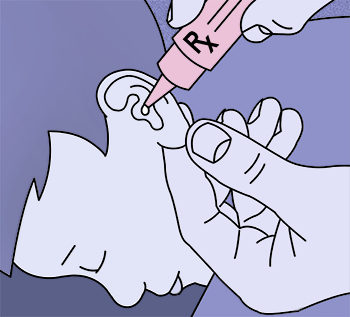
Applying prescription eardrops to small child (350 x 317)
FDA wants to make sure that the next time your child has ear pain requiring a prescription drug, the product has been approved by FDA as safe and effective.
That’s why FDA is notifying companies to stop marketing 16 unapproved prescription drugs labeled to relieve ear pain and swelling. These ear drops contain active ingredients such as benzocaine and hydrocortisone but have not been evaluated by FDA for safety, effectiveness and quality.
For years, health care providers have prescribed—and pharmacies have sold—these drug products whose labels did not disclose that they weren’t approved by FDA.
“If we don’t know whether these drugs have any benefits, we should not accept any possible risk of side effects,” says FDA’s Charles E. Lee, M.D.
Why FDA Is Taking This Action
FDA is taking this action under its Unapproved Drugs Initiative, which seeks to protect consumers from drugs that are not proven safe, effective and of high quality.
Using a product that has not been shown to be effective, especially when we have evidence of some safety concerns, is risky to the public health. FDA has received a few reports that these products had caused local allergic reactions of the ear, eye, face, neck and mouth. They can also cause itching, stinging, burning and irritation of the ear.
The quality of these drugs is uncertain. When FDA approves a drug, we review the manufacturing processes to ensure that the drugs are of consistent quality and purity, Lee says. That’s not the case with these unapproved ear drops.
What’s especially worrisome is that some of these products are prescribed for young children and infants, the population most susceptible to ear infections.
“It’s very basic—drugs that are used in children should be tested in children,” Lee says. “These products haven’t been shown to be effective in anyone, and there’s no proof that they work.”
FDA-Approved Alternatives Available
Parents and other consumers still will have many other treatment options.
FDA’s action affects only a small percentage of the drugs prescribed to treat pain and swelling that result from otitis media (middle ear infections), otitis externa (outer ear infections), and excess buildup of earwax. There are many FDA-approved drugs for middle and outer ear infections, plus other over-the-counter (OTC) products that are effective for prevention of swimmer’s ear and earwax buildup.
“We want consumers, doctors, health care providers and pharmacists to know about this problem and that they have better choices,” Lee says. “It’s not a difficult change. Use the products that we know are safe and don’t pose a danger to your health.”
What to Do Next
If you think you’re using unapproved prescription ear drops, contact your health care provider to discuss alternatives. FDA’s action will not affect legally marketed ear drops.
If you are experiencing side effects from unapproved products, consult your healthcare provider as soon as possible. FDA urges you to report that information online. You or your healthcare provider can also report an illness or injury related to the use of these products by calling 1-800-FDA-1088.

Saturday, March 14, 2015

Health News: Hidden hazards found in 'green' products ♦ Dairies illegally using antibiotics ♦ Onion extract improves high blood sugar ♦ Graphene fights cavities + more

Hidden hazards found in 'green' products  Common consumer products, including those marketed as 'green,' 'all-natural,' 'non-toxic' and 'organic' emit a range of compounds that could harm human health and air quality, researchers have found. But most of these ingredients are not disclosed to the public.Continue Reading
Dairies found illegally using antibiotics  A small number of dairy farms have been found using animal antibiotics in ways not approved by law, according to a new study by the U.S. Food and Drug Administration’s Center for Veterinary Medicine. Continue Reading
Onion extract may improve high blood sugar and cholesterol  The extract of onion bulb, Allium cepa, strongly lowered high blood glucose (sugar) and total cholesterol levels in diabetic rats when given with the antidiabetic drug metformin, according to a new study.Continue Reading
Study contaminated food causes 14%: of norovirus outbreaks  According to new work by researchers from the Netherlands, New Zealand and the U.S. Centers for Disease Control and Prevention about 14 % of all norovirus outbreaks are attributed to contaminated food. Noroviruses are one of the leading causes of gastroenteritis worldwide. Continue Reading

Graphene: A new tool for fighting cavities  Dental diseases, which are caused by the overgrowth of certain bacteria in the mouth, are among the most common health problems in the world. Now scientists have discovered that a material called graphene oxide is effective at eliminating these bacteria, some of which have developed antibiotic resistance Continue Reading

Thursday, July 17, 2014

NIH System to Monitor Emerging Drug Trends

Data from the National Drug Early Warning System will promote rapid and effective public health responses
An innovative National Drug Early Warning System (NDEWS) is being developed to monitor emerging trends that will help health experts respond quickly to potential outbreaks of illicit drugs such as heroin and to identify increased use of designer synthetic compounds. The system will scan social media and Web platforms to identify new trends as well as use conventional national- and local-level data resources.
“By monitoring trends at the local level, we hope to prevent emerging drug problems from escalating or spreading to surrounding regions”
Dr. Nora D. Volkow
Director, National Institute on Drug Abuse (NIDA)
The University of Maryland’s Center for Substance Abuse Research (CESAR) will receive five years of funding from the National Institute on Drug Abuse (NIDA), part of the National Institutes of Health, to develop NDEWS.
“NDEWS will generate critically needed information about new drug trends in specific locations around the country so rapid, informed, and effective public health responses can be developed precisely where needed,” said NIDA Director Dr. Nora D. Volkow. “By monitoring trends at the local level, we hope to prevent emerging drug problems from escalating or spreading to surrounding regions.”
Information about designer synthetic drugs – including different ways to possess and use them – is rapidly spread to millions of people through the Internet and social media. Also, other drug trends may quickly change. An example is the recent increases in heroin use among many regions across the country. Conventional methods to monitor drug trends may not ask about emerging drugs, do not always provide information about the types of drugs used at the community level, and may need a year or more to collect and report information.
Currently, NIDA conducts local-level surveillance on drug use through the Community Epidemiology Work Group (CEWG) network. For the last 38 years, CEWG has relied on drug addiction experts to analyze data from various other sources and summarize this information in semiannual reports from sentinel sites - major metropolitan areas and some states from around the United States. NDEWS will continue to monitor drug trends in sentinel sites around the country using many of the national and local data sources that have been utilized by CEWG. To expand upon these efforts and produce an enhanced national system to reflect that new drug trends may emerge outside of sentinel sites, NDEWS will establish a virtual community - a network of addiction experts across the country who will regularly communicate with each other to:
  • Detect emerging drug trends using national and local data sources (existing surveys, various drug-related lists and networks, and social media and web scans).
  • Dispatch a rapid response team at hot spots - local areas with reported rapid increases in emerging drugs. This team will assess the outbreak and collect anonymous urine samples — provided by criminal justice drug testing programs — for enhanced analysis that includes testing for synthetic drug metabolites.
  • Quickly disseminate information to the public using traditional and social media, websites, publications and newsletters.
“NDEWS promises to provide the country with critically needed real-time information about changing drug use patterns in communities across the country,” said lead investigator Dr. Eric Wish of CESAR. “It will utilize social media and other innovative technologies to identify emerging drugs and trends and to quickly disseminate important findings to experts and interested citizens. This opportunity builds on CESAR’s over 20 years of experience monitoring and reporting on emerging drugs.”
The five-year project begins in August 2014. For more information on the current system, CEWG, please go to:http://www.drugabuse.gov/about-nida/organization/workgroups-interest-groups-consortia/community-epidemiology-work-group-cewg.

Thursday, March 27, 2014

100 People Sick from Illegally Manufactured Mexican Style Cheese


SPRINGFIELD – Illinois Department of Public Health (IDPH) Director Dr. LaMar Hasbrouck is warning people about the dangers of consuming illegally manufactured cheeses. Health officials are reporting around 100 cases of salmonellosis in 13 counties believed to be linked to consumption of an illegally manufactured Mexican-style cheese. A sample of the cheese obtained from the home of a person who became ill tested positive for Salmonella. IDPH is working with local health departments to identify the manufacturer of the contaminated cheese.
“We’re concerned that people who consume this manufactured cheese may become sick from Salmonella,” said Dr. Hasbrouck. “It is important for you to check the labeling to make sure the product was made by a licensed dairy manufacturer - even if you purchased the cheese from a grocery store. If you become ill after eating Mexican-style cheese, contact your healthcare provider and your local health department.”
Local health departments in Boone, Cook (including the city of Chicago), DuPage, Fayette, Kane, Lake, LaSalle, Macon, Marion, McHenry, Vermillion, Washington and Will counties have reported to IDPH since July 2012 around 100 cases with the same strain of Salmonella believed to be associated with this cheese. The average age of people who have become ill is nine-years-old and a third of all the cases have been hospitalized.
Anyone with information about illegally manufactured cheese should contact their local health department for follow up. Without this information, it will not be possible to prevent further illnesses. People who become ill after eating illegally manufactured cheese, should keep the cheese for possible testing.
Many cases have reported consuming Mexican-style cheese obtained from worksites, including factories, and at train stations, from street vendors and from relatives and friends. The cheese is not labeled and is often wrapped in aluminum foil. IDPH recommends that people who have Mexican-style cheese in their home, but cannot clearly identify the product was made by a licensed or regulated manufacturer, should not eat the cheese.
While Salmonella bacteria cannot be detected by sight, taste or smell, it can cause illness, including fever, abdominal cramps and diarrhea. Most individuals can recover on their own in 3 to 5 days. The infection can be more severe in young children, the elderly and those with compromised immune system.
IDPH advises against buying or consuming cheese that is suspected to be made by an unlicensed dairy manufacturer. IDPH encourages consumers to always purchase milk and dairy products made by licensed dairy manufacturers. Legitimate Mexican-style cheeses are available in the refrigerated case at retail stores and in most cases, label information specifies the legal name of the product, the name and address of distributor or processor, quantity of contents, an ingredient statement, and nutrition facts.
For more information about Salmonella log on to www.idph.state.il.us/public/hb/hbsam.htm.


Thursday, January 16, 2014

FDA Seizes Hundreds of Rogue Pharmacy Websites.


Don't order medicines from web sites that claim to be Canadian pharmacies. Most are not legitimate pharmacies, and the drugs they supply are illegal and potentially dangerous.
Claiming to be a Canadian pharmacy is one of the hallmarks of Internet sites that sell illegal prescription drugs which, in many cases, are not made in Canada at all, but in a number of other countries. (Even if an online Canadian pharmacy is legitimate, in general, U.S. citizens cannot legally import prescription drugs from other countries. But that's a separate issue. We're talking here about fraud.)
There are many other false claims being made, but this one figured prominently in the June 2013 seizure of hundreds of rogue pharmacy websites.
This is according to Special Agent Daniel Burke, senior operations manager in FDA's Cybercrimes Investigations Unit, a special team created in March 2013 in the agency's Office of Criminal Investigations (OCI). Cybercrimes are illegal acts involving a computer and a network. This unit works with other domestic and international agencies to track down the operators and suppliers of websites that illegally sell prescription medicines. The agents' methods include high-tech detection in which they follow the cyber-trail of these pharmacies, and go undercover to infiltrate the criminal world.
Burke explains that medicines offered by these sites are often stolen or counterfeit. An unsuspecting consumer may be buying a medicine that does not have the active ingredient that will make it effective, or it may have undisclosed ingredients that could endanger their health or even be life-threatening.
"Consumers are able to buy prescription drugs, unapproved drugs and potentially counterfeit drugs without a full understanding of the risks that they take when they do that," says OCI Director John Roth. "What worries me is that people naively believe that these medicines are safe."
Illegal Pharmacy Websites Seized
In June, FDA—working with international regulatory and law enforcement agencies, including the U.S. Attorney's Office in Denver, Colorado—seized and shut down 1,677 illegal pharmacy websites. Many of the websites appeared to be operated by a criminal network that represented itself as various Canadian pharmacies.
The medicines sold on these websites were described as "brand name" or "FDA-approved" when they were neither. Products purchased by federal agents bypassed safety controls required by FDA, including that they be used with a valid prescription and under the supervision of a licensed health care provider.
Some of the illegal sites used the names of well-known U.S. retailers to trick consumers into believing that there was an affiliation with those stores. Examples include www.walgreens-store.com and www.c-v-s-pharmacy.com.
The banner of FDA's Cybercrimes Investigation Unit is now displayed on the seized sites to identify them as illegal.
Burke says it was dogged online detective work by federal investigators who monitored site traffic, "followed the money trail," and tracked the bogus sites back to an operation based overseas. An estimated 10,000 such sites are believed to be part of this network, he says. The U.S. investigators turned over their findings to local authorities via the international police organization Interpol.
Undercover Investigations
Burke estimates that there are 40,000 to 60,000 domain names that could be tied to illegal online pharmacies at any given time, and that this number is in a constant state of flux. (A domain name is used to identify and locate computers on the Internet.)
He and other operatives have gone undercover in other countries, with the cooperation of foreign law enforcement, to lure out the suppliers of these illegal medicines and to track down the site operators.
The drugs that these rogue pharmacies sell typically come from Southeast Asia, the Middle East, North Africa and South and Central America. The site operators are in the U.S. and all over the world. FDA coordinates its investigations with law enforcement agencies in many other countries, Burke explains. In some cases, the suspects are turned over to authorities in the country in which they were based; in other cases they are extradited to the United States for prosecution.
FDA is expanding its law enforcement presence overseas as well. In 2014, the first permanent OCI agent overseas will begin an assignment at Europol—the European Union's law enforcement agency—in The Netherlands.
Consumer Advice
Websites that illegally sell prescription drugs also potentially present non-health related risks, such as identity theft, computer viruses or credit card fraud. FDA asks consumers to report suspected criminal activity at www.fda.gov/oci.
FDA provides information on how consumers can identify a fake online pharmacy and offers advice on how to find a safe online pharmacy at BeSafeRx: Know Your Online Pharmacy.
"Consumers should also beware of offers that some sites make to attract customers, such as offering a commission or a referral bonus for bringing in new customers. They might offer 'bonus pills' with a purchase," says Burke. "They're unscrupulous."

Wednesday, November 13, 2013

Taiwan: Ramen Noodle Manufacturer Fined for Illegal Ingredients


Sing-Lin Foods Corp. was yesterday fined by Nantou's Health Bureau for lying about the number of their noodle products that contained sodium copper chlorophyllin, a food additive not allowed in noodle products.
The company announced on Wednesday that three of its Wu-Mu Ramen products had been taken off shelves in accordance with the law.
According to the bureau, at least 12 of the noodle products that Sing-Ling Foods Corp. produces contain sodium copper chlorophyllin, eight of which were produced on behalf of other companies.
Officials said that the company had violated the Act Governing Food Sanitation and that it will be fined between NT$30,000 and NT$3 million.
Sing-Ling Foods Corp. said that it has notified retailers in the United States, Canada, Singapore, and several European countries to take three of its products off market shelves.
Standard Foods Corporation, which authorities said had purchased sodium copper chlorophyllin from Chin Haoo Trading Co., Ltd., yesterday passed the Food and Drug Administration's (FDA) inspections.
The company said that it had only added sodium copper chlorophyllin in beverages and dried vegetables, which is not against regulations.
FDA Division Director Feng Jun-lan said that officials have not discovered any questionable products manufactured by Standard Foods Corporation so far, but that officials will continue to look into the firm's cooking oil products.
FDA Director Yeh Ming-kung yesterday said that the administration has discovered an effective method to test cooking oils for copper chlorophyllin complex.
Yeh said that the new method may very well prove to be the best way in the world to test the amount of copper chlorophyllin complex in cooking oils.
According to Yeh, the FDA will apply this method to inspect cooking oils manufactured by Wei Chuan and other companies.
There has been no recall in the United States Yet.


Wednesday, July 24, 2013

Watch Out For Phony Diabetic Cures

As the number of people diagnosed with diabetes continues to grow, illegally sold products promising to prevent, treat, and even cure diabetes are flooding the marketplace.
The Food and Drug Administration (FDA) is advising consumers not to use such products. They may contain harmful ingredients or may be otherwise unsafe, or may improperly be marketed as over-the-counter (OTC) products when they should be marketed as prescription products. They carry an additional risk if they cause consumers to delay or discontinue effective treatments for diabetes. Without proper disease management, people with diabetes are at a greater risk for developing serious health complications.
"People with chronic or incurable diseases may feel desperate and become easy prey. Bogus products for diabetes are particularly troubling because there are effective options available to help manage this serious disease rather than exposing patients to unproven and risky products," said Gary Coody, R.Ph., national health fraud coordinator for FDA. "Failure to follow well-established treatment plans can lead to, among other things, amputations, kidney disease, blindness and death."
These products are sold as dietary supplements; alternative medicines, such as ayurvedics;(a traditional system of healing arts that originated in India) prescription drugs and over-the-counter drugs, including homeopathic products: Examples of claims observed on these illegally marketed products include:
  • "Lower your blood sugar naturally."
  • "Lowers A1C levels significantly."
  • "You'll lower your chances of having eye disease, kidney disease, nerve damage and heart disease!"
  • "It can replace medicine in the treatment of diabetes."
  • "For Relief of Diabetic Foot Pain."
Undeclared ingredients can cause serious harm. If consumers and their health care professionals are unaware of the actual ingredients in the products they are taking, these products may interact in dangerous ways with other medications. One possible complication: Patients may end up taking a larger combined dose of the diabetic drugs than they intended, and that may cause a significant unsafe drop in blood sugar levels, a condition known as hypoglycemia.
FDA also looked at sales of prescription drugs from fraudulent online pharmacies. Signs that indicate an online pharmacy is legitimate include: requiring that patients have a valid prescription; providing a physical address in the U.S.; being licensed by a state pharmacy board; and having a state-licensed pharmacist to answer questions. Some fraudulent online pharmacies illegally sell drugs that are not approved in the United States, or sell prescription drug products without meeting necessary requirements.
Diabetics is a serious condition that should be treated by your doctor.