Showing posts with label FDA. Show all posts

Thursday, November 12, 2015

Health News: FDA may soon change labels to slash your added sugar intake ♦ Exploring the paradox of metabolically healthy obesity ♦Temporary ambulance locations reduces response times

FDA may soon change labels to slash your added sugar intake A high-sugar diet has been associated with all kinds of negative health impacts, from obesity to diabetes to high blood pressure. Now, the federal Food and Drug Administration (FDA) is nearing a decision on a new proposal that could help people cut down on their sugar intake.
Exploring the paradox of metabolically healthy obesity Researchers have defined some key characteristics of the metabolically healthy obese -- those obese individuals who remain free from type 2 diabetes and other disorders, that usually associate with obesity. Their findings have implications for the treatment of type 2 diabetes, insulin resistance and obesity
New disease-carrying mosquito arrives in British Columbia, Canada Scientists are studying an invasive, disease-carrying mosquito, Aedes japonicus, after finding it for the first time in Western Canada. The mosquitoes could pose a significant hazard to health if global warming favors the development of some of the viruses it can transmit.

Temporary ambulance locations reduces response times and may save lives Ambulances deployed at temporary locations that can be changed depending on the time of day and accident statistics can reduce response time and may save lives on the way to the hospital.

Sunday, October 4, 2015

Health News: brewerton wedding reception blamed for food poisoning ♦ Food group calls on FDA to stop wasting eggs ♦ Removing genes without a trace

State blames illness outbreak at brewerton wedding reception on food poisoning An outbreak of gastrointestinal illness among guests at a wedding reception in Brewerton July 31 was caused by food poisoning, according to the state Health Department. About 35 people got sick at the party at Arrowhead Lodge, an Onondaga County-owned facility at Oneida Shores Park, and at least nine of them were taken to area emergency rooms.
Food group calls on FDA to stop wasting eggs in wake of avian flu shortages Industry being forced to discard wholesome protein, enough to feed 94,000 Americans a year WASHINGTON, D.C. - This year's outbreak of highly pathogenic avian influenza (HPAI) in the United States and resulting egg price increases have caused the food industry to closely examine a current policy that forces broiler chicken producers to destroy perfectly acceptable and safe
Removing genes without a trace Genes may now be deleted without creating a scar in certain strains of Escherichia coli and other microorganisms, thanks to new research. The technique makes it easier to string together several genetic engineering steps without interference caused by a deletion scar
Preclinical drug developed to prevent gastrointestinal side effects of type 1 diabetes Up to 80 percent of individuals living with long-term type 1 diabetes experience gastrointestinal symptoms such as abdominal distension, irritable bowel syndrome, and fecal incontinence. A study reveals why these symptoms arise and tests an investigational drug in mice that could prevent them from developing.
Exposure to toxic chemicals threatening human reproduction and health Dramatic increases in exposure to toxic chemicals in the last four decades are threatening human reproduction and health, according to experts. Exposure to toxic environmental chemicals is linked to millions of deaths and costs billions of dollars every year, according to the authors.

Thursday, September 17, 2015

Health News: FDA halts sales of 4 R J Reynolds cigarette brands ♦ Heightened injury risk linked to shift length ♦ Specific fatty acids may worsen Crohn's disease

FDA halts sales of 4 R J Reynolds cigarette brands The U.S. Food and Drug Administration (FDA) banned sales of four cigarette brands from North Carolina-based R.J. Reynolds due to failure to comply with - 4 - FDA safety review regulations including failure to show that its new products do not raise new safety concerns September 15.The brands recalled were Came Crush Bold, Pall Mall Deep Set Recessed Filer,Pall Mall Deep Set Recessed Filter Menthol, and Vantage Tech 13.
Specific fatty acids may worsen Crohn's disease Some research has suggested that omega-3 fatty acids, abundant in fish oils, can relieve inflammation in the digestive tracts of people with Crohn's disease. But a new study hints that we should be paying closer attention to what the other omegas -- namely, omega-6 and omega-7 -- and are doing to improve or worsen the disease
Acetic acid, found in vinegar, shown to be effective against bacteria found in burn wounds Highly diluted acetic acid, an active ingredient of household vinegar, has been shown to be an effective alternative agent to prevent infection and kill bacteria found in burn wounds
New genome sequence to provide insight into tiger mosquito and how deadly diseases are transmitted to humans The first draft genome sequence of Aedes albopictus, commonly known as the tiger mosquito, has been published by scientists. This tiger mosquito is responsible for transmitting several deadly diseases to humans, such as dengue and chikungunya, potentially offering hope to millions around the world.
Heightened injury risk linked to shift length for emergency services clinicians Working shifts of 16 to 24 hours in length is linked to a 60 percent heightened risk of injury and illness among emergency services (EMS) clinicians, compared to shifts of eight to 12 hours.

Tuesday, July 28, 2015

Kroger recalls Cilantro due to possible Cyclospora Contamination

The Cilantro was sold by the bunch at Kroger Stores located in: Greater Memphis area, Tennessee; Arkansas; Mississippi; Western Kentucky; North Carolina; Virginia; Eastern West Virginia; Eastern Kentucky; Southeastern Ohio;
the Cilantro  may be contaminated with Cyclospora cayetanensis and, if eaten, could result in severe illness to those who may consume this product.
Cyclospora infects the small intestine (bowel) and usually causes watery diarrhea,bloating, increased gas, stomach cramps, loss of appetite, nausea, low-grade fever, and fatigue. In some cases, vomiting, explosive diarrhea, muscle aches, and substantial weight loss can
-Also Food and Drug Administration is banning imports of some fresh cilantro from Puebla, Mexico, after a government investigation found human feces and toilet paper in growing fields there.
The FDA announced the partial ban Monday after cilantro imported from the state of Puebla was linked to 2013 and 2014 outbreaks of stomach illnesses in the United States. The FDA said health authorities in Texas and Wisconsin also suspect cilantro from the region is responsible for more illnesses this year.
Following up on the outbreaks, U.S. and Mexican health authorities investigated 11 farms and packing houses in Puebla over the last three years. The FDA said it discovered "objectionable conditions" at eight of those firms, including five that were linked to the U.S. outbreaks. The FDA said the officials discovered the feces and toilet paper in fields and found that some of the farms had no running water or toilet facilities.
The investigation also found dirty containers that had held cilantro and, at one firm, water that tested positive for the cyclospora parasite that caused the stomach illnesses.
In its "import alert" issued Monday, the FDA said it suspects the contamination came from "contact with the parasite shed from the intestinal tract of humans" in the growing fields, contaminated water or harvesting, processing and packing activities.
The ban will only affect certain shipments of fresh cilantro from Puebla from April through August, corresponding to the timing of the outbreaks. The summer ban will continue in future years unless a company can prove to health authorities that its product is safe.

Friday, July 10, 2015

FDA Strengthens Warning of Heart Attack and Stroke Risk for Nonsteroidal Anti-Inflammatory Drugs (NSAID)

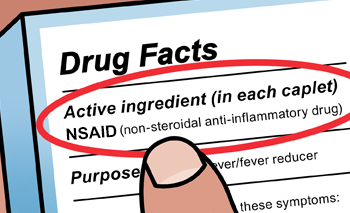
NSAIDs on drug label illustration - 350x213
Next time you reach into the medicine cabinet seeking relief for a headache, backache or arthritis, be aware of important safety information for non-steroidal anti-inflammatory drugs.
FDA is strengthening an existing warning in prescription drug labels and over-the-counter (OTC) Drug Facts labels to indicate that nonsteroidal anti-inflammatory drugs (NSAIDs) can increase the chance of a heart attack or stroke, either of which can lead to death. Those serious side effects can occur as early as the first few weeks of using an NSAID, and the risk might rise the longer people take NSAIDs. (Although aspirin is also an NSAID, this revised warning doesn’t apply to aspirin.)
The OTC drugs in this group are used for the temporary relief of pain and fever. The prescription drugs in this group are used to treat several kinds of arthritis and other painful conditions. Because many prescription and OTC medicines contain NSAIDs, consumers should avoid taking multiple remedies with the same active ingredient.
The Risks and What’s New
Prescription NSAIDs are an important treatment for the symptoms of many debilitating conditions, including osteoarthritis, rheumatoid arthritis‎, gout and other rheumatological and painful conditions. OTC NSAIDs are used to temporarily reduce fever and to treat minor aches and pains such as headaches, toothaches, backaches, muscular aches, tendonitis, strains, sprains and menstrual cramps. Common OTC NSAIDs include ibuprofen (Motrin, Advil) and naproxen (Aleve). In addition, some combination medicines that relieve various symptoms, such as multi-symptom cold products, contain NSAIDs.
“Be careful not to take more than one product that contains an NSAID at a time,” says Karen M. Mahoney, M.D., deputy director of FDA’s Division of Nonprescription Drug Products. How will you know? Check the list of active ingredients in the Drug Facts label.
The labels for both prescription NSAIDs and OTC NSAIDs already have information on heart attack and stroke risk. In the coming months, FDA will require manufacturers of prescription NSAIDs to update their labels with more specific information about heart attack and stroke risks. FDA will also request that the manufacturers of OTC NSAIDs update the heart attack and stroke risk information in Drug Facts labels.
FDA added a boxed warning to prescription drug labels for this risk in 2005. More recent data and information are prompting FDA to update NSAID labeling. Today we know that the risk of heart attack and stroke may occur early in treatment, even in the first weeks.
“There is no period of use shown to be without risk,” says Judy Racoosin, M.D., M.P.H., deputy director of FDA’s Division of Anesthesia, Analgesia, and Addiction Products.
People who have cardiovascular disease, particularly those who recently had a heart attack or cardiac bypass surgery, are at the greatest risk for cardiovascular adverse events associated with NSAIDs.
FDA is adding information in the drug label for people who already have had a heart attack. This vulnerable population is at an increased risk of having another heart attack or dying of heart attack-related causes if they’re treated with NSAIDs, according to studies.
But the risk is also present in people without cardiovascular disease. “Everyone may be at risk – even people without an underlying risk for cardiovascular disease,” Racoosin adds.
What Consumers Should Do
NSAIDs are effective treatments for pain, inflammation and fever. Consumers can still take them but should be aware of this increased risk of heart attack or stroke, especially at higher doses.
“As always, consumers must carefully read the Drug Facts label for all nonprescription drugs. Consumers should carefully consider whether the drug is right for them, and use the medicine only as directed. Take the lowest effective dose for the shortest amount of time possible,” Mahoney says.
When using prescription NSAIDs, read the consumer-friendly Medication Guide attached to your filled prescription, which provides important safety information.
If you have heart disease or high blood pressure, consult a healthcare provider before using an NSAID. Balance the benefits of NSAIDs with the possible risks and weigh your options. If you take low-dose aspirin for protection against heart attack and stroke, you should know that some NSAIDs, including ibuprofen and naproxen, can interfere with that protective effect.
Stop taking NSAIDs and seek medical help if you experience symptoms that might signal heart problems or stroke, such as chest pain, trouble breathing, sudden weakness in one part or side of the body, or sudden slurred speech.
Reduce your risk factors for heart disease and stroke. “Smoking, high blood pressure, high cholesterol and diabetes are significant risk factors for these conditions,” Mahoney says. “If you smoke, work on quitting. See your doctor regularly to find out if you have these other strong risk factors, and commit yourself to taking care of them and of your health.”

Friday, June 26, 2015

Problems with Mammograms at Coastal Diagnostic Center, California

FDA is alerting patients about possible problems with the quality of mammograms taken any time on or after February 24, 2013, at Coastal Diagnostic Center in Pismo Beach, California. The American College of Radiology revoked the facility’s accreditation effective April 10, 2015.
Risk: This does not necessarily mean that the results of the mammograms were inaccurate. But patients should consider having their mammograms reevaluated at a facility certified by the Mammography Quality Standards Act (MQSA) to determine whether they need a repeat mammogram or additional medical follow-up.
Recommendations:
FDA has some recommendations for patients who had a mammogram at Coastal Diagnostic Center any time on or after February 24, 2013.
If you have had a more recent mammogram at a MQSA-certified facility since February 24, 2013, follow the recommendations from that facility.
If you have not had a new mammogram at a MQSA-certified facility since then, follow these guidelines:
  • Talk with your healthcare provider as soon as possible about the need for a follow-up exam.
  • If your healthcare provider recommends a repeat mammogram, it should be done at a MQSA-certified facility to ensure quality and accuracy. Find a MQSA-certified facility in your area online or by calling the National Cancer Institute at 1-800-422-6237.
  • If you need a repeat mammogram and your health insurance will not pay for it, call the National Cancer Institute at 1-800-422-6237 for a listing of MQSA-certified facilities near you that will provide free or low-cost mammograms.

Tuesday, June 16, 2015

FDA:Remove artificial trans fats from the nation’s food supply


Today, the U.S. Food and Drug Administration (FDA) announced that it is taking action to remove artificial trans fats from the nation’s food supply -- a step that could prevent thousands of fatal heart attacks each year!
Highlights from the FDA announcement include:
  • The FDA says that partially hydrogenated oils (PHOs), the primary dietary source of trans fats, are not “generally recognized as safe” (GRAS) for use in human food.
  • Because PHOs are not GRAS, they may no longer be added to human food after June 18, 2018 unless otherwise approved by the FDA.
  • Food manufacturers have three years to remove PHOs from their products. This will allow companies to make the transition -- to either reformulate their products and/or petition the FDA to permit certain specific uses of PHOs.  
  • Companies have made strides towards reducing or eliminating PHOs and the FDA expects manufacturers may be in compliance ahead of schedule.
  • While some companies have made significant progress in voluntarily replacing PHOs with other fats or oils, the current intake of trans fats remains a public health concern.
  • Removing PHOs from processed foods could prevent thousands of heart attacks and deaths each year.
  • PHOs are formed when hydrogen is added to oil or fat (a process called hydrogenation) to make it more solid.
  • The FDA’s requirement in 2006 to list trans fat on the Nutrition Facts label resulted in the industry substantially reducing the presence of artificial trans fat, however trans fats are still found in a variety of foods.
  • PHOs are used in a variety of processed foods such as frostings, microwave popcorn, baked goods, stick margarines, and coffee creamers.
To learn more about the FDA’s action on trans fats, visit http://www.fda.gov/ForConsumers/ConsumerUpdates/UCM372915.htm

Health News: FDA rejects snack foods from India for contaminants ♦ Legalizing medical marijuana does not increase use among adolescents ♦ Vitamin D status related to immune response to HIV-1

FDA  rejects several snack foods from India for contaminants The U.S. Food and Drug Administration (FDA) has rejected a number of snack imports made by Indian company Haldiram Snacks for concerns over high levels of pesticides, mold and bacteria. The move comes as global food corporation Nestlé has been subjected to a nationwide ban in India of its Maggi noodles that have allegedly tested for high levels
Legalizing medical marijuana does not increase use among adolescents Nationwide study analyzing 24 years of data (1991 to 2014) from over one million American adolescents in the 48 contiguous states has found no evidence that legalizing the use of marijuana for medical purposes leads to increased use among teenagers.
Personal experience a major driver in decision for or against flu vaccination Convincing someone to receive the annual flu vaccine goes beyond clever messaging and well-written public service announcements, research finds. A study outlines both the barriers and facilitators that motivate people in their flu vaccine decisions.
More dialysis patients living in poor neighborhoods The percentage of adults beginning kidney dialysis who lived in zip codes with high poverty rates increased from 27.4 percent during the 1995-2004 time period to 34 percent in 2005-2010.

Vitamin D status related to immune response to HIV-1 Vitamin D plays an important part in the human immune response and deficiency can leave individuals less able to fight infections like HIV-1. Now an international team of researchers has found that high-dose vitamin D supplementation can reverse the deficiency and also improve immune response

Tuesday, June 2, 2015

Health News: Food inspectors file case against Nestle over noodles ♦ Cancer trial of drug combination yields spectacular results ♦ FDA make its own job on food additives harder

Food inspectors file case against Nestle over noodles Food safety inspectors in Uttar Pradesh said they had filed a criminal complaint against Nestle's local arm after saying they had found high levels of lead in some packets of Maggi instant noodles Nestle India, which disputes the findings, has said the batch in question was manufactured in February 2014 so was already past its sell-by date in April
Why must FDA make its own job on food additives harder Let’s face it: we all make self-destructive choices from time to time.  But when federal regulators illogically shoot themselves in the foot, the harm to public safety can be serious.  Such is the sad situation at the Food and Drug Administration, which just can’t seem to get it right when it comes to the regulation of food additives.
Cancer trial of drug combination yields spectacular results Terminally ill cancer patients could be “effectively cured” of the disease using a powerful new combination of drugs described by scientists as heralding a once-in-a-generation advance in treatment. A British-led trial brought “spectacular” results with more than half of patients with advanced melanoma seeing tumours shrink
Smokers and those exposed to passive smoke require more anesthetic and painkiller during operations New research shows that both smokers and those exposed to passive smoke require more anesthetic and painkillers to reach the same level of anesthesia as non-smokers.
A study shows that hypothermia occurs in around half of patients undergoing surgery, despite national guidelines for its prevention.

Friday, April 24, 2015

Food Research: FDA Doesn't Really Know What’s in Your Food ♦ Buffet: All-You-Can-Eat Illness ♦ Curcumin offers potential therapy for cancers caused by HPV

Why the FDA Doesn’t Really Know What’s in Your Food A massive legal loophole means companies can add new ingredients to foods with no government safety review. Rebecca Fattell was enjoying breakfast at a hotel in Berlin last summer when, after a few bites of a roll, her mouth started to itch, her gums started to hurt and before long, hives covered her skin. "My face, trunk, arms, legs," Fattell said, "they were all
Buffet: All-You-Can-Eat Illness Disease prevention specialists warn against shaking hands as a form of greeting since this is a common way people spread disease. Eating at a buffet exposes people to the hands of everyone who came to the restaurant and touched the common serving utensils
New method to detect most common bacteria contaminating oysters In a major breakthrough in shellfish management and disease prevention, researchers have discovered a new method to detect a bacterium that has contaminated New England oyster beds and sickened consumers who ate the contaminated shellfish. The new patent-pending detection method - which is available for immediate use to identify contaminated shellfish -- is a significant advance in efforts to identify shellfish harboring disease-carrying strains of Vibrio parahaemolyticus.
Curry: Curcumin offers potential therapy for cancers caused by HPV Curcumin, an antioxidant found in the curry spice turmeric, has been found to slow or limit the activity of the HPV virus, which causes oral and cervical cancers.

Sunday, March 22, 2015

Health News: GMO apples and potatoes approved ♦ First blood test for osteoarthritis ♦ Power naps improve memory performance + more

GMO apples and potatoes pass FDA safety assessment  These GMO approvals aren’t exactly small potatoes. Two varieties of genetically engineered apples and six types of genetically altered potatoes offer just as much nutrition and as little safety risk as their conventional relatives Continue Reading
Scientists must reduce antibiotic use in experiments  Scientists should reduce antibiotic use in lab experiments. According to a new article, molecular biology and genetic research such as the Human Genome Project use antibiotics in experiments. But it all adds to the global problem of antibiotic resistance according Continue Reading
Review of global guidelines for sepsis needed  Experts are calling for a global review of guidelines used to diagnose sepsis, after a study found one in eight patients with infections severe enough to need admission to an Intensive Care Unit in Australia and New Zealand, did not meet current criteria. Continue Reading
First blood test for osteoarthritis could soon be available The first blood test for osteoarthritis could soon be developed, thanks to new research. The research findings could potentially lead to patients being tested for osteoarthritis and diagnosed several years before the onset of physical symptoms Continue Reading

Power naps produce a significant improvement inPower napsperformance Psychologists have shown that a short nap lasting about an hour can significantly improve memory performance. The study involved examination of memory recall in 41 participants. The volunteers had to learn single words and word pairs. Once the learning phase was over, the participants were tested to determine how much information they could remember. About half of the participants were then allowed to sleep, while the others watched a DVD. After that, the participants were re-tested and those who had taken a nap were shown to have retained substantially more word pairs in memory than the participants in the control group who had watched a DVD. Continue Reading

Friday, March 13, 2015

Blue Bell Ice Cream recalled - Three Dead From Listeriosis

The U.S. Food and Drug Administration along with the Centers for Disease Control and Prevention (CDC) and state and local officials are investigating an outbreak of listeriosis potentially linked to certain Blue Bell Creameries single serving ice cream products. Listeriosis is caused by the bacterium Listeria monocytogenes.
According to the CDC and the Kansas Department of Health and Environment, five patients who were treated in a single hospital in Kansas were infected with one of four rare strains of Listeria monocytogenes. Three of these strains, which are highly similar, have also been found in products manufactured at the Blue Bell Creameries production facility in Brenham, Texas. Illness onset dates range from January 2014 to January 2015.
FDA was notified that these three strains and four other rare strains of Listeria monocytogenes were found in samples of Blue Bell Creameries single serving Chocolate Chip Country Cookie Sandwich and the Great Divide Bar ice cream products collected by the South Carolina Department of Health & Environmental Control during routine product sampling at a South Carolina distribution center, on February 12, 2015. These products are manufactured at Blue Bell Creameries’ Brenham facility.
The Texas Department of State Health Services, subsequently, collected product samples from the Blue Bell Creameries Brenham facility. These samples yielded Listeria monocytogenes from the same products tested by South Carolina and a third single-serving ice cream product, Scoops, which is also made on the same production line.
According to the Kansas Department of Health and Environment, hospital records available for four patients show that all were served ice cream from Blue Bell Creameries’ prepackaged, single-serving products and milkshakes made from these products. The hospital receives ice cream manufactured by Blue Bell Creameries, although it is not confirmed that the hospital receives ice cream only from the Brenham facility.
All five case patients are adults. Three deaths have been reported.
Blue Bell Creameries reports that it has removed the affected ice cream products from the market (see section below “What Products are Involved?”) by picking it up directly from the retailers and hospital settings it serves. The company has also shut down the production line where the products were made.
The FDA has moved quickly to investigate this issue and learn as much as possible to prevent additional people from becoming ill. We recognize that people will be concerned about these illnesses, and we will continue to provide updates and advice.
What are the Symptoms of Listeriosis?
Listeriosis is a rare but serious illness caused by eating food contaminated with the bacteria called Listeria monocytogenes. Anyone who experiences fever and muscle aches, sometimes preceded by diarrhea or other gastrointestinal symptoms, or develops fever and chills after eating the ice cream should seek medical care and tell their healthcare provider about any history of eating the ice cream. Symptoms can appear from a few days up to a few weeks after consumption of the contaminated food.
Who is at Risk?
Listeriosis can be fatal, especially in certain high-risk groups. These groups include the elderly, and people with weakened immune systems and certain chronic medical conditions (such as cancer). In pregnant women, listeriosis can cause miscarriage, stillbirth, premature labor, and serious illness or death in newborn babies.
What Products Are Involved?
Blue Bell Creameries reports that the following products were removed from the market. This action includes only the products listed below and does not include Blue Bell cups, pints or half gallons.
Product Name
Product Code
Chocolate Chip Country Cookie
SKU # 196
Great Divide Bar
SKU #108
Sour Pop Green Apple Bar
SKU #221
Cotton Candy Bar
SKU #216
Scoops
SKU #117
Vanilla Stick Slices
SKU #964
Almond Bars
SKU #156
6 pack Cotton Candy Bars
SKU #245
6 pack Sour Pop Green Apple Bars
SKU #249
12 pack No Sugar Added Mooo Bars*
SKU #343
*The regular Mooo Bars, available at grocery stores, are not subject to recall.
What Do Consumers Need To Do?
Consumers should not eat any of the products listed above.  If these ice cream products are in your freezer, they should be thrown away, even if some of them have been eaten without anyone becoming ill.
Recommendations for preventing listeriosis are available at the CDC Listeria website:http://www.cdc.gov/listeria/prevention.html.   
Listeria monocytogenes can grow at refrigerator temperatures, as low as 40 degrees Fahrenheit (4 degrees Celsius). The longer ready-to-eat refrigerated foods are stored in the refrigerator, the more opportunity Listeria has to grow.
For refrigerators and other food preparation surfaces and food cutting utensils that may have come in contact with the potentially contaminated ice cream, it is very important that the consumers thoroughly clean these areas
  • Wash the inside walls and shelves of the refrigerator, cutting boards and countertops; then sanitize them with a solution of one tablespoon of chlorine bleach to one gallon of hot water; dry with a clean cloth or paper towel that has not been previously used.
Consumers should follow these simple steps:
  • Wash hands with warm water and soap for at least 20 seconds before and after handling food.
  • Wipe up spills in the refrigerator immediately and clean the refrigerator regularly.
  • Always wash hands with warm water and soap following the cleaning and sanitization process.
What Do Institutions and Retailers Need To Do?  
Institutions and retailers should not sell or serve any products listed above.  They should also take the following steps:
  • Wash and sanitize display cases and refrigerators where potentially contaminated products were stored.
  • Wash and sanitize cutting boards, surfaces, and utensils used to cut, serve, or store potentially contaminated products.
  • Wash hands with warm water and soap following the cleaning and sanitation process.
  • Retailers, restaurants, and other food service operators who have processed and packaged any potentially contaminated products need to be concerned about cross contamination of cutting surfaces and utensils through contact with the potentially contaminated products.
  • Regular frequent cleaning and sanitizing of cutting boards and utensils used in processing may help to minimize the likelihood of cross-contamination.
Listeria can grow at refrigeration temperatures. Retailers, restaurants, and other food service operators may wish to consider whether other foods available for sale could have been cross-contaminated from the potentially contaminated products, and should be discarded.  
Who Should be Contacted?
The FDA encourages consumers with questions about food safety to call 1-888-SAFEFOOD Monday through Friday between 10 a.m. and 4 p.m. Eastern time, or to consult http://www.fda.gov.