Showing posts with label plastic. Show all posts

Thursday, July 23, 2015

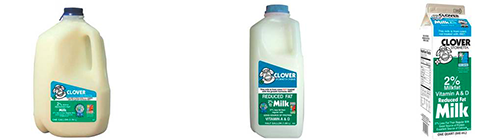
Clover Milk Recalled due to Plastic Contamination

Clover Stornetta Farms has issued a voluntary recall of the three items described below because they may contain small pieces of food grade  plastic.
The items were distributed throughout Northern California.
Clover Stornetta Farms’ top priority is the safety of our customers. For this reason we are issuing this voluntary recall out of an abundance of caution.
No complaints have been reported in connection with these products, and no other Clover products are being recalled.
Item Description
Pack Size
Lot Codes
UPC Code
Clover 2% Reduced Fat Milk
Gallon
JUL 29
07085284
Clover 2% Reduced Fat Milk
Quart
JUL 29
070852-193007
Clover 2% Reduced Fat Milk
Plastic Half Gallon
JUL 29
070852-990828
2
Consumers who have purchased an item mentioned above should return it to their grocery store for a full refund.
If you have any questions, please contact Clover at askclo@cloverstornetta.com

Source: Clover Stornetta Farms website

Saturday, July 11, 2015

Health news:Microwaving food in plastic may be hurting your health ♦ What makes us more likely to take the stairs? ♦ Hospital re admissions for sepsis are highly common

Microwaving food in plastic may be hurting your health If you’re about to nuke your leftovers in a plastic container, you might want to dirty another dish. When heated, harmful chemicals in plastic can leech into your food, potentially increasing your risk of high blood pressure and insulin resistance. This is concerning because hypertension and insulin resistance, which is closely linked to pre diabetes, are risk factors for type 2 diabetes.
Faster weight gain can be safe for hospitalized anorexia patients A new study of patients hospitalized with anorexia nervosa shows that a faster weight gain during inpatient treatment — well beyond what national standards recommend — is safe and effective.
Hospital re admissions for sepsis are highly common, extremely costly The Affordable Care Act created several national initiatives aimed at reducing hospital readmission rates for heart attacks, congestive heart failure and other common high-risk conditions. But there is still no national program to address sepsis, a potentially life-threatening illness caused by infection. New research finds that sepsis accounts for roughly the same percentage of hospital readmissions in California as heart attacks and congestive heart failure.
Scientists separate medical benefits of cannabis from 'unwanted' side effects Scientists have found a way to separate medical benefits of cannabis from its unwanted side effects. The research was carried out in mice, but it is hoped that the breakthrough will pave the way for safe cannabis-based therapies that do not cause alterations in mood, perception or memory. Last year the team discovered how the main psychoactive ingredient in cannabis, known as THC, reduces tumor growth in cancer patients
What makes us more likely to take the stairs? Can pedestrians be convinced to make healthy choices when an escalator seems so much faster and more convenient than a staircase? Yes: you just have to make sure that the stairs are far, far away from the escalator.

Wednesday, July 8, 2015

Great Britain: Taifun Tofu Basilico recalled

Windmill Organics Ltd is recalling a batch of Taifun Tofu Basilico, 200g, because some packs may contain small pieces of plastic. If you have bought this product, do not consume it. The FSA has issued a Product Recall Information Notice.
The batch being recalled is:
Product: Taifun Tofu Basilico
Pack size: 200g
'Use by' date: 13 August 2015
Batch code: 326
If you have bought the above product, do not consume it. Instead, return it to the store where it was purchased from for a full refund.
Windmill Organics Ltd has notified all of its customers that were distributed this product, via a point-of-sale notice. This notice alerts customers to the recall and advises them of what actions to take if they have bought the product.

No other Taifun products are known to be affected.

Thursday, April 23, 2015

Subway Chicken Recalled

West Liberty Foods, a Tremonton, Utah establishment, is recalling approximately 34,075 pounds of grilled chicken breast products that may be contaminated with pieces of plastic, the U.S. Department of Agriculture’s Food Safety and Inspection Service (FSIS) announced today.
The grilled chicken patties were produced on February 4, 2015. The following products are subject to recall:
  • 25-lb. cardboard boxes containing 5-5lb plastic bags of “SUBWAY FULLY COOKED GRILLED CHICKEN BREAST PATTY WITH RIB MEAT”
The products subject to recall bear the establishment number “EST. 34349 or P-34349” inside the USDA mark of inspection. These items produced were shipped to restaurants in Illinois, Oklahoma, Minnesota, Nebraska, and Texas. The company has already contacted the restaurants impacted in this recall.
The problem was discovered after the company received complaints from consumers who found small pieces of white plastic in the product.
FSIS and the company have received no reports of adverse reactions due to consumption of these products. Anyone concerned about an injury or illness should contact a healthcare provider.
Consumers with questions about the recall can contact Renee Miller, Sales Support Manager, at (319) 627-6114. Media with questions about the recall can contact Dan Waters, VP and General Counsel, at (515) 224-6199.

Monday, April 20, 2015

Chicken Sausage Product Recalled Due to Contamination With Plastic

Kayem Foods, a Chelsea, Mass., establishment, is recalling approximately 59,203 pounds of fully cooked chicken sausage products that may be contaminated with pieces of plastic, the U.S. Department of Agriculture’s Food Safety and Inspection Service (FSIS) announced today.
The chicken sausage products were produced on various dates in March 2015. The following products are subject to recall: [View Labels]
  • 12-oz. packages of Trader Joe’s brand “Sweet Apple Chicken Sausage” with the case code 9605 and use by/freeze by dates of “4 22 15,” “4 25 15,” and “4 29 15.”
  • 8-oz. packages of al fresco brand “Apple Maple Fully Cooked Breakfast Chicken Sausage” with the case code 9709 and use by/freeze by dates of “JUN 13 2015” and “JUN 20 2015.”
The products subject to recall bear the establishment number “P7839” inside the USDA mark of inspection. These items were shipped to retail locations nationwide.                  
The problem was discovered after the firm received complaints from two consumers who found small pieces of plastic in the product.
Neither the company nor FSIS has received reports of any injuries associated with consumption of these products. Anyone concerned about an injury or illness should contact a healthcare provider.  
FSIS routinely conducts recall effectiveness checks to verify recalling firms notify their customers of the recall and that steps are taken to make certain that the product is no longer available to consumers.
Consumers with questions about the recall can contact Joellen West, Customer Relations Supervisor, at (800) 426-6100 ext. 247. Media with questions about the recall can contact Christian Megliola, Director of Public Relations, at (617) 510-8190.

Monday, February 16, 2015

2/16/15 Health News: Seafood Contains Plastic--Restaurant Manager Jailed After Death--Bacteria prevalent in delis--Alligator blood helps soldiers-- Smoking impairs inflammatory back arthritis


UK Restaurant Manager, Chef Jailed After Deadly Food Poisoning Following a 2012 Christmas Day turkey dinner at a London-area pub that sickened approximately 33 people and may have killed one of them, the manager and chef were recently sentenced to jail terms. Chef Mehmet Kaya and Manager Ann-Marie McSweeney of the Railway Hotel in Hornchurch, Essex (east of London) were convicted of lying to... Continue Reading
Ocean plastic is likely disappearing into the food chain, new study indicates When I tell people that we have a problem with too much plastic in our oceans, many invariably say how shocked they were when they heard about vast swirling islands of trash that accumulate in the oceans’ gyres. I wish this was the full extent of the problem. It is not. Continue Reading
Listeria pathogen is prevalent, persistent in retail delis New research shows that standard cleaning procedures in retail delis may not eradicate Listeria monocytogenes bacteria, which can cause a potentially fatal disease in people with Continue Reading,
Alligator blood contains naturally strong germ fighters Alligator blood contains bacteria fighters that could help wounded soldiers in the field, according to new research. Alligators live in bacteria-filled environments and dine on carrion. Continue Reading
Smoking impairs treatment response in inflammatory back arthritis Smoking impairs the response to biological drugs used to treat inflammatory arthritis affecting the lower back, known as axial spondyloarthritis, or AxSpA, for short, new research reveals Continue Reading

Saturday, October 25, 2014

Canada: Primavera Pasta Sauce Recalled

Loblaw Companies Limited is voluntarily recalling President's Choice Organics brand Primavera Pasta Sauce from the marketplace due to possible plastic contamination. Consumers should not consume the recalled product described below.
Recalled products
Brand Name
Common Name
Size
Code(s) on Product
UPC
President's Choice Organics
Primavera Pasta Sauce
700 ml
BB/MA 2015 AU 07
0 60383 69005 2
President's Choice Organics Primavera Pasta Sauce - 700 mlCheck to see if you have recalled product in your home. Recalled products should be thrown out or returned to the store where they were purchased.


Friday, April 4, 2014

Chicken Nugget Recalled Due To Possible Foreign Matter Contamination

Tyson Foods Inc., a Sedalia, Mo. establishment, is recalling approximately 75,320 pounds of frozen, fully cooked chicken nugget products that may be contaminated with extraneous materials the U.S. Department of Agriculture’s Food Safety and Inspection Service (FSIS) announced today.
The following products are subject to USDA recall:
  • 5-lb. bags of “Tyson Fully Cooked White Meat Chicken Nuggets – 16142-928” with a “Best if Used By” date of “Jan 26 2015” or Feb 16 2015.” The manufacturer codes “0264SDL0315 through 19” and “0474SDL0311 through 14” can also be found on the bags. These products were produced Jan. 26, 2014 or Feb. 16, 2014 and shipped nationwide to one retail warehouse club chain.
  • 20-lb. bulk packs of “Spare Time Fully Cooked Nugget-Shaped Chicken Breast Pattie Fritters w/Rib Meat – 16142-861” with identifying case codes of “0264SDL0315 through 19” and “0474SDL0311 through 14.” These products were produced Jan. 26 and Feb. 16, 2014 and were shipped for institutional use in Indiana and Arkansas.               
The product bags bear the establishment number “P-13556.”
The problem was discovered after the firm received consumer complaints that small pieces of plastic were found in the products. The problem was traced to a product scraper inside a blending machine.
The company has received reports of minor oral injury associated with consumption of these products. FSIS has received no additional reports of injury or illness from consumption of these products.  Anyone concerned about an injury or illness from consumption of these products should contact a healthcare provider.        
Consumers with questions about the recall should contact Tyson Foods Consumer Services toll free at (866) 328-3156. Media with questions about the recall should contact Dan Fogleman, of Tyson public relations, at (479) 290-2166.

Wednesday, October 16, 2013

There is Plastic in the Fish We Eat.

This article is based on Bavarian research published in Current Biology People through plastic trash away.It ends up in a river banging along the rock till it gets into smaller and smaller pieces Some pieces get very small.Worms and other small animals eat the plastic. Minnows eat the wormsFinally a large fish eats the minnowFisherman catches the fish.He sells the fish to a restaurantYou Spend Big Bucks You eat the fishPlastic ends up in your bellyIf you would like a more scientific version click on the link..

Monday, October 7, 2013

Recall: 3 Batches of Motrin Infants' Drops Contaminated

MOTRIN infants' drops


McNeil Consumer Healthcare Division of McNEIL-PPC, Inc. (“McNeil”) is voluntarily recalling at the retail level three lots, approximately 200,000 bottles, of Concentrated MOTRIN® Infants’ Drops Original Berry Flavor 1/2 fl oz bottles distributed in the United States. . McNeil is asking retailers to remove the affected lots from store shelves, and is asking consumers to stop using and dispose of any product they may have that is included in this recall.


FULL RECALLED PRODUCT LIST:
Product
Lot #
UPC Code
Case UPC Code
Concentrated MOTRIN® Infants’ Drops
Original Berry Flavor 1/2 fl oz bottles


NDC 50580-100-18
DCB3T01
300450524157
30300450524158

DDB4R01


DDB4S01


After releasing these three lots of Concentrated MOTRIN® Infants’ Drops Original Berry Flavor 1/2 fl oz into the market, tiny plastic particles ( about the size of a poppy seed) were identified in a different product lot during manufacturing. This lot was not released to the market. It was determined that the particles originated in a shipment from a third party supplier of ibuprofen.
Original Berry Flavor 1/2 fl oz. Out of an abundance of caution, McNeil is voluntarily recalling the three lots released to the market made with the same batch of active ingredient. McNeil has worked with the third party to ensure that corrective measures are currently in place and are effective. The potential for adverse medical events related to the reason for this recall is not likely. Concentrated Infants’ MOTRIN® Drops Dye-Free Berry Flavor 1 fl oz is not included in this recall. Children’s or Adult MOTRIN® products are not included in this recall.

Friday, September 6, 2013

Pillsbury Cinnamon Rolls with Icing are Recalled Due to Plastic Fragments

General Mills announced today a voluntary recall of a limited quantity of refrigerated Pillsbury Cinnamon Rolls with Icing.
No other flavors or varieties of Pillsbury Cinnamon Rolls or Pillsbury dough products are being recalled.   Pillsbury Flaky Cinnamon Rolls and Pillsbury Grands! Cinnamon Rolls are not included in this recall.
This action is being taken as a precaution because the dough may contain fragments from a broken piece of plastic on the production line.  These products are sold in grocery stores nationally.  No other Pillsbury dough products are being recalled.
Only specific 8-count single and double packages with certain date codes of Pillsbury Cinnamon Rolls with Icing are being recalled:
Product                                                                 
Better if Used Date on Package
Pillsbury Cinnamon Rolls with Icing                                  
30OCT2013 and 31OCT2013
Pillsbury Cinnamon Rolls with Icing 2-pack                   
18OCT2013, 26OCT2013 and

31OCT2013
Consumers who have products covered by this recall are urged to contact General Mills for a replacement.  Consumers with questions may contact General Mills toll-free at 1-800-775-4777.


Saturday, August 24, 2013

Chemicals in Plastic Linked to Obesity

Researchers found urine levels of one type of phthalate (a vinyl softener),  were tied to a higher risk of insulin resistance among teenagers. Based on data from the same large nutrition survey, another study group linked bisphenol A, or BPA - used to line aluminum cans - to obesity and larger waists in youth.
According to the Centers for Disease Control and Prevention, about one in six U.S. children and teenagers is now obese.
"Clearly unhealthy diet and lack of physical activity are the drivers of this epidemic … but increasingly environmental chemicals are being identified as possible contributors," Dr. Leonardo Trasande, a pediatrician from New York University, said.
He and his colleagues analyzed data from a nationally-representative health and nutrition survey conducted in 2003 to 2008, which included urine and blood tests for 766 adolescents aged 12 to 19.
They found urinary levels of one particular type of phthalate, known as Di-2-ethylhexylphthalate (DEHP), were closely tied to a teenager's chance of having insulin resistance, a precursor to diabetes.
Just under 15 percent of study participants with the lowest one-third of DEHP levels were insulin resistant, compared to almost 22 percent of those with the highest levels.
DEHP, Trasande said, is often used to soften plastic bottles. It's used in plastic that is printed with the number 3 for recycling.
The researchers said their findings don't prove that eating food packaged with phthalates causes insulin resistance. For example, it's possible children who are already insulin-resistant do not have healthy eating habits and eat and drink more packaged products - thus the higher phthalate levels in their urine.
But Trasande told Reuters Health the chemical may influence how the body secretes insulin in response to sugar.
Because of that, he tells parents to avoid buying plastics made with DEHP.
"I advise them not to wash plastic containers in the dishwasher," he said. And, "When the plastic is clearly etched or damaged, it's time to throw it away."
MORE EVIDENCE ON BPA
For a separate study published concurrently in Pediatrics, Dr. Joyce Lee from the University of Michigan in Ann Arbor and her colleagues used nutrition survey data through 2010 to compare BPA levels in the urine of six- to 18-year-olds with other health measures.
In their analysis of 3,370 kids, BPA - an industrial chemical that may mimic estrogen in the body - was not linked to insulin resistance or blood sugar.
But children with higher BPA levels were more likely to be obese, and tended to have a higher waist circumference-to-height ratio, than those with the lowest levels.
A total of 18 percent of kids in the study were obese, based on CDC growth charts. Compared to children with the lowest BPA levels, the 25 percent with the highest levels were twice as likely to meet the cutoff for obesity.
The average child had 2.6 nanograms, or 2.6 billionths of a gram, of BPA in every milliliter of urine.
The findings are in line with a 2012 study that used some of the same data and also linked BPA in kids' urine to their chance of being overweight or obese, without proving a cause-and-effect relationship Reuters Health story of September 18, 2012
"That study adds further concerns to the ongoing use of BPA in food," Trasande said.
"There are a variety of chemicals used in children's products including BPA as well as other chemicals of less notoriety that our kids are exposed to on a daily basis, for which there are unknown health effects," Lee told Reuters Health in an email.
"Although the evidence about BPA and adverse health effects are not definitive, as a clinician, I do recommend that parents try to avoid BPA-containing plastics when possible to minimize their family's exposure. I also tell them to avoid microwaving food in plastic containers, as this can lead to chemicals leaking into the food," Lee said.
Still, one researcher cautioned that urinary levels of BPA and other chemicals may not say a lot about how much actually gets into children's blood and tissues.
"Everybody who does BPA studies uses the urine for a surrogate of exposure. It's erroneous, because the urine is purely what the person took in that day in BPA," Dr. Robert Brent from Alfred I. DuPont Hospital for Children in Wilmington, Delaware, who wrote an editorial accompanying the new studies, said.
"In order to know what exposure is you have to have the blood level of the chemical," he told Reuters Health - as well as how quickly it breaks down in the blood.
Last year the U.S. Food and Drug Administration banned BPA from baby bottles, but said there was not enough evidence for a more widespread ban. The FDA has not placed regulations on phthalates in food products, the Trasande team noted.
SOURCE:  Pediatrics  online August 19, 2013.