Showing posts with label HIV. Show all posts

Thursday, December 3, 2015

Health News: Major retailers recall celery products because of possible E, coli ♦ Gaming technology may improve X-ray precision ♦ Taking Truvada 'as needed' can prevent HIV-transmission

Major retailers recall celery products because of possible E, coli concerns Costco, Target and Starbucks are some of the many retailers pulling products of the shelves because they may be contaminated with E. coli O157:H7. Taylor Farms Pacific of Tracy, CA, is recalling certain products which may include celery which could potentially contain the pathogen.
Scientists draw evidence-based blueprint for HIV treatment, prevention For many years, clinicians debated the best time to start antiretroviral therapy for HIV infection, with some worrying that the risks of treatment in terms of drug toxicities could outweigh the benefits of controlling the virus. Scientists argue that the results of three large clinical trials definitively prove that the benefits of starting ART early in infection outweigh any theoretical risk
Gaming technology may improve X-ray precision With the aim of producing high-quality X-rays with minimal radiation exposure, particularly in children, researchers have developed a new approach to imaging patients based on the Xbox gaming system. Using proprietary software developed for the Microsoft Kinect system, researchers have adapted hands-free technology used for the popular Xbox system to aid radiographers when taking X-rays
Taking Truvada 'as needed' can prevent HIV-transmission amongst people at high-risk In a study into the prevention of HIV transmission, people who took the antiretroviral drug Truvada were 86 percent less likely to contract the disease than those who took a placebo.

Wednesday, December 2, 2015

Health Research: Type 2 diabetes reversed by losing fat from pancreas ♦ Enhanced treatment for hepatitis C could cut prevalence by 80 percent

Type 2 diabetes reversed by losing fat from pancreas Type 2 diabetes is caused by fat accumulating in the pancreas, researchers show. They add that losing less than one gram of that fat through weight loss reverses the diabetes.
Enhanced treatment for hepatitis C could cut prevalence by 80 percent Novel antiviral therapies for hepatitis C could reduce the prevalence of the blood-borne infection by more than 80 percent, according to a new analysis. The finding raises the possibility of greatly reducing, and even eliminating, hepatitis C in the United States if enhanced screening and treatment efforts target high-risk populations.
Metformin does not improve glycemic control for overweight teens with type 1 diabetes In a randomized trial that included overweight and obese adolescents with type 1 diabetes, the addition of metformin to insulin did not improve glycemic control after six months;
Researchers hope to harness human Researchers are learning more about how an ancient “error correction” system in the human genome helps protect the body against HIV, in hopes that their latest discovery may help in the fight against the infection.

Tuesday, November 24, 2015

CDC wants to increase awareness of a daily pill that can prevent HIV infection


Approximately 1 in 4 gay, bisexual men; 1 in 5 people who inject drugs; and 1 in 200 heterosexuals should be counseled about pre-exposure prophylaxis (PrEP)
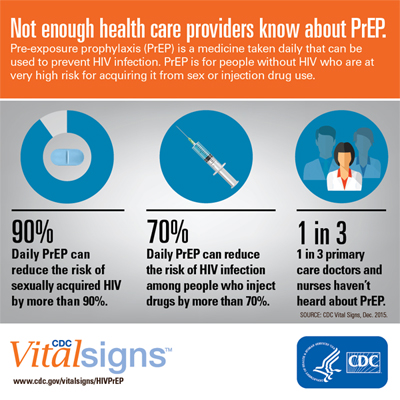
Not enough health care providers know about PrEP.
A new report published today estimates that 25 percent of sexually active gay and bisexual adult men, nearly 20 percent of adults who inject drugs, and less than 1 percent of heterosexually active adults are at substantial risk for HIV infection and should be counseled about PrEP, a daily pill for HIV prevention.
PrEP for HIV prevention was approved by the Food and Drug Administration in 2012. When taken daily, it can reduce the risk of sexually acquired HIV by more than 90 percent. Daily PrEP can also reduce the risk of HIV infection among people who inject drugs by more than 70 percent. However, according to recent studies, some primary health care providers have never heard of PrEP. Increasing awareness of PrEP and counseling for those at substantial risk for HIV infection is critical to realizing the full prevention potential of PrEP.
“PrEP isn’t reaching many people who could benefit from it, and many providers remain unaware of its promise,” said CDC Director Tom Frieden, M.D., M.P.H. “With about 40,000 HIV infections newly diagnosed each year in the U.S., we need to use all available prevention strategies.”
PrEP is one essential component in the nation’s high-impact prevention strategy
While PrEP can fill a critical gap in America’s prevention efforts, all available HIV prevention strategies must be used to have the greatest impact on the epidemic. These include treatment to suppress the virus among people living with HIV; correct and consistent use of condoms; reducing risk behaviors; and ensuring people who inject drugs have access to sterile injection equipment from a reliable source.
“PrEP has the potential to dramatically reduce new HIV infections in the nation,” says Jonathan Mermin, M.D., M.P.H, director of CDC’s National Center for HIV/AIDS, Viral Hepatitis, STD, and TB Prevention. “However, PrEP only works if patients know about it, have access to it, and take it as prescribed.”

Monday, November 23, 2015

Health News: Doc allegedly made hyperbaric chamber out of used propane tank.♦ Seven minutes of meditation can reduce racial prejudice, ♦ Key molecular players in obesity-associated type 2 diabetes identified

Doc allegedly made  hyperbaric chamber out of used propane tank. Officials announced that a former doctor was charged for allegedly conspiring to defraud the U.S. Food and Drug Administration and commit healthcare fraud when he reportedly created a device from pieces of used propane tanks welded together, and tried to pass it off as a hyperbaric chamber marketed as Hyperbox 101. Authorities also allege that the former doctor received millions of dollars through fraudulent claims submitted to Medicare and other programs.
European hospitals overlook every other person with HIV Many European hospitals fail to routinely test people who may be at risk of an HIV-infection. If tests were more widely used in healthcare, fewer HIV-patients would go unnoticed, especially in Northern Europe.
Seven minutes of meditation can reduce racial prejudice, A popular meditation technique that's intended to create feelings of kindness can also reduce prejudice.The study found that just seven minutes of Loving-kindness meditation (LKM), a Buddhist practise that promotes unconditional kindness towards oneself and others, is effective at reducing racial bias
Key molecular players in obesity-associated type 2 diabetes identified There is strong evidence that inflammation promotes obesity-associated type 2 diabetes and diabetes complications. However, clinical trials with anti-inflammatory drugs have only been modestly effective for treating type 2 diabetes. A new fingerprint of inflammation that may be able to predict which patients with obesity may also develop type 2 diabetes has been identified by medical researchers

Friday, November 20, 2015

Health News: Repairing neurons with light, ♦ Self-healing sensor brings 'electronic skin' closer to reality ♦ Obesity and type 2 diabetes harm bone healt

Vitamin D deficiency may limit immune recovery in HIV-positive adults Low levels of vitamin D may limit the effectiveness of HIV treatment in adults, a researcher has found. An 18-month longitudinal study was conducted in which the immune status of 398 HIV-positive adults The researchers, through observation, related the rise in immune function to whether or not individuals had adequate levels of vitamin D
Self-healing sensor brings 'electronic skin' closer to reality Scientists have developed a self-healing, flexible sensor that mimics the self-healing properties of human skin. Incidental scratches or cuts to the sensors "heal" themselves in less than one day.
Repairing neurons with light Scientists have succeeded in stimulating the regeneration of injured neurons in living fish by the use of light. To this end, they employed so-called Optogenetics, i.e. light inducible protein activation.
Obesity and type 2 diabetes harm bone health In a new animal study, researchers examined how the development of obesity and insulin resistance contribute to bone-fracture risk and whether exercise prevents weight gain and diabetes and protects bone health. They found obesity and type 2 diabetes negatively affected bone, but exercise prevented weight gain and diabetes and increased bone strength. These findings could inform interventions to improve bone health among individuals with obesity and type 2 diabetes.

Saturday, October 10, 2015

Women's Health: Preventive care drops when government cuts close women's health clinics ♦ Menopause diminishes impact of good cholesterol ♦ Should women consume alcohol during pregnancy?

Preventive care drops when government cuts close women's health clinics When women's health clinics close because of government funding cuts aimed at abortion providers, fewer women seek lifesaving preventive care that can identify health threats such as cancer, research shows. The findings also suggest that a clinic's closure affected less-educated women the most.
DNA-based vaccine clears nearly half of precancerous cervical lesions in clinical trial Using a novel synthetic platform for creating vaccines a team of researchers has successfully eradicated precancerous cervical lesions in nearly half of the women who received an investigational vaccine in a clinical trial.
Should women consume alcohol during pregnancy? Experts discuss the evidence and current guidelines on the controversial topic of alcohol consumption during pregnancy
Vaginal microbes influence whether mucus can trap HIV HIV particles are effectively trapped by the cervicovaginal mucus from women who harbor a particular vaginal bacteria species, Lactobacillus crispatus. The findings could lead to new ways to reduce or block vaginal transmission of HIV and other sexually transmitted infections.
Menopause diminishes impact of good cholesterol What has previously been known as good cholesterol -- high density lipoprotein -- has now been shown to be not so good in protecting women against atherosclerosis while they are transitioning through menopause.

Wednesday, September 30, 2015

Drug used to treat HIV linked to lower bone mass in newborns

NIH study finds mothers’ use of tenofovir tied to lower bone mineral content in babies
Infants exposed in the womb to a drug used to treat HIV and reduce the transmission of HIV from mother to child, may have lower bone mineral content than those exposed to other anti-HIV drugs, according to a National Institutes of Health study.
Researchers found that pregnant women who received the drug tenofovir disoproxil fumarate in their third trimester gave birth to babies whose bone mineral content was 12 percent lower than that of infants who were not exposed to the drug in the uterus. Proper mineral content helps strengthen normal bones. The Study appears in Clinical Infectious Diseases.
“At this point, we can say that those who care for pregnant women with HIV and their children should be aware that prescribing tenofovir to pregnant women could be a concern for their infants’ bones,” said George K. Siberry, M.D., the first author of the study and medical officer with NIH’s Eunice Kennedy Shriver National Institute of Child Health and Human Development (NICHD).
Although the study authors described the results as concerning, they cautioned against any changes in the use of tenofovir in pregnant women. The drug has proved successful as part of drug regimens that treat HIV in pregnant women, and often is used to prevent HIV transmission to infants. The researchers called for additional studies to understand bone health and development among children born to women who took tenofovir during their pregnancies.
“Families should keep in close touch with their physicians to monitor their child’s bone development,” Dr. Siberry added.
In the study, researchers enrolled a total of 143 infants at 14 sites across the United States from 2011 to 2013. Of these participants, 74 were exposed to tenofovir in the uterus, while 69 were given other anti-HIV drugs. Researchers used special, low-radiation X-ray scans, called DXA scans to measure bone mineral content within the first four weeks of birth.
The researchers then compared the bone mineral content of the two groups and found that the group of infants whose mothers took tenofovir, on average, had lower bone mineral content than the group of infants whose mothers were given other kinds of anti-HIV drugs. However, the researchers do not know whether the lower bone mineral content of the children in the tenofovir group is abnormal and will increase the risk of fractures. Dr. Siberry added that it is also unknown whether children can regain bone mineral content as they get older.
The study authors point out that tenofovir use has been associated with bone loss in adults and older children. A few NIH-funded studies have found that adults who used tenofovir were at increased risk for bone fracture.
Information on how to promote healthy bone development in children is available from NIH’s National Institute of Arthritis and Musculoskeletal and Skin Diseases at http://www.niams.nih.gov/health_info/bone/bone_health/juvenile/default.asp#3.

Friday, September 18, 2015

Health News: Silica nano-particles could repair damaged teeth ♦ Using ultrasound to clean medical instrument ♦ Suicide greatly underestimated in U.S.

MN salmonella outbreak blamed on tomatoes served at chipotle restaurants Tomatoes served at 22 Chipotle Mexican Grill locations in Minnesota were the source of the recent Salmonella Newport outbreak which sickened 64 people and hospitalized nine of them. All are recovering, according to the Minnesota Department of Health.
Epidemiologist says suicide, death from intentional self-injury is greatly underestimated in U.S. Suicide is the 10th leading cause of death in the United States -- greater even than traffic crashes. A professor of epidemiology says the problem is bigger and proposes a way to address it.
International team discovers natural defense against HIV A new natural defense against HIV infection has been discovered by researchers. The team's discovery focuses on ERManI, a protein that prevents the HIV virus from replicating.
Using ultrasound to clean medical instruments A pioneering ultrasonic device can significantly improve the cleaning of medical instruments and reduce contamination and risk of infection. StarStream makes water more efficient for cleaning by creating tiny bubbles which automatically scrub surfaces. The device supplies a gentle stream of water through a nozzle that generates ultrasound and bubbles, which dramatically improve the cleaning power of water reducing the need for additives and heating.
Tiny silica particles could be used to repair damaged teeth, Researchers have shown how the development of coated silica nanoparticles could be used in restorative treatment of sensitive teeth and preventing the onset of tooth decay

Monday, June 22, 2015

Health Research: Doctors often misdiagnose zinc deficiency ♦ Scientists identify amino acid that stops seizures in mice ♦ Drug improves cognition in Alzheimer's disease

HIV drug PrEP not linked to greater risk for depression A randomized, placebo-controlled trial of daily oral HIV preexposure prophylaxis (PrEP) in men and transgender women who have sex with men -- reported no link between taking Truvada for oral PrEP and experiencing depression.
Scientists identify amino acid that stops seizures in mice An amino acid whose role in the body has been all but a mystery appears to act as a potent seizure inhibitor in mice, according to a study. In a series of experiments, the amino acid D-leucine, found in many foods and certain bacteria, interrupted prolonged seizures, a serious condition known as status epilepticus, and it did so just as effectively as the epilepsy drug diazepam -- the choice of treatment for patients in the throes of convulsions -- but without any of the drug's sedative side effects.
Drug improves cognition in Alzheimer's disease-mouse model in spite of diet Long-term administration of a drug that mimics the hunger-signaling hormone ghrelin protected Alzheimer’s disease-model mice from memory deterioration, despite a high-glycemic-index diet, scientists report.
Doctors often misdiagnose zinc deficiency, unaware of impact of excess zinc Doctors often misdiagnose zinc deficiency, and seem to be unaware of the impact of excess zinc on the body, shows a small audit of clinical practice. Zinc is an essential trace element that is required in daily quantities of 5.5 to 9.5 mg for men, and 4 to 7 mg for women. But zinc supplements are usually only available in formulations of 45 or 50 mg. The US recommended tolerable limit is 40 mg/day
Tamper-resistant pill dispenser aims to stamp out medication misuse You can whack it with a hammer, attack it with a drill, or even stab it with a screwdriver. But try as you might, you won't be able to get into this pill dispenser. Which is exactly the idea.

Friday, June 19, 2015

Brain Research: New model to study HIV latency in brain cells ♦ Emotional brains 'physically different' from rational ones ♦ New imaging technique could make brain tumor removal safer

Brain injury patterns linked to post-concussion depression, anxiety Post-concussion psychiatric disorders like depression, anxiety and irritability can be extremely disabling for those among the nearly 3.8 million people in the United States who suffer concussions every year. Now, a new MRI study has found distinct injury patterns in the brains of people with concussion-related depression and anxiety
Emotional brains 'physically different' from rational ones Researchers have found physical differences in the brains of people who respond emotionally to others' feelings, compared to those who respond more rationally.
New model to study HIV latency in brain cells Over 35 million people worldwide are currently infected by HIV. Antiviral therapies can keep the virus from multiplying. However, no drug can cure infection so far, because various cell types continue to carry the virus in a latent, i.e. quiescent, state. Scientists have now established a model for latent HIV infection of brain cells. The researchers used this model to identify various compounds that affect latency of the virus in the brain.
Brain receptor found to significantly affect cocaine addiction By manipulating the activity of Activin receptors in the brain, researchers report that they were able to increase or decrease cocaine-taking and relapse behavior in animal models. The study focused on receptors in regions of the brain involved in pleasure and reward.
New imaging technique could make brain tumor removal safer, more effective, study suggests Brain surgery is famously difficult for good reason: When removing a tumor, for example, neurosurgeons walk a tightrope as they try to take out as much of the cancer as possible while keeping crucial brain tissue intact — and visually distinguishing the two is often impossible. Now researchers report they have developed an imaging technology that could provide surgeons with a color-coded map of a patient’s brain showing which areas are and are not cancer.

Tuesday, June 16, 2015

Health News: FDA rejects snack foods from India for contaminants ♦ Legalizing medical marijuana does not increase use among adolescents ♦ Vitamin D status related to immune response to HIV-1

FDA  rejects several snack foods from India for contaminants The U.S. Food and Drug Administration (FDA) has rejected a number of snack imports made by Indian company Haldiram Snacks for concerns over high levels of pesticides, mold and bacteria. The move comes as global food corporation Nestlé has been subjected to a nationwide ban in India of its Maggi noodles that have allegedly tested for high levels
Legalizing medical marijuana does not increase use among adolescents Nationwide study analyzing 24 years of data (1991 to 2014) from over one million American adolescents in the 48 contiguous states has found no evidence that legalizing the use of marijuana for medical purposes leads to increased use among teenagers.
Personal experience a major driver in decision for or against flu vaccination Convincing someone to receive the annual flu vaccine goes beyond clever messaging and well-written public service announcements, research finds. A study outlines both the barriers and facilitators that motivate people in their flu vaccine decisions.
More dialysis patients living in poor neighborhoods The percentage of adults beginning kidney dialysis who lived in zip codes with high poverty rates increased from 27.4 percent during the 1995-2004 time period to 34 percent in 2005-2010.

Vitamin D status related to immune response to HIV-1 Vitamin D plays an important part in the human immune response and deficiency can leave individuals less able to fight infections like HIV-1. Now an international team of researchers has found that high-dose vitamin D supplementation can reverse the deficiency and also improve immune response

Friday, June 12, 2015

Health News:FDA doesn’t care about mouse poop in your food ♦ All change for bacterial outer membrane proteins ♦ Strong teeth: Nano structures under stress make teeth crack resistant

FDA doesn’t care about mouse poop in your food Many eaters likely want to avoid insect parts, rodent feces or fly eggs in their meal. But according the Food and Drug Administration, that’s just not possible. The agency’s “Defect Level Handbook” provides guidelines for food processors on the levels of “natural or unavoidable defects in foods that present no health hazard for humans.” If you’re thinking of a defect as something
New drug can clear all psoriasis symptoms A new psoriasis drug has resulted in 40 percent of people showing a complete clearance of psoriatic plaques after 12 weeks of treatment and over 90 percent showing improvement.
All change for bacterial outer membrane proteins The discovery of how a group of bacteria rapidly adapts to changing growth conditions could have implications for future antibiotic development, according to research
Europe's most homophobic countries may be paving the way for a rise in HIV cases Europe's most homophobic countries may be paving the way for a rise in HIV cases among gay and bisexual men, according to new research. The investigators found that in these countries, gay men knew less about HIV, were less likely to use condoms and are at greater potential risk of getting HIV when they do have sex.
Strong teeth: Nanostructures under stress make teeth crack resistant Human teeth have to serve for a lifetime, despite being subjected to huge forces. But the high failure resistance of dentin in teeth is not fully understood. An interdisciplinary team of scientists has now analyzed the complex structure of dentin. They could reveal that the mineral particles are precompressed

Friday, June 5, 2015

Health Research: New combination vaccine to fight Streptococcus A ♦ Toothbrush contamination in communal bathrooms ♦ Micro-endoscope could eliminate unneeded biopsies

Researchers create new combination vaccine to fight Streptococcus A A groundbreaking, combination vaccine has been developed that may finally beat Streptococcus A infections. Human trials are set to begin, early as next year, for the vaccine which combines the protein, SpyCEP, with a previously developed vaccine J8-DT.
Online hookup sites increase HIV rates in sometimes surprising ways The introduction of Craigslist led to an increase in HIV infection cases of 13.5 percent in Florida over a four-year period, according to a new study. The estimated medical costs for those patients will amount to $710 million over the course of their lives.
Micro-endoscope could eliminate unneeded biopsies In a clinical study of patients in the United States and China, researchers found that a portable, low-cost, battery-powered microendoscope could eventually eliminate the need for costly biopsies for many patients undergoing standard endoscopic screening for esophageal cancer.
Does Agion silver technology work as an antimicrobial? The antibacterial effectiveness of Agion silver zeolite technology was tested on door handles across the Penn State Erie campus and after four years of sampling, a significant difference was observed between the bacterial populations isolated from silver versus control-coated door handles.
Toothbrush contamination in communal bathrooms Data confirms that there is transmission of fecal coli forms in communal bathrooms at a university, and that toothbrushes can serve as a vector for transmission of potentially pathogenic organisms.

Friday, May 22, 2015

Health News: $200 million settlement in 2012 meningitis outbreak ♦ MS Scientists identify cause of movement, balance problems ♦ Redesigned' antibodies may control HIV

Judge approves $200 million settlement in 2012 meningitis outbreak A Federal bankruptcy judge approved a $200 million settlement with the now-closed New England Compounding Center pharmacy following a 2012 fungal meningitis outbreak that killed 64 people and sickened more than 750 others across 20 states as a result of tainted drugs produced by the pharmacy. The settlement will be distributed among the victims and 14 former employees of the compounding center
Multiple sclerosis: Scientists identify cause of movement, balance problems New research into the causes of the excessive inflammation that drives multiple sclerosis has identified a faulty 'brake' within immune cells, a brake that should be controlling the inflammation. This points to a potential target for developing new therapies to treat multiple sclerosis.
Cancer drugs may hold key to treating Down syndrome and other brain disorders A class of FDA-approved cancer drugs may be able to prevent problems with brain cell development associated with disorders including Down syndrome and Fragile X syndrome.
'Redesigned' antibodies may control HIV With the help of a computer program called “Rosetta,” researchers have “redesigned” an antibody that has increased potency and can neutralize more strains of the AIDS-causing human immunodeficiency virus (HIV) than can any known natural antibody.
Potential new drug target for the treatment of rheumatoid arthritis A novel drug target for the treatment of rheumatoid arthritis has been identified, which focuses on the cells that are directly responsible for the cartilage damage in affected joints. Rheumatoid arthritis, an autoimmune disease that leads to stiff, deformed joints and often crippling pain. The immune system's attack on the body's own tissue leads to chronic, painful inflammation in the affected joints.

Wednesday, May 6, 2015

Health Research: New strategies to control diabetes ♦ Who benefits from a catheter -- and who doesn't? ♦ Chickenpox virus can cause a stroke in an HIV patien


Chickenpox virus can cause a stroke in an HIV patient Varicella-zoster virus causes chickenpox in children and shingles in older adults. The virus typically remains dormant in patients with healthy immune systems, but can reactivate. Patients infected with human immunodeficiency virus (HIV) can, in rare cases, experience bleeding on the brain that causes a type of stroke called intracerebral hemorrhage.
Who benefits from a catheter -- and who doesn't? New guide aims to protect patients What's the only thing worse than having a urinary catheter when you're in the hospital? Having one and getting a urinary tract infection -- or worse -- as a result. A new detailed guide gives doctors and nurses information to help decide which hospital patients may benefit from a urinary catheter.
Redesigned systems may increase access to MRI for patients with implanted medical devices New technology may extend the benefits of magnetic resonance imaging to many patients whose access to MRI is currently limited. A redesign of the wire at the core of the leads that carry signals between implanted medical devices and their target structures significantly reduces the generation of heat that occurs when standard wires are exposed.
Molecular link between high glucose, metabolic disease may offer new strategies to control diabetes Scientists say they've discovered a cause-and-effect link between chronic high blood sugar and disruption of mitochondria, the powerhouses that create the metabolic energy that runs living cells. The discovery sheds light on a long-hidden connection and could lead to new ways of preventing and treating diabetes.
Online training can teach psychotherapists evidence-based treatments, Psychotherapy treatments can lag years behind what research has shown to be effective because there simply are not enough clinicians trained in new methods. A new study proposes one solution to the problem. The findings show that employing online training programs to teach psychotherapists how to use newer evidence-based treatments.

Friday, April 24, 2015

HIV Outbreak in Indiana Community


On January 23, 2015, the Indiana State Department of Health (ISDH) began an ongoing investigation of an outbreak of human immunodeficiency virus (HIV) infection, after Indiana disease intervention specialists reported 11 confirmed HIV cases traced to a rural county in southeastern Indiana. Historically, fewer than five cases of HIV infection have been reported annually in this county. The majority of cases were in residents of the same community and were linked to syringe-sharing partners injecting the prescription opioid oxymorphone (a powerful oral semi-synthetic opioid analgesic). As of April 21, ISDH had diagnosed HIV infection in 135 persons (129 with confirmed HIV infection and six with preliminarily positive results from rapid HIV testing that were pending confirmatory testing) in a community of 4,200 persons.
The age range of the 135 patients is 18–57 years , 74 (54.8%) are male. A small number of pregnant women were diagnosed with HIV infection and started on antiretroviral therapy during pregnancy. As of April 21, no infants had tested positive for HIV. Of the 135 persons with diagnosed HIV infection, 108 (80.0%) have reported injection drug use (IDU), four (3.0%) have reported no IDU, and 23 (17.0%) have not been interviewed to determine IDU status. Among the 108 who have reported IDU, all reported dissolving and injecting tablets of oxymorphone as their drug of choice. Some reported injecting other drugs, including methamphetamine and heroin. Ten (7.4%) female patients have been identified as commercial sex workers. Coinfection with hepatitis C virus has been diagnosed in 114 (84.4%) patients.
The patients were interviewed about syringe-sharing and sex partners, as well as any social contacts who also might have engaged in high risk behaviors. Those interviewed reported an average of nine syringe-sharing partners, sex partners, or other social contacts who might be at risk for HIV infection. Of the 373 contacts named as of April 21, a total of 247 (66.2%) had been located, 230 (61.7%) were tested, and 17 (4.6%) either declined testing or were not able to be tested. Of the 230 contacts who were tested, test results for 109 (47.4%) were HIV positive, and 121 (52.6%) were HIV negative. Of the 128 contacts who have not yet been located, 74 (57.8%) have been identified as syringe-sharing or sex partners, and 54 (42.2%) are social contacts regarded as at high risk for HIV infection.
Injection drug use in this community is a multi-generational activity, with as many as three generations of a family and multiple community members injecting together. IDU practices include crushing and cooking extended-release oxymorphone, most frequently 40 mg tablets not designed to resist crushing or dissolving. Syringes and drug preparation equipment are frequently shared (e.g., the drug is dissolved in nonsterile water and drawn up into an insulin syringe that is usually shared with others). The reported daily numbers of injections ranged from four to 15, with the reported number of injection partners ranging from one to six per injection event.
Like many other rural counties in the United States, the county has substantial unemployment (8.9%), a high proportion of adults who have not completed high school (21.3%), a substantial proportion of the population living in poverty (19%), and limited access to health care (1). This county consistently ranks among the lowest in the state for health indicators and life expectancy (2).
ISDH worked with the only health care provider in the immediate community, local health officials, law enforcement, community partners, regional health care providers and CDC to launch a comprehensive response to this outbreak. A public health emergency was declared on March 26 by executive order (3). The response has included a public education campaign, establishment of an incident command center and a community outreach center, short-term authorization of syringe exchange, and support for comprehensive medical care including HIV and hepatitis C virus care and treatment as well as substance abuse counseling and treatment. State and local health departments and academic partners, with the assistance of CDC, are working to implement and improve the community outreach programs supported by the executive order and to interrupt IDU-related HIV and hepatitis C virus transmission. Contact tracing by state and CDC disease intervention specialists continues to identify those potentially exposed.
This HIV outbreak involves a rural population, historically at low risk for HIV, in which HIV infection spread rapidly within a large network of persons who injected prescription opioids. The Indiana public health response includes implementing programs to contain the spread of HIV and hepatitis C virus, curb injection drug use, and concurrently build social resilience in the community. The outbreak highlights the vulnerability of many rural, resource-poor populations to drug use, misuse, and addiction, in the context of a high prevalence of unaddressed comorbid conditions (4). The outbreak also demonstrates the importance of timely HIV and Hepatitis C surveillance activities and rapid response to interrupt disease transmission. Finally, the outbreak points to the need for expanded mental health and substance use treatment programs in medically underserved rural areas (5).

Monday, April 20, 2015

HIV Immunotherapy Promising in First Human Study

HIV, the virus that causes AIDS, attacks and destroys immune cells. Current treatment with antiretroviral therapy helps to prevent the virus from multiplying. But despite advances in treatment, scientists haven’t yet designed a vaccine that protects people from HIV.
HIV-infected immune cells. Image credit: Comstock /Stockbyte/Thinkstock.
Researchers have discovered many human antibodies that can neutralize multiple strains of HIV. They’ve gained important insights into how these broadly neutralizing antibodies bind to the virus and why they're effective. However, it’s been a challenge to design a vaccine that prompts the human immune system to generate such antibodies and mount an effective attack against the virus.
A team led by Dr. Michel C. Nussenzweig of the Howard Hughes Medical Institute at Rockefeller University has been exploring a different approach. In previous work, they isolated broadly neutralizing antibodies from people and produced them in the lab. These so-called monoclonal antibodies could prevent or treat infection with HIV or its monkey equivalent in mice and macaques.
In the current study, the researchers evaluated one of these promising monoclonal anti-HIV antibodies in people. The small phase 1 clinical trial included 29 volunteers—17 HIV-infected and 12 uninfected
The participants received a single intravenous dose (of 1, 3, 10, or 30 milligrams per kilogram of body weight) of the experimental antibody called 3BNC117. The antibody was well-tolerated by all participants. Among those infected with HIV, the 2 lower doses caused small and transient changes in blood HIV levels. The 8 participants who received the highest dose, however, had significant and rapid decreases in HIV. The virus’s resistance to the antibody was variable. In some people, HIV remained sensitive to 3BNC117 for 28 days.
“What’s special about these antibodies is that they have activity against over 80% of HIV strains and they are extremely potent,” says study coauthor Dr. Marina Caskey.
“In contrast to conventional antiretroviral therapy, antibody-mediated therapy can also engage the patient’s immune cells, which can help to better neutralize the virus,” adds co author Dr. Florian Klein.
This study suggests that 3BNC117 is safe in people and could help to control HIV. Future studies will continue to explore the use of this and other broadly neutralizing antibodies in HIV prevention and treatment.

Wednesday, April 15, 2015

Health News: HIV outbreak spreads to more than 100 cases ♦ ANIMAL ANTIBIOTICS SALES ♦ A LOOK AT FOOD FRAUD ♦ Pears help manage diabetes

Pears could be part of a healthy diet to manage diabetes While the phrase “an apple a day” is a popular saying, a new study suggests that pears as part of a healthy diet could help to manage type 2 diabetes and diabetes-induced hypertension. New research details potential health benefits of Bartlett and Starkrimson pears.
Rural Indiana HIV outbreak spreads to more than 100 cases  The Indiana health commissioner reported 95 confirmed cases and 11 preliminary cases of HIV April 11 in the southeast portion of the State, up from the more than 70 previously confirmed cases. The spread of the virus was linked to the use of contaminated syringes and the use of the painkiller Opana, prompting the governor to declare a state of emergency and authorize a short-term needle exchange in March.
62 PERCENT OF 2013 ANIMAL ANTIBIOTICS SALES WERE MEDICALLY IMPORTANT DRUGS Federal data released last week show that sales of medically important antimicrobials used in food-producing animals in the U.S. increased by 3 percent in 2013 and by 20 percent between 2009 and 2013. The Food and Drug Administration’s 2013 S
WHAT’S IN YOUR FOOD? A LOOK AT FOOD FRAUD Olive oil, fish, honey, milk, and fruit juices are common, everyday foods found in most people’s kitchens. However, these common foods may not contain the food ingredients you think. The honey in your pantry may contain antibiotics, chemicals and added sweeteners. The salmon in your refrigerator may not even be salmon, but instead may be...