Showing posts with label Heart Attack. Show all posts

Thursday, January 7, 2016

Health Research:Federal grand jury subpoenas Chipotle records♦ High blood sugar levels could lead to heart attack complications ♦ Reliably detecting dengue fever

Federal grand jury subpoenas Chipotle records Officials with Chipotle Mexican Grill say they will “fully cooperate” after receiving a subpoena from a federal grand jury seeking documents related to a norovirus outbreak at a restaurant in Simi Valley, Calif.
Broken bone may lead to widespread body pain, not just at the site of the fracture Breaking a major bone may increase risk of widespread chronic body pain in later life, a new study has found. Researchers found that men and women who had a spine fracture and women who had a hip fracture were more than twice as likely to experience long term widespread pain as those who had not had a fracture.
High blood sugar levels could lead to heart attack complications Direct evidence of blood vessel contraction due to glucose (sugar) has now been demonstrated for the first time, researchers report. These effects were observed even at glucose levels that could be reached after a large meal. This research provides a potential therapeutic target for improving outcomes following a heart attack or stroke
Reliably detecting dengue fever Tiger mosquitoes are indigenous to Africa and Asia. However, they are increasingly being found around the Mediterranean and are bringing the dengue virus with them. Up to now, there’s been no sure-fire antibody test for detecting this virus. Researchers have now developed such a test, creating a cost-effective and fail-safe way to diagnose dengue.

Wednesday, January 6, 2016

Cardiovascular research: How to improve cardiac arrest survival in three easy steps ♦ Seeking treatment earlier may improve heart attack outcomes ♦.Cardiovascular disease in adult survivors of childhood cancer

Seeking treatment earlier may improve heart attack outcomes While hospitals have made strides in reducing the time it takes to treat heart attack patients once they arrive at the hospital, patient delays recognizing symptoms and seeking treatment are associated with increased damage to the heart, according to a study.
Treatment time lags for heart attack patients with prior bypass graft surgery Heart attack patients who had previously undergone coronary artery bypass graft surgery were less likely than other heart attack patients, including those with prior angioplasty, to be treated within the 90-minute recommended 'door-to-balloon time,'
How to improve cardiac arrest survival in three easy steps Although survival rates for people who suffer cardiac arrest outside a hospital are extremely low in most places, emergency physicians propose three interventions to improve survival rates and functional outcomes in any community
.Cardiovascular disease in adult survivors of childhood cancer For adult survivors of childhood cancer, cardiovascular disease presents at an earlier age, is associated with substantial morbidity, and is often asymptomatic. According to researchers, the type and frequency of screening that should be used in this group is not clear.

Thursday, November 26, 2015

Cardiovascular research: New treatment potential for heart attack sufferers ♦ Heart failure improvements with diet and exercise ♦ When exercise is unhealthy for the heart:

Heart failure improvements with diet and exercise Doctors have shown the benefits of a healthy diet and exercise in patients with heart failure
First-in-human use of virtual reality imaging in cardiac cath lab to treat blocked coronary artery Virtual reality has potential to revolutionize some aspects of medicine and healthcare. Several medical specialties are already using it to train physicians and assist diagnosis and it also has potential for treatment. A group of cardiologists has now successfully used a VR device to guide the opening up (revascularization) of a chronically blocked right coronary artery.
When exercise is unhealthy for the heart: How heart problems and sudden cardiac death occur with endurance exercise Endurance exercise accelerates the development of heart problems in individuals with a particular genetic mutation, a new study finds. In mice with a mutated version of desmoplakin, a protein that maintains the heart wall, exercise made the heart walls come apart sooner. The findings offer insight into how to best manage exercise in individuals with the mutation.
New treatment potential for heart attack sufferers New hope in the fight against cardiovascular disease has arrived, following breakthrough research identifying a pigment in our bile which could protect us

Thursday, November 12, 2015

Cardiovascular Research:CPR by medics: Keep pumping or stop for rescue breathing? ♦ Diagnosing and treating diabetes in heart attack patients improves heart outcomes

Diagnosing and treating diabetes in heart attack patients improves heart outcomes People with heart problems often have diabetes, which puts them at greater risk for heart attacks, heart failure and stroke. Now, a new study has found that ensuring heart attack patients are promptly diagnosed and treated for diabetes makes a significant difference in improving their cardiac outcomes.
Heart valve patients may benefit from managing own blood thinners Allowing select patients to self-manage blood thinners following heart valve surgery may lead to a lower risk of major complications.
Use of testosterone replacement therapy in healthy men does not increase risk of heart attack or stroke, A new study of generally healthy men who used testosterone replacement therapy to normalize testosterone levels has found that taking supplemental testosterone does not increase their risk of experiencing a heart attack or stroke
CPR by medics: Keep pumping or stop for rescue breathing? The largest study so far of the outcomes of CPR performed by medics for people suffering an out-of-hospital cardiac arrest was conducted at 114 agencies across the United States and Canada. The researchers unexpectedly found that continuous chest compressions did not offer survival advantages, when compared to interrupting manual chest pumping to perform rescue breathing, nor were continuous chest compressions better in protecting brain function among those who survived and were later discharged from the hospital.

Tuesday, November 10, 2015

Cardiovascular Research:Specific Vitamin D levels linked to heart problems ♦ Poor air quality increases patients' risk of heart attack ♦ Moving to a walking neighborhood is good for your blood pressure

People with heart disease face an increased risk of a serious heart attack during poor air quality days.
Cardiovascular disease deaths are declining in people who have been diagnosed with rheumatoid arthritis after the year 2000, according to new research. This decline is found when compared to people diagnosed with RA in previous decades as well as when compared to people without the disease – signifying an encouraging milestone.
A lack of vitamin D can result in weak bones. Recent studies also show that vitamin D deficiency is linked to more serious health risks such as coronary artery disease, heart attacks, and strokes.

People who moved from a neighborhood that required a vehicle to run errands to one that made walking-errands convenient were significantly less likely to have high blood pressure than people who moved from one low-walkability neighborhood to another low-walkability neighborhood. Specifically, people who moved to a highly walkable neighborhood had a 54 percent lower risk of high blood pressure than those who moved to a more car-dependent neighborhood over 10 years of follow up

Tuesday, October 20, 2015

Children's Health: Premature birth appears to weaken brain connections ♦ What to do to prevent food allergies in infants, ♦ Childhood infections associated with increased risk of early heart attack

Premature birth appears to weaken brain connections Babies born prematurely face an increased risk of neurological and psychiatric problems that may be due to weakened connections in brain networks linked to attention, communication and the processing of emotions.
Childhood infections associated with increased risk of early heart attack Infections in childhood are associated with an increased risk of early heart attacks, according to new research. Unhealthy lifestyles in adulthood appear to compound the risk of early heart attack.
What to do to prevent food allergies in infants With food allergies in children on the rise, parents often ask the question, How do I prevent food allergies in my baby? A new review, based on the latest evidence, interprets new evidence to guide physicians and families regarding food introduction and allergy prevention
Young babies don't experience tickles in the way you think they do When you tickle the toes of newborn babies, the experience for them isn't quite as you would imagine it to be. That's because, according to new evidence, infants in the first four months of life apparently feel that touch and wiggle their feet without connecting the sensation to you

Heavy TV watching leads to unhealthy perceptions of fast food health risks The amount of TV adolescents watch is likely to bias their views about the consequences of eating fast food, suggests new research. Investigators surveyed over 1,000 teenagers who reported hours of TV viewing, beliefs about the consequences of eating fast food, and their frequency of fast food consumption.

Monday, October 12, 2015

Cardiovascular Research: Look inside your heart ♦ Studying cardiac arrhythmias in nematodes ♦ Exercise and stop smoking to improve depression after heart attack

Look inside your heart Quantifying the damage caused to specific parts of the heart by cardiac arrest is key to providing effective treatment and accurate prognoses for millions of people worldwide. Now, researchers have developed a computational method that uses magnetic resonance imaging data to assess the extent of damage to the left ventricle, the heart’s powerhouse.
Studying cardiac arrhythmias in nematodes A simple model using the nematode Caenorhabditis elegans has been developed that can be used to test substances for treating genetically-mediated cardiac arrhythmias. They used the nematode feeding apparatus for this purpose, a rhythmically active muscle pump that resembles the muscle cells in the mammalian heart.
Novel prosthetic heart valve developed for treatment of severe heart disorder A novel prosthetic heart valve has been developed, known as VeloX, which can be implanted through a small incision for the treatment of a serious heart valve disorder called mitral regurgitation. This is a condition in which the mitral valve on the left side of the heart does not close properly. The device is particularly beneficial to patients who are of high surgical risk or are unsuitable for existing clinical interventions
Transplantation of unique, newly discovered stems cells may lead to promising stroke therapy When rats modeled with stroke were transplanted with newly discovered and unique Muse cells, neuronal regeneration resulted in significant improvements in neurological and motor functions and did not cause cancer, as other cells often do, scientists report.
Exercise and stop smoking to improve depression after heart attack  Exercise and stop smoking to improve depression after a heart attack, experts urge.

Saturday, September 26, 2015

Women's Health: Women with moderate beer consumption run lower risk of heart attack ♦ New treatment may help overcome common pregnancy-related complication

Female gamers a new risk group for ,,overweight Young women who play computer games are a new risk group for developing overweight and obesity. This is the finding of a study that includes more than 2,500 Swedes in their 20s.
Number of young female anesthesiologists increases, but wages lower than male colleagues A study has analyzed a 2013 survey of members of the American Society of Anesthesiologists that found 40 percent of anesthesiologists under the age of 36 were female, a substantial increase over 2007 when 26 percent of young anesthesiologists were women. Despite an increasing number of women anesthesiologists, the study found male anesthesiologists earned 29 percent more than female anesthesiologists, with a reported average annual income of $403,616 for men compared to $313,074 for women.
Women with moderate beer consumption run lower risk of heart attack Women who drink beer at most once or twice per week run a 30 percent lower risk of heart attack, compared with both heavy drinkers and women who never drink beer. These are the findings of a Swedish study which has followed 1,500 women over a period of almost 50 years
New treatment may help overcome common pregnancy-related complication In pregnant women with preeclampsia, a procedure used to remove a protein called sFlt-1 from the blood reduced the amount of protein excreted in the urine and stabilized blood pressure. Pregnancy continued an average of eight days and 15 days in women treated once and multiple times, respectively, compared with three days in untreated women with preeclampsia.

Cardiovascular Research: What powers the pumping heart? ♦ More aggressive blood pressure treatment found to reduce heart disease ♦ Aggressive blood pressure treatment found to reduce heart disease,

More aggressive blood pressure treatment found to reduce heart disease, save lives A landmark clinical trial is underway, and has found that a more intensive management of high blood pressure reduces heart disease rates and saves lives.
Low dose beta-blockers as effective as high dose after a heart attack In a surprising finding, heart attack patients treated with a substantially lower dosage of beta-blockers than used in earlier clinical trials showing their effectiveness survived at the same rate, or even better, than patients on the higher doses. Patients receiving one-fourth of the original clinical trial dose had up to a 25 percent decrease in mortality. About 90 percent of patients who have had a heart attack receive beta-blockers, prescribed to prevent future heart attacks.
Early testing can predict stroke patients who will develop upper limb spasticity Many stroke patients suffer from spasticity of the arm that cause pain and impaired sensorimotor function. But there are ways of identifying such patients ahead of time so that they can obtain the earliest possible treatment.

What powers the pumping heart? A treasure trove of proteins has been discovered, which researchers say hold answers about how our heart pumps -- a phenomenon known as contractility. These molecules have not been studied in the heart and little is known about what they do in other tissues.

Wednesday, September 16, 2015

Cardiovascular Research: Air pollution increased deaths from heart disease ♦ Beta-blockers promote heart muscle cell survival following a heart attack

'Life's Simple 7' and diabetes care program reduce risk of heart failure One in four middle-aged adults who survive to age 85 will develop heart failure. Intervention programs to improve lifestyles are widely advocated, but do they actually work? Investigators in the US and Taiwan independently examined programs that may reduce cardiovascular risk and concluded that both programs will reduce lifetime risk of heart failure.
Beta-blockers promote heart muscle cell survival following a heart attack A commonly prescribed drug for heart disease may do more good than previously thought. Researchers have found that beta-blockers may prevent further cell death following a heart attack and that could lead to better longer term patient outcomes.
Popular hypertension drugs linked to worse heart health in blacks compared to whites Drugs commonly used to treat high blood pressure, and prevent heart attacks and strokes, are associated with significantly worse cardiovascular outcomes in hypertensive African Americans compared to whites.
Link between air pollution, increased deaths and increased deaths from heart disease affirmed In what is believed to be the largest, most detailed study of its kind in the United States, scientists have confirmed that tiny chemical particles in the air we breathe are linked to an overall increase in risk of early death.
Blacks in all socioeconomic groups have poorer outcomes after heart attack Low socioeconomic blacks and whites have poorer outcomes after a heart attack. Blacks with high socioeconomic status had shorter life expectancy after a heart attack compared to whites

Friday, September 4, 2015

Women's Health: Exposure to phthalates could be linked to pregnancy loss ♦ Acupuncture reduces hot flashes in breast cancer survivors ♦ Young women with diabetes have 6-fold risk of heart attack

Young women with diabetes have 6-fold risk of heart attack Women aged 45 years and under with diabetes have a six-fold risk of heart attack, according to new research. The study in more than 7,000 women also found that young women who had a heart attack (myocardial infarction, MI) were more likely to be smokers than older women with MI.
New symptom may help identify sleep apnea in older women Obstructive sleep apnea may be underdiagnosed in postmenopausal women. A new study strongly associates the condition's traditional risk factors with nocturnal enuresis (bedwetting), suggesting that it may be an additional screening factor for doctors to consider.
Exposure to phthalates could be linked to pregnancy loss A new study of more than 300 women suggests that exposure to certain phthalates -- substances commonly used in food packaging, personal-care and other everyday products -- could be associated with miscarriage, mostly between 5 and 13 weeks of pregnancy.
Acupuncture reduces hot flashes in breast cancer survivors Acupuncture may be a viable treatment for women experiencing hot flashes as a result of estrogen-targeting therapies to treat breast cancer, according to a new study. Hot flashes are particularly severe and frequent in breast cancer survivors, but current FDA-approved remedies for these unpleasant episodes, such as hormone replacement therapies are off-limits to breast cancer survivors because they include estrogen.

Cardiovascular research:Pollution and weather influence outcomes after heart attack ♦ Midday naps associated with reduced blood pressure ♦Coffee linked with increased cardiovascular risk

Pollution and weather influence outcomes after heart attack Pollution and weather influence outcomes after a heart attack, according to new research.
Coffee linked with increased cardiovascular risk in young adults with mild hypertension Coffee drinking is associated with increased risk of cardiovascular events (mainly heart attacks) in young adults (18-45) with mild hypertension.The 12-year study in more than 1,200 patients found that heavy coffee drinkers had a four-fold increased risk while moderate drinkers tripled their risk.
Midday naps associated with reduced blood pressure and fewer medications Midday naps are associated with reduced blood pressure levels and prescription of fewer antihypertensive medications.
Depression and extremes of blood pressure predict highest rates of harmful vascular events Depressive symptoms and extremes of blood pressure predict the highest rates of harmful vascular events in patients with existing heart disease, diabetes or stroke.
New 'Tissue Velcro' could help repair damaged hearts Engineers have just made assembling functional heart tissue as easy as fastening your shoes. The team has created a biocompatible scaffold that allows sheets of beating heart cells to snap together just like Velcro.

Friday, July 10, 2015

FDA Strengthens Warning of Heart Attack and Stroke Risk for Nonsteroidal Anti-Inflammatory Drugs (NSAID)

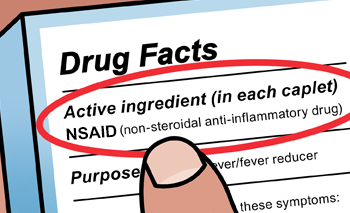
NSAIDs on drug label illustration - 350x213
Next time you reach into the medicine cabinet seeking relief for a headache, backache or arthritis, be aware of important safety information for non-steroidal anti-inflammatory drugs.
FDA is strengthening an existing warning in prescription drug labels and over-the-counter (OTC) Drug Facts labels to indicate that nonsteroidal anti-inflammatory drugs (NSAIDs) can increase the chance of a heart attack or stroke, either of which can lead to death. Those serious side effects can occur as early as the first few weeks of using an NSAID, and the risk might rise the longer people take NSAIDs. (Although aspirin is also an NSAID, this revised warning doesn’t apply to aspirin.)
The OTC drugs in this group are used for the temporary relief of pain and fever. The prescription drugs in this group are used to treat several kinds of arthritis and other painful conditions. Because many prescription and OTC medicines contain NSAIDs, consumers should avoid taking multiple remedies with the same active ingredient.
The Risks and What’s New
Prescription NSAIDs are an important treatment for the symptoms of many debilitating conditions, including osteoarthritis, rheumatoid arthritis‎, gout and other rheumatological and painful conditions. OTC NSAIDs are used to temporarily reduce fever and to treat minor aches and pains such as headaches, toothaches, backaches, muscular aches, tendonitis, strains, sprains and menstrual cramps. Common OTC NSAIDs include ibuprofen (Motrin, Advil) and naproxen (Aleve). In addition, some combination medicines that relieve various symptoms, such as multi-symptom cold products, contain NSAIDs.
“Be careful not to take more than one product that contains an NSAID at a time,” says Karen M. Mahoney, M.D., deputy director of FDA’s Division of Nonprescription Drug Products. How will you know? Check the list of active ingredients in the Drug Facts label.
The labels for both prescription NSAIDs and OTC NSAIDs already have information on heart attack and stroke risk. In the coming months, FDA will require manufacturers of prescription NSAIDs to update their labels with more specific information about heart attack and stroke risks. FDA will also request that the manufacturers of OTC NSAIDs update the heart attack and stroke risk information in Drug Facts labels.
FDA added a boxed warning to prescription drug labels for this risk in 2005. More recent data and information are prompting FDA to update NSAID labeling. Today we know that the risk of heart attack and stroke may occur early in treatment, even in the first weeks.
“There is no period of use shown to be without risk,” says Judy Racoosin, M.D., M.P.H., deputy director of FDA’s Division of Anesthesia, Analgesia, and Addiction Products.
People who have cardiovascular disease, particularly those who recently had a heart attack or cardiac bypass surgery, are at the greatest risk for cardiovascular adverse events associated with NSAIDs.
FDA is adding information in the drug label for people who already have had a heart attack. This vulnerable population is at an increased risk of having another heart attack or dying of heart attack-related causes if they’re treated with NSAIDs, according to studies.
But the risk is also present in people without cardiovascular disease. “Everyone may be at risk – even people without an underlying risk for cardiovascular disease,” Racoosin adds.
What Consumers Should Do
NSAIDs are effective treatments for pain, inflammation and fever. Consumers can still take them but should be aware of this increased risk of heart attack or stroke, especially at higher doses.
“As always, consumers must carefully read the Drug Facts label for all nonprescription drugs. Consumers should carefully consider whether the drug is right for them, and use the medicine only as directed. Take the lowest effective dose for the shortest amount of time possible,” Mahoney says.
When using prescription NSAIDs, read the consumer-friendly Medication Guide attached to your filled prescription, which provides important safety information.
If you have heart disease or high blood pressure, consult a healthcare provider before using an NSAID. Balance the benefits of NSAIDs with the possible risks and weigh your options. If you take low-dose aspirin for protection against heart attack and stroke, you should know that some NSAIDs, including ibuprofen and naproxen, can interfere with that protective effect.
Stop taking NSAIDs and seek medical help if you experience symptoms that might signal heart problems or stroke, such as chest pain, trouble breathing, sudden weakness in one part or side of the body, or sudden slurred speech.
Reduce your risk factors for heart disease and stroke. “Smoking, high blood pressure, high cholesterol and diabetes are significant risk factors for these conditions,” Mahoney says. “If you smoke, work on quitting. See your doctor regularly to find out if you have these other strong risk factors, and commit yourself to taking care of them and of your health.”

Wednesday, July 8, 2015

Health Research: Key mechanism that causes neuropathic pain found ♦ Marijuana users substitute alcohol at 21 ♦ Higher vitamin D doses needed to restore healthy levels in overweight blacks

Marijuana users substitute alcohol at 21 A recent study looked at marijuana and alcohol use in people between the ages of 18 and 24. It's probably not surprising that the results show a drastic increase in alcohol consumption in people just over 21; after all, that's the minimum legal age to drink. What an economist-researcher found remarkable is that, at the same age, there was an equally dramatic drop in marijuana use.
Age-related self-destruction of cells makes kidney prone to injury As advances in medicine allow individuals to live longer, people are facing unique age-related health challenges. As they age, organs such as the kidneys become more susceptible to injury, and their ability to self-repair is decreased. Researchers have found a cellular signal that causes kidney cells to die, making the kidneys prone to injury.
Higher vitamin D doses may be needed to restore healthy levels in overweight blacks The current recommended minimum daily dose of vitamin D is not sufficient to restore healthy vitamin D levels in overweight or obese black.
Life expectancy substantially lower with combination of diabetes, stroke or heart attack In an analysis that included nearly 1.2 million participants and more than 135,000 deaths, mortality associated with a history of diabetes, stroke or heart attack was similar for each condition, and the risk of death increased substantially with each additional condition a patient had.
Key mechanism that causes neuropathic pain found A biological process called endoplasmic reticulum stress appears to play a key role in causing neuropathic pain, according to a new study. The discovery could eventually lead to new therapeutics for controlling chronic pain associated with trauma, diabetes, shingles, multiple sclerosis or other conditions that cause nerve damage

Tuesday, July 7, 2015

Cardiovascular Research:Two bio markers linked to severe heart disease ♦ Heart attack treatment hypothesis 'busted ♦ Fundamental beliefs about atherosclerosis overturned

Two bio markers linked to severe heart disease found A first-of-its-kind animal model to pinpoint two biomarkers that are elevated in the most severe form of coronary disease has been developed by scientists.
Heart attack treatment hypothesis 'busted' Researchers have long had reason to hope that blocking the flow of calcium into the mitochondria of heart and brain cells could be one way to prevent damage caused by heart attacks and strokes. But in a study of mice engineered to lack a key calcium channel in their heart cells, scientists appear to have cast a shadow of doubt on that theory.
New blood pressure guidelines may lead to under treatment of older adults In 2014, the Joint National Committee released the eighth update to the blood pressure guidelines (JNC8P). These guidelines included a controversial decision to change the blood pressure goal that may lead to under treatment of adults 60 years of age or older. The JNC8P guidelines set a less stringent goal blood pressure of < 150/90 mmHg for individuals 60 years of age or older compared to the previous <140/90 mmHg goal.
Reducing stroke damage may be next for optical coherence tomography technology widely used in vision healthcare A new article reports on use of optical coherence tomography to obtain high-resolution images showing blood-flow dynamics in the brain before, during, and after stroke-like states. The information may ultimately enable clinicians to reduce stroke damage.
Fundamental beliefs about atherosclerosis overturned Doctors' efforts to battle the dangerous atherosclerotic plaques that build up in our arteries and cause heart attacks and strokes are built on several false beliefs about the fundamental composition and formation of the plaques. These new discoveries will force researchers to reassess their approaches to developing treatments and discard some of their basic assumptions about atherosclerosis.

Friday, June 19, 2015

Cardiovascular Research: Improve stem cells' ability treat heart failure ♦ Faster way to treat the heart after a heart attack ♦ Molecular cause of heart condition

Bioengineered patch, molecular 'booster' could improve stem cells' ability treat heart failure Despite the intense activity and high hopes that surround the use of stem cells to reverse heart disease, scientists still face multiple roadblocks before the treatment will be ready for clinical prime time. Researchers are now finding ways to maximize the healing potential of stem cells by helping them overcome the inhospitable conditions of a damaged heart – bringing the promise of stem cell therapy for heart disease one step closer to reality.
Researchers develop a faster way to treat the heart after a heart attack For healing the heart after a heart attack, stem cell therapies show promise but are slow to implement. Researchers develop a new treatment called microsphere therapy that can be kept on-hand and administered more readily than stem cells.
Molecular cause of heart condition identified Researchers have teased apart the molecular basis for differences in behavior between healthy cells and those from patients with a cardiac condition and identified a drug treatment that partially restores function to diseased cells.
Stem cell exosomes used to induce damaged mouse hearts to self-repair A little more than a decade ago, researchers discovered that all cells secrete tiny communications modules jammed with an entire work crew of messages for other cells. Today, a team of researchers is harnessing the communications vesicles secreted by stem cells and using them to induce the damaged heart to repair itself.

Thursday, June 18, 2015

Cardiovascular Research:Poor sleep associated with increased risk of heart attack, stroke ♦ Visualizing calcified coronary arteries ♦ Fructose powers a vicious circle

Visualizing calcified coronary arteries may be wake-up call to change lifestyle Looking at images of their own calcified coronary arteries may be a wake-up call for patients with newly diagnosed coronary artery disease to change their lifestyles.
Public divided on heart benefits from alcohol consumption In one of the first published studies using data from the Health eHeart Study, researchers have found that people are divided on the cardiovascular benefits of alcohol consumption. And, those who do perceive alcohol as 'heart healthy' drink substantially more than their counterparts.
Vinculin protein boosts function in the aging heart A team of researchers provide new insights on how hearts 'stay young' and keep functioning over a lifetime despite the fact that most organisms generate few new heart cells. Identifying key gene expression changes that promote heart function as organisms age could lead to new therapy targets that address age-related heart failure
Fructose powers a vicious circle Researchers have found a hitherto unknown molecular mechanism that is driven by fructose and can lead to cardiac enlargement and heart failure

Poor sleep associated with increased risk of heart attack, stroke Poor sleep is associated with increased risk of heart attack and stroke, according to results from a recent study. The study included a representative sample of 657 men aged 25 to 64 years with no history of heart attack, stroke or diabetes. In terms of sleep quality, very bad, bad or poor ratings were considered a sleeping disorder in the study. Cases of myocardial infarction and stroke were recorded over the next 14 years.

Friday, June 12, 2015

Cardiovascular Research: Heart attack risk increases 16-21% with use of common antacid ♦ Faulty gene can trigger fatal heart condition ♦ Antibiotic-laced sponges reduce exsternal infections in cardiac surgery

Heart attack risk increases 16-21% with use of common antacid Adults who use proton pump inhibitors are between 16 and 21 percent more likely to experience a heart attack than people who don't use the commonly prescribed antacid drugs
Obesity linked to adrenal disorder in teens may increase risk for cardiovascular disease Adolescents and young adults with congenital adrenal hyperplasia have significantly increased amounts of abdominal fat tissue, placing them at greater risk for harmful conditions linked to obesity, including cardiovascular disease.
How a faulty gene can trigger fatal heart condition New research has revealed how a faulty gene can cause fatal abnormal heart rhythms that are brought on by exercise.
Stroke education helps patients recognize stroke symptoms, encourages fast response Clear, simple preparedness messages can help patients recognize symptoms of a subsequent stroke and speed up emergency room arrival times. Stroke education materials dramatically improved hospital arrival times, specifically among Hispanic stroke patients.
Implantable antibiotic-laced sponges reduce exsternal infections in cardiac surgery Cardiac surgeons often "crack open" the flat bone that forms the middle front section of the chest, known as the sternum, in order to reach important structures. When a sternal wound infection occurs, serious complications and even death may result. Implanting antibiotic-laden sponges between the sternal halves before closure has been adapted to prevent infections. While a recent report questioned this practice, a meta-analysis clearly established that the sponges do work.

Wednesday, June 10, 2015

Cardiovascular Research:Researchers identify new genetic cause of arrhythmia ♦ Restless legs syndrome to increased risk of stroke ♦ New genetic mutation in aortic disease allows better diagnosis

Researchers identify new genetic cause of arrhythmia and develop therapy A rare and deadly form of inherited arrhythmia has been identified by researchers, who have developed a method to treat it. Arrhythmia is a malfunction of the heart's electrical system that causes irregular heartbeats.  
Study links severe restless legs syndrome to increased risk of stroke Increased restless legs syndrome severity is associated with subsequent increased risk of stroke, researchers report. The study group comprised 72,916 female registered nurses ages 41-58 years in 2005, free of diabetes, stroke, and pregnancy at the baseline.
Discovery of new genetic mutation in aortic disease allows better diagnosis and brings personalised medicine a step closer Thoracic aortic aneurysm and dissection (TAAD), an enlargement or tearing of the walls of the aorta in the chest, is, together with abdominal aortic aneurysms, responsible for about 2% of all deaths in Western countries. The aorta is the largest artery in the body, and carries blood from the heart. About one out of every five patients with TAAD has a family member with the same disorder, therefore indicating a genetic cause.  However, the relevant genetic mutations discovered so far only explain about 30% of all cases
. Images reveal structure of heart cells that may hold heart attack clues Newly released images revealing the 'bicycle spoke' structure of a heart cell may hold key clues to reducing damage from a heart attack. Using a novel type of electron microscopy, researchers produced 3D images of a healthy heart cell at nanoscopic scale which shows part of their structure is arranged like spokes on a wheel.

Thursday, May 14, 2015

Cardiovascular Research: Depression may double stroke risk ♦ hand-grip strength predicts heart attack and stroke risk ♦ Molecular switch that promotes heart cell maturation

Long-term depression may double stroke risk despite treatment Long-term depression may double the risk of stroke for middle-aged adults, research suggests. The scientists add that reducing symptoms of depression may not immediately reduce the elevated stroke risk
Testing hand-grip strength could be a simple, low-cost way to predict heart attack and stroke risk Weak grip strength is linked with shorter survival and a greater risk of having a heart attack or stroke.
Revolutionary discovery could help tackle skin, heart conditions An important discovery about how certain cells stick to each other to form tissue has been made by scientists. The team studied how cells in the skin and heart are bound together through structures called desmosomes. They wanted to understand how these junctions between the cells in the tissue are so strong
Molecular switch that promotes heart cell maturation discovered The difficulty in getting stem cells to mature into more adult-like heart cells has hindered the search for regenerative treatments for hearts damaged by disease. A molecular switch has now been discovered that appears to help embryonic heart cells switch from a glucose to fatty acid based metabolism, becoming larger, stronger, and acting like more mature heart cells. This discovery may lead to lab methods to grow heart cells that function more like those in adult hearts.