Showing posts with label Measles. Show all posts

Saturday, May 23, 2015

Health News :FDA posts Blue Bell inspection reports ♦ Salmonella linked sushi now totals 53 cases in 9 states ♦ Control of robotic arm using thoughts alone

FDA posts Blue Bell inspection reports 2007-2014 The U.S. Food and Drug Administration (FDA) on Thursday posted four additional inspection reports of Blue Bell Creameries facilities from 2007-2012. The four join recent FDA inspection reports of three Blue Bell plants performed before and after the company’s total product recall.
Salmonella cases linked to raw tuna sushi now totals 53 cases in 9 states According to updates posted Thursday by both the U.S. Centers for Disease Control and Prevention (CDC) and the U.S. Food and Drug Administration (FDA), there are now 53 people in 9 states infected with the outbreak strain of Salmonella Paratyphi B variant L Ten of those sickened have been hospitalized.
Control of robotic arm using thoughts alone Through a clinical collaboration between Caltech, Keck Medicine of USC and Rancho Los Amigos National Rehabilitation Center, a 34-year-old paralyzed man is the first person in the world to have a neural prosthetic device implanted in a region of the brain where intentions are made, giving him the ability to perform a fluid hand-shaking gesture, drink a beverage, and even play 'rock, paper, scissors,' using a robotic arm
Mosquito sex-determining gene could help fight dengue fever A gene responsible for sex determination in mosquitoes that can transmit yellow fever, dengue, and chikungunya viruses has been identified. Only female mosquitoes bite because they need blood for developing eggs, and researchers believe that a higher ratio of males could reduce disease transmission.
Why you need one vaccine for measles and many for the flu While the influenza virus mutates constantly and requires a yearly shot that offers a certain percentage of protection, old reliable measles needs only a two-dose vaccine during childhood for lifelong immunity. A new study has an explanation: The surface proteins that the measles virus uses to enter cells are ineffective if they suffer any mutation, meaning that any changes to the virus come at a major cost.

Wednesday, May 6, 2015

Childrens Health: Strategy found for safely prescribing antidepressants to children ♦ High fever: Is it measles or flu? ♦ Childhood maltreatment linked to sleep problems

Researchers hope to improve dental health by changing caregiver's behavior Studies have long associated low-income areas with poor oral health. But dental researchers have sensed that other factors related to income may be at work -- in particular, education level. So they recently investigated how a parent or other caregiver's education level and dental habits affect children's dental health
High fever: Is it measles or flu? A pathologist and infectious disease expert offers symptoms parents should watch for if they suspect their child has the measles.
'Herd immunity' threatened in measles outbreak, pathologist says Spending time with other people is a cure for loneliness. But being a member of a vaccinated community has an important added benefit: preventing the spread of vaccine-preventable infectious diseases. The current concern over outbreaks of measles in the United States provides valuable lessons about how vaccinations are effective across a broad community.
Childhood maltreatment linked to sleep problems among adults Adults who experienced multiple incidents of childhood maltreatment were more than two times as likely to have trouble sleeping than their counterparts who were not maltreated during childhood.
Strategy found for safely prescribing antidepressants to children and adolescents Two new strategies to treat depression in young people have been developed for the use of selective serotonin reuptake inhibitor class of medications. These strategies incorporate a new understanding of how to mitigate the risk of suicide while on SSRI treatment

Monday, April 27, 2015

Microneedle Patch for Measles Vaccination Could Be a Game Changer

Promises to Increase Reach of Immunization Coverage Globally
microneedle patch
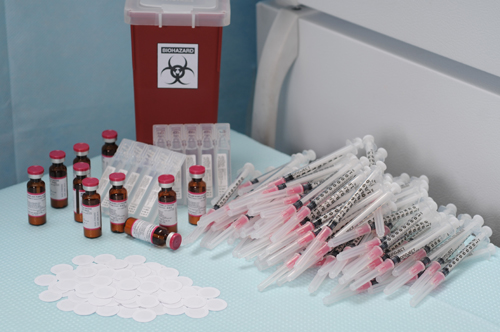
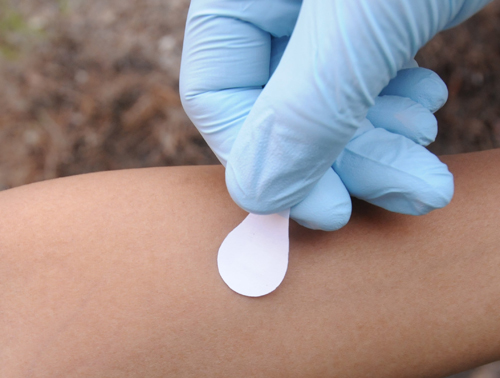
Administering measles vaccine with a microneedle patch is expected to be much easier than getting a shot.
Photo Credit: Gary Meek, Georgia Tech
microneedle patch
The 100 microneedle patches in the foreground could replace the 100 needles and syringes, 10 ten-dose vials of measles vaccine with diluent, a biohazards box for sharps waste disposal, and a refrigerator for cold chain storage shown in the background.
Photo Credit: Gary Meek, Georgia Tech
A new microneedle patch being developed by the Georgia Institute of Technology and the Centers for Disease Control and Prevention (CDC) could make it easier to vaccinate people against measles and other vaccine-preventable diseases.
The microneedle patch is designed to be administered by minimally trained workers and to simplify storage, distribution, and disposal compared with conventional vaccines.
The microneedle patch under development measures about a square centimeter and is administered with the press of a thumb. The underside of the patch is lined with 100 solid, conical microneedles made of polymer, sugar, and vaccine that are a fraction of a millimeter long. When the patch is applied, the microneedles press into the upper layers of the skin; they dissolve within a few minutes, releasing the vaccine. The patch can then be discarded.
“Each day, 400 children are killed by measles complications worldwide. With no needles, syringes, sterile water or sharps disposals needed, the microneedle patch offers great hope of a new tool to reach the world’s children faster, even in the most remote areas,” said James Goodson, Ph.D., epidemiologist from the CDC’s Global Immunization Division. “This advancement would be a major boost in our efforts to eliminate this disease, with more vaccines administered and more lives saved at less cost.
Getting the measles vaccine to remote areas is expected to be easier because the patch is more stable at varying temperatures than the currently available vaccines and takes up less space than the standard vaccine. Because microneedles dissolve in the skin, there is no disposal of needles, reducing the risk of accidental needlesticks. The measles patch is expected be manufactured at a cost comparable to the currently available needle and syringe vaccine.
Twenty million people are affected by measles each year. Unfortunately, global coverage with the measles vaccine has been stagnant for the last few years at around 85 percent, which is well below the coverage of up to 95 percent needed to interrupt transmission of the disease.
Because measles is vaccine-preventable and the measles virus survives only in human hosts, the world’s health officials are aiming for measles elimination. Having a simple patch administered by minimally trained vaccinators could help increase vaccination coverage and achieve the goal of measles elimination.
Georgia Tech and CDC’s Global Immunization Division and Division of Viral Diseases recently completed a study that showed the new microneedle patch produces a strong immune response in rhesus macaques. No adverse effects or health issues were noted during the study. These findings have cleared the way for developing proposals for human clinical trials, which could begin as early as 2017.
“We think this collaboration with CDC is an excellent example of how advances in engineering can be used to address important public health problems,” said Mark Prausnitz of Georgia Institute of Technology, who served as one of the principal investigators on the study.
World Immunization Week, celebrated in the last week of April each year, aims to promote the use of vaccines to protect people of all ages against disease. This year’s campaign focuses on closing the immunization gap and reaching equity in immunization levels as outlined in the Global Vaccine Action Plan (GVAP). The Plan, endorsed by the 194 Member States of the World Health Assembly in May 2012, is the framework to prevent millions of deaths by 2020 through universal access to vaccines for people in all communities.
The GVAP aims to:
  • strengthen routine immunization to meet vaccination coverage targets;
  • accelerate control of vaccine-preventable diseases with polio eradication as the first milestone;
  • eliminate measles and rubella;
  • introduce new and improved vaccines; and
  • spur research and development for the next generation of vaccines and technologies.
Microneedle technology could move the GVAP forward by leading to improved protection against other diseases, including polio, influenza, rotavirus, rubella, tuberculosis and others. CDC is also collaborating with Georgia Tech to see if microneedles could be used to administer inactivated polio vaccine. Additional research is studying microneedle-administration of the influenza, rotavirus and tuberculosis vaccines. For more information about microneedle technology please visit http://youtu.be/wVEF1ckaYEY.

Saturday, April 4, 2015

Pediatric Research: Nanoparticles may exploit tumor weaknesses ♦ Key mechanism identified in pediatric bone cancers ♦ Bleach linked to higher childhood infection rate

What can parents do to prevent the further spread of the measles?
A pediatric infectious diseases specialist helps explain the facts about measles, and how parents can prevent further outbreak. A recent outbreak of confirmed cases of measles involved children who were not vaccinated against the extremely contagious virus. While thought to be eradicated in the U.S., the illness has been traced to travelers who were infected in other countries.
A particular molecular pathway permits stem cells in pediatric bone cancers to grow rapidly and aggressively, according to researchers. In the study, the investigators used human and mouse osteosarcomas to pinpoint the molecular mechanisms that inhibit the tumor-suppressive Hippo pathway. The researchers concluded that Sox2 represses the functioning of the Hippo pathway, which, in turn, leads to an increase of the potent growth stimulator Yes Associated Protein, known as YAP, permitting cancer cell proliferation
Delving into the world of the extremely small, researchers are exploring how biodegradable nanoparticles can precisely deliver anticancer drugs to attack neuroblastoma, an often-deadly children's cancer.
Passive exposure to bleach in the home is linked to higher rates of childhood respiratory and other infections, suggests new research

Tuesday, February 10, 2015

2/10/15 Health News:Psychedelic drug prevents asthma ♦ Five babies at Chicago daycare center have measles ♦ doctors over prescribing painkillers ♦ Microbiome linked to type 1 diabetes


Psychedelic drug prevents asthma development in mice
Researchers have found that a psychedelic drug, (R)-DOI, prevents the development of allergic asthma in a mouse model. The effects are potent and effective at a concentration 50-100 times less than would influence behavior. Continue Reading
Five babies at suburban Chicago daycare center have measles:
A KinderCare Learning Center in Chicago underwent a deep cleaning February 4 and officials urged all unvaccinated children and staff who may have been exposed to the measles to keep away from the center Continue Reading
Opioid and heroin crisis triggered by doctors over prescribing painkillers
Researchers say policymakers must look beyond painkiller abuse in their efforts to reduce opioid overdose deaths. New research reframes the heroin and prescription drug abuse problem as a wave of opioid addiction caused by over prescribing of painkillers by doctors.Continue Reading
Carnivorous mushroom reveals immune trick: How we punch into cancer cells
Edible oyster mushrooms have an intriguing secret: They eat spiders and roundworms. And they do so using proteins that can punch their way into cells, leaving tidy but deadly holes. It's a trick that our immune cells also use to protect us, destroying infected cells, cancerous cells, and bacteria Continue Reading
Microbiome linked to type 1 diabetes: Shift in microbiome species diversity prior to disease onset

In the largest longitudinal study of the microbiome to date, researchers have identified a connection between changes in gut microbiota and the onset of type 1 diabetes. The study, which followed infants who were genetically predisposed to the condition, found that onset for those who developed the disease was preceded by a drop in microbial diversity -- including a disproportionate decrease in the number of species known to promote health in the gut.Continue Reading

Monday, February 9, 2015

2/9/15 Health News: Girl’s death raises questions about food safety ♦ Politics of Measles ♦ MOST DON’T USE FOOD THERMOMETERS ♦ Gut bacteria linked to kidney disease ♦ Prevent heart failure

The politics of Measles
Twenty-five years ago, when a doctor named Robert Ross was the deputy health commissioner of Philadelphia, a measles epidemic swept the country. Until this year’s outbreak, which started at Disneyland and has so far sickened more than a hundred people, the 1989-91 epidemic was the most alarming that the United States had seen since 1963, when the measles vaccine was introduced. Continue reading
Girl’s death raises questions about food safety, govt institutions
"I myself paid the fee of Rs 8,000 for the test at PCSIR but they still cannot tell me when I will get the report." Kanza, a student of class eight, died last week and her mother and two younger siblings fell ill, the family claimed, after consuming burgers at the Dilpasand Sweets’ Continue Reading
MOST CONSUMERS DON’T USE FOOD THERMOMETERS DESPITE IMPORTANCE TO FOOD SAFETY
A couple of weeks ago, I was having dinner with my parents. My dad was making chicken and asked me what temperature he needed to cook it to. After all, working for Food Safety News does qualify me as the food-safety expert of the family. “165 degrees F,” I told him. “What if it’s barely... Continue Reading
Gut bacteria byproduct linked to chronic kidney disease for the first time
For the first time, researchers have linked trimethylamine N-oxide -- a gut metabolite formed during the digestion of egg-, red meat- or dairy-derived nutrients choline and carnitine -- to chronic kidney disease.Continue Reading
.Bioengineered miniature structures could prevent heart failure
The delivery of tiny biodegradable microstructures to heart tissue damaged by heart attack may help repair the tissue and prevent future heart failure Continue Reading

Friday, January 30, 2015

1/30/15 Health News:Norway's !,st case of mad cow disease ♦ School releases students unvaccinated for measles ♦.Lesson From Ice Cream Recall ♦ True Cost of Cheap Meat

Norway finds first case of mad cow disease, says food safe
Norway reported its first ever case of mad cow disease, saying the instance was an isolated one and telling consumers it was still safe to eat beef and drink milk. Tests at a British laboratory confirmed the disease, in a 15-year-old cow, which had been slaughtered, … continue reading
Calif. school releases students unvaccinated for measles.
Officials at Palm Desert High School in Palm Springs announced that 66 students were ordered to remain at home through February 9 unless they are able to confirm they received immunization or show proof of resistance to measles after a student was sent home January 26 due to a suspected case of the disease. Continue Reading
LESSON FROM WA ICE CREAM RECALL: DON’T LET IT HAPPEN TO YOU
No doubt about it, food recalls can be hell. “I’ve never been through anything like this before,” Barry Bettinger, co-owner of Snoqualmie Gourmet Ice Cream in Snohomish, WA,. Not only do you worry about the people who have become...Continue Reading
NW BOOK EXPLORES FOOD SAFETY AND THE TRUE COST OF CHEAP MEAT
Reading “The Chain: Farm, Factory and the Fate of Our Food,” a new book by Ted Genoways, one begins to wonder who is treated better: the millions of hogs consumed in America each year, or the people who work on the farms Continue Reading
Trust your gut: E. coli may hold one of the keys to treating Parkinson's

E. coli usually brings to mind food poisoning and beach closures, but researchers recently discovered a protein in E. coli that inhibits the accumulation of potentially toxic amyloids—a hallmark of diseases such as Parkinson's, scientists say Continue Reading

Thursday, January 29, 2015

1/29/15 Health News: Measles outbreak up to 87 cases ♦ Pasture feeding improves nutritional of red meat ♦ Salt and hypertension ♦ Malignant melanoma

California measles outbreak is up to 87 cases in 7 states, Mexico
Officials have now confirmed at least 87 cases of measles in seven states and Mexico, as the outbreak centered in California continues to spread.Continue Reading
Arizona measles outbreak reaches ‘critical point’.
Two additional cases of measles were confirmed in Arizona January 27 and public health officials warned that one of the confirmed cases may have exposed as many as 195 children to the disease at the Phoenix Children’s East Valley Center. Continue Reading
Pasture feeding may improve nutritional benefits of red meat
Pasture-fed lamb meat is high in polyunsaturated fat due to the specific plant species consumed, indicating that it may be better for your health. Continue Reading
Can coffee protect against malignant melanoma?
Both epidemiological and preclinical studies have suggested that coffee consumption has a protective effect against non-melanoma skin cancers. However the protective effect for cutaneous melanoma is less clear, according to a new study. Continue Reading
Blame it on your brain: Salt and hypertension

Excessive salt intake "reprograms" the brain, interfering with a natural safety mechanism that normally prevents the body's arterial blood pressure from rising, Continue Reading

Thursday, September 11, 2014

Measles Outbreak in an Unvaccinated Family

Measles is currently endemic in much of the world, providing an ongoing source of imported cases to the United States. Children should get routine measles vaccinations..

In January 2013 the Florida Department of Health in Orange County investigated a measles outbreak in four unvaccinated siblings with no travel history. A fifth possibly associated case was later reported in a Brazilian citizen with travel to Orange County, Fla.. No source case was identified. A rapid and thorough public health response was conducted to prevent further transmission of measles. No additional cases were identified in Florida.
Measles causes fever, runny nose, cough and a rash all over the body. About one out of 10 children with measles also gets an ear infection, and up to one out of 20 gets pneumonia. For every 1,000 children who get measles, one or two will die. Adults can also get measles especially if they are not vaccinated. Children under 5 years of age and adults over 20 are at higher risk for measles complications including pneumonia, and a higher risk of hospitalization and death from measles than school aged children and adolescents.
Healthcare providers should learn to recognize measles infections and should consider measles diagnosis in persons with no or unknown vaccination history and compatible symptoms.

More Details

Thursday, June 12, 2014

6/12/14 Health News: Artificial Pancreas ♦ Thermometer Made From Light ♦ Measles Cases in USA Hit 20-year High ♦ 1 in 4 Smokers With Gene Defect Get Lung Cancer

1 in 4 Smokers With Gene Defect May Get Lung Cancer
Study finds smokers with gene normally linked to breast cancer appear to have a much higher risk of lung cancer. Up to one in four smokers with a particular genetic defect will develop lung cancer, researchers report. "Smokers in general have nearly a 15 percent chance of developing lung cancer, far higher than in nonsmokers.molecular and population genetics at the Institute of Cancer Research in the United Kingdom.Continue Reading
Fully Automated Artificial Pancreas Finally Within Reach
Even with increasingly effective treatments and glucose monitors, most individuals with type 1 diabetes still cannot achieve recommended glucose control goals. Many experts believe that the best near-term solution for patients will be a system that can independently restore insulin and glucose balance. “Artificial pancreas systems will be the most revolutionary advance in diabetes care since the discovery of insulin,” said Aaron Kowalski, PhD, a vice president at the Juvenile Diabetes Research Foundation, a global organization that funds type 1 diabetes research. Continue Reading
World's Best Thermometer Made From Light
Univ. of Adelaide physicists have produced the world's most sensitive thermometer — three times more precise than the best thermometers in existence. Published in the journal Physical Review Letters, the researchers from the university's Institute for Photonics and Advanced Sensing (IPAS) report they have been able to measure temperature with a precision of 30 billionths of a degree. "We believe this is the best measurement ever made of temperature − at room temperature," says project leader Prof. Andre Luiten, Chair of Experimental Physics in IPAS and the School of Chemistry and Physics, pointing out that it is possible to make more sensitive measurements of temperature in cryogenic environments near absolute zero. Continue Reading

CDC: Measles Cases in USA Hit 20-year High

The USA has the most measles cases in 20 years and the most since homegrown outbreaks were eliminated in 2000, the federal Centers for Disease Control and Prevention announced. The confirmed case count for 2014, as of May 23, was 288 and growing, the CDC says. The nationwide total is the highest for late May since 1994, when 764 cases were reported, the CDC says. It surpasses the 220 cases reported in all of 2011, which was the most in the post-2000 era. "This is not the kind of record we want to break, but should be a wake-up call for travelers and for parents to make sure vaccination records are up to date,"  Schuchat, who spoke during a telephone news conference, said this year's outbreaks are occurring among unvaccinated clusters of people exposed to travelers bringing the measles virus back from other countries — most notably the Philippines, where a large outbreak began in October 2013.Continue  Reading

Thursday, April 10, 2014

Measles Outbreak with Adopted Children from China

Timely vaccination for international adoptees before coming to the United States can prevent the spread of measles and other vaccine-preventable diseases. Although measles is a highly infectious disease that may lead to severe complications and even death, it can be prevented through routine vaccination. In this cluster, two adoptees from China were diagnosed with measles in July 2013, shortly after arriving in the United States.
Contact investigations by state and local public health agencies led to the identification of two additional measles cases, involving a family member of an adoptee and another new adoptee from China. All of the adoptees were children aged 2-years-old with cerebral palsy who had not received vaccination against measles.
By ensuring that international adoptees are up-to-date on their vaccines while still in their countries of origin, the spread of vaccine preventable disease like measles can be avoided.

Wednesday, February 26, 2014

2/26/14 Health News: Problems at Rancho Slaughterhouse - Vitamin C Reduced Stroke Risk - Itching: More Than Skin-Deep - Thousands Exposed to Measles

Federal Inspector Reported Problems at Rancho Slaughterhouse
A federal food inspector at Rancho Feeding Corp. repeatedly criticized practices inside the Petaluma slaughterhouse now at the center of an international meat recall and an ongoing criminal investigation, according to union officials. Continue reading

Vitamin C Linked With Reduced Stroke Risk
Making sure you get enough vitamin C could help protect you from stroke, a small new study suggests. Research shows that risk of hemorrhagic stroke -- which is more deadly, but rarer, than ischemic stroke -- is lower among people who have normal vitamin C levels, compared with people with depleted vitamin C levels. “Our results show that vitamin C deficiency should be considered a risk factor for this severe type of stroke, as were high blood pressure, drinking alcohol and being overweight in our study,” study researcher Dr. Stéphane Vannier, M.D. said in a statement. Continue Reading

Itching: More Than Skin-Deep
The experiment was not for the squirmish. Volunteers were made to itch like crazy on one arm, but not allowed to scratch. Then they were whisked into an M.R.I. scanner to see what parts of their brains lit up when they itched, when researchers scratched them and when they were finally allowed to scratch themselves. The scientific question was this: Why does it feel so good to scratch an itch? Itching and scratching engage brain areas involved not only in sensation, but also in mental processes that help explain why we love to scratch: motivation and reward, pleasure, craving and even addiction. What an itch turns on, a scratch turns off — and scratching oneself does it better than being scratched by someone else. Continue Reading

In California, Thousands Exposed to Measles

Thousands of San Francisco Bay Area residents may have been exposed to measles this month when an unvaccinated student at the University of California, Berkeley, attended classes and rode the area's BART transit system. Public health officials in Contra Costa County, outside of San Francisco, said anyone riding BART from Feb. 4 to Feb. 7 during the morning or late evening commutes could have been exposed to the highly contagious respiratory virus. The young man in his 20s lives in the county and was confirmed to have measles. He was likely infected while traveling recently in Asia, health officials said..Continue Reading

Friday, February 21, 2014

2/21/14 Health News: US is Failing to Protect Children - Test for Toxic Genes - Measles Deaths Plunge 78% - Mercury Pollution Closes Part of Maine Coast to Lobster Fishing

Contamination closes part of Maine coast to lobster fishing
PORTLAND ME – State officials were briefed about high levels of mercury contamination in lobsters caught around the mouth of the Penobscot River more than three years before the Department of Marine Resources shut the area down for fishing this week, according to a group of scientists involved in studying the contamination. Continue Reading
West Virginians: We don't drink the water
Health officials say the tap water near Charleston, West Virginia, is alright to drink. But many residents aren't buying it.When he runs the hot water, Joe Merchant said, "within a couple of minutes, I'll have a headache from the steam." Continue Reading


Report: U.S. Failing to Protect Kids From HPV

The US is failing to protect children from preventable cancers that afflict 22,000 Americans a year by not vaccinating enough of them against HPV, a new report says. Although a safe and effective HPV vaccine has been available for eight years, only one-third of girls have been fully immunized with all three recommended doses, according to a report from the President's Cancer Panel, which has advised the White House on cancer since 1971. HPV, or human papillomavirus, is a family of viruses that causes cancer throughout the body, including cancers that predominantly affect men, such as a type of throat cancer. Only 7% of boys are fully vaccinated, although the Centers for Disease Control and Prevention has recommended the shots for them since 2011. Raising vaccination rates to at least 80% of teen girls could prevent 53,000 future cases of cervical cancer in girls alive today, according to the CDC.Continue Reading
A Digital Test for Toxic Genes

Allon Wagner, Uri Gophna, and Eytan Ruppin of Tel Aviv University's Blavatnik School of Computer Science and Department of Molecular Microbiology and Biotechnology, along with researchers at the Weizmann Institute of Science, have developed a computer algorithm that predicts which metabolic genes are lethal to cells when overexpressed. The findings, published in Proceedings of the National Academy of Sciences, could help guide metabolic engineering to produce new chemicals in more cost-effective ways..Continue Reading
Measles Deaths Plunge 78% Since 2000 as Elimination Target Nears

Deaths from measles have dropped 78 percent since 2000 as global vaccination campaigns curb outbreaks of the pneumonia-causing disease, the World Health Organization said.  About 122,000 people died globally from measles in 2012, down from 562,000 in 2000, the Geneva-based WHO said in a statement today. Reported cases fell by a similar proportion. The decline is a result of a program supported by the WHO, the American Red Cross, the U.S. Centers for Disease Control and Prevention and others to cut deaths from the illness by 95 percent by 2015 and eliminate it from three of the WHO’s six regions by 2020.Continue Reading

Saturday, December 14, 2013

Travel Alert: Measles in Turkey

As of 10 September 2013, the World Health Organization (WHO) has reported 6,983 confirmed measles cases in Turkey during 2013, up from approximately 700 reported cases in all of 2012. Many cases have occurred in the southern provinces of the country. The Turkish Ministry of Health is working to address the outbreak.

Measles is a disease caused by a virus that is spread through the air by breathing, coughing, or sneezing. Measles virus is highly contagious and can remain so for up to 2 hours in the air or on surfaces. Symptoms of measles are rash, high fever, cough, runny nose, and red, watery eyes. Some people who become sick with measles also get an ear infection, diarrhea, or a serious lung infection, such as pneumonia. Although severe cases are rare, measles can cause swelling of the brain and even death. Measles can be especially severe in infants and in people who are malnourished or who have weakened immune systems (such as from HIV infection or cancer or from certain drugs or therapies).

Measles remains a common disease in many parts of the world, including Europe, the Middle East, Asia, the Pacific, and Africa. In the United States, most measles cases result from international travel. The disease is brought into the United States by people who get infected in other countries. Measles outbreaks can result when returning travelers spread the disease to people who have not been vaccinated or have not had measles as a child. Anyone who is not protected against measles is at risk of getting infected when he or she travels internationally.

Travelers can protect themselves by Getting the measles vaccine.
People who cannot show that they were vaccinated as children and who have never had measles should be vaccinated. Infants 6-11 months of age should have 1 dose of measles vaccine if traveling internationally.
Children in the United States routinely receive measles vaccination at 12-15 months.               
Infants vaccinated before 12 months of age should be re-vaccinated on or after the first birthday with 2 doses, separated by at least 28 days.
Children 12 months of age or older should have 2 doses, separated by at least 28 days.
Adolescents and adults who have not had measles or have not been vaccinated should get 2 doses, separated by at least 28 days.
Two doses of MMR (measles, mumps & rubella) vaccine is nearly 100% effective at preventing measles.
The only measles vaccines available in the United States are the measles-mumps-rubella (MMR) and the measles-mumps-rubella-varicella (MMRV) vaccines. MMR has been used safely and effectively since the 1970s. A few people experience mild, temporary adverse reactions, such as joint pain, from the vaccine, but serious side effects are extremely rare. There is no link between MMR and autism.
.
Practice hygiene and cleanliness:
Wash your hands often.
If soap and water are not available, clean your hands with hand sanitizer (containing at least 60% alcohol).
Don’t touch your eyes, nose, or mouth. If you need to touch your face, make sure your hands are clean.
Cover your mouth and nose with a tissue or your sleeve (not your hands) when coughing or sneezing.
Try to avoid close contact, such as kissing, hugging, or sharing eating utensils or cups with people who are sick.

If you feel sick and think you may have measles:
Talk to your doctor or nurse if you feel seriously ill, especially if you have a fever.
Tell him or her about your travel.
For more information about medical care abroad, see Getting Health Care Abroad and a list of International Joint Commission-accredited facilities.
Avoid contact with other people while you are sick.