Showing posts with label infection. Show all posts

Tuesday, November 24, 2015

CDC wants to increase awareness of a daily pill that can prevent HIV infection


Approximately 1 in 4 gay, bisexual men; 1 in 5 people who inject drugs; and 1 in 200 heterosexuals should be counseled about pre-exposure prophylaxis (PrEP)
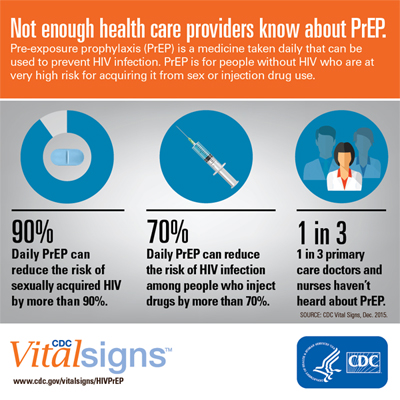
Not enough health care providers know about PrEP.
A new report published today estimates that 25 percent of sexually active gay and bisexual adult men, nearly 20 percent of adults who inject drugs, and less than 1 percent of heterosexually active adults are at substantial risk for HIV infection and should be counseled about PrEP, a daily pill for HIV prevention.
PrEP for HIV prevention was approved by the Food and Drug Administration in 2012. When taken daily, it can reduce the risk of sexually acquired HIV by more than 90 percent. Daily PrEP can also reduce the risk of HIV infection among people who inject drugs by more than 70 percent. However, according to recent studies, some primary health care providers have never heard of PrEP. Increasing awareness of PrEP and counseling for those at substantial risk for HIV infection is critical to realizing the full prevention potential of PrEP.
“PrEP isn’t reaching many people who could benefit from it, and many providers remain unaware of its promise,” said CDC Director Tom Frieden, M.D., M.P.H. “With about 40,000 HIV infections newly diagnosed each year in the U.S., we need to use all available prevention strategies.”
PrEP is one essential component in the nation’s high-impact prevention strategy
While PrEP can fill a critical gap in America’s prevention efforts, all available HIV prevention strategies must be used to have the greatest impact on the epidemic. These include treatment to suppress the virus among people living with HIV; correct and consistent use of condoms; reducing risk behaviors; and ensuring people who inject drugs have access to sterile injection equipment from a reliable source.
“PrEP has the potential to dramatically reduce new HIV infections in the nation,” says Jonathan Mermin, M.D., M.P.H, director of CDC’s National Center for HIV/AIDS, Viral Hepatitis, STD, and TB Prevention. “However, PrEP only works if patients know about it, have access to it, and take it as prescribed.”

Sunday, November 8, 2015

Health News: Eye drops could clear up cataracts ♦ New research could help in the fight against infection, cancer and allergies ♦ Potential target for dry age-related macular degeneration

Study identifies patients most likely to have joint pain reduction after bariatric surgery In the three years following bariatric surgery, the majority of patients experience an improvement in pain and walking ability. A new study went on to identify key patient characteristics that can indicate which people are the most and the least likely to see improvement, a finding that could allow clinicians to identify patients who may require additional interventions to improve outcomes.
Scientists find potential target for dry age-related macular degeneration Scientists have good news for patients who suffer from currently untreatable dry age-related macular degeneration (dry AMD). In a new study, researchers identified a potential target for future therapies to slow the progression of the blinding condition. The findings indicate that treatments currently used for other conditions could also work for dry AMD.
Eye drops could clear up cataracts using newly identified chemical A chemical that could potentially be used in eye drops to reverse cataracts, the leading cause of blindness, has been identified by a team of scientists.
New research could help in the fight against infection, cancer and allergies New research has uncovered an important mechanism in the drive to understand immunological processes that protect us against infection, allergy and cancer.

Thursday, October 15, 2015

Senior's Health:Exoskeleton to ensure an active old age ♦ Tripped up by a bug: Infection may cause falls ♦ Older patients recover more slowly from concussion

High opioid use in older people with COPD raises safety concerns Researchers are raising safety concerns about high rates of new opioid use among older adults with COPD, according to a study. Opioids, such as codeine, oxycodone and morphine might be prescribed more frequently among older adults with COPD to treat chronic muscle pain, breathlessness and insomnia. Common side effects of opioids include falls and fractures, confusion, memory impairment, fatigue, constipation, nausea, vomiting and abdominal pain.
Older patients recover more slowly from concussion Mild traumatic brain injury (MTBI), or concussion, accounts for 75 percent of all TBI and represents an important public health problem. Difficulty in working memory is frequently reported in patients after concussion. Now new research suggests that older individuals may have a more difficult time recovering from concussion.
Tripped up by a bug: Infection may cause falls, especially in older people People who end up in the emergency room because of a fall often are tripped up by an infection, rather than a loose throw rug or poor eyesight, suggests a new study
Exoskeleton to ensure an active old age Researchers are creating portable robot skeletons for the elderly so they can continue to be active longer. Think of it as a tool, not as a robot, says researcher

Saturday, August 8, 2015

Health News How white blood cells limit muscle regeneration ♦ Urban ERs see high rates of hepatitis C infection ♦ Viruses thrive in big families


Viruses thrive in big families, in sickness and in health Every child puts a household at increased risk for viral infections. A new study showed that childless households had infections during 3-4 weeks of the year, while families with six children were infected for 45 weeks. But only half who tested positive reported feeling ill. These results can help families and health care providers know when illness should be cause for concern.
How white blood cells limit muscle regeneration Researchers have identified a protein produced by white blood cells that puts the brakes on muscle repair after injury in mice. The findings point to a target for potential treatments aimed at enhancing muscle regeneration.
Opioid use and sexual violence among drug-using young adults in NYC New research seeks to identify the potential role of drug use in increasing risk of sexual violence among young adult opioid users in New York City, and to identify the specific social and contextual factors surrounding this group's experiences of sexual violence.
Urban ERs see high rates of hepatitis C infection An urban emergency department that set up a hepatitis C testing protocol saw high rates of infection among intravenous drug users and Baby Boomers, with three-quarters of those testing positive unaware they were infected.
High blood sugar of diabetes can cause immune system malfunction, triggering infection Scientists may have uncovered a molecular mechanism that sets into motion dangerous infection in the feet and hands often occurring with uncontrolled diabetes. It appears that high blood sugar unleashes destructive molecules that interfere with the body's natural infection-control defenses

Wednesday, June 10, 2015

Health News: Inject able electronics:♦ Schizophrenia, bipolar disorder may share genetic roots with creativity ♦ Whole genome sequencing found to rapidly enhance infection control

Tool can accurately predict risk of death within on year after admission to hospital A recently developed tool can accurately predict the risk of death for patients within one year after admission to hospital using routinely collected data.
Schizophrenia, bipolar disorder may share genetic roots with creativity Genes linked to creativity could increase the risk of developing schizophrenia and bipolar disorder, according to new research. Genetic risk scores were examined in a sample of 86,292 individuals from the general population of Iceland. Creative individuals were defined as those belonging to the national artistic societies of actors, dancers, musicians, visual artists and writers
Inject able electronics: New system holds promise for basic neuroscience, treatment of neuro-degenerative diseases An international team of researchers has developed a method for fabricating nanoscale electronic scaffolds that can be injected via syringe. Once connected to electronic devices, the scaffolds can be used to monitor neural activity, stimulate tissues and even promote regenerations of neurons.
Virus evolution and human behavior shape global patterns of flu movement The global movement patterns of all four seasonal influenza viruses are illustrated in new research, providing a detailed account of country-to-country virus spread over the last decade and revealing unexpected differences in circulation patterns between viruses.
Whole genome sequencing found to rapidly enhance infection control Whole genome sequencing can quickly isolate the specific strain of bacteria causing an outbreak, identify the source of contamination, and enable rapid infection prevention to stop the spread of infection, according to a study. The findings are based on the examination of an outbreak of Pseudomonas aeruginosa in an Australian neonatal unit

Monday, June 8, 2015

Health Research: Viral infection history in a single drop of blood ♦ How salmonella synchronizes its invasion plan ♦ Developing delirium in ICU linked to fatal outcomes

Viral infection history in a single drop of blood New technology makes it possible to test for current and past infections with any known human virus by analyzing a single drop of a person's blood. The method, called VirScan, is an efficient alternative to existing diagnostics that test for specific viruses one at a time
Study maps types of physical activity associated with better sleep Physical activities, such as walking, as well as aerobics/calisthenics, running, weight-lifting, and yoga/Pilates are associated with better sleep habits, compared to no activity, according to a new study. In contrast, the study shows that other types of physical activity -- such as household and childcare -- work are associated with increased cases of poor sleep habits.
Withholding angiotensin receptor blockers after surgery increases risk of postoperative death Withholding angiotensin receptor blockers for longer than two days after surgery is associated with a significantly increased risk of postoperative death.
How salmonella synchronizes its invasion plan A new study has uncovered a mechanism by which Salmonella bacteria organize the expression of genes required for infection. Salmonella bacteria are one of the leading causes of foodborne illness. Part of what makes them so successful is their ability to invade our bodies, overcoming our natural defenses. Understanding how they do this could lead to new ways of preventing their invasion.
Developing delirium in ICU linked to fatal outcomes About one-third of patients admitted to an intensive care unit (ICU) will develop delirium, a condition that lengthens hospital stays and substantially increases one’s risk of dying in the hospital.

Friday, May 8, 2015

Health News: Why is Listeria showing up more often? ♦ Food safety from a consumer perspective ♦ Nerves move to avoid damage

Why is Listeria showing up more often? Listeria monocytogenes, a food-borne pathogen has been the cause of 18 food recalls since March 1, 2015. Of the 88 total recalls during the same period of time, Listeria accounted for about 20 percent of the total. Listeria has been appearing in products not typically associated with the bacteria, and many people want to know what's going on.
Food safety from a consumer perspective Darin Detwiler, adjunct faculty at Northeastern University and Senior Policy Coordinator at STOP Foodborne Illness, sat down with Food Safety News at the 2015 Food Safety Summit in Baltimore, MD, last month to discuss food safety from a consumer perspective. Detwiler’s son, Riley, was one of four children who died in the 1993 Jack in.
.Nerves move to avoid damage New research can help explain the prevalence of widespread syndromes such as carpal tunnel syndrome and sciatica. According to the results, neural movements can be measured by using non-invasive techniques, which are also applicable in diagnostics and rehabilitation planning.
Unexpected role for calcium in controlling inflammation during chronic lung infection Many of us take a healthy immune system for granted. But for certain infants with rare, inherited mutations of certain genes, severe infection and death are stark consequences of their impaired immune responses. Researchers have identified an important role for calcium signaling in immune responses to chronic infection resulting from Mycobacterium tuberculosis, the bacterium causing tuberculosis.

Saturday, April 4, 2015

Pediatric Research: Nanoparticles may exploit tumor weaknesses ♦ Key mechanism identified in pediatric bone cancers ♦ Bleach linked to higher childhood infection rate

What can parents do to prevent the further spread of the measles?
A pediatric infectious diseases specialist helps explain the facts about measles, and how parents can prevent further outbreak. A recent outbreak of confirmed cases of measles involved children who were not vaccinated against the extremely contagious virus. While thought to be eradicated in the U.S., the illness has been traced to travelers who were infected in other countries.
A particular molecular pathway permits stem cells in pediatric bone cancers to grow rapidly and aggressively, according to researchers. In the study, the investigators used human and mouse osteosarcomas to pinpoint the molecular mechanisms that inhibit the tumor-suppressive Hippo pathway. The researchers concluded that Sox2 represses the functioning of the Hippo pathway, which, in turn, leads to an increase of the potent growth stimulator Yes Associated Protein, known as YAP, permitting cancer cell proliferation
Delving into the world of the extremely small, researchers are exploring how biodegradable nanoparticles can precisely deliver anticancer drugs to attack neuroblastoma, an often-deadly children's cancer.
Passive exposure to bleach in the home is linked to higher rates of childhood respiratory and other infections, suggests new research

Thursday, February 19, 2015

Scientists create potential long-acting HIV therapeutic

New molecule also might prevent HIV infection
Scientists have created a new molecule that shows promise for controlling HIV without daily antiretroviral drugs. The molecule foils a wider range of HIV strains in the laboratory than any known broadly neutralizing HIV antibody and is more powerful than some of the most potent of these antibodies. In addition, the molecule safely protected monkeys from infection with an HIV-like virus during a 40-week study period. Together, the data suggest that the molecule could, with further research, be used to subdue HIV in humans. The authors note that the molecule potentially could be used as both a preventative drug and as a treatment. The new findings appear in the February 18 issue of the journal Nature.
“This innovative research holds promise for moving us toward two important goals: achieving long-term protection from HIV infection, and putting HIV into sustained remission in chronically infected people,” said Anthony S. Fauci, M.D., director of the National Institute of Allergy and Infectious Diseases (NIAID).
The new molecule is called eCD4-Ig and works by tightly binding to two unchanging sites on the surface of HIV that the virus uses to attach to receptors on cells called CD4 and CCR5. Typically, when HIV attaches to these receptors, it unlocks a door to the cell and gets inside. However, when eCD4-Ig binds to HIV, it effectively takes away the virus’s key, locking it out of the cell and preventing it from multiplying.
To make eCD4-Ig, the scientists took an antibody-like molecule that latches onto the CD4 binding site but does not neutralize HIV on its own, and fused it with a short protein fragment that attaches tightly to the CCR5 binding site. Together, these two arms of the molecule are much more effective at stopping HIV than either one is alone.
To test whether eCD4-Ig would protect monkeys from an HIV-like virus (simian immunodeficiency virus, or SIV), the scientists synthesized genetic instructions for making the molecule and placed them inside a harmless carrier virus called adeno-associated virus, or AAV. This gene-therapy tool was designed such that once the AAV-modified virus infected a cell, it would cause the cell to make eCD4-Ig indefinitely. The researchers injected the genetically modified AAV into four monkeys. Then they exposed both the treated monkeys and four untreated monkeys to SIV six times at increasingly higher doses over a 34-week period. None of the treated monkeys became infected with SIV, while all of the untreated monkeys did.  The eCD4-Ig molecule made in the monkey’s cells persisted in the animals’ blood in a fully functional form and at protective concentrations for the entire 40-week study period.
In addition, the scientists found that while monkeys’ immune systems view both eCD4-Ig and broadly neutralizing antibodies to HIV-like viruses as foreign molecules to some degree, the undesirable immune response generated by eCD4-Ig is milder than that generated by infusions of broadly neutralizing HIV antibodies. Scientists have been investigating these antibodies as another promising approach to long-acting treatment for HIV.
“Our molecule appears to be the most potent and broadest inhibitor of HIV entry so far described in a preclinical study,” said Dr. Farzan. “If one could inject either eCD4-Ig or our gene therapy tool into people with HIV infection, it might control HIV for extended periods in the absence of antiretroviral drugs. Further research will help illuminate the promise of these approaches.”
To build on their findings, the scientists are studying both the therapeutic potential of eCD4-Ig in monkeys infected with HIV-like viruses and the ability of eCD4-Ig to prevent infection against a wider range of HIV and HIV-like strains.

Thursday, June 19, 2014

Chances of Dying from an Infection Contracted in the Hospital

You go to the hospital to get well, but did you know that many patients can get additional infections while being treated there? 1 in 25 hospitalized patients have an infection caused by their medical care. 1 in 9 will die. One growing and especially concerning threat to patients in healthcare facilities is antibiotic resistance – when bacteria beat out the drugs made to fight them. Every year, at least 2 million people in and out of healthcare facilities become infected with bacteria that are resistant to antibiotics and 23,000 die as a result.
These statistics are a good reminder of why it's important to be an informed, empowered and prepared patient. Do you know what steps you can take to protect yourself?  Do you know what questions you should ask your doctor and what preventive actions you should practice while in the hospital? Can you recognize the signs and symptoms of an infection? Knowing this information can protect your health and may save your life.

Monday, April 14, 2014

Blood Transfusions Linked to Infection Risk in Hospitals

Blood Transfusions Linked to Infection Risk in Hospitals
Hospitalized patients who had fewer blood transfusions had lower risks of infection, according to a large analysis. The results suggest that more conservative transfusion strategies could help reduce infection rates at health care facilities.
Blood transfusion bags
About 1 in every 20 hospital inpatients develops an infection related to their care. These infections can have devastating consequences—lengthening the time hospitalized and, in some patients, contributing to death. Strategies to reduce infections include using checklists, improving hand hygiene, and avoiding the use of urinary catheters.
One common inpatient therapy is transfusion of red blood cells. More than 37,000 units of red blood cells are transfused every day in the United States. Transfusions can replace blood lost during surgery or after a serious injury. Transfusions may also help people who are unable to make enough blood due to an illness, such as cancer or kidney failure. Transfusions are often given when patients have low levels of hemoglobin, an iron-rich protein in red blood cells. Normal hemoglobin levels range from about 14 to 17 g/dL (grams per deciliter) in men and 12 to 15 g/dL in women.
The risk of developing an infection from a blood transfusion is extremely low. Donated blood is carefully screened for infectious agents, such as viruses. However, when patients receive blood from a donor, their immune system may react to substances found in the stored donor blood, placing them at greater risk of infection from other sources.
A team led by Drs. Mary Rogers and Jeffrey Rohde of the University of Michigan set out to examine the association between transfusion strategies and health care-associated infections. The work was funded by NIH’s National Heart, Lung, and Blood Institute (NHLBI). Results were published April 2, 2014, in the Journal of the American Medical Association.
The scientists analyzed data from 18 randomized clinical trials that together included more than 7,500 patients. These trials compared liberal transfusion strategies (where patients received more blood) to restrictive transfusion strategies (where patients received less blood, generally only when their hemoglobin levels dropped below 7 or 8 g/dL or they had symptoms). The team examined the incidences of health care-associated infections, such as pneumonia, wound infection, and sepsis.
The risk of serious hospital-associated infections was about 17% when liberal transfusion strategies were used but only 12% with restrictive transfusion strategies. The researchers calculated that for every 1,000 patients in which transfusion is under consideration, 26 could potentially be spared an infection if restrictive strategies were used.
There were some differences, however, that depended on the clinical setting. In patients who underwent hip or knee surgery, or who already had sepsis, a restrictive transfusion strategy reduced the risk of infection by 30% or more. The risk of infection, however, was similar for the 2 transfusion strategies in patients with cardiac diseases, who were critically ill, had acute upper gastrointestinal bleeding, or for infants with low birth weight.
“Overall, the fewer the red blood cell transfusions, the less likely hospitalized patients were to develop infections,” Rohde explains. “Transfusions may benefit patients with severe anemia or blood loss; however, for patients with higher red blood cell levels, the risks may outweigh the benefits.”

Wednesday, April 2, 2014

Every Thing You need To Know About Sepsis

Sepsis is an illness that affects all parts of the body that can happen in response to an infection and can quickly become life-threatening.
Sepsis caused by infectionIn severe cases of sepsis, one or more organs fail. In the worst cases, sepsis causes the blood pressure to drop and the heart to weaken, leading to septic shock. Once this happens, multiple organs may quickly fail and the patient can die.
Sepsis is a serious illness that is very difficult to predict, diagnose, and treat. Patients who develop sepsis have an increased risk of complications and death and face higher healthcare costs and longer treatment.
What causes sepsis?
Sepsis is a response to an infection. When you get an infection, your immune system releases chemicals into your blood to fight the infection. The chemicals sometimes cause body-wide inflammation, which can lead to blood clots and leaky blood vessels. This impairs blood flow, which damages the body’s organs by depriving them of nutrients and oxygen.
Different types of infections can lead to sepsis, including infections of the skin, lungs, urinary tract, abdomen (such as appendicitis), or other part of the body. Healthcare-associated infections, including pneumonia, central line-associated bloodstream infections, catheter-associated urinary tract infections, and surgical site infections can sometimes lead to sepsis. MRSA infections of the skin and soft tissue can also lead to sepsis.
Who gets sepsis?
Anyone can get sepsis, but the risk is higher in:
  • people with weakened immune systems
  • infants and children
  • elderly people
  • people with chronic illnesses, such as diabetes, AIDS, cancer, and kidney or liver disease
  • people suffering from a severe burn or physical trauma
How many people get sepsis?
CDC’s National Center for Health Statistics estimates that, based upon information collected for billing purposes, the number of times people were in the hospital with sepsis or septicemia (another word for sepsis) increased from 621,000 in the year 2000 to 1,141,000 in 2008 Between 28 and 50 percent of people who get sepsis die.
The number of cases of sepsis each year has been going up in the United States. This could be because of the following reasons:
  • the population is aging
  • people have more chronic illnesses
  • people are getting more invasive procedures, immunosuppressive drugs, chemotherapy, and organ transplants
  • increasing antibiotic resistance
  • increasing awareness and tracking of sepsis
What are the symptoms of sepsis?
Common symptoms of sepsis are fever, chills, rapid breathing and heart rate, rash, confusion, and disorientation.
Many of these symptoms, such as fever and difficulty breathing, are the same as in other conditions, making sepsis hard to diagnose in its early stages.
How is sepsis diagnosed?
Doctors diagnose sepsis using a number of physical findings like fever, increased heart rate, and increased respiratory rate. They also do lab tests that check for signs of infection.
How is sepsis treated?
People with sepsis are usually treated in hospital intensive care units. Doctors try to treat the infection, sustain the vital organs and prevent a drop in blood pressure.
Doctors prescribe antibiotics to treat the infection. Many patients receive oxygen and intravenous (IV) fluids to maintain normal blood oxygen levels and blood pressure.
Other types of treatment, such as mechanical ventilation or kidney dialysis, may be necessary. Sometimes surgery is required to clear a local site of infection.
Many other drugs, including vasopressors and corticosteroids, may be used to treat sepsis or to revive those who have gone into septic shock.
Are there any long-term effects of sepsis?
Many people who survive severe sepsis recover completely and their lives return to normal. But some people, especially those who had pre-existing chronic diseases, may experience permanent organ damage. For example, in someone who already has kidney impairment, sepsis can lead to kidney failure that requires lifelong dialysis.
What is CDC doing to prevent sepsis?
CDC works to prevent infections that could lead to sepsis through promotion of vaccination for diseases like pneumococcus and meningitis, smoking cessation programs to prevent community-acquired pneumonia, and strategies to prevent healthcare-associated infections. Recently, CDC has begun projects specifically focused on sepsis prevention so that we can better understand the factors that contribute to sepsis, enhance prevention strategies, and save lives.
Thursday, January 23, 2014

Research Finds Many Youth Have High Levels of HIV

More than 30 percent of young males who had sex with other males and who were subsequently enrolled in a government treatment and research network were found to have high levels of HIV, reported researchers from the National Institutes of Health and other institutions.
The health status of the study participants, who ranged in age from 12 to 24 years, was monitored as part of their participation in the - Adolescent Medicine Trials Network for HIV/AIDS Interventions= (ATN). The ATN provides medical care to youth with HIV and offers counseling and, medications, and other preventive measures to youth who are at risk of acquiring HIV. As part of their participation in the network, the youth have the option of taking part in research studies of the latest methods to prevent people from acquiring HIV and to treat those who have become infected.
To conduct the current study, researchers analyzed the health records of youth with HIV, soon after they enrolled in the ATN. The study authors noted that the high blood levels of the virus seen in the majority of study participants indicated that they were diagnosed early in the course of HIV infection, when the chances for minimizing the health consequences of HIV are greatest. The researchers added, however, that the study results suggest that HIV is highly likely to be transmitted among members of this group.
“This is not a time for complacency,’’ said study author Bill G. Kapogiannis, M.D., scientific director of the ATN. “Our results suggest that all health care providers who work with young people — particularly those who work with males who have sex with other males — should stress the urgency of getting tested, and, if infected, into treatment, which benefits their own health as well as reduces transmission to others.”
According to the U.S. Centers for Disease Control and Prevention, 1 in 4 new HIV infections  occur in young people from 13 to 24 years of age. About 60 percent of all youth with HIV do not know they are infected, are not getting treated, and can unknowingly pass the virus on to others. Among the groups that the CDC recommends get tested for HIV are those:
  • The network is funded by three institutes at the National Institutes of Health: The Eunice Kennedy Shriver
  • Who have injected drugs and shared needles and other equipment with others
  • Who have had unprotected sex with men who have sex with men, had multiple partners or anonymous partners
  • Have been diagnosed with hepatitis, tuberculosis, or a sexually transmitted disease
  • Had unprotected sex with someone in the above groups
To conduct the study, the researchers measured the viral load and CD4 counts of 852 youth in 14 cities in the United States and Puerto Rico. Viral load is the amount of HIV in the blood. Dr. Kapogiannis explained that viral levels are highest very early in the course of an HIV infection. CD4 counts measure infection-fighting white blood cells known as T-cells.
“In the first few weeks, the viral load can be millions of copies, or higher,” he said. “Then, over the ensuing months, it stabilizes at about 30,000 to 50,000 copies. Normal CD4 counts range from 500 to 1,000, but drop substantially during the infection.”
Among the study participants, 34 percent had CD4+ counts of 350 or less, 27 percent had counts from 351 to 500, and 39 percent had counts greater than 500. Male youth who had reported sexual contact with another male had the highest average viral load, in excess of 115,000. Among all males, regardless of sexual orientation, the viral load averaged more than 106,000. For females, the average viral load count was roughly 48,000. Most of those diagnosed with HIV had been referred for medical care during the course of the study (79 percent.)
“Men with HIV tend to have higher viral loads than do women,” Dr. Kapogiannis said. “But I think there is a timing issue here as well. It’s possible that the young men who have sex with men are being diagnosed earlier than are the women, because of greater awareness of the risks and more frequent testing.”
Because of the high viral loads they detected in their study, the researchers concluded that efforts to diagnose and treat people with HIV should focus a large share of their efforts on youth, particularly young men who have sex with men.
“It’s important to get these individuals into treatment early, not only for the sake of their own health, but also for that of others, because many youth don’t even know they are infected and may risk unknowingly transmitting the virus during this time,” Dr. Kapogiannis said.

Sunday, September 22, 2013

Salmonella Outbreak - 1 dead, 7 Infected


A Salmonella outbreak in Hopkins County, Kentucky, has killed one person and caused another seven confirmed illnesses. The health department does not know the source of the outbreak.
Investigators have begun interviewing victims to see where or what they might have eaten in the days leading up to their illnesses. The health department hope to determine the cause in the coming weeks. Often in cases like this, investigators don’t have enough information to definitively identify an outbreak source.
It is important that everyone wash their hands thoroughly and cook meat their meat to the proper temperature. Symptoms of Salmonella infection include diarrhea, fever and abdominal cramping. They generally develop 12 to 72 hours after exposure, and last between four and seven days. If you have any of these symptoms it is important to see a health professional.


Wednesday, September 18, 2013

MRSA Infects People Near Pig Farms

In a study By John Hopkins they found out that people who live near pig farms, or farms that use pig feces as fertilizer, are more likely to get infections from methicillin-resistant Staphylococcus aureus, commonly known as MRSA.
Researchers looked at the records of nearly 3,000 patients infected with MRSA and 3,000 controls, mapping out their proximity to swine operations and fertilized fields. What they found was a “significant” association between proximity to swine manure and rates of MRSA infection, according to Joan Casey, an environmental health scientist at John Hopkins.
They found that living close to pigs or their manure accounted for increased risks of 30 percent for healthcare-associated MRSA, 38 percent for community-associated MRSA, and 37 percent for skin and soft-tissue cases.
MRSA can colonize on the skin or inside the nostrils of humans without infecting them, but if those colonies are able to enter the body, such as through a wound, they can cause severe illness.
MRSA and other viruses can be carried by dust through the air in agricultural areas. It can also get into the water near pig farms.

It might be wise if we would disinfect all animal manure before we use it as fertilizer.