Showing posts with label vaccine. Show all posts

Thursday, December 17, 2015

Health News: Gut damage identified as cause of vaccine failure ♦ Body clock study unlocks prospect of treatment for osteoarthritis ♦ When rejection comes from within

Gut damage identified as cause of vaccine failure, malnutrition Damage to the gut from infections is causing vaccine failure and contributing to malnutrition in low-income countries, researchers have determined. Research in Bangladesh sheds light on why: damage to the gut from infection, say researchers, explains why food alone is not a solution to malnutrition. To be effective, nutritional therapy will need to include measures to prevent or treat the damage to the gut of infants.
Body clock study unlocks prospect of treatment for osteoarthritis A biologist has, for the first time, established that the painful and debilitating symptoms endured by osteoarthritis sufferers are intrinsically linked to the human body clock.
Scientists say face mites evolved alongside humans since the dawn of human origins A landmark new study explores the fascinating, little-known natural history of the face mite species Demodex folliculorum, using genetic testing to link the microscopic animal's evolution to our own ever-evolving human story. By zooming in on mite mitochondrial DNA from around the world, scientists discovered that different human populations have different mites, that those mites follow families through generations, and that they are not casually transferred between humans.
When rejection comes from within A new cellular structure responsible for previously unexplained rejection of organ transplants has been identified. This discovery could one day revolutionize transplantation practice by modifying risk assessment of rejection in people who receive heart, lung, kidney, or liver transplants

Saturday, November 14, 2015

Health Research: New vaccine could prevent high cholesterol ♦ Novel stem cell line avoids risk of introducing transplanted tumors ♦ Hospital patients given anti-heartburn drugs have higher risk of dying

First, do no harm: Hospital patients given anti-heartburn drugs have higher risk of dying Right now, in any US hospital, about half of the patients have a prescription for an acid-reducing drug to reduce heartburn or prevent bleeding in their stomach and gut. But that well-intentioned drug may actually boost their risk of dying during their hospital stay, by opening them up to infections that pose more risk than bleeding would.
Novel stem cell line avoids risk of introducing transplanted tumors A new “progenitor cell” capable of unlimited expansion and differentiation into mature kidney cells, but without the risk of forming tumors.
New vaccine could prevent high cholesterol A new cholesterol-lowering vaccine leads to reductions in 'bad' LDL cholesterol in mice and macaques, according to new research.The authors of the study say the vaccine has the potential to be a more powerful treatment than statins alone
Global health team pioneers development of a new antimalarial drug screening model A new screening model to classify antimalarial drugs and to identify drug targets for the most lethal strain of malaria, Plasmodium falciparum, has been developed by a group of scientists

Thursday, October 8, 2015

Children's Health: ype 1 diabetes prevention: Insulin vaccine undergoes second trial ♦ Understanding others' thoughts enables young kids to lie ♦ New test predicts teens' future risk of heart diseas

Type 1 diabetes prevention: Insulin vaccine undergoes second trial A vaccination against type 1 diabetes may soon be available to young children: the Pre-POINT early vaccination study will involve children between the ages of six months and two years from across Germany who have a first-degree relative with type 1 diabetes. In the preceding Pre-POINT study a positive immune response was triggered in children aged between two and seven years with the aid of powdered insulin. The follow-up Pre-POINT early study will now test whether this effect can be confirmed by giving very young children oral insulin, and whether type 1 diabetes can be prevented in the long term.
Understanding others' thoughts enables young kids to lie Kids who are taught to reason about the mental states of others are more likely to use deception to win a reward, according to new research.
New test predicts teens' future risk of heart disease A new test can predict teenagers' future risk of heart disease, the number one killer of both men and women. By identifying those at risk early, the test enables doctors to encourage the healthy behaviors that could one day save the teens' lives
Birth weight, poor childhood growth linked to hearing, vision problems in middle age A study of up to 433,390 UK adults has linked being under and overweight at birth with poorer hearing, vision and cognition in middle age. 
Parents Influence Children's Play of Violent Video Games Parents who are anxious and emotional can impact their children's violent video game play, according to new research. Warm and restrictive parents successfully limited children’s play. However, anxious parents had the opposite effect.

Tuesday, September 29, 2015

Every 9 Minutes, Someone in the World Dies of Rabies

A human death from rabies is a tragic but rare thing in the United States and most developed nations. It’s just as tragic but sadly common in parts of the world where some 3 billion people are at risk of being bitten by a rabid dog. More than 59,000 people die of rabies each year because they cannot get the care they need. That’s about 1 person dying of rabies every 9 minutes.
Most of these deaths are in Africa and Asia, and nearly half of the victims are children under the age of 15. Many of these lives can be saved if bite victims and healthcare providers know what to do and have what they need —rabies vaccine and immunoglobulin.
“Measures to prevent rabies in people are simple: wash the wound right after you are bitten and get follow-up care and vaccination immediately,” said Ryan Wallace, veterinary epidemiologist with CDC. “However, the primary method of prevention, and the more cost-effective intervention in the fight against rabies, is vaccination of domestic pets, particularly dogs.”
Today is World Rabies Day, an opportunity for people around the world to learn more about the impact that rabies has on people and animals and what each of us can do to put the world on the path toward eliminating rabies. This year’s theme is End Rabies Together, which challenges individuals and organizations to pull together to end the needless suffering and deaths caused by this preventable disease.
The fact that so few people in the United States and other developed nations get rabies shows that the disease can be controlled. Canine rabies has been eliminated in the United States, thanks to routine dog vaccinations and licensing and better control of stray dogs. Since the control of canine rabies in the United States, it has now been recognized that numerous wild animals can be infected with this disease. For that reason, people still must remain aware of the risk of rabies and seek medical care when exposed to wildlife and unusually acting animals.

Friday, August 28, 2015

Health Research: How language shapes our ability to process information ♦ Advance toward more effective, long-lasting flu vaccine ♦ Antibiotic use linked to type 2 diabetes diagnosis

Bilingualism and the brain: How language shapes our ability to process information In an increasingly globalised world, there are many practical benefits to speaking two languages rather than one. Even in the US, which is largely monolingual, more than 20 percent of the population is now thought to speak a second language
Major advance toward more effective, long-lasting flu vaccine Medical researchers have found a way to induce antibodies to fight a wide range of influenza subtypes -- work that could one day eliminate the need for repeated seasonal flu shots.
Flu vaccinations make sense for elderly, study suggests Amid debate about whether flu vaccination really helps the elderly, a new study provides fresh evidence that it does. Researchers found vaccines well matched to the year's flu strain significantly reduce deaths and hospitalizations compared to when the match is poor, suggesting that vaccination indeed makes a difference. They project that well-matched vaccines saves thousands of lives every flu season.
Blood vessel cells help tumors evade the immune system A new study is the first to suggest that cells in the tumor blood vessels contribute to a local environment that protects the cancer cells from tumor-killing immune cells. The results can contribute to the development of better immune-based cancer therapies.
Antibiotic use linked to type 2 diabetes diagnosis People who developed type 2 diabetes tended to take more antibiotics in the years leading up to the diagnosis than people who did not have the condition.

Monday, June 29, 2015

Health News: Nation's strictest mandatory vaccine laws ♦ Food processing impact on chlorate residue ♦ Updated guidance on use of hepatitis C drugs

California approved one of nation's strictest mandatory vaccine laws  The California Assembly passed a bill - 5 - June 25 restricting exemptions for mandatory vaccination schedules, negating the State’s personal belief exemption allowing only children with serious health problems to opt out.
More Information of food processing impact on chlorate residue needed An EFSA panel has called for more data on the impact of processing on chlorate residues in food but said total daily intake at the highest estimated amount is unlikely to exceed safe levels. The panel on Contaminants in the Food Chain said the impact of the uncertainties on the risk assessment is large.
Updated guidance on use of hepatitis C drugs The online Recommendations for Testing, Managing, and Treating Hepatitis C has been updated to aid practitioners treating patients infected with hepatitis C virus (HCV). HCV is a blood-borne virus that infects the liver and may lead to cirrhosis or liver cancer (hepatocellular carcinoma). In the past 25 years HCV has gone from an undiagnosed disease to an epidemic level, with the World Health Organization (WHO) estimating that up to 150 million people worldwide live with chronic disease.
Fatalistic beliefs may prevent Appalachian women from completing HPV vaccination series Could a fatalistic attitude toward cervical cancer serve as a barrier to prevention of the disease? A recent study suggests a link between fatalistic beliefs and completion of the human papilloma virus (HPV) vaccine series among a sample of young Appalachian Kentucky women.
Scientists identify 'decoy' molecule that may sharply reduce risk of flu death The flu virus can be lethal. But what is often just as dangerous is the body's own reaction to the invader. The immune counterattack can end up harming the body's own tissues, causing deadly damage. Now, a researcher has, for the first time, uncovered new details about how this response plays out. And he has identified a 'decoy' molecule that can rein in this runaway inflammatory response.

Thursday, June 11, 2015

Health Research: Step towards Type 1 Diabetes vaccine by using nano therapy ♦ Gene key to activating insulin-producing beta cells ♦ Protects beach goers from harmful bacteria levels

Improvements for 'care transitions' in hospitals suggested Shift changes and movements of patients between different parts of a hospital are vulnerable times when mistakes are made, and a new study offers suggestions to offset the risk.
Physician waivers to prescribe buprenorphine increases potential access to treatment In the past, many people living in rural counties have had no practical way to get treatment for opioid addiction. This study shows that the increased number and geographic distribution of physicians obtaining waivers to prescribe buprenorphine has widened potential access to effective treatment for those with addiction to heroin or prescription painkillers.
Step towards Type 1 Diabetes vaccine by using nanotherapy For the first time, liposomes that imitate cells in the process of natural death have been used to treat diabetes. The next steps are to confirm the efficacy in vivo with cells from patients and to carry out clinical trials to prevent the disease and to cure it.
Diabetic researchers pinpoint gene key to activating insulin-producing beta cells Four students with diabetes are investigating the molecular pathways that can activate the replication of beta cells. Beta cells are insulin-producing pancreas cells that are attacked and destroyed by the immune system of those with Type 1 diabetes.
New tool better protects beachgoers from harmful bacteria levels A new, timelier method to identify harmful bacteria levels on recreational beaches has been developed by researchers. The new model provides beach managers with a better prediction tool to identify when closures are required to protect beachgoers from harmful contaminates in the water.

Wednesday, May 27, 2015

Health Research: Future vaccine may help lower blood pressur ♦ Cocaine addiction, craving and relapse ♦ Moderate drinking in later years may damage heart

Cocaine addiction, craving and relapse One of the major challenges of cocaine addiction is the high rate of relapse after periods of withdrawal and abstinence. But changes in our DNA during drug withdrawal may offer promising ways of developing more effective treatments for addiction. Withdrawal from drug use results in reprogramming of the genes in the brain that lead to addictive personality
Changing diagnosis codes will challenge emergency medicine Emergency medicine faces special challenges during this fall's changeover in how medical diagnoses are coded. Nearly a quarter of all ER clinical encounters could pose difficulties’
Future vaccine may help lower blood pressure long-term A DNA vaccine helped lower blood pressure for up to six months, reduced tissue damage to the heart and blood vessels associated with hypertension in rats, investigators report. If future research shows the vaccine is a viable treatment option in humans, it could improve high blood pressure levels
Moderate drinking in later years may damage heart Moderate to heavy alcohol intake later in life may be associated with subtle changes in the structure and efficiency of the heart. Women may be particularly vulnerable to negative cardiac effects of alcohol at moderate to higher levels of consumption.
New findings about mechanisms underlying chronic pain reveal novel therapeutic strategies A critical role for a class of cells present in the brain and spinal cord, called microglia, has been discovered for those in pain. Researchers have found microglia to neuron signaling to be crucial in the development of pain hypersensitivity after injury, but also for one of the paradoxical effects morphine and other opioids sometimes produce, called hyperalgesia, which is an increase in pain sensitivity.

Saturday, May 23, 2015

Health News :FDA posts Blue Bell inspection reports ♦ Salmonella linked sushi now totals 53 cases in 9 states ♦ Control of robotic arm using thoughts alone

FDA posts Blue Bell inspection reports 2007-2014 The U.S. Food and Drug Administration (FDA) on Thursday posted four additional inspection reports of Blue Bell Creameries facilities from 2007-2012. The four join recent FDA inspection reports of three Blue Bell plants performed before and after the company’s total product recall.
Salmonella cases linked to raw tuna sushi now totals 53 cases in 9 states According to updates posted Thursday by both the U.S. Centers for Disease Control and Prevention (CDC) and the U.S. Food and Drug Administration (FDA), there are now 53 people in 9 states infected with the outbreak strain of Salmonella Paratyphi B variant L Ten of those sickened have been hospitalized.
Control of robotic arm using thoughts alone Through a clinical collaboration between Caltech, Keck Medicine of USC and Rancho Los Amigos National Rehabilitation Center, a 34-year-old paralyzed man is the first person in the world to have a neural prosthetic device implanted in a region of the brain where intentions are made, giving him the ability to perform a fluid hand-shaking gesture, drink a beverage, and even play 'rock, paper, scissors,' using a robotic arm
Mosquito sex-determining gene could help fight dengue fever A gene responsible for sex determination in mosquitoes that can transmit yellow fever, dengue, and chikungunya viruses has been identified. Only female mosquitoes bite because they need blood for developing eggs, and researchers believe that a higher ratio of males could reduce disease transmission.
Why you need one vaccine for measles and many for the flu While the influenza virus mutates constantly and requires a yearly shot that offers a certain percentage of protection, old reliable measles needs only a two-dose vaccine during childhood for lifelong immunity. A new study has an explanation: The surface proteins that the measles virus uses to enter cells are ineffective if they suffer any mutation, meaning that any changes to the virus come at a major cost.

Monday, May 18, 2015

Health News: FDA: Illegal drug residue in cows ♦ Vitamin E, improves lung function when exposure to air pollution ♦ Antibody's unusual abilities might inspire vaccine strategies

FDA: Illegal drug residue in cows and sulfites in fish Last week, the U.S. Food and Drug Administration published warning letters sent to a dairy and to two seafood processing facilities. Goyenetche Dairy of Buttonwillow, CA, was cited for illegal drug residues in the tissues of a dairy cow sold for slaughter for food.
New way to treat skin conditions: World's first mercury-free film-type ultraviolet light source Scientists have developed the world's first new mercury-free light source that produces ultraviolet radiation for medical applications. It is currently being certified as a medical instrument, and sales are expected to begin in October 2015. This equipment should effectively treat skin diseases such as atopic dermatitis, leucoderma, and psoriasis. Because it can deliver high-intensity radiation to only the affected area, it should reduce the treatment time and patients’ stress
Antibody's unusual abilities might inspire vaccine strategies The recent discovery of a novel antibody that works in an unusual way could inspire new vaccine strategies. The antibody appears to have properties that might keep bacteria like disease-causing E. coli from adhering to human cell surfaces and also dislodge those already attached. Among the common pathogens for which researchers are seeking more effective methods to prevent adherence to human cell surfaces are the forms of E. coli that cause urinary tract infections.
Antibody, improves lung function when exposure to air pollution An association between the amount of vitamin E in the body, exposure to particulate pollution and lung function has been uncovered by a new study. The paper adds to growing evidence from previous studies suggesting that some vitamins may play a role in helping to protect the lungs from air pollution

Tuesday, April 28, 2015

Health Research:How hospitals can improve outcomes of weekend surgeries ♦ Artificial virus fragment the key to a Chikungunya vaccine ♦ Hepatitis C virus infection

Alcohol use disorders - stronger predictor of mortality than chronic hepatitis C virus infection Scientists show that alcohol use disorders (AUD) have a serious, negative prognostic outcome with higher mortality risks in the general population and patients with hepatitis C virus (HCV) infection in particular.
How hospitals can improve outcomes of weekend surgeries Studies have shown that patients who undergo surgeries on weekends tend to experience longer hospital stays and higher mortality rates and readmissions. For the first time, a new study has identified five resources that can help hospitals overcome this 'weekend effect': increased nurse-to-bed ratio; full adoption of electronic medical records; inpatient physical rehabilitation; a home-health program; and a pain management program.
Is a small artificially composed virus fragment the key to a Chikungunya vaccine? The mosquito transmitted Chikungunya virus, which causes Chikungunya fever, is spreading continuously. No vaccine is so far available. Researchers have experimentally recombined segments of the virus surface protein E2, thus creating artificial proteins. The domain generated that way -- 'sAB+' -- was able to confer a protective effect against Chikungunya virus to the animal. An immunization by means of this small protein fragment could thus provide a suitable approach to developing a Chikungunya vaccine.
Whooping cough: A small drop in vaccine protection can lead to a case upsurge In 2012 the USA saw the highest number of pertussis -- whooping cough -- cases since 1955. New research finds that a likely explanation for this rise in disease is a drop in the degree of vaccine protection for each vaccinated individual.

Monday, April 27, 2015

Microneedle Patch for Measles Vaccination Could Be a Game Changer

Promises to Increase Reach of Immunization Coverage Globally
microneedle patch
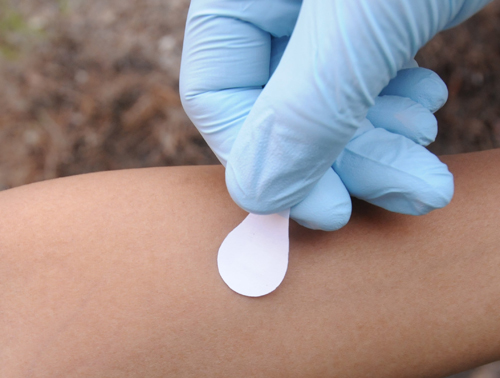
Administering measles vaccine with a microneedle patch is expected to be much easier than getting a shot.
Photo Credit: Gary Meek, Georgia Tech
microneedle patch
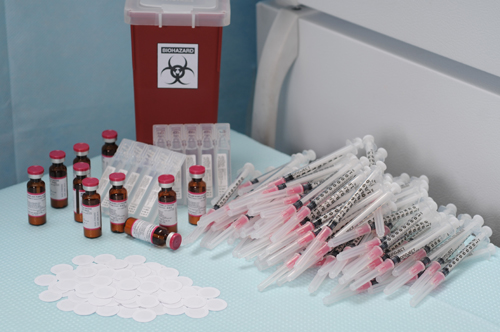
The 100 microneedle patches in the foreground could replace the 100 needles and syringes, 10 ten-dose vials of measles vaccine with diluent, a biohazards box for sharps waste disposal, and a refrigerator for cold chain storage shown in the background.
Photo Credit: Gary Meek, Georgia Tech
A new microneedle patch being developed by the Georgia Institute of Technology and the Centers for Disease Control and Prevention (CDC) could make it easier to vaccinate people against measles and other vaccine-preventable diseases.
The microneedle patch is designed to be administered by minimally trained workers and to simplify storage, distribution, and disposal compared with conventional vaccines.
The microneedle patch under development measures about a square centimeter and is administered with the press of a thumb. The underside of the patch is lined with 100 solid, conical microneedles made of polymer, sugar, and vaccine that are a fraction of a millimeter long. When the patch is applied, the microneedles press into the upper layers of the skin; they dissolve within a few minutes, releasing the vaccine. The patch can then be discarded.
“Each day, 400 children are killed by measles complications worldwide. With no needles, syringes, sterile water or sharps disposals needed, the microneedle patch offers great hope of a new tool to reach the world’s children faster, even in the most remote areas,” said James Goodson, Ph.D., epidemiologist from the CDC’s Global Immunization Division. “This advancement would be a major boost in our efforts to eliminate this disease, with more vaccines administered and more lives saved at less cost.
Getting the measles vaccine to remote areas is expected to be easier because the patch is more stable at varying temperatures than the currently available vaccines and takes up less space than the standard vaccine. Because microneedles dissolve in the skin, there is no disposal of needles, reducing the risk of accidental needlesticks. The measles patch is expected be manufactured at a cost comparable to the currently available needle and syringe vaccine.
Twenty million people are affected by measles each year. Unfortunately, global coverage with the measles vaccine has been stagnant for the last few years at around 85 percent, which is well below the coverage of up to 95 percent needed to interrupt transmission of the disease.
Because measles is vaccine-preventable and the measles virus survives only in human hosts, the world’s health officials are aiming for measles elimination. Having a simple patch administered by minimally trained vaccinators could help increase vaccination coverage and achieve the goal of measles elimination.
Georgia Tech and CDC’s Global Immunization Division and Division of Viral Diseases recently completed a study that showed the new microneedle patch produces a strong immune response in rhesus macaques. No adverse effects or health issues were noted during the study. These findings have cleared the way for developing proposals for human clinical trials, which could begin as early as 2017.
“We think this collaboration with CDC is an excellent example of how advances in engineering can be used to address important public health problems,” said Mark Prausnitz of Georgia Institute of Technology, who served as one of the principal investigators on the study.
World Immunization Week, celebrated in the last week of April each year, aims to promote the use of vaccines to protect people of all ages against disease. This year’s campaign focuses on closing the immunization gap and reaching equity in immunization levels as outlined in the Global Vaccine Action Plan (GVAP). The Plan, endorsed by the 194 Member States of the World Health Assembly in May 2012, is the framework to prevent millions of deaths by 2020 through universal access to vaccines for people in all communities.
The GVAP aims to:
  • strengthen routine immunization to meet vaccination coverage targets;
  • accelerate control of vaccine-preventable diseases with polio eradication as the first milestone;
  • eliminate measles and rubella;
  • introduce new and improved vaccines; and
  • spur research and development for the next generation of vaccines and technologies.
Microneedle technology could move the GVAP forward by leading to improved protection against other diseases, including polio, influenza, rotavirus, rubella, tuberculosis and others. CDC is also collaborating with Georgia Tech to see if microneedles could be used to administer inactivated polio vaccine. Additional research is studying microneedle-administration of the influenza, rotavirus and tuberculosis vaccines. For more information about microneedle technology please visit http://youtu.be/wVEF1ckaYEY.

Thursday, April 9, 2015

Health Research:Ebola vaccine effective in a single dose ♦ Insights for pain drug development ♦ Fountain of youth uncovered

Ebola vaccine effective in a single dose  Medical researchers have developed a quick-acting vaccine that is both safe and effective with a single dose against the Ebola strain that killed thousands of people in West Africa last year. During 2014, the outbreak of the West African Makona strain of Ebola Zaire virus killed nearly 10,000 and caused worldwide concern.
First look at 'wasabi receptor' brings insights for pain drug development  In a feat that would have been unachievable only a few years ago, researchers have pulled aside the curtain on a protein informally known as the 'wasabi receptor,' revealing at near-atomic resolution structures that could be targeted with anti-inflammatory pain drugs.
In first human study, new antibody therapy shows promise in suppressing HIV infection  In the first results to emerge from HIV patient trials of a new generation of so-called broadly neutralizing antibodies, researchers have found the experimental therapy can dramatically reduce the amount of virus present in a patient's blood.
Fountain of youth uncovered in mammary glands of mice, by breast cancer researchers The Fountain of Youth has been discovered, it was found in the mammary glands of genetically modified mice. A research team has found that when two factors that control tissue development are removed, you can avoid the impact of aging
Increase in inflammation linked to high traffic pollution for people on insulin  People on insulin living next to roads with heavy traffic had markedly increased concentration of C-reactive protein, a marker of inflammation, compared to those living in lower traffic areas, a two-year epidemiological study has found. Individuals taking oral diabetes medications did not experience increases in CRP concentration.

Monday, April 6, 2015

Experienced severe diarrhea or vomiting--Could a Norovirus Vaccine be a Reality?


Female with stomach ache
Have you ever experienced severe diarrhea or vomiting? If you have, it’s likely you had norovirus. If you haven’t, chances are you will.
Anyone can get norovirus and you can get it more than once. It is estimated that a person will get norovirus about five times during their lifetime.
Norovirus affects about one in 15 people and contributes to 56,000 to 71,000 hospitalizations and 570 to 800 deaths in the U.S.
Norovirus spreads easily from contaminated food orsurfaces or from an infected person.  People with norovirus illness are contagious from the moment they begin feeling sick and for the first few days after they recover. Some people may be contagious for even longer.
Currently, there is not a vaccine to prevent norovirus infection or a drug to treat sick people. But, there is hope for a vaccine.
Coming together to find answers and move towards a vaccine
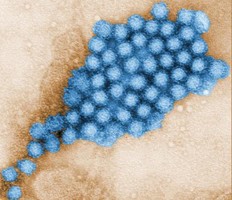
Transmission electron micrograph (TEM) image of some of the ultrastructural morphology displayed by norovirus virions, or virus particles.
In February 2015, the Bill and Melinda Gates Foundation, CDC foundation, and CDC brought together norovirus experts from around the world to discuss how to make the norovirus vaccine a reality. Participants came from 17 countries on six continents and included representatives from academia, industry, government, and private charitable foundations.
Important questions remain about norovirus:
  • How do humans develop immunity?
  • How long does immunity last?
  • Does immunity to one strain protect against infection from others?
  • How would a vaccine be used to prevent disease and protect those at highest risk?
The meeting was a step toward finding answers to these questions and making a norovirus vaccine a reality. (Photo: Microscopic view of norovirus particles)
=============
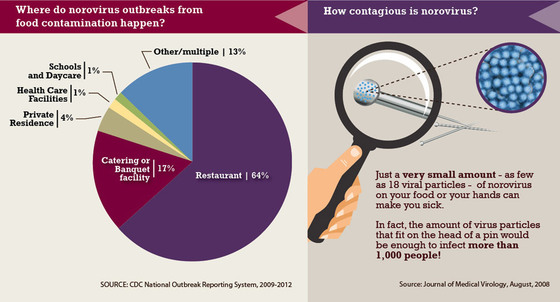
Where do norovirus outbreaks happen and how contagious is norovirus
=============
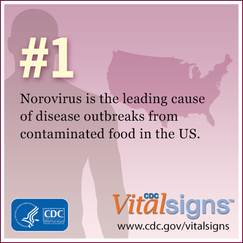
Norovirus is leading cause of disease outbreaks from contaminated food in the U.S.
Facts about norovirus
  • Leading cause of diarrhea and vomiting in the United States. Each year, norovirus causes 19 to 21 million illnesses (about one in 15 people) and contributes to 56,000 to 71,000 hospitalizations and 570 to 800 deaths in the U.S.
  • Global disease. Norovirus is also a major cause of diarrheal disease worldwide accounting for nearly 20% of all diarrheal cases. In developing countries, it is associated with approximately 50,000 to 100,000 child deaths every year.
  • Many names, same symptoms. Norovirus is the most common cause of diarrhea and vomiting (also known as gastroenteritis) and is often referred to as food poisoning or stomach flu. Norovirus is not related to the flu (influenza). Though they may share some of the same symptoms, the flu is a respiratory illness caused by influenza virus.
  • Serious for some, but not most. For most people, norovirus illness is not serious and they get better in one to three days. But it can be serious in young children, the elderly, and people with other health conditions and can lead to severe dehydration, hospitalization, and even death.  
  • Spreads quickly. Norovirus spreads quickly from person to person in enclosed places like nursing homes, daycare centers, schools, and cruise ships. It is also a major cause of outbreaks in restaurants and catered-meal settings if contaminated food is served.
=============
Protect yourself from norovirus infographic
Tips to protect against norovirus
While there is hope for a norovirus vaccine in the future, there are steps you can take now to protect yourself.
  • Practice proper hand hygiene. Wash your hands carefully with soap and water, especially after using the toilet and changing diapers and always before eating or preparing food. If soap and water aren't available, use an alcohol-based hand sanitizer. These  products can help reduce the number of germs on your hands, but they are not a substitute for washing with soap and water.
  • Take care in the kitchen. Carefully rinse fruits and vegetables and cook oysters and other shellfish thoroughly before eating.
  • Do not prepare food while infected. People with norovirus illness should not prepare food for others while they have symptoms and for at least two days after they have recovered from their illness.
  • Clean and disinfect contaminated surfaces. After throwing up or having diarrhea, immediately clean and disinfect contaminated surfaces using a bleach-based household cleaner, as directed on the product label. If no such cleaning product is available, use a solution made with five tablespoons to 1.5 cups of household bleach per one gallon of water.
  • Wash laundry thoroughly. Immediately remove and wash clothing or linens that may be contaminated with vomit or stool. Handle soiled items carefully—try not to shake them—to avoid spreading virus. If available, wear rubber or disposable gloves while handling soiled clothing or linens and wash your hands after handling. Wash soiled items with detergent at the maximum available cycle length and then machine dry.

Thursday, March 26, 2015

Health Research: BPA can adversely affect reproduction ♦ ink between genetic variation, alcohol dependence ♦ Norovirus candidate vaccine induces broad antibody responses

BPA can adversely affect reproduction of future generations of fish  Bisphenol A is a chemical that is used in water bottles, dental composites and resins used to line metal food and beverage containers. Often, rivers and streams become contaminated with BPA. Fish exposed to BPA will pass adverse reproductive effects onto their offspring Continue Reading
Patients who go home after knee replacement do as well as those discharged to rehab facility  Patients who go home after knee replacement and receive physical therapy at home do as well as those who go to an inpatient rehabilitation facility.   Continue Reading
Link between genetic variation, alcohol dependence found  A biological clue that could help explain why some drinkers develop a dependence on alcohol and others do not has been discovered. The findings help to identifying those at risk of addiction and designing better treatments to help stop drinking Continue Reading
Norovirus candidate vaccine induces broad antibody responses in trial participants  A multivalent candidate vaccine elicits broad antibody responses to a range of norovirus strains,, according to a new study.The results of the study indicate that a vaccine to norovirus may be available in the future.Continue Reading
Discovery of what attracts pregnant mosquitoes is used to fight malaria The battle against malaria is also a battle against its natural host, the mosquito, which means disrupting the insect's life cycle is every bit as important as putting nets over beds. Now, an international research team has discovered what attracts mosquitoes to lay their eggs in specific places Continue Reading