Showing posts with label formula. Show all posts

Sunday, July 26, 2015

Nature’s Variety Dog Food Recalled due to Salmonella contamination

Nature’s Variety has announced a voluntary recall of their Instinct® Raw Chicken Formula for dogs with a “Best By” date of 04/27/16 because these products may be contaminated with Salmonella. Salmonella can affect animals eating the products and there is risk to humans from handling contaminated pet products, especially if they have not thoroughly washed their hands after having contact with the products or any surfaces exposed to these products.
Healthy people infected with Salmonella should monitor themselves for some or all of the following symptoms: nausea, vomiting, diarrhea or bloody diarrhea, abdominal cramping and fever. Rarely, Salmonella can result in more serious ailments, including arterial infections, endocarditis, arthritis, muscle pain, eye irritation, and urinary tract symptoms. Consumers exhibiting these signs after having contact with this product should contact their healthcare providers.
Pets with Salmonella infections may be lethargic and have diarrhea or bloody diarrhea, fever, and vomiting. Some pets will have only decreased appetite, fever and abdominal pain.  Infected but otherwise healthy pets can be carriers and infect other animals or humans.  If your pet has consumed the recalled product and has the symptoms, please contact your veterinarian.
The affected products are limited to the Instinct Raw Chicken Formula Frozen Diets packaged in the following forms:
  • UPC# 769949611431 – Instinct Raw Chicken Formula Bites for Dogs 4 lb.; Best By 04/27/16
  • UPC# 769949611448 – Instinct Raw Chicken Formula Bites for Dogs 7 lb.; Best By 04/27/16
  • UPC# 769949611486 – Instinct Raw Chicken Formula Patties for Dogs 6 lb.; Best By 04/27/16
The “Best By” date is located on the back of the package below the seal. The affected product was distributed through retail stores in the United States and limited distribution in Canada. No other Nature’s Variety products are affected. Photo: Product Labels
No illnesses have been reported to date. Even though no illnesses have been reported, consumers should follow the Simple Handling Tips published on the Nature’s Variety package when disposing of the affected product.
Nature’s Variety became aware of a potential issue after receiving notification from the FDA that a routine surveillance sample of seven pound Instinct Raw Chicken Bites for dogs tested positive for Salmonella.
Consumers feeding the affected product should discontinue use and monitor their pet’s health, and contact their veterinarian if they have concerns. Consumers who have purchased one of the above products can obtain a full refund or exchange by either returning the product in its original packaging or bringing a proof of purchase back to their retailer.
Consumers with additional questions can call our Consumer Relations team at 888-519-7387 from 8 am to 7 pm Central time, 7 days a week during the recall.  Or, consumers can email Nature’s Variety directly via cservice@naturesvariety.com.


Monday, March 16, 2015

Cat food recalled due to lack of thiamine

Primal Pet Foods is voluntarily recalling a single batch production code of Feline Turkey Raw Frozen Formula 3-pound bag. FDA tested product in response to a single consumer complaint. Primal Pet Foods was alerted by FDA that the testing of two bags of this lot resulted in a low thiamine level. Neither FDA nor Primal have received any other reports concerning Thiamine in Primal products. No other product manufactured by Primal Pet Foods is involved in this voluntary recall.
Only the product with the following Best By date and production code is included in the voluntary recall.  It is best to check the production code on the back of the bag to determine if the product has been recalled or not.
The lot involved in this voluntary recall is:
Primal Pet Foods Feline Turkey Raw Frozen Formula 3-pound bag (UPC# 8 50334-00414 0) with Best By date 060815 B22
Primal takes very seriously, the need for adequate Thiamine levels in our feline diets. We include Organic Quinoa Sprout Powder as a natural B-Complex supplement to ensure that adequate levels of Thiamine are met. Additionally, Thiamine occurs naturally in other ingredients contained in our Feline Turkey Formula such as: Turkey Muscle Meat (including heart), Turkey Liver, Organic Sunflower Seeds, Dried Organic Kelp, Organic Collard Greens and Organic Squash.
Consumers who still have bags of cat food from this lot should stop feeding it to their cats and call us at (866) 566-4652 Monday through Friday, 9:00 am – 4:00 pm PST. Consumers with further questions should visit our website atwww.primalpetfoods.com or call us at this same number.
Cats fed only diets low in thiamine for several weeks may be at risk for developing a thiamine deficiency. Thiamine is essential for cats. Symptoms of deficiency displayed by an affected cat can be gastrointestinal or neurological in nature. Early signs of thiamine deficiency may include decreased appetite, salivation, vomiting, and weight loss. In advanced cases, neurologic signs can develop, which may include ventriflexion (bending towards the floor) of the neck, wobbly walking, circling, falling, and seizures. If your cat has consumed the recalled lot and has these symptoms, please contact your veterinarian. If treated promptly, thiamine deficiency is typically reversible.
Front display label, PRIMAL Formula FOR CATS, 3 LBfo

Wednesday, February 25, 2015

Sheep Food Recalled In Florida

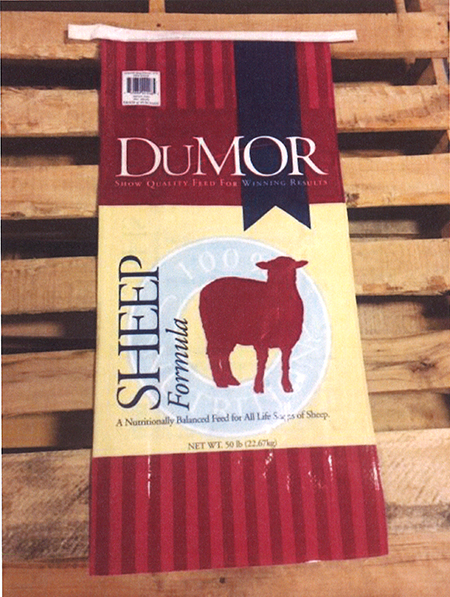
Purina Animal Nutrition LLC has initiated a limited voluntary recall of DuMOR® Sheep Formula in Florida due to the potential for a higher-than-acceptable level of copper, which can cause health issues and potential mortality. There has been one report of sheep mortality associated with the single lot that is being recalled.
Symptoms of copper toxicity in sheep include: lethargy and anemia, grinding of teeth, thirst, off feed/poor appetite, pale to yellow mucous membranes, red/dark purple colored urine and recumbency. Death usually occurs one to two days after onset of clinical symptoms.
Dumor, Sheep Formula Net wt. 50 lbs (front label)Customers should discontinue feeding the product immediately. The product was distributed to seven Tractor Supply Company stores in Florida. The recall is limited to DuMOR® Sheep Formula produced at the Lake City, Florida plant on Nov. 28, 2014.
Lot No.
55EA
0047317
DuMOR® Sheep Formula
4NOV28LKC1
Customers can find the lot number on the sewing strip of each bag. The product was only distributed in Florida.
Retailers have been contacted and told to immediately quarantine any remaining recalled product and notify customers who purchased the product. Customers who purchased this product should return remaining bags to their retailer.
For more information on the product recall, contact Customer Service at 888-719-8066. The number will be staffed 8 a.m. to 4:30 p.m. Central Time Monday through Friday.

Saturday, July 12, 2014

Canada: Walmart Recalls Enfamil A+ Infant Formula

The Canadian Food Inspection Agency (CFIA), Walmart Canada Corporation and Mead Johnson Nutrition (Canada) Company are advising the public that some bottles of Enfamil A+ Ready-to-Feed Infant Formula have been found with the tamper-proof seal broken and blue tape applied in its place. These bottles were found to contain water and some formula residue instead of infant formula.
A total of three complaints have been reported in Brampton and Mississauga.
Walmart immediately removed the product from sale in a number of stores in the Halton and Peel regions of Toronto and did not find any additional product that had been altered.

Products

Brand NameCommon NameSizeCodes(s) on ProductUPC
Enfamil A+Ready to Feed Infant Formula18 bottles x 237 mLVarious0 56796 90518 0

What You Should Do

Consumers using infant formulas should examine the containers to ensure that the security seal is intact and has not been altered. If you have product that appears to have been altered, do not use or consume it. Product that appears to have been altered should be thrown out or returned to the store where it was purchased.

Monday, December 16, 2013

12/15/13 Health News: Raw Milk illness Under Reported, Antibiotics in Animal Feed, Infant Formula in Korea

MN STUDY: RAW MILK ILLNESSES GREATLY UNDER REPORTED
Despite the somewhat commonplace occurrence of illness outbreaks associated with unpasteurized milk, the number of illnesses linked to drinking raw milk is much higher than those counted in outbreak reports, according to an analysis published by the Minnesota Department of Health on Wednesday. Looking at 10 years of health department data between 2001 and 2010,... Continue Reading

SEOUL DAIRY IS ALL ABOUT KEEPING TRUST OF SOUTH KOREAN MOTHERS
Because so many Asian consumers look to them for food safety cues, the influence of South Korean mothers is hard to overestimate. Just ask Wan Sik Kim, managing director of the food safety center at Seoul-based Maeil Dairies. He’ll tell you that no force in the country, not government regulators nor the competition, has more... Continue Reading

WILL FDA’S VOLUNTARY PLAN ACTUALLY REDUCE ANTIBIOTICS IN ANIMAL FEED?

U.S. Food and Drug Administration has released the final version of a voluntary plan to phase out the use of certain antibiotics in food animals. Antibiotics are added to the feed or drinking water of cattle, hogs, poultry and other food-producing animals to help them gain weight faster or use less food to gain... Continue Reading

Monday, October 14, 2013

Aluminum Found in Infant Formula

In an article published in BMC Pediatrics, researchers from Keele University in Staffordshire, U.K. pointed out that their recent research published in this journal highlighted the issue of the high content of aluminium in infant formulas. The expectation was that the findings would serve as a catalyst for manufacturers to address this significant problem. It is critically important that parents and other users have confidence in the safety of infant formulas and that they have reliable information to use in choosing a product with a lower content of aluminium. Herein, we have significantly extended the scope of the previous research and the aluminium content of 30 of the most widely available and often used infant formulas has been measured.
Both ready-to-drink milks and milk powders were contaminated with aluminium. The concentration of aluminium across all milk products ranged from ca 100 to 430 μg/L. The concentration of aluminium in two soy-based milk products was 656 and 756 μg/L. The intake of aluminium from non-soy-based infant formulas varied from ca 100 to 300 μg per day. For soya-based milks it could be as high as 700 μg per day.
All 30 infant formulas were contaminated with aluminium. There was no clear evidence that that contamination had been addressed and reduced. It is the opinion of the authors of this study that regulatory and other non-voluntary methods are now required to reduce the aluminium content of infant formulas and thereby protect infants from chronic exposure to dietary aluminium.
In its Public Health Statement for Aluminum, the U.S. Centers for Disease Control and Prevention state:
  • An average adult in the United States consumes about 7-9 mg of aluminum per day in food.
  • The concentration of aluminum in natural waters (e.g., ponds, lakes, streams) is generally below 0.1 milligrams per liter (mg/L).
  • People generally consume little aluminum from drinking water. Water is sometimes treated with aluminum salts while it is processed to become drinking water. But, even then, aluminum levels generally do not exceed 0.1 mg/L. Several cities have reported concentrations as high as 0.4–1 mg/L of aluminum in their drinking water.
  • Oral exposure to aluminum is usually not harmful. Some studies show that people exposed to high levels of aluminum may develop Alzheimer’s disease, but other studies have not found this to be true. We do not know for certain that aluminum causes Alzheimer’s disease.
  • Some people who have kidney disease store a lot of aluminum in their bodies. The kidney disease causes less aluminum to be removed from the body in urine. Sometimes such people developed bone or brain diseases that doctors suspect were caused by the excess aluminum.
  • Although over-the-counter oral products containing aluminum are considered safe in healthy individuals at recommended doses, adverse effects have been observed following long-term use in some individuals.
  • Brain and bone disease caused by high levels of aluminum in the body have been seen in children with kidney disease. Bone disease has also been seen in children taking some medicines containing aluminum. In these children, the bone damage is caused by aluminum in the stomach preventing the absorption of phosphate, a chemical compound required for healthy bones.
  • Aluminum is found in breast milk, but only a small amount of this aluminum will enter the infant’s body through breastfeeding. Typical aluminum concentrations in human breast milk range from 0.0092 to 0.049 mg/L. Aluminum is also found in soy-based infant formula (0.46–0.93 mg/L) and milk-based infant formula (0.058–0.15 mg/L).
  • We do not know if aluminum will cause birth defects in people. Birth defects have not been seen in animals.
  • Very young animals appeared weaker and less active in their cages and some movements appeared less coordinated when their mothers were exposed to large amounts of aluminum during pregnancy and while nursing. In addition, aluminum also affected the animal’s memory. These effects are similar to those that have been seen in adults.
  • It does not appear that children are more sensitive to aluminum than adult animals are.

Monday, August 5, 2013

Vietnam: Recall Similac Infant Formula

Vietnamese health authorities have ordered the recall of a New Zealand-made infant formula after that country issued a global warning that it might contain bacteria that can cause the deadly botulism.
The Food Safety Department Saturday ordered Abbott Vietnam to stop distributing Similac Gain Plus Eye-Q for children between one and three years old, There were 10 lots that were imported between June 17 and July 3. They were removed from grocery shelves.

Earlier the department received a warning that whey protein concentrate, the cheapest and most common form of whey protein, produced by New Zealand-based Fonterra could be contaminated with clostridium botulinum.

The Vietnamese agency also warned about Karicare formula products made by New Zealand's Nutricia company using Fonterra’s whey concentrate.The New Zealand’s Ministry of Science and Innovation said the risky Karicare products have only been sold locally,The Vietnamese Food Safety Department nevertheless ordered Chau Uc Nutrition which imports Karicare products to report a list of its purchases by August 6 to make sure,

An Abbott Vietnam spokesperson said the company has informed customers about the risky lots and told them they can exchange any product they may have bought. Customers can call its hotline at 19001519 for any questions or complaints, the spokesperson said.

Tran Quang Trung, head of the Food Safety Department, said since the tainted lots were only imported recently, not many cans have been sold yet.
Samples from the cans would be tested this week, he said.

Sunday, August 4, 2013

New Zealand: Contaminated Whey Powder Shipped to 8 Countries

Fonterra , the world's largest dairy exporter, said on Saturday it had found bacteria which can cause botulism in some of its dairy products, prompting China to recall affected products. Russia has suspended imports and circulation of Fonterra products. New Zealand authorities said they were holding back some widely used infant formula products from supermarket shelves.There are reports Thailand has ordered a recall of Fonterra products imported since May. NZAgbiz, is recalling calf milk replacer sold in the North Island.

Fonterra said it had sold the whey protein concentrate contaminated with Clostridium Botulinum to eight customers, including food and beverage companies and animal stock feed firms, for possible use in infant formula, bodybuilding powder, and other products.
Fonterra said the products in question were exported to Australia, China, Malaysia, Vietnam, Thailand and Saudi Arabia.
China, imports most of its milk powder from New Zealand. They asked domestic importers to recall any products which may have been contaminated.  China is increasing scrutiny of New Zealand dairy products.
Fonterra said three food companies, two beverage companies and three animal stock feed manufacturers were affected.
In Chinese state radio said Fonterra was notifying three Chinese firms affected by the contamination. "The administration has also asked importers to immediately recall any possibly contaminated products and has required all local quarantine and inspection bodies to further strengthen inspection and supervision of New Zealand dairy products exported to China," the General Administration of Quality Supervision, Inspection and Quarantine said in a statement.
Clostridium Botulinum is often found in soil. In the Fonterra case it was caused by an unsanitary pipe at a processing plant.
Botulinum toxin is the most acutely toxic substance know.The Clostridium Botulinum bacteria can cause botulism, a potentially fatal disease which affects the muscles and can cause respiratory problems. Infant botulism can attack the intestinal system. According to the U.S. Food and Drug Administration, a very small amount—a few nanograms—of toxin can cause illness. While the incidence of the disease is low, "the mortality rate is high if not treated immediately and properly," the FDA said on its website.
The Ministry of Primary Industries said five batches of Karicare formula manufactured in New Zealand for babies were produced using the contaminated product. The brand is popular in China.
It said there had been no reports of any illness linked to the affected whey protein yet, and that Fonterra fresh milk, yoghurt, cheese, spreads and UHT milk products were not affected.
China has started to tighten dairy import regulations to improve overall food safety. In recent weeks, Foreign-branded infant formula is a prized commodity in China, where consumers are distrustful of domestic brands given a series of food safety scandals. Popular foreign brands include Nestle, Danone and Mead Johnson.
.Coca-Cola Co. in China said it has quarantined some whey protein it received from the New Zealand company. Chinese regulators said companies including Hangzhou Wahaha Group were among importers of the potentially tainted ingredient.

While Fonterra is a major supplier of bulk milk powder products used in formula in China, it had stayed out of branding after Chinese dairy company Sanlu, in which it had held a stake, was found to have added melamine to bulk up formulas in 2008
Mr. Romano said the problem was caused by a pipe that wasn't correctly sterilized. He stated that the length of time between detection and confirmation was due to the extensive testing that was carried out.
Mr. Groser said, however, the situation is "very serious" and the government has questions for Fonterra about where the failure happened, the length of time it took to verify and who is going to take responsibility


New Zealand: More Infant Formula Recalled for Botulism

 Nutricia NZ Ltd recalled there infant formula which may contain Clostridium botulinum bacteria. The products recalled were  Karicare Infant Formula Stage 1 (0-6 months) with a batch numbers 3169 or  3170 and use by dates of: 17 06 2016 or 18 06 2016. Also Karicare Gold+ Follow on Stage 2 (6-12 months)with batch number: D3183 and  use by: date of  31 12 2014  Both are  sold in 900g cans.        

The recalled formula has been available for sale throughout New Zealand in all major supermarkets and retailers including pharmacies and The Warehouse stores as well as direct sales from web sites. None of the formula was  sold outside New Zealand.                                                                                   

 Nutricia Ltd is recalling the above products because the whey protein concentrate used as an ingredient in these formula may have been contaminated with Clostridium botulinum bacteria. This bacteria produces a neurotoxin that causes botulism.      

There have been no reports of illness however if you have been using this product to feed your infant and your child shows any sign of illness, please contact your healthcare professional. If you have any health concerns please call Healthline on 0800 611 116 or Plunketline 0800 933 922  for advice.
                                                                                                                                                            
Customers should return the product to the place of purchase for a full cash refund.