Showing posts with label New Zealand. Show all posts

Friday, August 28, 2015

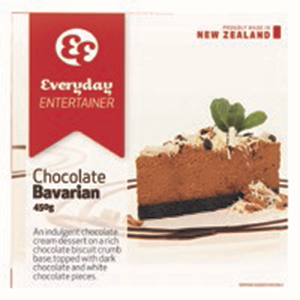
New Zealand: Chocolate Bavarian Cheese Cake recalled

Recalled food products: Everyday Entertainer Brand Chocolate Bavarian Cheesecake (450g)
The product has been sold in Countdown supermarkets throughout New Zealand.
The New Zealand Dessert Company is initiating a recall of a batch of the Everyday Entertainer Brand Chocolate Bavarian Cheesecake (450g) (Best Before: 03/01/2017) as the product may contain Bacillus cereus.
The affected product should not be consumed. There have been no consumer reports of illness, however any person concerned about their health should seek medical advice.
Consumers should return the products to their retailer for a full refund or phone 07 542 2966 between 9 am and 5 pm with any queries.
This recall does not affect any other Everyday Entertainer brand products.
The New Zealand Dessert Company 38 Enterprise Drive, Papamoa Beach, Tauranga   07 542 2966

Monday, January 12, 2015

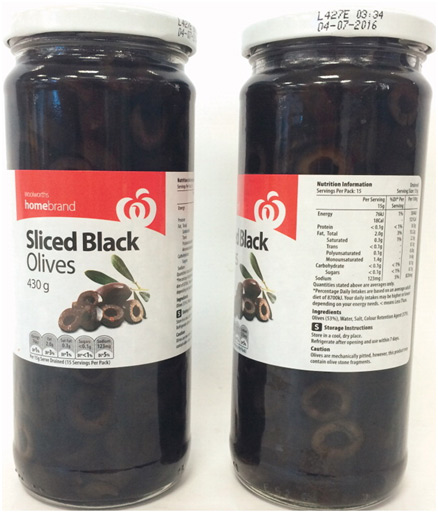
New Zealand: Woolworths Homebrand Sliced Black Olives Recalled

Recalled food products: Woolworths Homebrand Sliced Black Olives 430g
This product is sold in a 430g glass jar.  The Olives were sold by Countdown, Fresh Choice, And SuperValue supermarkets throughout New Zealand from 14 AUG 2014
This product has been sold in Countdown, Fresh Choice and SuperValue supermarkets throughout New Zealand from 14 August 2014.
This product is manufactured overseas and is exported to Australia and New Zealand. Progressive Enterprises Ltd is the only New Zealand recipient of this product.
Progressive Enterprises Ltd are initiating a recall of Woolworths Homebrand
Sliced Black Olives 430g glass jars as this product may contain glass.
Customers are asked to check the date mark located on the rim of the product lid. All products with the date mark listed above should not be consumed.
Foods containing foreign matter may cause injury. If you have consumed this product and have any concerns about your health, please contact your doctor or seek medical advice.
Customers should return the product to their nearest Countdown, Fresh Choice or SuperValue store for a full refund or phone 0800 40 40 40 with any queries.
This recall does not affect any other Homebrand product.

Monday, January 13, 2014

New Zealand Cream Recalled Due to E Coli

Anchor and Pams Fresh Cream in 300 ml and 500 ml size were recalled due to the presents of E Coli


Name of Product and Identification
Anchor Cream (Fresh) and Pam’s Cream (Fresh)
Affected batch numbers:
Pams Cream 500 ml bottles - 1400684206
Pams Cream 300 ml bottles – 1400684209


Anchor Cream 500 ml bottles - 1400684207
Anchor Cream 300 ml bottles  - 1400684208
Best Before: 21/01/2014
NZ Distribution:
These products have been sold in major supermarkets, food service outlets and dairies throughout the Upper North Island from Northland down to Turangi including Gisborne.
Reason for Recall:
Fonterra Brands (New Zealand) Ltd have initiated a recall of 300ml and 500ml Anchor and Pams cream as product tests show the presence of E. coli in some of these products.
Comments:
Consumers are advised to check the batch number listed on the product label. Affected product has the batch numbers listed above only and should not be consumed.
Any person concerned about their health should seek medical advice.
Customers should return the product to their retailer for a full refund or phone Fonterra Brands customer service centre on 0800 256 257 with any queries.
This recall does not affect any other Fonterra Brands (New Zealand) Ltd product.


Sunday, January 12, 2014

New Zealand: Ice Cream recalled Due to E Coli

All Flavors of Deep South Ice Cream  have been recalled. The ice cream is packed in 125 ml, 2 litre,5 litre, and 10 litre packs. Deep South Ice Cream Ltd are initiating a precautionary recall of the ice-cream products listed above as these products may contain E.coli.
Consumers are advised to check the date marking listed on the product. Affected product has a Best Before date between 27.12.2015 to 07.01.2016 inclusive and should not be consumed. Customers should return the product to their retailer for a full refund or phone 021 366 537 with any queries.
This recall does not affect any other Deep South Ice Cream product.


Monday, September 30, 2013

China Finds Rot in Apples From New Zealand

Apple rot causing an export ban to China was probably due to heavy rain during harvest, says Pipfruit New Zealand technical manager Mike Butcher. He said Pacific Queen and Pacific Rose were the varieties particularly affected.
"These organisms manifest in storage and are more prevalent in extremely wet harvest periods," "It requires rain to be released from its capsule and then water running down the tree spreads it to other apples
The rot, caused by the fungus Neofabraea alba, was not a food safety risk. "China undertake a sub-sampling of each consignment and they found evidence on only a few apples, so it is not in every apple, it is not in every box," Dr Butcher said.
Pipfruit New Zealand chief executive Alan Pollard said because China took only 2 per cent of the New Zealand harvest the industry was unaffected at season-end. Shipments bound for China had been diverted.
"The rot may be a market access problem for China but not in other markets," Mr Pollard said. He said two pack houses had been identified as being the source of three shipments with the surface rot.
The Ministry for Primary Industries had a team in China and they notified New Zealand of the rotten find, he said. Talks with China about market access for next season will start in February-March.

Thursday, September 5, 2013

New Zealand: Shellfish Contaminated in 3 Areas


MOHAKATINO - MOTUNUI IN TARANAKI
The Taranaki District Health Board today issue a public health warning advising people not to collect or consume shellfish from Mohakatino down to Motunui. Routine tests on shellfish samples taken from Mohakatino this week have shown levels of Paralytic Shellfish Poisoning (PSP) at (1.11mg/kg). This level is above the Ministry for Primary Industry safe limit of 0.80 mg/kg and anyone eating these toxic shellfish is potentially at risk of illness especially if they eat a large quantity.
Kina, mussels, toheroa, pipis, tuatua, oysters and cockles in the affected area should not be eaten. Cooking shellfish does not remove the toxin.
Paua, crab and crayfish may still be eaten if the gut has been completely removed prior to cooking as toxins accumulate in the gut. If the gut is not removed its contents could contaminate the meat during the cooking process.
Symptoms of PSP usually occur within 12 hours of consuming shellfish and include:
  • Numbness and tingling around the mouth, face or extremities;
  • Difficulties in swallowing or breathing;
  • Dizziness; double vision;
  • And in severe cases, paralysis and respiratory failure.
If anyone becomes ill after eating shellfish from an area where a public health warning has been issued they should contact a doctor immediately, advise their local Public Health Unit and keep any leftover shellfish for testing .
Signage is currently being erected in the area affected by the Public Health Warning and major stakeholders have been informed. The Public Health Unit of the Taranaki District Health Board will continue to monitor the situation. For more information about the safety of the shellfish, people can contact a Health Protection Officer toll free at 0508 834 274.
Hokianga Harbour
The Health Protection Unit of Northland District Health Board continues to advise people not to consume shellfish from the Hokianga Harbour. This public health warning has been issued due to the persistence of Microcystin Toxins above safe levels in shellfish.
Shellfish in the Hokianga Harbour were tested for Microcystins after a bloom of toxic Cyanobacteria occurred in Lake Omapere which drains into the Hokianga Harbour.
High levels of microcystins are frequently associated with the death of animals consuming contaminated water. Human deaths from consumption on microcystins have not been well reported but it is acutely toxic in animal studies and they are thought to cause liver damage in humans. Human fatalities have also occurred when water used for dialysis of patients with kidney failure has become contaminated.
For further information contact: Northland District Health Board (09) 430 4100
Bay of Plenty shellfish toxin warning extended - 9th October 2012 (still valid as of 05/09/2013)
Following ongoing shellfish toxin monitoring the Paralytic Shellfish Poisoning (PSP) toxin warning has been extended eastwards to include Whakatane Heads.
The affected area now includes the entire coastline from Tairua (including Tairua Harbour), east along the Bay of Plenty coastline, including Tauranga Harbour, Maketu and Waihi estuaries, to Whakatane Heads. Also included in the warning are Matakana and Motiti islands, and all other inshore islands along this coastline.
“Ongoing monitoring has shown high levels of paralytic shellfish poison present in shellfish along this coastline. People should take note of the areas that still contain high levels of paralytic shellfish poison and avoid collecting shellfish in these areas,” says Medical Officer of Health, Dr Jim Miller.
The health warning applies to all bivalve shellfish including mussels, pipi, tuatua, cockles, oysters, scallops as well as catseyes and kina (sea urchin). Shellfish in the affected area should not be taken or consumed. Paua, crayfish and crabs can still be taken but as always, the gut should be removed before cooking.
Consumption of shellfish affected by the paralytic shellfish toxin can cause numbness and tingling around the mouth, face or extremities; difficulty swallowing or breathing; dizziness; double vision; and in severe cases, paralysis and respiratory failure. These symptoms usually occur within 12 hours of a person consuming affected shellfish. Anyone suffering illness after eating shellfish should seek medical attention.
Monitoring of toxin levels will continue along the coast and any changes will be communicated accordingly. For all health warning updates across the Bay of Plenty and Lakes districts call 0800 221 555. Further information is available at www.ttophs.govt.nz/health_warnings
There are no biotoxin warnings currently in place for the South Island
Wednesday, August 28, 2013

New Zealand: Tests Wrong-- NO Botulinum in Fonterra’s Whey Powder

Whey Protein powder made by the New Zealand company Fonterra that were at the center of a global contamination scare this month did NOT contain a bacterium that could cause botulism and posed no food safety threat, New Zealand officials said on Wednesday.
Tests showed that whey protein concentrate manufactured by the world’s largest dairy processor contained Clostridium sporogenes, which cannot cause botulism but which at elevated levels can be associated with food spoiling.
Initial tests conducted by Fonterra and a New Zealand government research institute had indicated the presence of Clostridium botulinum, raising fears that infant formula and sports drinks made from the product and widely exported could be dangerous.
The botulism scare caused a recall of products made by multinational brands that may have contained the whey protein in markets like China, Southeast Asia and the Middle East. It also prompted bans in Russia and Sri Lanka.
“We went to world-leading labs, which are accredited and can test for this,” said Scott Gallacher, acting director-general of the Ministry for Primary Industries. “That has given us a clear and definitive sense that it isn’t Clostridium botulinum. There is no food safety risk here.”
Theo Spierings, the chief of Fonterra, said he was “very relieved” at the results of the ministry’s tests. He said Fonterra “did the right thing” in announcing the possible risk earlier this month.
“When you go through a global recall, you know it will affect your reputation,” he said. “If we had not acted on this, and if something had happened with one child in the world, then it would have caused a massive reputation issue in the long term, or even you could be wiped off the map and possibly face closure.”
Mr. Spierings said that Fonterra’s interim tests had indicated the possible presence of either Clostridium sporogenes or Clostridium botulinum and that the final stage of the company’s testing had shown a positive result for the botulinum strain.

Analysts said the all-clear could help Fonterra repair its reputation. “Obviously, it’s caused some damage, but we shouldn't lose sight of the fact that Fonterra did raise the alert even if it wasn’t absolutely certain,” said Doug Steel, an economist at Bank of New Zealand.

Monday, August 26, 2013

Fonterra Closes Plant in Sri Lanka After 200 Demonstrate

New Zealand dairy company Fonterra on Friday temporarily halted operations in Sri Lanka after health authorities there found a toxic agricultural chemical in two batches of milk powder.
Fonterra is already dealing with a botulism controversy in China that put New Zealand Prime Minister John Key in damage-control mode of assuring Chinese customers his government would investigate the issue and ensure that the company corrected it.
A group of approximately 200 Sri Lankan demonstrators protested outside Fonterra’s Sri Lankan facilities on Thursday. Fonterra told it’s 755 employees to go home and closed the operation to protect their safety.
Fonterra has disputed Sri Lanka’s findings of two samples contaminated with the chemical dicyandiamide. Regardless, it recalled its Anchor full-cream milk powder and the Anchor 1+ milk powder for children.
A district court in Sri Lanka had ordered Fonterra not to sell its products earlier in the week, but it lifted that order on Friday.
After a nearly three-hour court session, Sudath Perera, a lawyer representing Fonterra, said, "The enjoining order was dissolved on suppression and misrepresentation of the facts submitted to the courts."
Fonterra has been working in Sri Lanka for 35 years. It collects milk and processes milk from over four  thousand farmers. It is a longstanding Sri Lankan brand Fonterra this year launched a farmer training and education programme to help develop dairy farming skills in Sri Lanka.
Industry insiders say the claims against Fonterra products are politically motivated. They had escalated since the New Zealand exporter's problems this year with a string of food safety scares and alerts.


Tuesday, August 20, 2013

GMO Feed Could Have Caused Contamination Fonterra’s Whey Powder.

Genetically engineered stock feed (GMO)could be the biggest culprit in the Clostridium botulinum contamination that caused the recent recall of some Fonterra dairy products, according to the Soil & Health Association.
“New Zealand dairy cattle are eating more and more GMO stockfeed, increasing the likelihood of botulism from milk products,” says Debbie Swanwick, spokesperson, Soil & Health - Organic NZ.
In May this year Soil & Health’s magazine Organic NZ published an article by Matamata vet Frank Rowson, warning that glyphosate-based herbicides (found in many GMO crops) cause increases in the virulence of pathogens, leading to more botulism and salmonella.
Most of the soy in New Zealand stock feed is now genetically engineered, but some retailers have or are intending to change suppliers and buy from India and South America to produce GMO free lines.
Consumers want healthy, safe food. Organic and sustainable farmers have been providing it, and it’s not too late for Fonterra and other farmers to respond to this.
Soil & Health has for years been warning about the increased potential for food scares from unsustainable farming practices. Over six years ago Soil & Health raised concerns about dicyandiamide (DCD) contamination, and in January this year DCD residues were found in milk.

    This could also be a problem for the European Union where they have started using GMO
for animal feed

Monday, August 19, 2013

China Bans New Zealand Milk Products Due to Nitrate Contamination


Westland Milk Products were Banned in China. There were elevated nitrate levels in  their lactoferrin powder. exported to China.
The powder, made by West Coast dairy co-operative, Westland Milk Products, has been quarantined with the Ministry for Primary Industries (MPI) revoking export certificates for four of the company's lactoferrin consignments.
"Westland is of the view it is an isolated incident in the lactoferrin plant only, where traces of cleaning products (which contains nitrates) were not adequately flushed from the plant prior to a new run of product," WMP chief executive Rod Quin said. "Our investigation is underway to establish the root cause and we have implemented corrective actions so we can ensure this does not happen again."
Westland has put a hold on all of its lactoferrin in its warehouse and has begun retesting all individual batches. All other lactoferrin product tested to date had returned results well below the New Zealand nitrates limit. No other Westland products were affected.
Westland had reported to the MPIs that two batches of lactoferrin totalling 390 kilograms showed nitrate levels of 610 and 2198 parts per million respectively.The New Zealand maximum limit for nitrates is 150 parts per million.
The product was initially not identified as non-compliant during Westland's routine testing regime before it was exported. All of the 390 kg of non-complying lactoferrin was sent to China."We immediately initiated a process to find and quarantine all of the product and it has been put on hold," Quin said.
Nitrates were a naturally occurring substance found in such foods as leafy green vegetables. The issue was not that it was present in the lactoferrin powder, but that the 390kg was over allowable levels.
"Food safety is not the issue in this instance because lactoferrin is used as a very minor ingredient in food products. This means that, even if the lactoferrin with elevated nitrates had been added to food, the retail products would still have nitrate levels significantly below allowed limits."
The WMP issues comes a few weeks after New Zealand's largest company, dairy co-operative Fonterra, became embroiled in a scandal involving in the export of milk powder that had the potential to cause botulism.
The lactoferrin is either being held as a final product in itself or it is being held in the final product in which it has been used and none of that has been released to the market.''
Lactoferrin is used in a range of applications from yogurt to infant formula, where it is used to make bovine milk more like human milk.
It was too early to know if the breach would have any long term consequences for Tatua trading in the China market.


Sunday, August 18, 2013

Sri Lanka Bans sale of New Zealand Milk Products

A Sri Lankan court has temporarily banned the sale and distribution of all milk products made by New Zealand dairy co-operative Fonterra.
Fonterra confirmed it had received notification of the temporary injunction on Sunday, but said it strongly refuted the claims on which it was based.
Managing director Jonathan Priem, said in a statement: “We strongly refute the allegations on which this injunction has been made. Our independent testing has found no traces of DCD [bacteria] in any Fonterra branded products in Sri Lanka and no affected whey protein concentrate or products containing it have been sent to the country.We are confident in the quality and safety of our products in Sri Lanka and we are currently working through our legal options there.”
The order was issued by the Gampaha District Court in a case filed by the Government Nursing Officers Association, according to the Daily Mirror.
Fonterra is prohibited from selling or distributing all their products for two weeks.
The issue is separate to the safety recall announced by Fonterra earlier this month after tests turned up a type of bacteria that could cause botulism in whey protein.

Monday, August 12, 2013

Belarus and Kazakhstan Ban Fonterra dairy Products

Former Soviet republics Belarus and Kazakhstan have joined Russia in banning Fonterra dairy products in the wake of the dairy giant's botulism scare, Trade Minister Tim Groser has confirmed.


A spokeswoman for Mr Groser said the two central Asian nations had placed "temporary restrictions" on Fonterra products, the same move taken by Russia last week.
The two countries were small markets for Fonterra, the spokeswoman said.


The bans come as the Government is moving to expedite an investigation into the food safety scare which Fonterra says could cost New Zealand tens of millions of dollars in lost export earnings.


The products in these three countries are not the Whey product which has been recalled.

Sunday, August 11, 2013

Whey Contaminated With Botulism--, Nobody Gets Sick-- Why ???

Whey Protein was sold by Fonterra was contaminated with Clostridium botulinum the bacteria that causes  Botulism. The contamination was caused by a stainless steel pipe that was dirty. The pipe had been cleaned but then sat for a long time. It was put into use without cleaning it again.

Botulinum toxin is inside the bacteria which causes paralysis. It releases the toxin when the bacteria is replicating. But most of the toxin that causes the paralysis in humans is caused by a virus called bacteriophage. This virus kills bacteria by splitting it open. Thus the toxin gets released.

Clostridium botulinum lives as a spore, sometimes for several years. In its regular form it needs to be in an oxygen free environment. This is one of the factors that made the odds of products like whey powder unlikely to cause disease. Most of Fonterra whey was used in beverages. Coca Cola used it in sports drinks and many companies used it in baby formula. These products were heated to protect them from any bacterial contamination. Heating the beverages to 100 C (boiling) for 10 minutes will destroy the Botulinum toxin and damage the Clostridium botulinum so that it can not multiply or create more toxin.

If Botulism is caught early can be treated with an antivenom that comes from horses. The antivenom stops the Botulinum toxin from entering the bloodstream. This can prevent patients from worsening, but recovery still takes many weeks

The respiratory failure and paralysis that occur with severe botulism may require a patient to be on a ventilator for weeks, plus intensive medical and nursing care. After several weeks, the paralysis slowly improves.
Physicians may try to remove contaminated food still in the stomach by inducing vomiting or by using enemas. Wounds should be treated, usually surgically, to remove the source of the toxin-producing bacteria. Good supportive care in a hospital is the mainstay of therapy for all forms of botulism.[29]
The President of Fonterra announced even though they thought the chance of disease was small they felt that any chance of someone getting sick from their products was too much.

In an early report I stated that Fonterra had originally tested the Whey in march and didn't recall the product. It turns out that the earlier test did not catch the contamination. It was only when they tested it a second time that they found out about the  Clostridium botulinum. They issued the recall with in 24 hours.

Wednesday, August 7, 2013

New Zealand Dairy Farmers Taking A Beating

A contamination scare at milk-producer Fonterra Cooperative Group Ltd. is jeopardizing export ties with China, which this year overtook Australia as its biggest trading partner. Dairy is the largest foreign exchange earner, accounting for 28 percent of overseas sales in an economy where exports make up about a third of output.

Because Fonterra is a Cooperative, when they lose money the farmers lose money.The farmers have to keep milking their cows even while countries are banning these products.
Fonterra will undoubtedly have to make up the costs of companies that had to recall their products. If someone gets sick from the whey powder in New Zealand they can not file suit under New Zealand Law. But if someone gets sick in another country they are ruled by that country’s laws.

“The events of the past few days are a stark reminder of New Zealand’s increasing vulnerability to a single product and to a single export destination,” said Doug Steel, an economist at Bank of New Zealand Ltd. in Wellington. “Any lingering major concern about the quality of New Zealand’s food production could have far-reaching economic implications.”

The nation’s currency fell to a one-month low after Fonterra, the world’s largest dairy exporter, said Aug. 3 that a dirty pipe at a processing plant may have tainted whey protein used in baby formula with botulism-causing bacteria. New Zealand’s “100% Pure” tourism slogan is becoming a “festering sore,” China’s official news agency Xinhua wrote in an editorial about the scare, saying that buyers of Kiwi goods are losing faith in its clean, green image.

New Zealand’s dollar fell more than 1 U.S. cent when markets opened on Aug. 5 and traders pared bets on higher interest rates this year on concern that the incident may weaken the $156 billion economy.

The news prompted product recalls in China, Vietnam, Thailand, Sri Lanka and New Zealand. Whey protein is used in goods ranging from infant formula to sports drinks. Fonterra Chief Executive Officer Theo Spierings apologized in Beijing on Aug. 5 and expressed optimism that Chinese import restrictions will be lifted soon.

In 2008, Fonterra’s Chinese partner Sanlu Group collapsed after locally made melamine-contaminated milk powder killed and hospitalized babies, causing an industry-wide scandal. In January this year.“This cuts to our reputation as a clean, green, 100 percent pure provider,” said David Shearer, leader of the main opposition Labour Party. While “white gold” has “done an enormous amount for our economy,” New Zealand needs to diversify, he told state broadcaster TVNZ.

Fonterra, New Zealand’s biggest company, accounts for about a third of the world’s trade in dairy products and posted revenue of NZ$19.8 billion in the year through July 2012.
It was formed in 2001 from the merger of the nation’s two largest dairy companies. Government legislation protected its virtual monopoly after Fonterra argued it needed scale to compete with rivals such as Nestle SA (NESN) in growth markets such as China.

Monday, August 5, 2013

Coca Cola and Three Other Companies Recall Products in China

China's importers on Sunday began to recall produced with contaminated whey protein of New Zealand dairy company Fonterra.
The recall began after the General Administration of Quality Supervision, Inspection and Quarantine (AQSIQ) announced a list of four domestic companies that have imported whey products that may be contaminated with clostridium botulinum..
The four importers are Hangzhou Wahaha Health Food Co., Ltd., Hangzhou Wahaha Import & Export Co., Ltd., Shanghai Tangjiu Co., Ltd. and Shanghai-based Dumex Baby Food Co., Ltd., according to AQSIQ.
Shanghai Tangjiu, a Chinese agent for Fonterra products, said in a statement that it had imported 4.8 tonnes of affected whey protein before selling the whey to the Shanghai branch of Coca-Cola. Coca-Cola confirmed the news in a statement, which said 4.77 tonnes of the material had been sealed. The remaining whey protein was used to produce milk beverages that are now being recalled.
The Wahaha Group, which owns two of the companies in question, has initiated recalls for affected products despite finding no signs of contamination in them, said Zong Qinghou, board chairman of Wahaha.The company imported about 14 tonnes of whey protein from Fonterra in 2012 that was used to process its dairy products, including its popular Nutri-Express drink, according to Zong. The products hit shelves in October 2012 and the company is working to recall any unsold items.
Baby formula maker Dumex also said it is sealing imported Fonterra products and recalling two of its branded formula products that were made with the whey protein.
AQSIQ on Sunday also issued a consumer warning for three batches of Karicare-brand dairy products produced by New Zealand company Nutricia.The affected Karicare products are not officially imported to China, but may have entered the country through other channels, AQSIQ said.


Sunday, August 4, 2013

New Zealand: Contaminated Whey Powder Shipped to 8 Countries

Fonterra , the world's largest dairy exporter, said on Saturday it had found bacteria which can cause botulism in some of its dairy products, prompting China to recall affected products. Russia has suspended imports and circulation of Fonterra products. New Zealand authorities said they were holding back some widely used infant formula products from supermarket shelves.There are reports Thailand has ordered a recall of Fonterra products imported since May. NZAgbiz, is recalling calf milk replacer sold in the North Island.

Fonterra said it had sold the whey protein concentrate contaminated with Clostridium Botulinum to eight customers, including food and beverage companies and animal stock feed firms, for possible use in infant formula, bodybuilding powder, and other products.
Fonterra said the products in question were exported to Australia, China, Malaysia, Vietnam, Thailand and Saudi Arabia.
China, imports most of its milk powder from New Zealand. They asked domestic importers to recall any products which may have been contaminated.  China is increasing scrutiny of New Zealand dairy products.
Fonterra said three food companies, two beverage companies and three animal stock feed manufacturers were affected.
In Chinese state radio said Fonterra was notifying three Chinese firms affected by the contamination. "The administration has also asked importers to immediately recall any possibly contaminated products and has required all local quarantine and inspection bodies to further strengthen inspection and supervision of New Zealand dairy products exported to China," the General Administration of Quality Supervision, Inspection and Quarantine said in a statement.
Clostridium Botulinum is often found in soil. In the Fonterra case it was caused by an unsanitary pipe at a processing plant.
Botulinum toxin is the most acutely toxic substance know.The Clostridium Botulinum bacteria can cause botulism, a potentially fatal disease which affects the muscles and can cause respiratory problems. Infant botulism can attack the intestinal system. According to the U.S. Food and Drug Administration, a very small amount—a few nanograms—of toxin can cause illness. While the incidence of the disease is low, "the mortality rate is high if not treated immediately and properly," the FDA said on its website.
The Ministry of Primary Industries said five batches of Karicare formula manufactured in New Zealand for babies were produced using the contaminated product. The brand is popular in China.
It said there had been no reports of any illness linked to the affected whey protein yet, and that Fonterra fresh milk, yoghurt, cheese, spreads and UHT milk products were not affected.
China has started to tighten dairy import regulations to improve overall food safety. In recent weeks, Foreign-branded infant formula is a prized commodity in China, where consumers are distrustful of domestic brands given a series of food safety scandals. Popular foreign brands include Nestle, Danone and Mead Johnson.
.Coca-Cola Co. in China said it has quarantined some whey protein it received from the New Zealand company. Chinese regulators said companies including Hangzhou Wahaha Group were among importers of the potentially tainted ingredient.

While Fonterra is a major supplier of bulk milk powder products used in formula in China, it had stayed out of branding after Chinese dairy company Sanlu, in which it had held a stake, was found to have added melamine to bulk up formulas in 2008
Mr. Romano said the problem was caused by a pipe that wasn't correctly sterilized. He stated that the length of time between detection and confirmation was due to the extensive testing that was carried out.
Mr. Groser said, however, the situation is "very serious" and the government has questions for Fonterra about where the failure happened, the length of time it took to verify and who is going to take responsibility