Showing posts with label ham. Show all posts

Wednesday, December 9, 2015

New Zealand: Beehive Shaved Champagne Ham Recalled due to Listeria

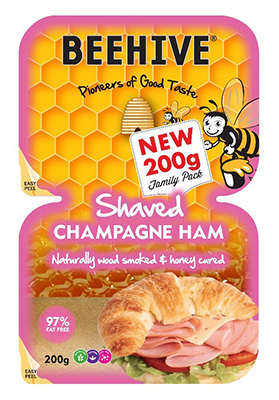
Recalled food products: Beehive Shaved Champagne Ham (200g Family Pack)
Beehive Shaved Champagne Ham (200g Family Pack)
Use by Date: 26 JAN 16
Batch: 335322
This product is sold in a 200g plastic pack.
The affected product has been sold in Countdown, New World, Pak n Save and Fresh Choice outlets throughout the North Island.
Premier Beehive NZ Limited are initiating a recall of their Beehive Shaved Champagne Ham (200g Family Pack, Use by Date: 26 JAN 2016, Batch 335322) after discovering that the product may contain Listeria.

Tuesday, October 27, 2015

Adolf’s Meat Products is recalling assorted meat due to Listeria

Adolf’s Meat Products, a Hartford, Conn. establishment, is recalling approximately 224 pounds of assorted meat that may be adulterated with Listeria monocytogenes, the U.S. Department of Agriculture’s Food Safety and Inspection Service (FSIS) announced today.
The following items, produced on Oct. 20, 2015, are subject to recall: [View Label]
  • 14-lb. of Smoked Kielbasa
  • 100-lb. of Hams
  • 40-lb. of Canadian Bacon
  • 30-lb. of Bone-In Pork Loins
  • 50-lb. of Liverwurst
The smoked kielbasa products bear establishment number “EST. 34651” inside the USDA mark of inspection, while other products were sold without labels from behind deli counters. All recalled products were sold at retail locations in Connecticut.
The problem was discovered during routine FSIS sample testing. There have been no confirmed reports of adverse reactions due to consumption of these products.
Consumption of food contaminated with L. monocytogenes can cause listeriosis, a serious infection that primarily affects older adults, persons with weakened immune systems, and pregnant women and their newborns. Less commonly, persons outside these risk groups are affected.
Listeriosis can cause fever, muscle aches, headache, stiff neck, confusion, loss of balance and convulsions sometimes preceded by diarrhea or other gastrointestinal symptoms. An invasive infection spreads beyond the gastrointestinal tract. In pregnant women, the infection can cause miscarriages, stillbirths, premature delivery or life-threatening infection of the newborn. In addition, serious and sometimes fatal infections in older adults and persons with weakened immune systems. Listeriosis is treated with antibiotics. Persons in the higher-risk categories who experience flu-like symptoms within two months after eating contaminated food should seek medical care and tell the health care provider about eating the contaminated food.
FSIS and the company are concerned that some product may be frozen and in consumers' freezers.
Consumers who have purchased these products are urged not to consume them. These products should be thrown away or returned to the place of purchase.
FSIS advises all consumers to reheat ready-to-eat product until steaming hot.
Media and consumers with questions regarding the recall can contact Joseph Gorski, President, at (860) 522-1588.
Thursday, September 17, 2015

Italian Boneless Ham recalled

Di Stefano Cheese Co., a Pomona, Calif., establishment, is recalling approximately 1,280 pounds of Parma Boneless Ham produced in Italy that were not presented at the U.S. point of entry for inspection, the U.S. Department of Agriculture’s Food Safety and Inspection Service (FSIS) announced today. Without the benefit of full inspection, a possibility of adverse health consequences exists.
The following products are subject to recall: [View Labels]
  • 15 lb. cases of “Ruliano Collezione Regale” Parma boneless ham with case code 14260
  • 15 lb. cases of “Ruliano 24” Parma boneless ham with a sell by date of 08-02-2016
These products were sent to distributors in the California.
The problem was discovered by routine record verification in the Public Health Information System (PHIS).
FSIS and the company have received no reports of adverse reactions due to consumption of these products. Anyone concerned about a reaction should contact a healthcare provider.
Consumers who have purchased these products are urged not to consume them. These products should be thrown away or returned to the place of purchase.
Consumers with questions about the recall can contact Sasia Mellinger, Human Resources Manager, at (909) 865-8301. Media with questions about the recall can contact Stefano Bruno, Vice President, at (909) 865-8301.

Saturday, January 17, 2015

Pork Products Imported from Spain Recalled

Food Club Corp., the importer of record which was formerly located in Los Altos, Calif., and is now located in Key Biscayne, Fla., is recalling approximately 3,233 pounds of pork products that were produced in Spain and were not presented at the U.S. point of entry for inspection, the U.S. Department of Agriculture’s Food Safety and Inspection Service (FSIS) announced today. Without the benefit of full inspection, a possibility of adverse health consequences exists.           
The following Sociedad Cooperativa Valle de Los Pedroches items are subject to recall:Whole hams of “COVAP JAMÓN DE BELLOTA 100% IBERICO BONE IN DRY CURED ACORN FED IBERICO PORK HAM” and bearing lot numbers “13314, 14124, 14444 or 14503” on the packaging labels.
  • 2.5-oz. individually wrapped packages of “COVAP JAMÓN DE BELLOTA DRY CURED ACORN FED IBERICO SLICED HAM” and bearing lot numbers “13323, 13472, 14105, 14344, 14423 or 14484” on the packaging labels.  
The products subject to recall were included in six different shipments bearing establishment number “Spain 29” inside the Spain mark of inspection and have “Sell-by” dates from June 19, 2014 through Dec. 10, 2015. These products were shipped to customers via the Internet in California.                                 
The problem was discovered using the Public Health Information System (PHIS) during a routine review of import shipment data. It was found that the product failed to present at a San Francisco, California point of entry for FSIS re-inspection and was detained at a Los Altos, California mailing warehouse facility.
FSIS and the company have received no reports of adverse reactions due to consumption of these products. Anyone concerned about a reaction should contact a healthcare provider.

Consumers and Media with questions about the recall can contact the company’s owner, Eduardo Rebollo, at info@ibericoclub.com.

Friday, June 27, 2014

Recall-- Organic Ham Contains Plastic


Label, Recalled Product E. G. Emils & Sons, Inc., a Philadelphia, Pa. establishment, is recalling approximately 5,896 pounds of deli ham product that may be contaminated with extraneous materials, the U.S. Department of Agriculture’s Food Safety and Inspection Service (FSIS) announced today.
The following product is subject to USDA recall:
  • “Wegman’s Food You Feel Good About Organic Ham,” Wegman’s Private Label with pack lot numbers 14941309, 14941310 and 14941311.
This product bears “EST 9935” inside the USDA mark of inspection on the labels and was produced May 29, 2014. The product was shipped to Wegman’s locations in Maryland, Massachusetts, New Jersey, New York, Pennsylvania and Virginia to be sliced at deli counters. The organic ham was sold between June 12 and June 25.
The problem was discovered by a Wegman’s employee upon slicing the ham at the deli counter. The problem was traced to a piece of plastic that broke off from an interlocker belt.
Neither the company nor FSIS has received any reports of injury associated with consumption of this product. Anyone concerned about an injury or illness from consumption of this product should contact a healthcare provider.        
FSIS routinely conducts recall effectiveness checks to verify that recalling firms notify their customers of the recall and that steps are taken to make certain that the product is no longer available to consumers.  
Consumers with questions about the recall should contact E.G. Emils & Sons, Inc. at 215-763-9824. Media with questions about the recall should contact customerservice@emils.com.


Saturday, January 18, 2014

Canada:Spiral Cut Ham Recalled Due to Listeria


Overwaitea Food Group is recalling Ripple Creek Farm brand Hickory Smoked Spiral Sliced Ham from the marketplace due to possible Listeria contamination. Consumers should not consume the recalled product described below.
The following product has been sold in British Columbia and Alberta.
Recalled products
Brand Name
Common Name
Size
Code(s) on Product
Ripple Creek Farm
Hickory Smoked Spiral Sliced Ham
Variable
Best Before 2014 FE 13
Check to see if you have recalled product in your home. Recalled product should be thrown out or returned to the store where they were purchased.
Food contaminated with Listeria monocytogenes may not look or smell spoiled but can still make you sick. Symptoms can include vomiting, nausea, persistent fever, muscle aches, severe headache and neck stiffness. Pregnant women, the elderly and people with weakened immune systems are particularly at risk. Although infected pregnant women may experience only mild, flu-like symptoms, the infection can lead to premature delivery, infection of the newborn or even stillbirth. In severe cases of illness, people may die.
This recall was triggered by a recall in another country. The Canadian Food Inspection Agency (CFIA) is conducting a food safety investigation, which may lead to the recall of other products. If other high-risk products are recalled the CFIA will notify the public through updated Food Recall Warnings.The CFIA is verifying that industry is removing recalled product from the marketplace.
For more information, consumers can contact the CFIA by filling out the online feedback form.

Friday, January 17, 2014

Spiral Sliced Ham Recalled Due to Listeria


Gusto Packing, a Montgomery, Ill. establishment, is recalling approximately 67,113 pounds of sliced, spiral ham products due to concerns about possible Listeria monocytogenes contamination, the U.S. Department of Agriculture’s Food Safety and Inspection Service (FSIS) announced today.
The hams were shipped to wholesalers for further distribution in Illinois, Indiana, Kentucky and Ohio, while some were exported to Canada.
The following products are subject to recall:
  • 45.5-lb. cases, with six individual sized hams each labeled “Centrella Signature, Hardwood Hickory Smoked, Spiral Sliced Ham with Natural Juices” with the case code “71292603304,” packaged on Nov. 29, 2013, having a Use or Freeze by date of “02/06/14.”
  • 45.8-lb. cases, with six individual sized hams each labeled “AMISH VALLEY, Fully Cooked, Hickory Smoked Spiral Sliced Ham” with the case code “71292645104,” packaged on Nov. 29, 2013, having a Use or Freeze by date of “02/06/14.”
  • 45.8-lb. cases, with six individual sized hams each labeled “AMISH VALLEY, Fully Cooked, Hickory Smoked Spiral Sliced Ham” with the case code “71292645104,” packaged on Nov. 30, 2013, having a Use or Freeze by date of “02/06/14.”
  • 31.6-lb. cases, with four individual sized hams each labeled “Ripple Creek Farms, Fully Cooked, Ready To Eat, Hickory Smoked, Spiral Sliced Ham” with the case code “71292603312,” packaged on Nov. 30, 2013, having a Best Before date of “2014 FE 13.”
Packaging labels bear the establishment number “EST. 2516” inside the USDA mark of inspection.  Photos of [Labels]
The problem was discovered when Gusto Packing’s internal sampling program found some of its products tested positive for Listeria monocytogenes. Those products were frozen and held for reconditioning. Later, Gusto Packing found that some of those ham products inadvertently shipped into commerce. The company then informed FSIS.  
 Anyone concerned about an illness should contact a healthcare provider.
Consumption of food contaminated with L. monocytogenes can cause listeriosis, a serious infection that primarily affects older adults, persons with weakened immune systems, and pregnant women and their newborns. Less commonly, persons outside these risk groups are affected.
Listeriosis can cause fever, muscle aches, headache, stiff neck, confusion, loss of balance and convulsions sometimes preceded by diarrhea or other gastrointestinal symptoms. An invasive infection spreads beyond the gastrointestinal tract. In pregnant women, the infection can cause miscarriages, stillbirths, premature delivery or life-threatening infection of the newborn. In addition, serious and sometimes fatal infections can occur in older adults and persons with weakened immune systems. Listeriosis is treated with antibiotics. Persons in the higher-risk categories who experience flu-like symptoms within two months after eating contaminated food should seek medical care and tell the health care provider about eating the contaminated food.
When available, the retail distribution list(s) will be posted on the FSIS website at www.fsis.usda.gov/recalls.

Friday, December 6, 2013

Ham Prosciutto Recalled Due to Listeria

 Santa Maria Foods, a Brampton, Ontario, establishment, is recalling approximately 2,600 pounds of whole boneless ham prosciutto product due to possible contamination with Listeria monocytogenes, the U.S. Department of Agriculture’s Food Safety and Inspection Service (FSIS) announced today.
recall 071-2013 imageThe ham product was shipped to California and Michigan for further distribution. Case labels bear the Canadian establishment number “473A” within the Canadian mark of inspection. The following product is subject to recall: 
  • Approximately 50-lb. boxes labeled “PROSCIUTTO x 4 GOLD” with the case codes BR031356 or BR031374, produced on Nov. 14 and Nov. 15, 2013. Each box contains 4 individually packaged hams with the case codes BR031341 or BR031354.
The problem was discovered by FSIS sampling collected during routine reinspection. The sampled product was held, but further investigation by Santa Maria Foods revealed that additional potentially implicated product had been released into commerce. FSIS and the company have received no reports of illnesses associated with consumption of these products. Anyone concerned about an illness should contact a healthcare provider.
Consumption of food contaminated with L. monocytogenes can cause listeriosis, a serious infection that primarily affects older adults, persons with weakened immune systems, and pregnant women and their newborns. Less commonly, persons outside these risk groups are affected.
Listeriosis can cause fever, muscle aches, headache, stiff neck, confusion, loss of balance and convulsions sometimes preceded by diarrhea or other gastrointestinal symptoms. An invasive infection spreads beyond the gastrointestinal tract. In pregnant women, the infection can cause miscarriages, stillbirths, premature delivery or life-threatening infection of the newborn. In addition, serious and sometimes fatal infections in older adults and persons with weakened immune systems. Listeriosis is treated with antibiotics. Persons in the higher-risk categories who experience flu-like symptoms within two months after eating contaminated food should seek medical care and tell the health care provider about eating the contaminated food.
.  Consumers with questions regarding the recall can contact the company’s consumer hotline at 888-886-4428.

recall 071-2013 image

Sunday, November 10, 2013

Ready to Eat Ham and Chicken Sandwiches and Salad Recalled Due to E Coli

Glass Onion Catering, a Richmond, Calif. establishment, is recalling approximately 181,620 pounds of ready-to-eat salads and sandwich wrap products with fully-cooked chicken and ham that may be contaminated with E. coli O157:H7, the U.S. Department of Agriculture’s Food Safety and Inspection Service (FSIS) announced today.
Products regulated by FSIS bear the establishment number “P-34221” inside the USDA mark of inspection. FSIS products subject to recall include:
  • 12 oz. packages of  “delish pan pacific chop salad”
  • 13.4 oz. packages of  “delish California style grilled chicken salad”
  • 9.9 oz. packages of  “delish uncured applewood smoked ham & cheese wrap”
  • 10.5 oz. packages of “delish grilled chicken caesar wrap”
  • 10.9 oz. packages of  “delish southwestern chicken wrap”
  • 11.5 oz. packages of  “delish greek brand low-calorie grilled chicken wrap”
  • 9.9 oz. packages of  “delish white chicken club wrap”
  • 11.2 oz. packages of  “delish asian style chicken wrap”
  • 13.4 oz. packages of  “atherstone Fine Foods Southwestern Style White Chicken Wrap with Chimichurri Sauce”
  • 10.5 oz. packages of  “atherstone Fine Foods Asian Style White Chicken Wrap with Mango Vinaigrette”
  • 9.9 oz. packages of  “atherstone Fine Foods Grilled White Chicken Caesar Wrap with Caesar Dressing”
  • 10.7 oz. packages of  “super fresh Foods California Grilled Chicken Salad, Low Fat Mendocino Mustard Dressing”
  • 10.7 oz. packages of  “Lunch Spot Southwestern Style Chicken Wrap, Chile & Lime  Dressing”
  • 9.2 oz. packages of  “super fresh Foods Pan Pacific Chopped Chicken Salad, Ginger Soy Dressing”
  • 10.7 oz. plastic containers of “TRADER JOE’S Field Fresh Chopped Salad with Grilled Chicken.”
  • 11 oz. plastic containers of “TRADER JOE’S MEXICALI SALAD with Chili Lime Chicken.”
The products were produced between Sept. 23 and Nov. 6, 2013 and shipped to distributions centers intended for retail sale in Arizona, California, Nevada, New Mexico, Oregon, Texas, Utah and Washington. When available, the retail distribution list(s) will be posted on the FSIS website at www.fsis.usda.gov/recalls.
FSIS began monitoring a cluster of E. coli O157:H7 illnesses on Oct. 29, 2013 then was notified by FDA on Nov. 6, 2013 that California authorities had reported case-patients consuming pre-packaged salads with grilled chicken. FSIS has determined that there is a link between the grilled chicken salads and the illness cluster. Twenty-six case-patients have been identified in three states with indistinguishable E. coli O157:H7 PFGE (genetic fingerprint) patterns with illness onset dates ranging from Sept 29, 2013 to Oct. 26, 2013. Based on epidemiological information, 15 case-patients reported consumption of ready-to-eat pre-packaged salads prior to illness onset. A traceback investigation determined Glass Onion Catering was the supplier of the products implicated in the outbreak.   
E. coli O157:H7 is a potentially deadly bacterium that can cause dehydration, bloody diarrhea and abdominal cramps 2-8 days (3-4 days, on average) after exposure the organism. While most people recover within a week, some develop a type of kidney failure called hemolytic uremic syndrome (HUS). This condition can occur among persons of any age but is most common in children under 5-years old and older adults. It is marked by easy bruising, pallor, and decreased urine output. Persons who experience these symptoms should seek emergency medical care immediately.
FSIS and the company are concerned that some products may be in a consumer’s refrigerators. Because this is a ready-to-eat product, FSIS advises all consumers to destroy the product.
Consumers with questions regarding the recall can contact Tom Atherstone, company president, at (510) 236-8905.

Monday, October 28, 2013

Canada: Reser's Fine Foods Recalls More Chicken, Ham, and Beef Products

The public warning issued on October 24, 2013 has been updated to include additional products and Best Before dates.
The Canadian Food Inspection Agency (CFIA) and Reser’s Fine Foods Inc. are warning the public not to consume the salad products described below, because they may be contaminated with Listeria monocytogenes.
There have been no reported illnesses associated with the consumption of these products.
The manufacturer, Reser's Fine Foods Inc., Beaverton, Oregon, USA, is voluntarily recalling the affected products from the marketplace. The CFIA is monitoring the effectiveness of the recall.
The following products, marked with a Best Before Date followed by a plant identifier code of 20, are affected by this alert:
Affected products
Brand Name
Common Name
Size
Codes(s) on Product
UPC
Additional Info
Market Pantry
Coleslaw
425 g
Best Before Date(s) followed by plant identifier code 20
from 2013 OC10 to 2013 NO03
6 28919 00240 5

Market Pantry
Macaroni Salad
454 g
Best Before Date(s) followed by plant identifier code 20
from 2013 OC20 to 2013 NO11
6 28919 00239 9

Market Pantry
Potato & Egg Salad
454 g
Best Before Date(s) followed by plant identifier code 20
from 2013 NO03 to 2013 NO17
6 28919 00238 2

Market Pantry
Potato Salad
454 g
Best Before Date(s) followed by plant identifier code 20
from 2013 OC20 to 2013 NO14
6 28919 00237 5

Reser's Fine Foods
Creamy Spinach Dip
454 g
Best Before Date(s) followed by plant identifier code 20
from 2013 OC17 to 2013 NO14
0 71117 61206 6

Reser's Fine Foods
Crunchy Cole Slaw
425 g
Best Before Date(s) followed by plant identifier code 20
from 2013 OC10 to 2013 NO08
0 71117 18244 6

Reser's Fine Foods
Crunchy Coleslaw
1.25 kg
Best Before Date(s) followed by plant identifier code 20
from 2013 OC10 to 2013 NO08
0 71117 61225 7

Reser's Fine Foods
Gourmet Red Potato Salad
1.81 kg
Best Before Date(s) followed by plant identifier code 20
from 2013 OC12 to 2013 NO15
0 71117 00164 8

Reser's Fine Foods
Gourmet Red Potato Salad
340 g
Best Before Date(s) followed by plant identifier code 20
from 2013 OC12 to 2013 NO10
0 71117 61209 7

Reser's Fine Foods
Potato Salad with Deviled Egg
454 g
Best Before Date(s) followed by plant identifier code 20
from 2013 OC12 to 2013 NO15
0 71117 61252 3

Reser's Fine Foods
Potato Salad with Egg
454 g
Best Before Date(s) followed by plant identifier code 20
from 2013 OC23 to 2013 NO26
0 71117 18243 9

Reser's Fine Foods
Potato Salad with Egg
1.25 kg
Best Before Date(s) followed by plant identifier code 20
from 2013 OC23 to 2013 NO26
0 71117 61321 6

Reser's Fine Foods
Traditional Cole Slaw with Oil & Vinegar
425 g
Best Before Date(s) followed by plant identifier code 20
from 2013 OC10 to 2013 NO07
0 71117 61254 7

Reser's Fine Foods
Cheesy Macaroni Salad
1.25 kg
Best Before Date(s) followed by plant identifier code 20
from 2013 OC20 to 2013 NO18
0 71117 61227 1

Reser's Fine Foods
Cheesy Macaroni Salad
454 g
Best Before Date(s) followed by plant identifier code 20
from 2013 OC20 to 2013 NO18
0 71117 18241 5

Reser's Fine Foods
Ranch Pasta Salad with Bacon
454 g
Best Before Date(s) followed by plant identifier code 20
from 2013 OC11 to 2013 NO07
0 71117 61250 9

Reser's Fine Foods
Potato Salad
454 g
Best Before Date(s) followed by plant identifier code 20
from 2013 OC23 to 2013 NO21
0 71117 18242 2

Reser's Fine Foods
Potato Salad
1.25 kg
Best Before Date(s) followed by plant identifier code 20
from 2013 OC23 to 2013 NO26
0 71117 61320 9

Reser's Fine Foods
Macaroni Salad
454 g
Best Before Date(s) followed by plant identifier code 20
from 2013 OC23 to 2013 NO26
0 71117 18240 8

Reser's Fine Foods
Macaroni Salad
1.25 kg
Best Before Date(s) followed by plant identifier code 20
from 2013 OC23 to 2013 NO21
0 71117 61322 3

Reser's Fine Foods
Homestyle Potato Salad
454 g
Best Before Date(s) followed by plant identifier code 20
from 2013 OC10 to 2013 NO07
0 71117 61251 6

Reser's Fine Foods
Potato Salad*
3.63 kg
Best Before Date(s) followed by plant identifier code 20
from 2013 OC23 to 2013 NO27
0 71117 00215 7
* These affected products were sold in bulk and may have been repacked at retail. Consumers who cannot determine the original product identity are advised to check with their retailer to determine if they have one of the affected products.
Reser's Fine Foods
Loaded Baked Potato Salad*
2.27 kg
Best Before Date(s) followed by plant identifier code 20
from 2013 OC08 to 2013 NO10
0 71117 11586 4
* These affected products were sold in bulk and may have been repacked at retail. Consumers who cannot determine the original product identity are advised to check with their retailer to determine if they have one of the affected products.
Reser's Fine Foods
Cole Slaw*
3.18 kg
Best Before Date(s) followed by plant identifier code 20
from 2013 OC08 to 2013 NO10
0 71117 15124 4
* These affected products were sold in bulk and may have been repacked at retail. Consumers who cannot determine the original product identity are advised to check with their retailer to determine if they have one of the affected products.
Reser's Fine Foods
Chicken Salad Dressing*
3.63 kg
Best Before Date(s) followed by plant identifier code 20
from 2013 OC24 to 2013 NO20
71117 14761 2
* These affected products were sold in bulk and may have been repacked at retail. Consumers who cannot determine the original product identity are advised to check with their retailer to determine if they have one of the affected products.
Reser's Fine Foods
Macaroni Salad*
3.63 kg
Best Before Date(s) followed by plant identifier code 20
from 2013 OC25 to 2013 NO20
0 71117 00216 4
* These affected products were sold in bulk and may have been repacked at retail. Consumers who cannot determine the original product identity are advised to check with their retailer to determine if they have one of the affected products.
Reser's Fine Foods
Four Bean Salad*
3.63 kg
Best Before Date(s) followed by plant identifier code 20
from 2013 NO24 to 2013 DE15
71117 61281 3
* These affected products were sold in bulk and may have been repacked at retail. Consumers who cannot determine the original product identity are advised to check with their retailer to determine if they have one of the affected products.
Reser's Fine Foods
Diced Potato with Egg Salad*
3.63 kg
Best Before Date(s) followed by plant identifier code 20
from 2013 OC23 to 2013 NO26
71117 65135 5
* These affected products were sold in bulk and may have been repacked at retail. Consumers who cannot determine the original product identity are advised to check with their retailer to determine if they have one of the affected products.
Stonemill Kitchens
Red Potato Salad with Dijon
2.27 kg
Best Before Date(s) followed by plant identifier code 20
from 2013 OC15 to 2013 NO18
0 71117 61629 3

Related alerts

More information

Food contaminated with Listeria monocytogenes may not look or smell spoiled. Consumption of food contaminated with this bacteria may cause listeriosis, a foodborne illness. Listeriosis can cause high fever, severe headache, neck stiffness and nausea. Pregnant women, the elderly and people with weakened immune systems are particularly at risk. Infected pregnant women may experience only a mild, flu-like illness, however, infections during pregnancy can lead to premature delivery, infection of the newborn, or even stillbirth.