 Have you ever experienced severe diarrhea or vomiting? If you have, it’s likely you had norovirus. If you haven’t, chances are you will.
Anyone can get norovirus and you can get it more than once. It is estimated that a person will get norovirus about five times during their lifetime.
Norovirus affects about one in 15 people and contributes to 56,000 to 71,000 hospitalizations and 570 to 800 deaths in the U.S.
Norovirus spreads easily from contaminated food orsurfaces or from an infected person. People with norovirus illness are contagious from the moment they begin feeling sick and for the first few days after they recover. Some people may be contagious for even longer.
Currently, there is not a vaccine to prevent norovirus infection or a drug to treat sick people. But, there is hope for a vaccine.
Have you ever experienced severe diarrhea or vomiting? If you have, it’s likely you had norovirus. If you haven’t, chances are you will.
Anyone can get norovirus and you can get it more than once. It is estimated that a person will get norovirus about five times during their lifetime.
Norovirus affects about one in 15 people and contributes to 56,000 to 71,000 hospitalizations and 570 to 800 deaths in the U.S.
Norovirus spreads easily from contaminated food orsurfaces or from an infected person. People with norovirus illness are contagious from the moment they begin feeling sick and for the first few days after they recover. Some people may be contagious for even longer.
Currently, there is not a vaccine to prevent norovirus infection or a drug to treat sick people. But, there is hope for a vaccine.
Coming together to find answers and move towards a vaccine
 In February 2015, the Bill and Melinda Gates Foundation, CDC foundation, and CDC brought together norovirus experts from around the world to discuss how to make the norovirus vaccine a reality. Participants came from 17 countries on six continents and included representatives from academia, industry, government, and private charitable foundations.
Important questions remain about norovirus:
In February 2015, the Bill and Melinda Gates Foundation, CDC foundation, and CDC brought together norovirus experts from around the world to discuss how to make the norovirus vaccine a reality. Participants came from 17 countries on six continents and included representatives from academia, industry, government, and private charitable foundations.
Important questions remain about norovirus:
-
How do humans develop immunity?
-
How long does immunity last?
-
Does immunity to one strain protect against infection from others?
-
How would a vaccine be used to prevent disease and protect those at highest risk?
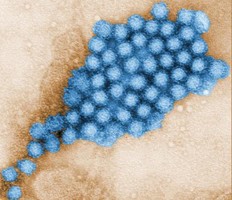
The meeting was a step toward finding answers to these questions and making a norovirus vaccine a reality. (Photo: Microscopic view of norovirus particles)


 Facts about norovirus
-
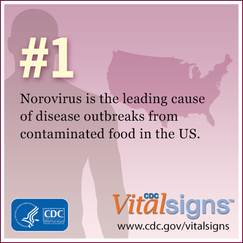
Leading cause of diarrhea and vomiting in the United States. Each year, norovirus causes 19 to 21 million illnesses (about one in 15 people) and contributes to 56,000 to 71,000 hospitalizations and 570 to 800 deaths in the U.S.
-
Global disease. Norovirus is also a major cause of diarrheal disease worldwide accounting for nearly 20% of all diarrheal cases. In developing countries, it is associated with approximately 50,000 to 100,000 child deaths every year.
-
Many names, same symptoms. Norovirus is the most common cause of diarrhea and vomiting (also known as gastroenteritis) and is often referred to as food poisoning or stomach flu. Norovirus is not related to the flu (influenza). Though they may share some of the same symptoms, the flu is a respiratory illness caused by influenza virus.
-
Serious for some, but not most. For most people, norovirus illness is not serious and they get better in one to three days. But it can be serious in young children, the elderly, and people with other health conditions and can lead to severe dehydration, hospitalization, and even death.
-
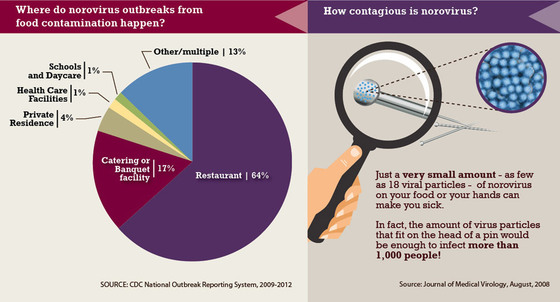
Spreads quickly. Norovirus spreads quickly from person to person in enclosed places like nursing homes, daycare centers, schools, and cruise ships. It is also a major cause of outbreaks in restaurants and catered-meal settings if contaminated food is served.

 Tips to protect against norovirus
While there is hope for a norovirus vaccine in the future, there are steps you can take now to protect yourself.
Tips to protect against norovirus
While there is hope for a norovirus vaccine in the future, there are steps you can take now to protect yourself.
-
Practice proper hand hygiene. Wash your hands carefully with soap and water, especially after using the toilet and changing diapers and always before eating or preparing food. If soap and water aren't available, use an alcohol-based hand sanitizer. These products can help reduce the number of germs on your hands, but they are not a substitute for washing with soap and water.
-
Take care in the kitchen. Carefully rinse fruits and vegetables and cook oysters and other shellfish thoroughly before eating.
-
Do not prepare food while infected. People with norovirus illness should not prepare food for others while they have symptoms and for at least two days after they have recovered from their illness.
-
Clean and disinfect contaminated surfaces. After throwing up or having diarrhea, immediately clean and disinfect contaminated surfaces using a bleach-based household cleaner, as directed on the product label. If no such cleaning product is available, use a solution made with five tablespoons to 1.5 cups of household bleach per one gallon of water.
-
Wash laundry thoroughly. Immediately remove and wash clothing or linens that may be contaminated with vomit or stool. Handle soiled items carefully—try not to shake them—to avoid spreading virus. If available, wear rubber or disposable gloves while handling soiled clothing or linens and wash your hands after handling. Wash soiled items with detergent at the maximum available cycle length and then machine dry.
Have you ever experienced severe diarrhea or vomiting? If you have, it’s likely you had norovirus. If you haven’t, chances are you will.
Anyone can get norovirus and you can get it more than once. It is estimated that a person will get norovirus about five times during their lifetime.
Norovirus affects about one in 15 people and contributes to 56,000 to 71,000 hospitalizations and 570 to 800 deaths in the U.S.
Norovirus spreads easily from contaminated food orsurfaces or from an infected person. People with norovirus illness are contagious from the moment they begin feeling sick and for the first few days after they recover. Some people may be contagious for even longer.
Currently, there is not a vaccine to prevent norovirus infection or a drug to treat sick people. But, there is hope for a vaccine.
|
In February 2015, the Bill and Melinda Gates Foundation, CDC foundation, and CDC brought together norovirus experts from around the world to discuss how to make the norovirus vaccine a reality. Participants came from 17 countries on six continents and included representatives from academia, industry, government, and private charitable foundations.
Important questions remain about norovirus:
The meeting was a step toward finding answers to these questions and making a norovirus vaccine a reality. (Photo: Microscopic view of norovirus particles)
|
Facts about norovirus
|
Tips to protect against norovirus
While there is hope for a norovirus vaccine in the future, there are steps you can take now to protect yourself.
|

