Showing posts with label diarrhea. Show all posts

Wednesday, January 13, 2016

Health News; Salmonella Outbreak in Alabama ♦ Researchers closer to better treatment for leading cause of hospital-acquired diarrhea

Salmonella Outbreak in Alabama Johnny Ray’s in Pelham was closed indefinitely January 8 following four confirmed cases of Salmonella tied to the restaurant. Health officials in Alabama are investigating the outbreak.
Roman toilets gave no clear health benefit, and Romanization actually spread parasites Intestinal parasites such as whipworm became increasingly common across Europe during the Roman Period, despite the apparent improvements the empire brought in sanitation technologies, archaeological evidence shows.

Researchers closer to better treatment for leading cause of hospital-acquired diarrhea Researchers have obtained the crystal structure of a toxin from the bacterium Clostridium difficile ('C. diff') -- the leading cause of hospital-acquired diarrhea in the United States. They also found that zinc is required to unleash the toxin's damaging effects in the colon. The discoveries are aiding efforts to develop vaccines and other novel therapies to prevent the potentially fatal consequences of C. diff infection

Playing american football may be a risk factor for hypertension As National Football League playoff games are underway, a new article suggests that the toll the sport takes on players' bodies extends beyond head trauma and damage to limbs and joints. The trauma and damage associated with football participation may also be linked to elevations in blood pressure through immune system activation and inflammation.

Thursday, November 12, 2015

Bacteria Research: Competition between 'good bacteria' important for healthy gut ♦ Researchers develop antibiotic alternative for wound infections

Competition between 'good bacteria' important for healthy gut The vital ecosystem of bacteria in the human gut operates like a jungle, with competition between microbes helping maintain the stability necessary to keep us health
Controlling levels of specific gut bacteria could help prevent severe diarrhea Everyone has suffered from it. It's ranged from mild to severe. It's a condition that's most-often described in a whisper. Diarrhea. Severe cases of diarrhea, however, are no joking matter. New research may offer patients suffering from acute cases new treatments that focus on intestinal microbial communities to prevent the disease.
Researchers develop antibiotic alternative for wound infections For the first time, researchers have discovered how electrical stimulation works for the treatment of bacterial infections, paving the way for a viable alternative to medicinal antibiotics. The researchers passed an electric current over a film of bacteria and in 24 hours killed almost all of a multidrug resistant bacterium that is often present in difficult-to-treat infections. The remaining bacterial population was 1/10,000th of its original size.
The gut microbiota can influence the effectiveness of dietary treatments Why a dietary treatment works for some but not others seems to depend on interactions between the gut microbiota and the diet. A new study shows that people with better control of blood sugar after eating barley kernel bread also have a different balance of microbes in the gut.

Monday, July 20, 2015

Health News: Friendly’s Ice Cream recall ♦ Gene causing appearance of premature aging found ♦ Researchers test artificial liver device to treat acute liver failure

Friendly’s Ice Cream recall Friendly’s Ice Cream is recalling a small amount of one lot code of flavor of ice cream, Vienna Mocha Chunk, which may contain small plastic fragments. The affected lot code of 48oz Vienna Mocha Chunk ice cream cartons were produced on 6/18/15 and shipped between 6/21/15 and 7/7/15.
Gene causing appearance of premature aging found A genetic mutation associated with the appearance of premature aging and severe loss of body fat in children has been identified by scientists. They found that the appearance of premature aging, a neonatal form of Progeroid syndrome, in a 3-year-old girl was caused by a mutation in the gene CAV1.
New resource makes gene-editing technology even more user-friendly A new user-friendly resource to accompany the powerful gene editing tool called CRISPR/Cas9, which has been widely adopted to make precise, targeted changes in DNA, has been developed by researchers. This breakthrough has the potential to facilitate new discoveries in gene therapies and basic genetics research
Researchers test bioartificial liver device to treat acute liver failure Researchers have developed and are testing an alternative to liver transplantation called the Spheroid Reservoir Bioartificial Liver that can support healing and regeneration of the injured liver, and improve outcomes and reduce mortality rates for patients with acute liver failure.
Intestinal parasites are common cause of diarrhea in cats: Giardia may be transmitted to humans Diarrhea in cats can have several causes, with infections from single-cell intestinal parasites being a common explanation. Researchers studied nearly 300 cats in order to assess the presence and prevalence of parasitic species in Austria. The most common causative agents were Giardia. One species of Giardia that was found may also be transmissible to humans.

Wednesday, July 8, 2015

Health News:Nexium Recalled ♦ More than 180 children sickened by foodborne illness in Pakistan ♦ Drug inhibits infection that causes watery

.Nexium Recalled - Seroquel XR Nexium bottles Recall: Antipsychotic found in bottle labeled for GERD medication. AstraZeneca announced a voluntary recall of 34,524 mislabeled Nexium bottles following the discovery of Seroquel XR, an antipsychotic agent, in an unopened Nexium container.
More than 180 children sickened by foodborne illness in Pakistan More than 180 children at a home for orphans in Islamabad, Pakistan, were sickened Sunday, July 5, 2015, reportedly after consuming “substandard” food. The children were taken to three different hospitals after complaining of stomach pain and other symptoms of foodborne illness soon after eating breakfast. According to a newspaper report, some of the children became...
Drug inhibits infection that causes watery diarrhea Researchers have demonstrated that heparin, a type of inhibits infection with Cryptosporidium parvum, a protozoan that causes diarrhea in humans and other mammals. This will facilitate the development of anti-cryptosporidial agents.
Study reveals brain network responsible for cognitive changes in multiple sclerosis Decreased connectivity between network-specific brain regions are to blame for the central deficit common to the various cognitive changes associated with multiple sclerosis (MS). The study found that, compared to healthy controls, individuals with MS exhibit weaker brain connections between the dorsolateral prefrontal cortex and posterior brain regions.
Molecule linked to muscle fatigue in humans; enhances exercise tolerance when fed to mice Everyone's muscles have different limits. While professional athletes can train for hours before feeling fatigued, others struggle to mow the lawn or climb stairs. No panacea exists to create an equal playing field, nor will one likely be discovered, but a new study questions whether this limit can be nutritionally extended.

Monday, April 6, 2015

Experienced severe diarrhea or vomiting--Could a Norovirus Vaccine be a Reality?


Female with stomach ache
Have you ever experienced severe diarrhea or vomiting? If you have, it’s likely you had norovirus. If you haven’t, chances are you will.
Anyone can get norovirus and you can get it more than once. It is estimated that a person will get norovirus about five times during their lifetime.
Norovirus affects about one in 15 people and contributes to 56,000 to 71,000 hospitalizations and 570 to 800 deaths in the U.S.
Norovirus spreads easily from contaminated food orsurfaces or from an infected person.  People with norovirus illness are contagious from the moment they begin feeling sick and for the first few days after they recover. Some people may be contagious for even longer.
Currently, there is not a vaccine to prevent norovirus infection or a drug to treat sick people. But, there is hope for a vaccine.
Coming together to find answers and move towards a vaccine
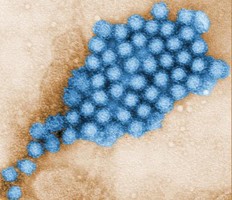
Transmission electron micrograph (TEM) image of some of the ultrastructural morphology displayed by norovirus virions, or virus particles.
In February 2015, the Bill and Melinda Gates Foundation, CDC foundation, and CDC brought together norovirus experts from around the world to discuss how to make the norovirus vaccine a reality. Participants came from 17 countries on six continents and included representatives from academia, industry, government, and private charitable foundations.
Important questions remain about norovirus:
  • How do humans develop immunity?
  • How long does immunity last?
  • Does immunity to one strain protect against infection from others?
  • How would a vaccine be used to prevent disease and protect those at highest risk?
The meeting was a step toward finding answers to these questions and making a norovirus vaccine a reality. (Photo: Microscopic view of norovirus particles)
=============
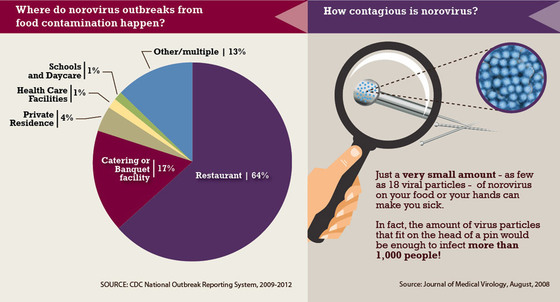
Where do norovirus outbreaks happen and how contagious is norovirus
=============
Norovirus is leading cause of disease outbreaks from contaminated food in the U.S.
Facts about norovirus
  • Leading cause of diarrhea and vomiting in the United States. Each year, norovirus causes 19 to 21 million illnesses (about one in 15 people) and contributes to 56,000 to 71,000 hospitalizations and 570 to 800 deaths in the U.S.
  • Global disease. Norovirus is also a major cause of diarrheal disease worldwide accounting for nearly 20% of all diarrheal cases. In developing countries, it is associated with approximately 50,000 to 100,000 child deaths every year.
  • Many names, same symptoms. Norovirus is the most common cause of diarrhea and vomiting (also known as gastroenteritis) and is often referred to as food poisoning or stomach flu. Norovirus is not related to the flu (influenza). Though they may share some of the same symptoms, the flu is a respiratory illness caused by influenza virus.
  • Serious for some, but not most. For most people, norovirus illness is not serious and they get better in one to three days. But it can be serious in young children, the elderly, and people with other health conditions and can lead to severe dehydration, hospitalization, and even death.  
  • Spreads quickly. Norovirus spreads quickly from person to person in enclosed places like nursing homes, daycare centers, schools, and cruise ships. It is also a major cause of outbreaks in restaurants and catered-meal settings if contaminated food is served.
=============
Protect yourself from norovirus infographic
Tips to protect against norovirus
While there is hope for a norovirus vaccine in the future, there are steps you can take now to protect yourself.
  • Practice proper hand hygiene. Wash your hands carefully with soap and water, especially after using the toilet and changing diapers and always before eating or preparing food. If soap and water aren't available, use an alcohol-based hand sanitizer. These  products can help reduce the number of germs on your hands, but they are not a substitute for washing with soap and water.
  • Take care in the kitchen. Carefully rinse fruits and vegetables and cook oysters and other shellfish thoroughly before eating.
  • Do not prepare food while infected. People with norovirus illness should not prepare food for others while they have symptoms and for at least two days after they have recovered from their illness.
  • Clean and disinfect contaminated surfaces. After throwing up or having diarrhea, immediately clean and disinfect contaminated surfaces using a bleach-based household cleaner, as directed on the product label. If no such cleaning product is available, use a solution made with five tablespoons to 1.5 cups of household bleach per one gallon of water.
  • Wash laundry thoroughly. Immediately remove and wash clothing or linens that may be contaminated with vomit or stool. Handle soiled items carefully—try not to shake them—to avoid spreading virus. If available, wear rubber or disposable gloves while handling soiled clothing or linens and wash your hands after handling. Wash soiled items with detergent at the maximum available cycle length and then machine dry.

Thursday, April 2, 2015

Multidrug-resistant Shigellosis Spreading in the United States

International travelers are bringing a multidrug-resistant intestinal illness to the United States and spreading it to others who have not traveled, according to a report released today by the Centers for Disease Control and Prevention (CDC). Shigella sonnei bacteria resistant to the antibiotic ciprofloxacin sickened 243 people in 32 states and Puerto Rico between May 2014 and February 2015. Research by the CDC found that the drug-resistant illness was being repeatedly introduced as ill travelers returned and was then infecting other people in a series of outbreaks around the country.
CDC and public health partners investigated several recent clusters of shigellosis in Massachusetts, California and Pennsylvania and found that nearly 90 percent of the cases tested were resistant to ciprofloxacin (Cipro), the first choice to treat shigellosis among adults in the United States. Shigellosis can spread very quickly in groups like children in childcare facilities, homeless people and gay and bisexual men, as occurred in these outbreaks.
“These outbreaks show a troubling trend in Shigella infections in the United States,” said CDC Director Tom Frieden, M.D., M.P.H. “Drug-resistant infections are harder to treat and because Shigella spreads so easily between people, the potential for more – and larger – outbreaks is a real concern.  We’re moving quickly to implement a national strategy to curb antibiotic resistance because we can’t take for granted that we’ll always have the drugs we need to fight common infections.”
In the United States, most Shigella is already resistant to the antibiotics ampicillin and trimethoprim/sulfamethoxazole. Globally, Shigella resistance to Cipro is increasing. Cipro is often prescribed to people who travel internationally, in case they develop diarrhea while out of the United States. More study is needed to determine what role, if any, the use of antibiotics during travel may have in increasing the risk of antibiotic-resistant diarrhea infections among returned travelers.
“The increase in drug-resistant Shigella makes it even more critical to prevent shigellosis from spreading,” said Anna Bowen, M.D., M.P.H., a medical officer in CDC’s Waterborne Diseases Prevention Branch and lead author of the study. “Washing your hands with soap and water is important for everyone. Also, international travelers can protect themselves by choosing hot foods and drinking only from sealed containers.”
CDC’s PulseNet lab network identified an increase in Shigella sonnei infections with an uncommon genetic fingerprint in December 2014. Further testing at CDC’s National Antimicrobial Resistance Monitoring System (NARMS) lab found that the bacteria were resistant to Cipro. PulseNet detected several large clusters: 45 cases in Massachusetts; 25 cases in California; and 18 cases in Pennsylvania. About half of the PulseNet cases with patient information were associated with international travel, mostly to the Dominican Republic and India. The San Francisco Department of Public Health reported another 95 cases (nine of them among those identified by PulseNet), with almost half occurring among the homeless or people living in single-room occupancy hotels.
Shigella causes an estimated 500,000 cases of diarrhea in the United States every year. It spreads easily and rapidly from person to person and through contaminated food and recreational water. It can cause watery or bloody diarrhea, abdominal pain, fever, and malaise. Although diarrhea caused by Shigella typically goes away without treatment, people with mild illnesses are often treated with antibiotics to stop the diarrhea faster. Until recently, Cipro resistance has occurred in just 2 percent of Shigella infections tested in the United States, but was found in 90 percent of samples tested in the recent clusters.
Because Cipro-resistant Shigella is spreading, CDC recommends doctors use lab tests to determine which antibiotics will effectively treat shigellosis. Doctors and patients should consider carefully whether an infection requires antibiotics at all.
To prevent the spread of shigellosis, CDC recommends that people wash their hands often with soap and water, especially after using the toilet and before preparing food or eating; keep children home from childcare and other group activities while they are sick with diarrhea; avoid preparing food for others while ill with diarrhea; and avoid swimming for a few weeks after recovering. Improving access to toilets and soap and water for washing hands may help prevent Shigella transmission among the homeless.
Travelers to developing countries can take additional precautions to avoid diarrhea and minimize infection with resistant bacteria. Choose safe foods and beverages, such as food that is steaming hot and drinks from sealed containers (download CDC’s app “Can I Eat This?” to help you make safer food and beverage choices when you travel).  Wash hands frequently, particularly before eating and after using the toilet. Take bismuth subsalicylate to prevent travelers’ diarrhea and treat it with over-the-counter drugs like bismuth subsalicylate or loperamide. Try to reserve antibiotics for severe cases of travelers’ diarrhea.
Health care providers should test stool samples from patients with symptoms consistent with shigellosis, re-test stool if patients do not improve after taking antibiotics, and test bacteria for antibiotic resistance.
For more information on Shigella, please visit: www.cdc.gov/shigella.
Travelers can learn more about food and water precautions to prevent Shigella at: http://wwwnc.cdc.gov/travel/yellowbook/2014/chapter-2-the-pre-travel-consultation/food-and-water-precautions.

Sunday, July 28, 2013

Cyclosporiasis Outbreak Expanding to 16 States

There is a dramatic rise in cases in this multi state outbreak of cyclosporiasis. there are now 321 cases in 15 states. Of these there 18 in the hospital.The number of cases seems to rise every day.
As of now there are cases in Iowa, Texas, Florida, New York City, Wisconsin, Georgia, Missouri, Arkansas, Connecticut, Minnesota, New Jersey, and Ohio. Illinois and Kansas have also notified CDC of one case each that may have been acquired in another state.
Public health authorities have not been able to find the cause of the epidemic. Historically outbreaks have come from fresh produce.
Cyclospora is a protozoan which causes infections characterized by a watery diarrhea that lasts an average of 57 days, if untreated. Even Though most of the illnesses in the current outbreak began in mid to late June. Many people are still ill and some have had relapses.
Anyone experiencing diarrhea, or have recently had a long bout with diarrhea, should contact their healthcare provider and see if they should be tested for Cyclospora infection.

Wednesday, July 10, 2013

I6 People Hospitalized After Swimming in Lake

Rhode Island closed Spring Lake after 92 people were sickened with Shigella bacteria, I6 of those

were hospitalized. Mostly children.were infected

Some Shigella is drug resistant. It caused diarrhea and is a major cause of children dying in underdeveloped countries with 90,000 deaths a year.It attackes the cells in the small intestine. There is no vaccine for Shigella.
Health Director Michael Fine advises anyone who swam in Spring Lake on the Fourth of July to consider seeking medical attention if they have gastrointestinal symptoms. There are no severe cases in this outbreak so far. Spring Lake is expected to reopen today as tests show that the Shigella is gone.
Shigella is typically spread by contact with human feces. Many are caused by poor hand washing. A study showed that many Americans don’t use soap to wash their hands. Few wash their hands vigorously for the recommended 21 seconds.
A single ill child, possibility wearing a leaky diaper, might have spread the bacteria to all the others. Both food and water was tested for the bacteria before the lake was pinpointed as the source.

Some tips for preventing the spread of shigellosis:

  • Wash hands with soap carefully and frequently, especially after going to the bathroom, after changing diapers, and before preparing foods or beverages.
  • Dispose of soiled diapers properly
  • Disinfect diaper changing areas after using them.
  • Keep children with diarrhea out of child care settings.
  • Supervise handwashing of toddlers and small children after they use the toilet.
  • Do not prepare food for others while ill with diarrhea
  • Avoid swallowing water from ponds, lakes, or untreated pools. (See more information about this.)

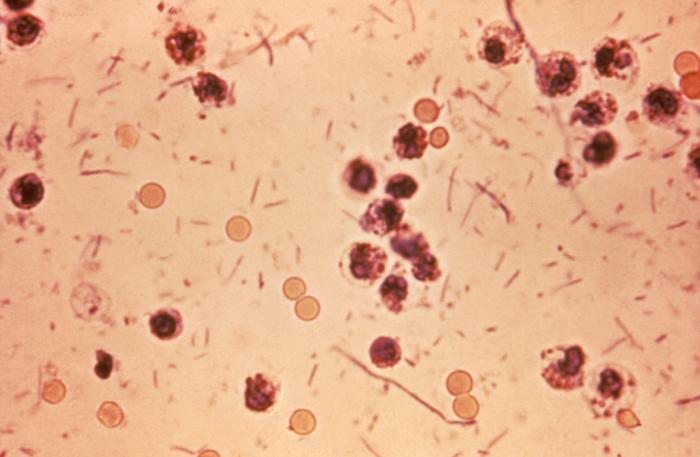
    Picture of Shigella in a stool sample


File:Shigella stool.jpg

Source Google, CDC, Food Safety News  

Thursday, May 30, 2013

Five People Sick From Drinking Raw Milk

In Chambersburg, Pennsylvania the Family Cow Dairies raw milk was infected with Campylobacter. After testing the milk the state agriculture officials found  Campylobacter, They ask Family Cow Dairy to stop selling milk until further notice. Five People have been reported sick from the milk so far.


This is not the first time that Family Cow Dairy has had infected milk. They had Campylobacter infected milk  in January and February of 2012. This outbreak sickened 80 people and put 12 people in the hospital.
An investigation after this outbreak revealed that the water for washing the milking equipment was 110F instead of 160F. This and a broken bottle capper were the only defects that were found.

One effect of campylobacteriosis is tissue injury in the gut. Campylobacter causes diarrhea, nausea, vomiting and stomach cramps. The  diarrhea consist of as many as 10 watery, frequently bloody, bowel movements per day and fever as high as 104°F. In most people, the illness lasts for 2–10 days
In Pennsylvania raw milk must be tested twice a month to check for bacterial contamination. Since this is happening a second time this is obviously not enough. Between 2007 and 2011 there were 15 raw milk- related disease outbreaks in Pennsylvania. 233 people were reported sickened in these outbreaks. There are usually many more people ill than those reported to the health department.

The amount of illness in states where raw milk is legal is much higher.