Tuesday, January 27, 2015

1/27/15 Health News: Drugs from dirt ♦ Higher dementia risk linked to common drugs ♦ Safety of Imported Seafood ♦ Methadone to treat pain increases risk of death

Higher dementia risk linked to more use of common drugs
A large study links a significantly increased risk for developing dementia, including Alzheimer's disease, to taking commonly used medications with anticholinergic effects. Many older people take these medications, which include nonprescription Benadryl.Continue Reading
LOUISIANA SENATOR SEEKS TO ENHANCE THE SAFETY OF IMPORTED SEAFOOD
Sen. David Vitter (R-LA) introduced a bill this past week that would amend the Federal Food, Drug, and Cosmetic Act to ensure the safety of imported seafood. According to the American Shrimp Processors Association, which supports the bill, S. 190 increases inspection standards on foreign imported seafood, requires foreign exporters to meet U.S.... Continue Reading
Poor social integration = poor health
There are many benefits to being supported by a strong social network. But can a bigger friend base actually make you healthier? New research shows that social relationships do have a positive influence our physical well-being. Continue Reading
Drugs from dirt: Scientists develop first global roadmap for drug discovery
Scientists have analyzed soils from beaches, forests, and deserts on five continents and found the best places in the world to mine untapped antibiotic and anticancer drugs. The findings provide a road map for future drug discovery. Continue Reading
Use of methadone to treat pain increases risk of death, study shows
Outside the hospital, use of methadone to treat pain carries a 46 percent increased risk of death when compared to the equally effective but more costly alternative, morphine SR (sustained release), according to a recent study Continue Reading

Monday, January 26, 2015

Gastroade Xtra (OTC Drug for Horses} Recalled

Cox Veterinary Laboratory, Inc. is voluntarily recalling the lots of Gastroade Xtra identified below down to the consumer level distributed nationwide. Gastroade Xtra was previously marketed by Cox Veterinary Laboratory as an OTC drug for use in horses, and contains Omeprazole. This recall has been initiated due to information from the FDA that Gastroade Xtra must have an approved new animal drug application to be legally marketed in the United States. Gastroade Xtra is not approved by the FDA. In addition, some lots may be sub-potent and pose a risk of continued ulceration. As a consequence, Cox Veterinary Laboratory has ceased all production and sales of Gastroade Xtra and is recalling the product.
Because the FDA has not approved Gastroade Xtra, the safety and efficacy of the product has not yet been established. To date, however, there have been no reported adverse events associated with the use of Gastroade Xtra.
Gastroade Xtra is labeled for the care of gastric ulcers in horses. Gastroade Xtra is a paste that is packaged in a 32 ml tube bearing the name Gastroade Xtra, Omeprazole 2.28g.
Aided with the information provided by the FDA, Cox Veterinary Laboratory is notifying its distributors and customers by a letter sent certified mail directly and through this press release of this voluntary recall. Cox Veterinary Laboratory will arrange for a return of all recalled product. Consumers and distributors that have unused Gastroade Xtra should stop using this product immediately and contact Cox Veterinary Laboratory to arrange for the return of the product.
Horse owners, caretakers and veterinarians should report to the FDA any adverse events, including ineffectiveness, in horses that received unapproved omeprazole products. Information on reporting adverse events for approved or unapproved animal drugs can be found at: http://www.fda.gov/animalveterinary/safetyhealth/reportaproblem/ucm055305.htm. Complaints about approved and unapproved animal drug products can be reported by calling a consumer complaint coordinator, within your FDA District Office or by filing a Veterinary Adverse Drug Reaction report.
Affected lots include Batch 0052 (UPC 091037382986) manufactured 5/29/2014.
Questions regarding this voluntary recall should be addressed to Jeanne Buffington by email at jeanne@coxvetlab.com from Monday to Friday, 10 am to 4pm, EST.
Consumers should contact their veterinary healthcare provider if they have experienced any problems that may be related to the use of this drug product.

Update Cheeses and Sour Cream Recall (3 sick-1 Dead}

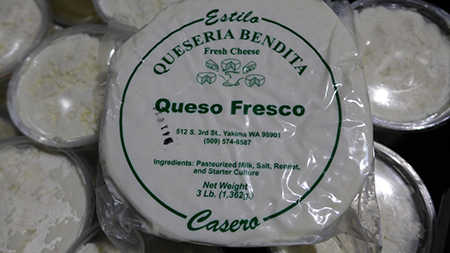
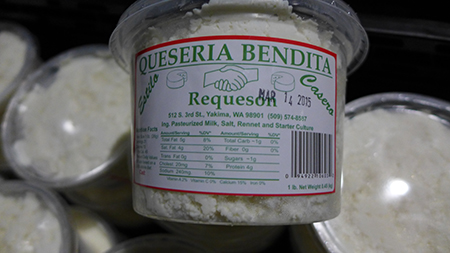
Queseria Bendita LLC of Yakima, Washington is recalling all lots of Panela, Queso Fresco, Requeson, Cotija fresh soft cheese products and Sour Cream to include ALL Best By Dates because of a potential to be contaminated with Listeria monocytogenes, an organism which can cause serious and sometimes fatal infections in young children, frail or elderly people, and others with weakened immune systems. Although healthy individuals may suffer only short-term symptoms such as high fever, severe headache, stiffness, nausea, abdominal pain and diarrhea, listeria infection can cause miscarriages and stillbirths among pregnant women.
Panela, Queso Fresco, Requeson, Cotija fresh soft cheese products and Sour Cream were distributed to Hispanic grocery stores in Washington and Oregon and the firm also sold products from its on-site store in Yakima, Washington.
The recalled products are packaged with clear plastic wrapper or plastic tub, and the best by dates are stamp coded next to a label. The products are refrigerated and have the shelf life of up to 90 days. The last date of distribution of recalled products is January 15, 2015.
The products being recalled are identified in the table below:
Product
package size
container type
UPC
Best By Date
Panela
1 lb.
plastic wrap
6 10074 99341 4
ALL
Queso Fresco
1 lb.
plastic wrap
0 94922 10602 5
ALL
Queso Fresco
3 lbs.
plastic wrap
None
ALL
Requeson
1 lb.
Tub
0 94922 10603 2
ALL
Sour Cream/Crema Agria
1 lb.
Tub
0 94922 10608 7
none
Cotija Cheese
1 lb.
plastic wrap
none
Up to date, there are a total of three (3) cases of Listeria monocytogenes infections linked to consumption of soft cheese produced by Queseria Bendita, including two hospitalizations and one death.
The recall was the result of the investigation and samples collection by the Food and Drug Administration. The company has currently agreed to cease the production and distribution of all products.
This recall is being made with the knowledge of the U.S. Food and Drug Administration.
Consumers and retailers are advised to remove recalled products off the store shelves and destroy. Consumers with questions can call the firm at 509-961-8949 between 8 am-4 pm PST.
Queseria Bendita Queso Fresco, 3lb.
Queseria Bendita Requeson, 1 lb.

1/26/15 Health News:Undisclosed Superbug sickened dozens in Virginia ♦ New cancer-fighting strategy ♦ BPA exposure during pregnancy causes oxidative stress in child

Undisclosed superbug sickened dozens at Virginia Mason.
Virginia Mason Medical Center officials in Seattle stated that they overhauled their cleaning protocol for medical scopes after an outbreak of drugresistant superbugs spread by contaminated specialized endoscopes infected at least 32 patients between 2012 and 2014. Authorities believe the bacterium was likely transferred from patient to patient after the devices were cleaned, but still harbored the germs.Continue Reading
New cancer-fighting strategy would harden cells to prevent metastasis
Existing cancer therapies are geared toward massacring tumor cells, but researchers propose a different strategy: subtly hardening cancer cells to prevent them from invading new areas of the body. They devised a way of screening compounds for the desired effect and have identified a compound that shows promise in fighting pancreatic cancer. Continue Reading
Scientists invent system to improve effectiveness of cancer surgery
With the goal of making it easier for surgeons to detect malignant tissue during surgery and hopefully reduce the rate of cancer recurrence, scientists have invented a new imaging system that causes tumors to “light up” when a hand-held laser is directed at them Continue Reading
BPA exposure during pregnancy causes oxidative stress in child, mother
Exposure to the endocrine-disrupting chemical bisphenol A (BPA) during pregnancy can cause oxidative damage that may put the baby at risk of developing diabetes or heart disease later in life, according to a new study. Continue Reading

New Zealand: More Black Olives Recalled

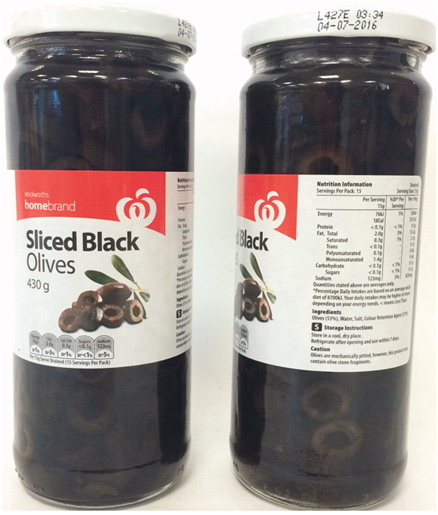
Recalled food products: Woolworths Homebrand Sliced Black Olives 430g
This product has been sold in Countdown, Fresh Choice and SuperValue supermarkets throughout New Zealand. Sliced Black Olives 430g glass jars as this product may contain glass.
Customers are asked to check the date mark located on the rim of the product lid. All products with the date mark listed above should not be consumed. Foods containing foreign matter may cause injury. If you have consumed this product and have any concerns about your health, please contact your doctor or seek medical advice.
Customers should return the product to their nearest Countdown, Fresh Choice or Super Value store for a full refund or phone 0800 40 40 40 with any queries. This recall does not affect any other Homebrand product.
Please note: This notification is an update to the earlier recall of Homebrand Sliced Black Olives 430g which has been extended to include all Best Before dates.


sl

Saturday, January 24, 2015

J.J. Fuds Chicken Tender Chunks Pet Food Recalled

J.J. Fuds is recalling a select lot and product of J.J. Fuds Chicken Tender Chunks Pet Food because it has the potential to be contaminated with Listeria monocytogenes, an organism which can cause serious and sometimes fatal infections in young children, frail or elderly people, and others with weakened immune systems. Although healthy individuals may suffer only short-term symptoms such as high fever, severe headache, stiffness, nausea, abdominal pain and diarrhea,
Listeria infection can cause miscarriages and stillbirths among pregnant women. Animals' ill with Listeria will display symptoms similar to the ones listed above for humans. People who have concerns about whether their pet has Listeria should contact their veterinarian.
The recalled product was distributed regionally in Minnesota, Wisconsin, Michigan, Indiana and Illinois to wholesale and retail customers. The product can be identified by the batch ID code (manufactured date) and UPC code printed on the back of the individual plastic bag or on the master case label. This product is a frozen raw poultry product (see Safe Handling Instructions on package) and has a shelf life of one year if kept frozen.
The recalled product is as follows:
J. J. Fuds Premium Natural Blends, Chicken Tender Chunks
All 5 lb. bags with:
Product UPC Number: 654592-345935
Manufacture/Lot Code Date: 5/5/14
The recalled product should not be sold or fed to pets. Pet owners who have the affected product at home should return to retailer for a refund and proper disposal.
For further information or questions regarding this recall, please contact us at jjfuds.com or by phone at 888-435-5873 Monday-Friday8AM-4PM CST.
JJ Fuds Inc Front Label / Front Label (PRNewsFoto/J.J. Fuds, Inc.)

Friday, January 23, 2015

Diaper compound may expand power of microscopes

Pour, mix, set, add water and voila: highly detailed images of the inside of cells. A study, partially funded by the National Institutes of Health, showed that a modified form of the superabsorbent chemical used in disposable diapers can expand brain structures to four and a half times their original size. The process called expansion microscopy will allow scientists to take super-resolution pictures of healthy and diseased tissue throughout the body using common microscopes.
“For centuries, a scientist’s ability to look at cells has been constrained by the power of the lenses they used to magnify them. We decided to try something different, and physically magnify the cells themselves,” said Edward Boyden, Ph.D., associate professor of biological engineering and brain and cognitive sciences at the Massachusetts Institute of Technology, Cambridge, and a leader of the study published in Science.
Dr. Boyden and his colleagues discovered that if they linked brain cell proteins to a mesh of sodium polyacrylate and then added water, the polyacrylate mesh swelled and greatly expanded the size of protein complexes while preserving their normal structural arrangement in the cell. This allowed the scientists to see previously hidden submicroscopic details of cell structures.
“Expansion microscopy is a potential game changer,” said Walter Koroshetz, M.D., acting director of NIH’s National Institute of Neurological Disorders and Stroke. “This is the kind of outside- the-box technical innovation that expands the capability of microscopes widely used in the scientific community to explore the fine structure of the nervous system in health and disease.”
To demonstrate the technique’s potential, the scientists took pictures of cell protein complexes before and after swelling. They also developed a special labeling molecule that allowed them to both visualize protein complexes and link them to the superabsorbent meshes.
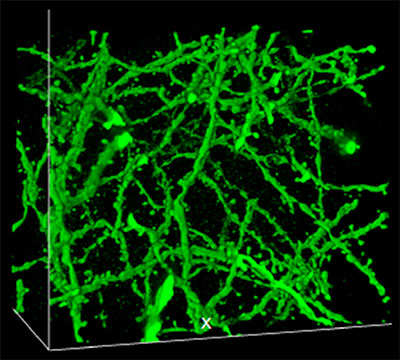
Image of diaper compound used to expand brain cells
Swollen brain cells - Scientists modified the superabsorbant diaper compound, polyacrylate, to magnify brain tissue. Courtesy of Boyden lab, MIT, Cambridge, MA.
They performed experiments on both rodent brain slices and cells grown in petri dishes. In each case, the scientists fixed cell proteins in place with formaldehyde and then gently stripped the cells of their fatty membranes before treating them with labeling molecules. Before treating with acrylate, the scientists took pictures of certain parts of the cells with a high powered microscope designed to capture fine protein complex details. Then they applied the acrylate, polymerized it to form a mesh, used enzymes to clear away unlinked proteins from the mesh and expanded the structures with water. After expansion, they took pictures of the same locations using a lower powered microscope.
Dr. Boyden’s team showed that expansion microscopy improved the second microscope’s ability to resolve details of the cells’ protein complexes. For instance, spaces between rows of skeletal microtubule filaments were easier to see. Expansion also helped the scientists see more clearly the two sides of synapses, the communication points between nerve cells.
Finally, the scientists showed that the overall three dimensional protein complexes within a certain brain cell circuit could be successfully enlarged.
“Our results show that we can scan large chunks of brain tissue with nanoscale precision. We think this can be applied to a variety of tissues and help answer a lot of different questions in science and medicine,” said Dr. Boyden.
In the future, Dr. Boyden and his team plan to test ways to combine the technique with other visualization methods and use it to study diseases in human brain tissue.