Showing posts with label Cyclospora. Show all posts

Sunday, October 18, 2015

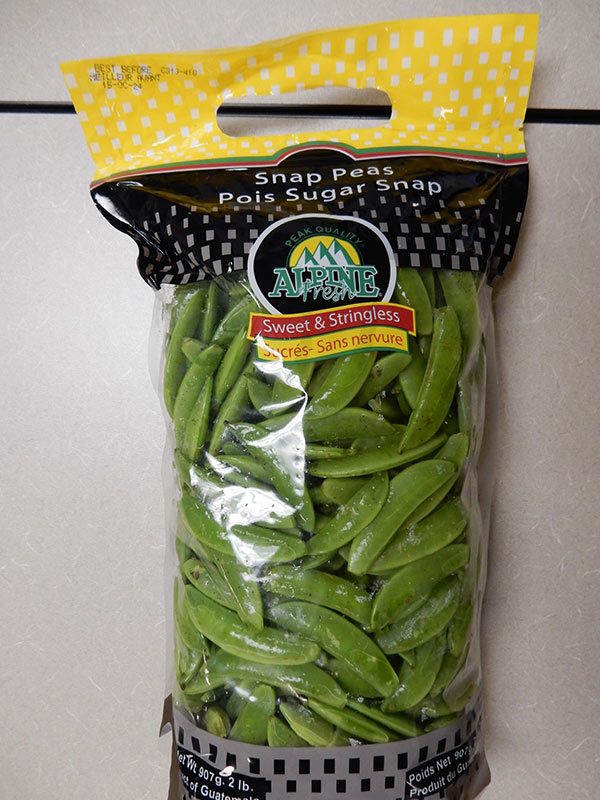
Canada: Costco recalls Snap Peas due to Cyclospora contamination.

Canada: Costco recalls Snap Peas due to  Cyclospora contamination.
Costco Wholesale Canada Inc. is voluntarily recalling Alpine Fresh brand Snap Peas from the marketplace due to possible Cyclospora contamination. Consumers should not consume the recalled product described below.
The following product has been sold from Costco locations across Ontario.
Recalled products
Brand Name
Common Name
Size
Code(s) on Product
UPC
Reason for Recall
Alpine Fresh
Snap Peas
907 g (2 lb)
All Best Before dates from
15-OC-01 to 15-OC-29 inclusively
8 15887 01072 7
Microbiological - Other - Cyclospora
What you should do
Check to see if you have recalled products in your home. Recalled products should be thrown out or returned to the store where they were purchased.
Food contaminated with Cyclospora may not look or smell spoiled. Washing fresh produce will not always eliminate Cyclospora. People infected with Cyclospora can experience a wide range of symptoms, including watery diarrhea, stomach cramps, and nausea. Some people do not get sick at all, while others suffer from a severe upset stomach. Few people get seriously ill.
More information
Alpine Fresh Inc.: 1-877-650-3481
For more information, consumers and industry can contact the CFIA by filling out the online feedback form.
  • Snap Peas - 907 g (2 lb)

Tuesday, August 11, 2015

Health News:83 cases of cyclospora infection reported in Canada ♦ Astronauts set to taste food grown in space ♦ Can music help people with epilepsy?

83 cases of cyclospora infection reported in Canada According to a public health notice issued Saturday, Aug. 8, 2015, the Public Health Agency of Canada is collaborating with provincial public health partners, the Canadian Food Inspection Agency, and Health Canada to investigate 83 cases of Cyclospora infection in Ontario, British Columbia, Alberta, and Quebec.
Astronauts set to taste food grown in space In a pioneering feat that will help astronauts on long-duration space missions like Mars, the crew members on board the International Space Station (ISS) are set to eat fresh food grown in the microgravity environment of space for the first time. Expedition 44 crew members, including Nasa astronaut Scott Kelly, are ready to sample the fruits of their labor after harvesting a crop
Can music help people with epilepsy? The brains of people with epilepsy appear to react to music differently from the brains of those who do not have the disorder, a finding that could lead to new therapies to prevent seizures.
One size does not fit all when it comes to marrow fat, While most of us worry about the fat cells building up on the fleshy parts of our bodies, scientists are paying serious attention to another kind of fat cell deep inside our bones, in the marrow. Now they've published new important clues about it, including a discovery that there are two types.
Important gaps found in evidence for best methods for cleaning hospital rooms to prevent healthcare-associated infections While a new study points to several promising cleaning tactics of “high-touch surfaces,” there’s a lack of evidence as to which is the most effective at reducing healthcare-associated infections

Monday, August 3, 2015

Health News: Viagra in alcohol latest food scare in China ♦ CDC: 358 Cyclospora cases in 26 states linked to cilantro ♦ Heating and cooling with light leads to ultrafast DNA diagnostics

Viagra in alcohol latest food scare in China Chinese police are investigating if two distillers added Viagra to their liquor in the country’s latest food-safety scare. The Liuzhou Food and Drug Administration said that it found the Guikun Alcohol Plant and the Deshun Alcohol Plant, both located in the southwest of China, were putting Sildenafil, more commonly known as Viagra, into three of their baijiu products.
CDC: 358 Cyclospora cases in 26 states linked to cilantro According to an update posted Friday, July 31, 2015, as of July 30, the U.S. Centers for Disease Control and Prevention (CDC) had been notified of 358 ill persons with confirmed Cyclospora infection from 26 states so far this year.
Parents inclined to misjudge child happiness based on personal feelings Parents' estimations of their children's happiness differ significantly from the child's own assessment of their feelings, according to a new study. Research showed parents of 10 and 11-year-olds consistently overestimated their child's happiness, while those with 15 and 16-year-olds were inclined to underestimate

Heating and cooling with light leads to ultrafast DNA diagnostics Researchers used LEDs and a thin film of gold to turbocharge the heating and cooling cycles of the PCR test so results are ready in minutes, not hours. The innovation greatly expands the clinical and research applications of a workhorse lab tool used in forensics, medical diagnostics and more.

Tuesday, July 7, 2015

Health News: 113 sick from cyclospora outbreak ♦ Killer sea snail a target for new drugs ♦ Discovery points to a new path toward a universal flu vaccine

Elastic gel to heal wounds A team of bioengineers has developed a new protein-based gel that, when exposed to light, mimics many of the properties of elastic tissue, such as skin and blood vessels. They now report on the new material's key properties, many of which can be finely tuned, and on the results of using the material in preclinical models of wound healing.
Discovery points to a new path toward a universal flu vaccine The conventional flu vaccine protects only against a few specific strains of flu. However, experiments show that by including modified antibodies within the vaccine it may be possible to elicit broad protection against many
113  sick in Texas cyclospora outbreak no food id'd yet A recent surge in reports of illnesses due to the parasite Cyclospora  has prompted the Texas Department of State Health Services to investigate the infections in hopes of determining a common source.
How dengue virus adapts as it travels, increasing chances for outbreaks A research group is the first to explain the mechanisms that the Dengue virus has developed to optimize its ability to cause outbreaks as it travels across the globe to new places and revisits old ones.

Killer sea snail a target for new drugs Pain treatment researchers have discovered thousands of new peptide toxins hidden deep within the venom of just one type of Queensland cone snail. Researchers hope the new molecules will be promising leads for new drugs to treat pain and cancer.

Friday, June 26, 2015

Health News: Health-department investigating cyclospora outbreak ♦ How neurons control muscle movement ♦ Whooping cough: New findings on pertussis pathogen

Health-department investigating cyclospora outbreak. The Austin and Travis County Health and Human Services Department announced June 23 that it is investigating a cyclospora outbreak in response to 15 - 7 - confirmed and 11 probable new cases of the intestinal illness.
Parkinson's disease may begin in the gut A major epidemiological registry-based study indicates that Parkinson's disease begins in the gastrointestinal tract. The study is the largest in the field so far.
How neurons control muscle movement How the brain controls movement in people with paralysis, related to their diagnosis of Lou Gehrig's disease, have found that groups of neurons work together, firing in complex rhythms to signal muscles about when and where to move
Whooping cough: New findings on pertussis pathogen The worldwide spreading of the whooping cough, also known as pertussis, has substantially increased since 2010. Researchers have investigated structure and function of an important membrane protein of the bacterium causing pertussis. They discovered that the protein structure differs from a previously postulated model.
New family of bio inspired antibiotic compounds developed The first results of a study of a new antibacterial compound based on natural peptides capable of selectively killing resistant pathogens have been released by scientists. The study has proved that these compounds are highly active against clinically relevant Gram-negative and Gram-positive bacteria. In vitro and in vivo tests have showed compounds’ low toxicity.

Friday, August 29, 2014

8/29/14 Health News: US Food Contain Ingredients Banned In Other Countries ♦ CYCLOSPORA LINKED TO CILANTRO ♦

80% of the Food in US Contain Ingredients Banned In Other Countries
In the book, authors Mira and Jason Calton provide a list of banned ingredients which they term "Banned Bad Boys" as well as the countries which have banned them. Among the items is Olestra - commonly used in low/no-fat snack foods and known to cause serious gastrointestinal issues - which has been banned in the United Kingdom and Canada.  Worse is brominated vegetable oil, a substance found in Mountain Dew and Fresca which has been banned in more than 100 countries. As the authors state, brominated vegetable oil "has been linked to basically every form of thyroid disease - from cancer to autoimmune diseases - known to man." Continue Reading
TEXAS CYCLOSPORA CASES LINKED TO MEXICAN CILANTRO
At least 126 Cyclospora-related illnesses in Texas reported this year have now been traced back to fresh cilantro imported from Mexico, according to the Texas Department of State Health Services. State and federal health officials revealed the source of the outbreak at the same time they announced that the outbreak was considered over. The case... Continue Reading
Protein-enriched aquaculture feed from sweet potato pushed
SWEET potato (Ipomoea batatas), locally known as kamote, is an important food crop. In some areas of the Philippines, it is a staple particularly among marginalized families in provinces, as they are easy to cultivate and relatively cost less than a kilo of rice.

One of the problems facing the aquaculture industry today is the high cost of fish feed. Nutritionists all over the world are constantly searching for the dietary protein sources of fish to maximize growth and increase production within the shortest possible time and at lowest Continue reading

Thursday, August 14, 2014

8/14/14 Health News: 160 CYCLOSPORA-CAUSED ILLNESSES IN TEXAS ♦ Hand sanitizer does not help in schools ♦ CALIFORNIA ANTIBIOTICS BILL CLOSER TO BECOMING LAW

AT LEAST 160 CYCLOSPORA-CAUSED ILLNESSES REPORTED IN TEXAS
The Texas Department of State Health Services (DSHS) is investigating an outbreak of at least 160 cases of Cyclosporiasis, an illness caused by the parasite Cyclospora that can cause prolonged watery diarrhea and other gastrointestinal symptoms. The department has identified at least 160 cases this year, including a surge of reported cases beginning in mid-June....Continue Reading
Hand sanitizer doesn't help in schools
School children get low marks when it comes to spreading germs, often sharing bugs with their classmates. So scientists wondered if putting hand sanitizers into elementary school classrooms would lead to fewer absences.continue reading
CALIFORNIA ANTIBIOTICS BILL CLOSER TO BECOMING LAW
On Monday, the California Assembly passed Senate Bill 835 to ban the use of antibiotics for growth promotion and require a veterinarian prescription for a livestock antibiotic. The Natural Resources Defense Council (NRDC) and other public interest groups such as the Consumers Union, Environmental Working Group and Sierra Club California opposed the measure because they say it...Continue Reading

Saturday, July 26, 2014

7/27/14 Health News: Chinese Food Safety Scandal ♦ Kale’s popularity leading to worldwide shortage ♦ CYCLOSPORA SURGE:IN 13 STATES ♦ EU Food Safety Regulators Turn “A Blind Eye”

Meat Plant Previously Passing USDA Audits Now Implicated in Chinese Food Safety Scandal
For Immediate Release Friday, July 25, 2014 Meat Plant Previously Passing USDA Audits Now Implicated in Chinese Food Safety Scandal Advocacy organization urges USDA to stop equivalency process for Chinese poultry imports Washington, D.C. – In light of the recent scandal in China involving Shanghai Husi Foods Company consumer advocacy organization Food & Water Watch has sent a … continue reading
Kale’s popularity leading to worldwide shortage
Yes, that’s right – one of the top global kale seed suppliers has run out of stock. Tony Hubbard, head of the Bejo Seeds company in Australia, said, “you could describe it as embarrassing to us, but it’s just one of those things that’s happened on a global basis… It’s caught us out well and truly, we put our hands up to that.”continue reading
CYCLOSPORA SURGE: 125 CASES IN 13 STATES
Federal officials from the U.S. Centers for Disease Control and Prevention (CDC) are now stepping in to assist health officials in 13 states in investigating a spike in cases of Cyclosporiasis, according to CIDRAP. Cyclosporiasis is an intestinal infection caused by the ingestion of food or water contaminated with the parasite Cyclospora. In total, 125... Continue Reading
GMO Contamination of the Food Chain. Devastating Health Impacts. EU Food Safety Regulators Turn “A Blind Eye”
“Corporations as the dominant institution shaped by capitalist patriarchy thrive on eco-apartheid. They thrive on the Cartesian legacy of dualism which puts nature against humans. It defines nature as female and passively subjugated. Corporatocentrism is thus also androcentric – a patriarchal construction. The false universalism of man as conqueror and owner of the Earth has led …continue reading

Monday, October 14, 2013

Olive Garden and Red Lobster Falsely Accused

As of September 20, 2013 the CDC had been notified of 643 ill persons with of Cyclospora infection from 25 states: Arkansas, California, Connecticut, Florida, Georgia, Illinois, Iowa, Kansas, Louisiana, Massachusetts, Michigan, Minnesota, Missouri, Nebraska, New Hampshire, New Jersey, New York (including New York City), Ohio, Pennsylvania, South Dakota, Tennessee, Texas, Virginia, Wisconsin, and Wyoming.
Most of the illness onset dates have ranged from mid-June through mid-July. Among 581 ill persons with available information, 45 (8%) have reported being hospitalized. No deaths have been reported.
Public health officials in Iowa and Nebraska performed investigations within their states and concluded that restaurant-associated cases of Cyclospora infection in their states were linked to a salad mix produced by Taylor Farms de Mexico. Olive Garden and Red Lobster were named by the FDA as two places where the contaminated salad was served.
On August 12, 2013, Taylor Farms de Mexico informed FDA that the company had voluntarily suspended production and shipment of any salad mix, leafy green, or salad mix components from its operations in Mexico to the United States.
Taylor Farms did 1800 tests trying to find Cyclospora. All Tests were negative. No Cyclospora was found. On August 25, 2013, Taylor Farms de Mexico, with FDA concurrence, resumed production and shipment of salad mix, leafy greens, and salad mix components to the United States. No announcement was made to correct the misinformation about Olive
Although the investigation of cases continued, available evidence suggests that not all of the cases of cyclosporiasis in the various states are directly related to each other.
However, unlike some other foodborne parasites, cyclospora doesn't become infectious for days or weeks this causes a real problem for investigators because most people do not remember what they ate that long ago. It is likely that we will never know what caused the outbreak.


Saturday, September 7, 2013

CDC: Cyclospora Investigation Hindered by Budget Deficiencies


Federal authorities are struggling to explain why 600 people in 22 states have fallen ill from a food borne parasite rarely seen in the United States. But some officials are ready to finger one culprit that has hindered their investigation: the sequester. The Centers for Disease Control and Prevention has had to slash $285 million at a time when food and health experts say disease detection needs more funding as these type of food outbreak cases become more complex and widespread.
Taylor Farms, which is the largest supplier of leafy greens in the U.S., said its operation has undergone more than 1,800 tests, and every single one of which has come back negative for the parasite. After voluntarily suspending operations for two weeks, the company has resumed operations and instituted regular testing for Cyclospora. 
 Meanwhile, CDC officials are circling around another possible explanation. “We’re coming to the conclusion that this may be two separate outbreaks,” said Dr. Robert Tauxe, deputy director of the CDC’s Division of Foodborne, Waterborne and Environmental Diseases. “It’s very difficult to come up with any explanation that connects the two.” Significantly hindering the CDC is that it does not have the technology it needs to conduct the “genetic fingerprinting” that would tell investigators which illnesses are linked to a common source, Tauxe said.

Tuesday, August 27, 2013

CDC: New Cyclospora Infections Not Linked to Taylor Farms


Map for August 26, 2013

Public health investigators have interviewed all the people with Cyclosporiasis in Texas about their exposures during the 2 weeks before they became ill. These interviews have covered what food they ate and where they ate and purchased their food. On the basis of these interviews, investigators have identified a group (cluster) of ill people who reported eating at the same restaurant. A detailed investigation of this cluster is ongoing. This investigation includes listing the different ingredients in the food that was eaten. People who did not get sick but who also ate meals at the same restaurant on the same days as ill people are also being interviewed. The preliminary analysis of results from this ongoing cluster investigation in Texas does not show a connection to salad mix, leafy greens, and salad mix components produced at Taylor Farms de Mexico.
From August 11-19, 2013, FDA with the cooperation of Taylor Farms de Mexico and Mexican government authorities conducted a thorough environmental assessment at the firm’s processing facility. The team also assessed five farms identified through traceback information from the outbreak investigation. The team found that conditions and practices at these facilities at the time of the assessment were in accordance with known food safety protocols. On August 25, 2013, Taylor Farms de Mexico, with FDA concurrence, resumed production and shipment of salad mix, leafy greens, and salad mix components to the United States.
The findings in Texas differ from those from earlier investigations in Iowa and Nebraska. In those states investigators linked cyclosporiasis cases acquired after eating in one of multiple restaurants to eating a bagged salad mix from Taylor Farms de Mexico. It is not unusual to recognize outbreaks that happen in the same season but are due to different foods. Not all cases during the same time of year are necessarily caused by the same exposure.
For example, during a several-month period in 1997, there were three separate and unrelated outbreaks of cyclosporiasis caused by different fresh produce items from various sources. Strong evidence from epidemiologic investigations led to the recognition that the outbreaks were separate and unrelated. Although the investigation of cases in 2013 is ongoing, available evidence suggests that not all of the cases of cyclosporiasis in the various states are directly related to each other. CDC continues to work with state and local partners and FDA to investigate clusters of illness, food exposures, and sources of food items.

No laboratory tests are available yet that can distinguish different strains of the parasite Cyclospora cayetanensis. CDC and other institutions are working on developing new molecular tools that could distinguish one strain from another. These tools would help public health investigators more quickly determine whether cases of Cyclospora infection are linked. These tools could also be useful for linking a possible source of infection to illnesses in people.
As of August 23, 2013 (5pm EDT), a total of 610 ill persons with Cyclospora infection have been reported from 22 states. Since the last update, 1 additional ill person was reported.
Ill persons range in age from less than one year to 92 years, with a median age of 51 years. 55 percent of ill persons are female. Among 581 ill persons for whom information is available, 43 have reported being hospitalized. No deaths have been reported.
Illnesses that occurred after July 17, 2013, might not yet have been reported because of the time it takes between when a person becomes ill and when the illness is reported. This could take up to 5 to 6 weeks.

Epi Line Graph for August 26, 2013


Saturday, August 24, 2013

630 Sick from 20 States from Cyclospora- Why???

So far the CDC reports a total of 609 cases of Cyclospora infection have been reported from 22 states and New York City. The number of cases identified in each area is as follows: Texas (257), Iowa (156), Nebraska (86), Florida (31), Wisconsin (16), Illinois (11), Arkansas (10), New York City (7), Georgia (5), Missouri (5), Kansas (4), Louisiana (3), New Jersey (3), Connecticut (2), Minnesota (2), New York (2), Ohio (2), Virginia (2), California (1), New Hampshire (1), South Dakota (1), Tennessee (1), and Wyoming (1).
Although the CDC reports the Texas total as 257, Texas reports that a total of 278 cases of Cyclospora infection have been reported in Texas in 2013 with the vast majority having onsets in June and July. Most Texas cases are reported from the Dallas/Fort Worth area. DSHS is investigating the cases to identify possible common exposures and to determine whether they are linked to an outbreak in other states.
No deaths have been reported but 40 have reported being hospitalized.
Nearly two months have passed since state and federal health authorities first became aware on June 28 of two related cases of Cyclospora infection in Iowa residents. Considering Iowa typically sees one or two such cases a year, the small irregularity immediately caught the attention of state health officials.
Within weeks, authorities had identified several hundred cases across a dozen states, with the bulk in Iowa, Nebraska and Texas. On Aug. 1, investigators in Iowa and Nebraska concluded that the majority of cases in those two states were connected to lettuce grown by Taylor Farms de Mexico and in salads served at Olive Gardens and Red Lobsters.
But, as time goes on, the investigations in Texas and the remaining states have still not identified an outbreak source. The U.S. Food and Drug Administration has a team of investigators at Taylor Farms in Mexico performing environmental assessments of the facilities and traceback investigations to determine where else – if anywhere – contaminated lettuce might have been sold, according to FDA spokesman David Steigman.
A number of cases in Texas are not easily connected to Darden Restaurants and Taylor Farms, said Dave Theno, Ph.D., CEO of Gray Dog Partners, a technical food safety consulting agency. But he said that the evidence remains “pretty compelling” that most of the illnesses are part of one event until an FDA investigation proves otherwise.
Because fresh produce has a relatively short shelf-life, distribution channels typically run up north from Mexico, not east to west. Based on the geography of the outbreak, it would make sense to assume that contaminated produce was sent north through Texas and ended up in Iowa and Nebraska.
Theno said the most important question for investigators in Mexico to answer is whether Taylor Farms has crop contamination problems that moved Cyclospora through their facilities or whether it’s an area-wide contamination issue – possibly from a water source – that might mean nearby crops were also affected.
A number of factors complicate the investigation as a whole.
First, a representative from Darden Restaurants told NBC News that they do not use Taylor Farms salad in their Texas restaurants. It is not clear if the restaurant sources Taylor Farms salad in any states besides Iowa and Nebraska.
A Florida woman who tested positive for Cyclospora in July ate at Olive Garden several days before getting ill. Florida has 31 confirmed illnesses, the fourth-highest number of the states involved.
Further complicating the matter, not even all of the cases in Iowa and Nebraska have a clear connection to Darden. Roughly 80 percent of Iowa cases and 75 percent of Nebraska cases appear connected to Darden, leaving the remaining 20 to 25 percent more of a mystery, according to Iowa state epidemiologist Dr. Patricia Quinlisk.
To complicate the investigation even more, the salad came into the U.S. pre-mixed with Taylor lettuce and other ingredients.
Perhaps the biggest issue distancing the Texas illnesses is that they began, on average, a week later than those in Iowa and Nebraska.
In Texas, where illnesses appear to have less of a connection  Taylor, patients are being interviewed and re-interviewed about all the places they may have dined.
The biggest roadblock, however, has been the relatively long incubation period of Cyclospora parasites. Patients may not experience symptoms such as diarrhea and nausea for several days – or even weeks – after exposure.
“It’s difficult to explain to people why it’s taking so long,” Mann said. “By the time the cases are finally reported to the CDC, several weeks have gone by. When an epidemiologist finally interviews patients, they might not remember eating the food that got them sick.”
Some cases, Quinlisk said, may be isolated Cyclospora illnesses that have gotten swept up in the outbreak investigation. A few hundred cases get reported in the U.S. each year on average.
Quinlisk described the investigation into the Iowa and Nebraska illnesses as “very detailed.”
The classic food history interview involves an 18-page questionnaire that takes more than an hour for each patient to complete. Patients may then receive additional calls from the environmental health team looking for more information.
The state health departments in those states performed targeted cluster investigations using case-control studies. In short, they interviewed patients who got sick, as well as fellow diners who didn’t get sick, to tease out any statistical differences in their meals. They even retrieved credit-card records from patients to coordinate dates of exposure.
Another issue that makes these investigations tricky is that not everyone who eats the contaminated food ends up sick. The parasite is not evenly dispersed across all the salad, and so some diners may ingest a large number of organisms, while others may eat from the same salad bowl and ingest only a few or none at all.
The general rule of thumb, Quinlisk said, is to expect about 40 percent of those who ate a contaminated food to actually end up with symptoms.
One issue this outbreak raises is the need for more coordination between state health departments during large, interstate outbreaks, said Craig Hedberg, Ph.D., environmental health professor at the University of Minnesota.
Hedberg compared the national jurisdiction of food regulation from FDA to the patchwork of state health departments that make up the majority of environmental health investigation resources.
“Our public-health system is really based on individual state authorities, and we don’t have a national framework for conducting outbreak investigations in parallel with the kind of regulation we have with respect to the food itself,” Hedberg said. “The CDC attempts to help guide those investigations, but because of limited resources and different priorities across different states, that coordination doesn’t always occur as seamlessly as we’d like to see it.”
Theno said he felt this current outbreak demonstrated the need for better cooperation and communication between federal investigators at FDA and the companies potentially involved in the outbreak.
“I think we need to find a way for companies and regulatory agencies to work much more closely together on these outbreaks,” Theno said. “It takes a long time for the agency to reach back into the supply chain. The faster we can get to the source of an outbreak, the sooner we can stop it and the better we can prevent it in the future.”
(Cyclospora is a single-celled food- or waterborne parasite that may cause diarrhea, nausea and vomiting. In the U.S., it is often associated with imported fresh produce. In 1996, at least 1,465 people were infected with Cyclospora in an outbreak linked to raspberries grown in Guatemala. Another 804 people were sickened by Guatemalan raspberries the next year. In 2005, 592 contracted Cyclospora infections after eating basil imported from Peru.)

Source Food Safety News
Tuesday, August 13, 2013

The Cyclospora Outbreak Continues To Grow

According To the Centers for Disease Control and Prevention (CDC) in Atlanta there are 21 more cases of Cyclospora Infection. The count for this week is 535 and now it has spread to 18 states. Thirty two have been hospitalized.

On Aug. 2  FDA had informed CDC that the traceback investigation had concluded he prepackaged salad mix blamed by Iowa and Nebraska health officials for the outbreak in those states had come from Taylor Farms in Mexico.  But it took a full week until Aug. 9, that those shipments were stopped by the producer.
“This voluntary action goes beyond the salad mix and includes iceberg lettuce, romaine lettuce, green leaf lettuce, red cabbage, green cabbage and carrots.”
The current distribution of the outbreak cases is as follows: Texas (215), Iowa (153), Nebraska (86), Florida (27), Wisconsin (10), Illinois (9), Arkansas (5), Georgia (5), Missouri (4), Kansas (3), Louisiana (3), New Jersey (2), Ohio (2), Virginia (2), Connecticut (1), Minnesota (1), New Hampshire (1), and New York (6).
Iowa and Nebraska have concluded the source of the Cyclospora outbreak is those states is a salad mix produced from Mexican grown produce, CDC says it is continuing to work with the other states to determine if that product is responsible for the entire outbreak.
CDC continues to say it is not clear whether all 535 cases are part of the same outbreak or whether it is multiple outbreaks.
Taylor Farms has said its Mexico facility has an extensive water testing program to try to find the source of the problem. Taylor Farms will use processing facilities in California, Colorado, Texas, Tennessee, Florida, and Maryland will take over the salad mix production.
Even though the implicated salad mix has been out of the supply chain since late June, the illness count continues to increase on a daily basis as sick people seek treatment and are diagnosed. The parasite infections cause symptoms that last up to three months in healthy people and up to a year in elderly or immune compromised people who do not seek treatment.
Major purchasers from Taylor Farms in Mexico included the Olive Garden and Red Lobster restaurant chains. Other smaller unnamed restaurants and grocery stores were involved
It is imperative that people wash their produce whether it is bagged or not sense  it is not clear if the outbreak was totally caused by taylor farms products. Actually this is a good practice anytime.