Showing posts with label Shigella. Show all posts

Wednesday, October 21, 2015

Health News:Shigella outbreak sickens 30: San Jose seafood restaurant shutdown ♦ Are cars nanotube factories on wheels ♦ Feds seize frozen crab products for potential listeria contamination

Shigella outbreak sickens 30: San Jose seafood restaurant shutdown  The Mariscos San Juan at 205 N. 4th Street in downtown San Jose was closed Oct. 18 after the Santa Clara County Public Health Department connected the seafood restaurant with an outbreak of Shigella that has sickened at least 30 people.
Feds seize frozen crab products for potential listeria contamination On Tuesday, Oct. 20, 2015, federal government officials seized approximately 5,000 cases of frozen, processed crab products manufactured by Rome Packing Company Inc. of East Providence, RI, because the crab meat is suspected to be contaminated with harmful bacteria. in a complaint unsealed today, the government alleged that Rome Packing,

Are cars nanotube factories on wheels? Scientists detect the presence of carbon nanotubes in cells extracted from the airways of Parisian children with asthma. Their results suggest nanotubes may be common components of airborne pollution and vehicles may be a source.
Case report finds 'popcorn lung' in patient using e-cigarettes A case report has been presented of acute inhalation lung injury related to the use of e-cigarettes and a flavored e-cigarette liquid containing diacetyl.
Nanotechnology inspires next-generation dental materials Have a cavity? Ask your dentist about filling it with a mixture of nanoparticles including silica and zirconia. These white fillings resemble teeth better than their metal alternatives and are less likely to come loose or fracture teeth. This is just the beginning argue scientists in a review of 'nanodentistry.' Next-generation dental materials incorporating nanotechnology aim to help teeth self-heal, rebuild enamel, and protect against bacterial infections.


Tuesday, September 29, 2015

Health News:Common Chemicals linked to rising diabetes, obesity risk ♦ 150 Shigella cases confirmed in Kansas City ♦ Warning about THC-infused capsules

Shigella on-the rise 150 cases confirmed in Kansas City. The Kansas City Health Department along with other medical professionals urged residents to use recommended prevention methods including washing hands with soap and water and using paper towels to dry them, September 28 after the number of reported Shigella cases in the city rose to 150
22 Salmonella cases reported in North Dakota Officials with the North Dakota Department of Health announced Monday, Sept. 28, 2015, that they are investigating an increase in reported cases of salmonellosis, an infection caused by Salmonella bacteria. The illness can cause diarrhea, abdominal cramping, nausea, vomiting and fever. Since July 20, 22 cases of Salmonella Thompson have been reported in North Dakota. Because the infections...
Warning about THC-infused capsules A food safety advisory for a THC-infused product manufactured in Aspen, CO, was announced this past Friday by Denver’s Department of Environmental Health. THC, or tetrahydrocannabinol, is the psychoactive ingredient in cannabis (marijuana). The department issued the warning on Friday, Sept. 25, 2015, for RX Green’s Autopilots capsules. Consumers who have purchased Rx Green’s Autopilots Omega 3...
Tiny mitochondria play outsized role in human evolution and disease Mitochondria are not only the power plants of our cells; these tiny structures also play a central role in our physiology. By enabling flexible responses to new environments, mitochondria have helped humans adapt and evolve.
Chemical exposure linked to rising diabetes, obesity risk Emerging evidence ties endocrine-disrupting chemical exposure to two of the biggest public health threats facing society -- diabetes and obesity. EDCs contribute to health problems by mimicking, blocking or otherwise interfering with the body's natural hormones. By hijacking the body's chemical messengers, EDCs can alter the way cells develop and grow. Known EDCs include bisphenol A (BPA) found in food can linings and cash register receipts, phthalates found in plastics and cosmetics, flame retardants and pesticides. The chemicals are so common that nearly every person on Earth has been exposed to one or more

Saturday, April 4, 2015

Health News :Blue bell creameries suspends operations at Oklahoma plant ♦ Food service permit suspended at arizona winery ♦ Shigella infections becoming resistant to antibiotic

Blue bell creameries suspends operations at Oklahoma plant following listeria outbreak After Listeria in ice cream from Blue Bell Creameries sickened five adults in Kansas, the company announced Friday that it is voluntarily suspending operations at its manufacturing plant in Broken Arrow, Oklahoma.
Food service permit suspended at arizona winery The Pinal County Public Health Services District has temporarily suspended the food establishment permit of the Windmill Winery in Florence, AZ, after a wedding at the facility on March 19 was linked to a Salmonella outbreak.
CDC: Shigella  infections becoming resistant to recommended antibiotic Research conducted by the U.S. Centers for Disease Control and Prevention suggests a greater proportion of Shigella infections in the United States are now resistant to a very important antibiotic. Shigella causes an estimated 500,000 cases of diarrhea in the United States annually ..
DNA can't explain all inherited biological traits, research shows  Characteristics passed between generations are not decided solely by DNA, but can be brought about by other material in cells, new research shows. Scientists studied proteins found in cells, known as histones, which are not part of the genetic code, but act as spools around which DNA is wound. Histones are known to control whether or not genes are switched on
'Open' stem cell chromosomes reveal new possibilities for diabetes Cells of the intestine, liver and pancreas are difficult to produce from stem cells. Scientists have discovered that chromosomes in laboratory stem cells open slowly over time, in the same sequence that occurs during embryonic development. It isn't until certain chromosomal regions have acquired the 'open' state that they are able to respond and become liver or pancreatic cells.

Tuesday, July 1, 2014

Antibiotic Resistance in Foodborne Germs is an Ongoing Threat

Antibiotic resistance in foodborne germs, an ongoing public health threat, showed both positive and troubling trends, according to data tracked by the Centers for Disease Control and Prevention in 2012. Each year, antibiotic-resistant infections from foodborne germs cause an estimated 430,000 illnesses in the United States. Multi-drug resistant Salmonella, from food and other sources, causes about 100,000 illnesses in the United States each year.
The most recent data showed that multi-drug resistant Salmonella decreased during the past 10 years and resistance to two important groups of drugs – cephalosporins and fluoroquinolones – remained low in 2012. However, in Salmonella typhi, the germ that causes typhoid fever, resistance to quinolone drugs increased to 68 percent in 2012, raising concerns that one of the common treatments for typhoid fever may not work in many cases.
About 1 in 5 Salmonella Heidelberg infections was resistant to ceftriaxone, a cephalapsorin drug. This is the same Salmonella serotype that has been linked to recent outbreaks associated with poultry. Ceftriaxone resistance is a problem because it makes severe Salmonella infections harder to treat, especially in children.
The data are part of the latest report of the National Antimicrobial Resistance Monitoring System (NARMS), a tri-agency surveillance system that has tracked antibiotic resistance in humans (CDC), retail meats (Food and Drug Administration), and food animals (U.S. Department of Agriculture) since 1996.  The report from CDC NARMS compares resistance levels in human samples in 2012 to a baseline period of 2003-2007.
“Our latest data show some progress in reducing resistance among some germs that make people sick but unfortunately we’re also seeing greater resistance in some pathogens, like certain types of Salmonella,” said Robert Tauxe, M.D., M.P.H, deputy director of CDC’s Division of Foodborne, Waterborne, and Environmental Diseases. “Infections with antibiotic-resistant germs are often more severe. These data will help doctors prescribe treatments that work and to help CDC and our public health partners identify and stop outbreaks caused by resistant germs faster and protect people’s health.”
Among the other findings in the 2012 report:
  • Campylobacter resistance to ciprofloxacin remained at 25 percent, despite FDA’s 2005 withdrawal of its approval for the use of enrofloxacin in poultry. Ciprofloxacin and enrofloxacin are both in the fluoroquinolone class of drugs.
  • Shigella resistance to ciprofloxacin (2 percent) and azithromycin (4 percent) is growing. However, no Shigella strains were resistant to both drugs.
  • Although fluoroquinolone resistance remained low in 2012, Salmonella enteritidis – the most common Salmonella type – accounted for 50 percent of infections resistant to the fluoroquinolone drug nalidixic acid, which is used in laboratory testing for resistance. Resistance to nalidixic acid relates to decreased susceptibility to ciprofloxacin, a widely used fluoroquinolone drug. Other work shows that many of the nalidixic acid resistant Salmonella enteritidis infections are acquired during travel abroad.
The report introduces a new method for interpreting Campylobacter data and includes links to online interactive graphs where users can choose an organism and an antibiotic and see the “bug-drug” trends from year-to-year in NARMS.
CDC NARMS monitors antibiotic resistance among clinical isolates of six types of common foodborne germs reported from all 50 states. In 2012, NARMS tested over 5,000 isolates for antibiotic resistance. By comparing results in 2012 with the baseline period of 2003-2007, NARMS provides important information on whether foodborne germs are gaining or losing resistance.

Saturday, May 24, 2014

Prevent Recreational Water Illness and Injury

Photo: Young girls playing in pool

Having fun while you swim this summer means knowing how to prevent recreational water illnesses (RWIs) and injuries. Learn how to stay healthy and safe while enjoying the water!
Swimming is one of the most popular sports activities in the United States1. Although swimming is a physical activity that offers many health benefits, pools and other recreational water venues are also places where germs can be spread and injuries can happen.

Prevent Illnesses

Recreational water illnesses (RWIs) are caused by germs spread by swallowing, breathing in mists or aerosols of, or having contact with contaminated water in swimming pools, hot tubs/spas, interactive fountains, lakes, rivers, or oceans.
Contrary to popular belief, chlorine and other disinfectants do not kill germs instantly. While most germs are killed within minutes, Crypto (short for Cryptosporidium) can live for days. Before they are killed, these germs can cause RWIs, such as gastrointestinal, skin, ear, respiratory, eye, neurologic, and wound infections. The most commonly reported RWI is diarrhea caused by germs such as Crypto, Giardia, Shigella, norovirus and E. coli O157:H7. Swallowing just a mouthful of water that contains these germs can make you sick.
We all share the water we swim in, and we each need to do our part to keep ourselves, our families, and our friends healthy. To help protect yourself and loved ones from germs, here are a few simple and effective steps all swimmers can take each time we swim:
Keep the poop, germs, and pee out of the water.
  • Don't swim when you have diarrhea.
  • Shower with soap before you start swimming.
    • Take a rinse shower before you get back into the water.
  • Take bathroom breaks every 60 minutes.
  • Wash your hands after using the toilet or changing diapers.
Check the free chlorine level and pH before getting into the water.
  • Pools: Proper chlorine (1–3 mg/L or parts per million [ppm]) and pH (7.2–7.8) levels maximize germ-killing power.
  • Hot tubs/spas: Proper disinfectant level (chlorine [2–4 parts per million or ppm]) or bromine [4–6 ppm]) and pH (7.2–7.8) maximize germ-killing power.
  • Most superstores, hardware stores, and pool-supply stores sell pool test strips.
    • Free pool test strips: Go to the Water Quality & Health Council (WQHC)'s Healthy Pools page to order and receive free test strips. (Please note that any questions regarding your order or the availability of test strips should be addressed to the WQHC,
    • Don't swallow the water you swim in.
Parents of young children should take a few extra steps:
  • Take children on bathroom breaks every 60 minutes or check diapers every 30–60 minutes.
    • Change diapers in the bathroom or diaper-changing area and not at poolside where germs can rinse into the water.
Visit CDC's Healthy Swimming website for more information. A variety of materials for the public, including infographics, brochures, posters, videos, podcasts, and fact sheets are available in the Health Promotion Materials section.

Prevent Drowning

Drowning is the leading cause of injury death among children 1–4 years old. Every day, 10 people die from drowning, and 2 of those 10 are children under the age of 15 years. Of drowning victims who survive and are treated in emergency rooms, more than half are hospitalized or transferred for further care. These individuals often experience brain damage, which can cause memory problems, learning disabilities, or permanent loss of basic functioning (or permanent vegetative state).
Keep swimmers safe in the water.
  • Make sure everyone knows how to swim.
  • Use life jackets appropriately.
  • Provide continuous, attentive supervision close to swimmers.
  • Know CPR (for older children and adults).
Prevent access to water when pool is not in use.
  • Install and maintain barriers like 4-sided fencing and weight-bearing pool covers.
  • Use locks/alarms for windows and doors.
Visit the Water-Related Injuries webpage for more information.

Prevent Pool Chemical Injuries

Pool chemicals are added to the water to kill germs and maximize disinfection. However, the same pool chemicals can also injure us if they're not handled and stored safely. Preventable injuries from pool chemicals led to nearly 5,000 emergency room visits in 2012. Nearly half of these preventable injuries were in children and teenagers and more than a third of these preventable injuries occurred at a home rather than a community pool.
Residential pool owners and public pool operators can follow these simple and effective steps to prevent pool chemical injuries:
  • Read and follow directions on product labels.
  • Wear appropriate safety equipment, such as goggles and masks, as directed, when handling pool chemicals.
  • Secure pool chemicals to protect people and animals.
    • Keep young children away when handling chemicals.
  • NEVER mix different pool chemicals with each other, especially chlorine products with acid.
  • Pre-dissolve pool chemicals ONLY when directed by product label.
    • Add pool chemical to water, NEVER water to any pool chemical.
Visit the Pool Chemical Safety page for more information, including free posters and a video on pool chemical safety.
Remember: Think Healthy. Swim Healthy. Be Healthy!

Wednesday, July 10, 2013

I6 People Hospitalized After Swimming in Lake

Rhode Island closed Spring Lake after 92 people were sickened with Shigella bacteria, I6 of those

were hospitalized. Mostly children.were infected

Some Shigella is drug resistant. It caused diarrhea and is a major cause of children dying in underdeveloped countries with 90,000 deaths a year.It attackes the cells in the small intestine. There is no vaccine for Shigella.
Health Director Michael Fine advises anyone who swam in Spring Lake on the Fourth of July to consider seeking medical attention if they have gastrointestinal symptoms. There are no severe cases in this outbreak so far. Spring Lake is expected to reopen today as tests show that the Shigella is gone.
Shigella is typically spread by contact with human feces. Many are caused by poor hand washing. A study showed that many Americans don’t use soap to wash their hands. Few wash their hands vigorously for the recommended 21 seconds.
A single ill child, possibility wearing a leaky diaper, might have spread the bacteria to all the others. Both food and water was tested for the bacteria before the lake was pinpointed as the source.

Some tips for preventing the spread of shigellosis:

  • Wash hands with soap carefully and frequently, especially after going to the bathroom, after changing diapers, and before preparing foods or beverages.
  • Dispose of soiled diapers properly
  • Disinfect diaper changing areas after using them.
  • Keep children with diarrhea out of child care settings.
  • Supervise handwashing of toddlers and small children after they use the toilet.
  • Do not prepare food for others while ill with diarrhea
  • Avoid swallowing water from ponds, lakes, or untreated pools. (See more information about this.)

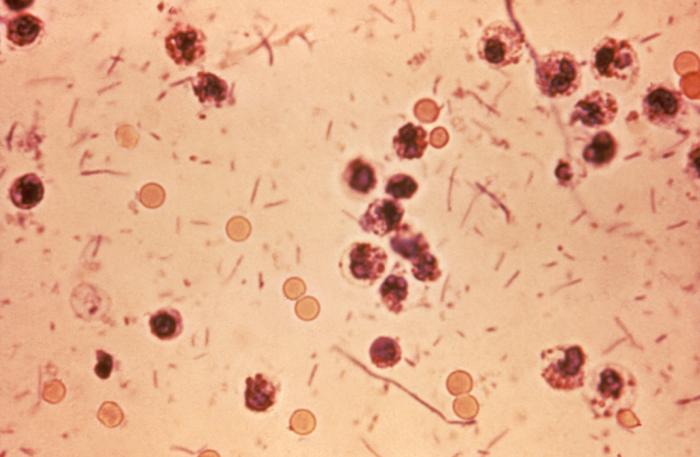
    Picture of Shigella in a stool sample


File:Shigella stool.jpg

Source Google, CDC, Food Safety News