Showing posts with label pancreatic cancer. Show all posts

Friday, January 8, 2016

Cancer Research: Scientists test new strategy that could help fight ovarian cancer ♦ Most men not getting prostate cancer screening ♦ Cancer death rate continues steady drop

Radiation an important addition to treatment for pancreatic cancer surgery candidates Radiation therapy was associated with a lower risk of cancer recurrence in pancreatic cancer surgery patients, making it, like chemotherapy, an important addition to treatment, new research found. Whether radiotherapy helps patients after pancreatic cancer surgery has been a long-standing question, and the findings suggest that it does.
Cancer death rate continues steady drop Steady reductions in smoking combined with advances in cancer prevention, early detection, and treatment have resulted in a 23 percent drop in the cancer death rate since its peak in 1991
Scientists test new strategy that could help fight ovarian cancer A promising novel method to treat gynecologic tumors has been discovered by researchers. The approach focuses on a protein called p53, which is commonly mutated in women who have high-grade serous ovarian cancer, the deadliest form of reproductive cancer. In many women with the disease, the cancer is very advanced by the time it is diagnosed and is therefore difficult to treat.
Most men not getting prostate cancer screening, treatment information they need Men and their health providers are not having important discussions when it comes to prostate cancer screening and treatment,

Sunday, December 20, 2015

Cancer Research:'Smart fat cells' cross blood-brain barrier to catch early brain tumors ♦ Magnesium intake may be beneficial in preventing pancreatic cancer

'Smart fat cells' cross blood-brain barrier to catch early brain tumors An MRI contrast agent that can pass through the blood-brain barrier will allow doctors to detect deadly brain tumors called gliomas earlier, say researchers. This ability opens the door to make this fatal cancer treatable.
Multiple-dose, targeted radiation more effective for treating pituitary tumors Multiple small doses of highly focused radiation therapy is safer and more effective than a single larger dose of radiation at destroying pituitary gland tumors.
Immunotherapy breakthrough now approved as standard of care for advanced melanoma A first-of-its-kind (anti-PD-1) immunotherapy was recently approved by the U.S. Food & Drug Administration as first-line treatment for metastatic melanoma—allowing greater access to this therapy for patients without having to previously receive other prior treatments.
Magnesium intake may be beneficial in preventing pancreatic cancer Researchers have found that magnesium intake may be beneficial in preventing pancreatic cancer. Using information from the VITamins and Lifestyle study, the study analyzed data on more than 66,000 men and women, between the ages of 50 and 76, looking at the direct association between magnesium and pancreatic cancer.

Friday, November 20, 2015

Cancer Research:Working up a sweat may protect men from lethal prostate cancer ♦ Technique to more effectively diagnose, treat cancer developed

Technique to more effectively diagnose, treat cancer developed A method to better trace changes in cancers and treatment of the prostate and lung without the limitations associated with radiation has been developed.
Socioeconomic factors associated with undergoing surgery for early-stage pancreatic cancer While socioeconomic factors such as race, ethnicity, marital status, insurance status, and geographic location are associated with whether patients with localized pancreatic cancer undergo resection (surgical removal of the tumor), only geographic location is associated with survival in these patients,
Working up a sweat may protect men from lethal prostate cancer A study that tracked tens of thousands of midlife and older men for more than 20 years has found that vigorous exercise and other healthy lifestyle habits may cut their chances of developing a lethal type of prostate cancer by up to 68 percent.
Global task force tackles problem of untreatable cancers and disease relapse: Non-toxic chemicals in plants and foods may be key Many cancer therapies are highly toxic, and even when they appear to work, a significant percentage of patients will experience a relapse after only a few months.  Typically these relapses result from small subpopulations of mutated cells which are resistant to therapy, and doctors who try to address this problem with combinations of therapies find that therapeutic toxicity typically limits their ability to stop most cancers

Friday, November 6, 2015

Health Research: Some 3-D printed objects are toxic ♦ Bursts of high-intensity exercise could help diabetes patients manage low blood sugar levels

Only one in five U.S. pancreatic cancer patients get this key blood test at diagnosis Only one in five U.S. pancreatic cancer patients receive a widely available, inexpensive blood test at diagnosis that can help predict whether they are likely to have a better or worse outcome than average and guide treatment accordingly.
Bursts of high-intensity exercise could help diabetes patients manage low blood sugar levels People with type-1 diabetes could regain their ability to tell when blood sugar levels are low by regularly doing short bursts of high-intensity exercise, according to a preliminary study. The findings could lead to a non-drug based treatment for a potentially life-threatening condition.
Some 3-D printed objects are toxic Parts produced by some commercial 3D printers are toxic to certain fish embryos, new research shows. These results have raised questions about how to dispose of parts and waste materials from 3D printers.

Insulin sensitivity: One night of poor sleep could equal six months on a high-fat diet New research finds that one night of sleep deprivation and six months on a high-fat diet could both impair insulin sensitivity to a similar degree, demonstrating the importance of a good night's sleep on health. This study used a canine model to examine whether sleep deprivation and a high-fat diet affect insulin sensitivity in similar ways.

Thursday, October 29, 2015

:3-D pancreatic cancer may help predict clinical responses, ♦ New clues for blocking cancer gene ♦ Inherited gene increased risk of childhood cancer

Genetic testing could identify men at a 10-fold increased risk of testicular cancer A new study of more than 25,000 men has uncovered four new genetic variants associated with increased risk of testicular cancer. Testing for these variants combined with all 21 previously identified using genetic sequencing identified men with a 10-fold higher risk of testicular cancer.
Drug for digestive problem can extend survival for many advanced cancer patients Advanced cancer patients given a drug designed to relieve constipation caused by pain killers lived longer with less tumor progression than those who did not receive or respond to the drug, researchers report. This is the first study in humans to associate opioid blockade with longer survival. It suggests that methylnaltrexone, approved in 2008 for prevention of opioid-induced constipation.
Inherited gene variation linked to an increased risk of the most common childhood cancer For two generations of one family, inherited variation in the ETV6 gene linked to an increased risk of childhood acute lymphoblastic leukemia.
3-D pancreatic cancer organoid may help predict clinical responses, personalize treatments A new method to grow 3-D organoid cultures of pancreatic tumors directly from surgical tissue offers a promising opportunity for testing targeted therapies and personalizing treatments.
New finding offers clues for blocking cancer gene A new study suggests a potential new way to block Notch, one of the most common cancer-causing genes, without causing severe side effects. The Notch gene plays a role in many types of cancer. It's the most common cancer-causing gene in T-cell acute lymphoblastic leukemia. About 60 percent of children and adults with T-cell leukemia harbor a Notch mutation

Wednesday, October 28, 2015

Cancer Research: Lung cancer specialist brings new treatments, ♦ Increased risk of large bowel cancer for each 1 cm rise in waist circumference

Surgery proving option for more pancreatic cancer patients. Pancreatic cancer has long proved the least survivable of the most common forms of cancer, in part because it tends to spread before symptoms appear. Surgery has offered the longest remissions, but for many people with advanced cancer, an operation wasn’t an option. Now, thanks to improvements in chemotherapy, radiation and surgery, even this most recalcitrant of cancers is starting to budge.
New genetic discovery advances understanding of prostate cancer A new and important genetic discovery, which sheds light on how prostate cancers develop and spread, has been made by an international research team. Prostate cancer is one of the most common cancers affecting men.
Chemical probe to dissect role of potential cancer-causing proteins Scientists have created a highly specific and well-characterized chemical probe which can switch off two important proteins implicated in cancer -- shedding new light on the role these proteins play in driving cancer cell proliferation
Lung cancer specialist brings new treatments, hope to new Mexicans This year, more than 158,000 Americans are expected to die from lung cancer. That’s a staggering number: it’s more than all the deaths expected from breast, prostate, colon, rectum, bladder and skin cancers combined. But this grim statistic only spurs one lung cancer doctor and scientist to work harder toward a cure
Increased risk of large bowel cancer for each 1 cm rise in waist circumference New research shows an increased risk of large bowel cancer for each 1 cm rise in waist circumference. In addition, in men, there is now evidence that increasing waist circumference in middle age is associated with increased bowel cancer risk.

Wednesday, September 23, 2015

Cancer Research: New smart robot accelerates cancer treatment research ♦ New discovery offers cure by starving cancer cells ♦ Role of cancer-suppressing gene uncovered ♦

New discovery offers cure by starving cancer cells Scientists know that most cancer cells use glucose to fuel their uncontrolled growth and now an international team of researchers has identified a protein which if switched off could stop the disease in its tracks.
Two-drug combination shows promise against one type of pancreatic cancer One form of pancreatic cancer has a new enemy: a two-drug combination that inhibits tumors and kills cancer cells in mouse models. For the first time, researchers have shown that a certain protein becomes overabundant in pancreatic neuroendocrine tumors, allowing them to thrive. They also found that pairing a synthetic compound with an existing drug provides a more effective anticancer punch than a single drug.
Role of cancer-suppressing gene uncovered Researchers have uncovered the role played by a gene which suppresses the development of cancer. The findings open new opportunities for scientists to find treatments for cancer, and shed light on the activity of the gene WWOX.
New smart robot accelerates cancer treatment research A new smart research robot accelerates research on cancer treatments by finding optimal treatment combinations, experts report. For patients with the same cancer type returning multiple times, sometimes the cancer cells develop resistance against the pharmacotherapy used. The new robot systems may also become important in the efforts to find new drug compounds that make these resistant cells sensitive again

Friday, September 11, 2015

Cancer Research: Natural compound could reduce breast cancer risk ♦ Errant gene turns cells into mobile cancer factories ♦ Pancreatic cancer stem cells could be 'suffocated' by an anti-diabetic drug

Nearly half of testicular cancer risk comes from inherited genetic faults Almost half of the risk of developing testicular cancer comes from the DNA passed down from our parents. The research suggests genetic inheritance is much more important in testicular cancer than in most other cancer types, where genetics typically accounts for less than 20 percent of risk
Scientists produce cancer drug from rare plant in lab Stanford scientists produced a common cancer drug -- previously only available from an endangered plant -- in a common laboratory plant. This work could lead to a more stable supply of the drug and allow scientists to manipulate that drug to make it even safer and more effective
Pancreatic cancer stem cells could be 'suffocated' by an anti-diabetic drug Pancreatic cancer stem cells are virtually addicted to oxygen-based metabolism, and could be 'suffocated' with a drug already used to treat diabetes.
Errant gene turns cells into mobile cancer factories Scientists have found a key molecular mechanism that underlies deadly behavior in hard-to-treat breast cancer, and have demonstrated how a single master gene, called Sox10, controls if--and to what extent--cells turn into these potentially dangerous factories. This new understanding of Sox10 could help point the way to more efficient therapies for drug-resistant cancers.

Natural compound could reduce breast cancer risk in some women The odds of women being diagnosed with breast cancer increase in postmenopausal women who have taken a combined estrogen and progestin hormone replacement therapy; these women also have an increased risk of developing progestin-accelerated breast tumors. Now, researchers have found that luteolin, a natural compound found in herbs such as thyme and parsley as well as vegetables such as celery and broccoli, could reduce the cancer risk for women who have taken hormone replacement therapy.

Saturday, August 29, 2015

Health Research: Nasal spray device for mental illness ♦ Medicinal marijuana: Patients battle stigma and misunderstanding ♦ Blood test to catch pancreatic cancer early

Scientists reveal cellular clockwork underlying inflammation Researchers have uncovered key cellular functions that help regulate inflammation -- a discovery that could have important implications for the treatment of allergies, heart disease, and certain forms of cancer. The discovery explains how two particular proteins, Tollip and Tom1, work together to contribute to the turnover of cell-surface receptor proteins that trigger inflammation.
Nasal spray device for mental illness Researchers have tested a new device for delivering hormone treatments for mental illness through the nose. This method was found to deliver medicine to the brain with few side effects.
Medicinal marijuana: Patients battle stigma and misunderstanding New research examines the experiences of California residents who have been prescribed medical marijuana and the stigma they experience from public opinion.  The findings indicate that the stigma of using medical marijuana may contribute to the under-treatment of those who might benefit from medical marijuana
DNA 'clews' used to shuttle CRISPR-Cas9 gene-editing tool into cells Researchers have for the first time created and used a nanoscale vehicle made of DNA to deliver a CRISPR-Cas9 gene-editing tool into cells in both cell culture and an animal model.
Important steps toward developing a blood test to catch pancreatic cancer early Pancreatic cancer is the fourth most common cause of cancer-related death in the United States and has a 5-year survival rate of only 6 percent, which is the lowest rate of all types of cancer.  This low survival rate is partially attributed to the difficulty in detecting pancreatic cancer at an early stage.

Tuesday, August 11, 2015

Cancer Research:Nerve-guiding protein that aids pancreatic cancer spread ♦ Drug candidate kills cancer cells through over stimulation ♦ Advanced cell screening technology for cancer immunotherapy

Researchers identify nerve-guiding protein that aids pancreatic cancer spread Scientists have identified a molecular partnership in pancreatic cancer cells that might help to explain how the disease spreads -- metastasizes -- in some cases. Their findings reveal urgently needed new targets to treat pancreatic cancer, which strikes nearly 50,000 people in the US each year and has only a 5 percent survival rate five years after diagnosis.
Drug candidate kills cancer cells through overstimulation A drug candidate that overstimulates proteins crucial for tumor growth shows promise as a new strategy to treat a wide range of cancers. The demands of rapid cell division put a strain on cancer cells, and the approach works by tipping cell stress over the edge. Researchers show that the drug candidate inhibits tumor growth in a mouse model of breast cancer and efficiently kills a broad range of human cancer cells.
Poor survival among colorectal cancer patients tied to biomarker csn6 A protein called CSN6 has been found to be correlated with poor survival among patients with colorectal cancer, according to a study. The study revealed that CSN6, a subunit of a protein complex known as COP9 signalsome, is overexpressed in colorectal cancer tissue samples. The finding could be significant in the search for alternative treatment strategies for colorectal cancer.
Researchers develop advanced cell screening technology for cancer immunotherapy Researchers have created a new method for screening cells used in immunotherapy cancer treatments, allowing high-performing immune system cells to be studied in isolation and potentially expanding the number of patients for whom the breakthrough treatment proves successful.

Tuesday, August 4, 2015

Cancer Research: Watching a tumor grow in real-time ♦ Urine test for early stage pancreatic cancer possible ♦ PHD2 oxygen sensor inhibits breast cancer dissemination

Watching a tumor grow in real-time Researchers have gained new insight into the phases of breast cancer growth. The ability to visualize and characterize the composition of a tumor in detail during its development can provide valuable insights in order to target appropriate therapeutics.
Cancer patients lose faith in health care system if referred late by GP If it takes more than three trips to the GP to be referred for cancer tests, patients are more likely to be dissatisfied with their overall care, eroding confidence in the doctors and nurses who go on to treat and monitor them.
Blocking PHD2 oxygen sensor inhibits breast cancer dissemination Reducing the expression of the PHD2 oxygen sensor impairs the ability of breast cancers to metastasize (spread) to other parts of the body, scientists have discovered. Breast cancer is the second leading cause of cancer death in women, primarily due to metastasis. These findings indicate that PHD2 inhibition may have valuable therapeutic potential.
Urine test for early stage pancreatic cancer possible after biomarker discovery A combination of three proteins found at high levels in urine can accurately detect early-stage pancreatic cancer, researchers have found. The discovery could lead to a non-invasive, inexpensive test to screen people at high risk of developing the disease.

Wednesday, July 15, 2015

Method for Early Detection of Pancreatic Cancer

Nearly 50,000 Americans will be diagnosed with pancreatic cancer in 2015, according to NIH’s National Cancer Institute (NCI). Only 7% are expected to survive 5 years or longer because the disease is difficult to detect early enough for effective treatment.
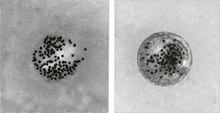
Transmission electron micrograph of an exosome
The GPC1biomarker (black dots) on exosomes from 2 patients. Image by the researchers, courtesy of Nature.
One method of spotting cancer early is to find biomarkers—substances in the body that signal the presence of a disease. A team of scientists lead by Dr. Raghu Kalluri of the University of Texas MD Anderson Cancer Center searched for biomarkers on tiny, fluid-filled sacs called exosomes. Exosomes are released by cells and circulate in blood. The research, which was partially funded by NCI, was published in Nature on July 9, 2015.
The scientists compared exosomes from a human cancer cell line and several noncancerous cell lines. They tested a variety of biomarkers and found 48 that were unique to the cancer exosomes. One, called Glypican-1 or GPC1, was found at high levels in pancreatic and breast cancer cells.
The team next isolated exosomes in blood samples taken from healthy people and patients with breast cancer or pancreatic cancer. The researchers found that 75% of the patients with breast cancer (24 out of 32) and all of the 251 pancreatic cancer patients had higher levels of GPC1-containing exosomes in their blood compared to healthy controls. Patients with late-stage pancreatic cancer had more of these exosomes in their blood than patients with early-stage disease.
Patients with precancerous pancreatic lesions had more GPC1-positive exosomes in their blood than both healthy controls and patients with noncancer pancreatic illnesses like pancreatitis. In contrast, a commonly used pancreatic cancer biomarker called carbohydrate antigen 19-9 couldn’t distinguish people with precancerous lesions from healthy controls. This suggests that GPC1-positive exosomes may be a better biomarker than the current standard.
Finally, the group examined a mouse model of pancreatic cancer. GPC1-positive exosomes predicted cancer emergence before tumors could be detected with MRI or other techniques.
If confirmed, this research could lead to fast and accurate tests for detecting early-stage pancreatic cancer, which would allow for earlier treatment and raise the disease’s survival rate.
“This presents an unprecedented opportunity for informative early detection of pancreatic cancer and in designing potential curative surgical options,” Kalluri says.

—by Brandon Levy

Monday, June 29, 2015

Cancer Research: Potential new class of cancer drugs developed ♦ Experimental treatment sends deadly leukemia into remission ♦ microRNA may provide therapy against pancreatic cancer

microRNA may provide therapy against pancreatic cancer Cancer researchers have found that a particular microRNA may be a potent therapeutic agent against pancreatic cancer. The need for new therapies for pancreatic cancer patients is great as only 7 percent of people with the disease survive more than 5 years after diagnosis. According to the National Cancer Institute, there will be an estimated 48,960 new cases of pancreatic cancer and 40,560 deaths from the disease in 2015.
E2F4 signature can predict progression of bladder cancer Investigators harnessed genomic data to discover that the previously identified E2F4 signature in breast cancer can be utilized to predict prognosis and response to therapy in bladder cancer.
Experimental treatment sends deadly leukemia into remission An experimental new treatment approach for a rare, deadly leukemia can send the disease into remission even in patients for whom the standard therapy has failed, a pilot study has found. The study is 'proof of principle' the cutting-edge approach could be used to treat many other cancers as well.
Development of new blood vessels not essential to growth of lymph node metastases The growth of metastases in lymph nodes -- the most common site of cancer spread -- does not require the development of new blood vessels, researchers have discovered, potentially explaining why antiangiogenesis drugs have failed to prevent the development of new metastases.
Potential new class of cancer drugs developed A new class of drug developed targets the Warburg effect to cut off cancer's energy supply, and researchers say that it has the potential to stop most kinds of cancer in its tracks.

Sunday, June 28, 2015

Cancer Research: Compound in magnolia may combat cancer ♦ Earlier, easier detection of colorectal cancer ♦ Cancer drug makes fruit flies live longer

Compound in magnolia may combat head and neck cancers As one of the compounds in magnolia extract, honokiol has been used for centuries in traditional Chinese and Japanese medicine to treat anxiety and other conditions. More recently, scientists have been revealing its cancer-fighting properties.
New approach holds promise for earlier, easier detection of colorectal cancer A new, sensitive electrochemical technique capable of detecting colorectal cancer in tissue samples has been developed by chemists -- a method that could one day be used in clinical settings for the early diagnosis of colorectal cancer.
Cancer drug makes fruit flies live longer Adult fruit flies given a cancer drug live 12 percent longer than average, according to a study researching healthy aging. The drug targets a specific cellular process that occurs in animals, including humans, delaying the onset of age-related deaths by slowing the aging process.
New drug squashes cancer's last-ditch efforts to survive As a tumor grows, its cancerous cells ramp up an energy-harvesting process to support its hasty development. This process, called autophagy, is normally used by a cell to recycle damaged organelles and proteins, but is also co-opted by cancer cells to meet their increased energy and metabolic demands. A compound that stops this cellular recycling process has now been developed by scientists.
New class of compounds shrinks pancreatic cancer tumors, prevents regrowth A chemical compound that has reduced the growth of pancreatic cancer tumors by 80 percent in treated mice has been developed by researchers. The compound, called MM41, was designed to block faulty genes. It appears to do this by targeting little knots in their DNA, called quadruplexes, which are very different from normal DNA and which are especially found in faulty genes.

Saturday, June 27, 2015

Cancer Research: Targeting telomeres could improve chemotherapy ♦ New colon cancer culprit found in gut microbiome ♦ DNA shed from head and neck tumors detected in blood, saliva

Current blood cancer drug prices not justified The costs associated with cancer drug prices have risen dramatically over the past 15 years, which is of concern to many top oncologists.Researchers concluded that the majority of existing treatments for hematologic, or blood, cancers are currently priced too high to be considered cost-effective in the United States
DNA shed from head and neck tumors detected in blood, saliva On the hunt for better cancer screening tests, scientists led a proof of principle study that successfully identified tumor DNA shed into the blood and saliva of 93 patients with head and neck cancer.
Targeting telomeres, the timekeepers of cells, could improve chemotherapy Telomeres, specialized ends of our chromosomes that dictate how long cells can continue to duplicate themselves, have long been studied for their links to the aging process and cancer. Researchers show how disabling telomere protection during cell division prompts cell death.
Tiny particles in blood useful for early diagnosis of pancreatic cancer A protein encoded by the gene glypican-1 (GPC1) present on cancer exosomes may be used as part of a potential non-invasive diagnostic and screening tool to detect early pancreatic cancer, potentially at a stage amenable to surgical treatment,

New pancreatic cancer culprit found in gut microbiome Changes in the gut bacteria of colon cancer patients indicate that some virulent bacteria could be linked to the progression of the disease. The findings could eventually be used to identify a virulence signature in these cancers and help doctors predict how bacterial changes in patients' guts could affect their prognosis.

Thursday, June 25, 2015

Cancer Research: Stress hormones could undermine breast cancer therapy ♦ new drug combo offers hope for people battling melanoma ♦ Decreased rates of high-grade cervical lesions in young women

Stress hormones could undermine breast cancer therapy Stress hormones often given to patients to treat the side effects of therapy may cause a subset of breast cancers to become treatment-resistant.
Decreased rates of high-grade cervical lesions in young women A new analysis indicates that rates of high-grade cervical lesions decreased in young US women after vaccines were made available to protect against human papillomavirus (HPV), but the trend may be due in part to changes in cervical cancer screening recommendations.
Study identifies multiple genetic changes linked to increased pancreatic cancer risk In a genome-wide association study believed to be the largest of its kind, researchers have uncovered four regions in the human genome where changes may increase the risk of pancreatic cancer.
Annual low-dose CT screening safe, reliable for identifying pre-cancers An annual exam using a key imaging technology could spare patients with lung nodules from unnecessary tests and surgery. The study authors found the imaging technology, called low-dose computed tomography (LDCT), to be a safe and effective screening tool to monitor those with non solid lung nodules, which in some cases are precursors to cancer.
Promising new drug combo offers hope for people battling melanoma Summer inspires many people to think about their vacation plans, however, it makes one medical oncologist think about melanoma. He hopes to be able to offer a new treatment for melanoma patients in the near future.

Thursday, May 21, 2015

Cancer Research: Organic nanoparticles, more lethal to tumors ♦ Study discovers how pancreatic cancer spreads to the liver ♦ Non-invasive colon cancer screening for African-Americans

Smoking induces early signs of cancer in cheek swabs DNA damage caused by smoking can be detected in cheek swabs. The study provides evidence that smoking induces a general cancer program that is also present in cancers which aren't usually associated with it -- including breast and gynecological cancers.
Study discovers how pancreatic cancer spreads to the liver Investigators has illuminated the precise molecular steps that enable pancreatic cancer to spread to the liver -- the event that makes the most common form of the disease lethal. By understanding this process, their discovery can lead to targeted treatments that delay metastasis, and offer clinicians a new biomarker to test for the earliest signs of pancreatic cancer.
Non-invasive colon cancer screening may be promising for African-Americans, Stool DNA (sDNA) testing, a new non-invasive technology for colon cancer screening, is a promising alternative to colonoscopy for African Americans.  sDNA sensitivity and specificity of advanced lesions and all adenomas (polyps) in African Americans was similar to or exceeded that of other racial group.
Chemo before surgery benefits patients with advanced ovarian cancer Women with advanced ovarian cancer have fewer side effects and tend to have a better quality of life if given chemotherapy before surgery. Delaying surgery also reduced the amount of time spent in the hospital after surgery.
Organic nanoparticles, more lethal to tumors Carbon-based nanoparticles could be used to sensitize cancerous tumours to proton radiotherapy and induce more focused destruction of cancer cells, a new study shows. Radiotherapy used in cancer treatment is a promising treatment method, albeit rather indiscriminate. Indeed, it affects neighboring healthy tissues and tumors alike. Researchers have thus been exploring the possibilities of using various radio-sensitizers; these nanoscale entities focus the destructive effects of radiotherapy more specifically on tumor cells.

Saturday, May 2, 2015

Cancer Research:Metabolic reprogramming restrains senescent cells from becoming cancerous ♦ synchrotron makes tumors visible ♦ Pancreatic cancer risk linked to weak sunlight:

Protein 'brake' in metabolic reprogramming restrains senescent cells from becoming cancerous Research has shown that cancerous cells have a different metabolism -- essential chemical and nutritional changes needed for supporting the unlimited growth observed in cancer Now, scientists have identified a way that cells can reprogram their metabolism to overcome a tumor-suppressing mechanism known as senescence, solidifying the notion that altered metabolism is a hallmark of cancer progression.
Compact synchrotron makes tumors visible Soft tissue disorders like tumors are very difficult to recognize using normal X-ray machines, as there is hardly any distinction between healthy tissue and tumors. Researchers have now developed a technology using a compact synchrotron source that measures not only X-ray absorption, but also phase shifts and scattering. Tissue that is hardly recognizable using traditional X-ray machines is now visible.
Pre-existing inflammation may promote the spread of cancer Allergic reactions -- or at least the pre-existing inflammation from these reactions -- may set the stage for cancer to spread from one area to another.
Pancreatic cancer risk linked to weak sunlight: Harm may come from low vitamin D Pancreatic cancer rates are highest in countries with the least amount of sunlight. Low sunlight levels in those countries were due to a combination of heavy cloud cover and high latitude

Scientists identify key receptors behind development of acute myeloid leukemia Scientists have discovered that a certain class of receptors that inhibit immune response are crucial for the development of acute myeloid leukemia (AML), the most common acute leukemia affecting adults

Wednesday, April 22, 2015

Cancer Research: Scientists turn cancer cells into normal cells ♦ Breaking breast cancer resistance ♦ Radiotherapy after prostate cancer surgery declining

Cancer-inflammation 'vicious cycle' detailed in new study New findings hidden within the complex machinery behind the chronic inflammation-cancer feedback loop have been discerned.
New drug combination shows promise for breaking breast cancer resistance A new combination of drugs has been developed that may overcome treatment resistance and relapse in breast cancer. While most women initially respond well to hormonal treatment with drugs such as tamoxifen, many go on to develop resistance and relapse. There is evidence that this is often due to activation of  a gene involved which fuels the growth of the tumor.
Pancreatic cancer loses viral defenses when talking with supporting cells  Researchers have unlocked a way to make pancreatic cancer cells more vulnerable to cancer-killing viruses, known as oncolytic viruses. The scientists have discovered how they can exploit the communication, or cross-talk, between pancreatic cancer and a specific cell type that supports the tumor. This cross-talk weakens the ability of both cell types to fight off cancer-fighting viruses.
Pancreatic cancer breakthrough: Scientists turn cancer cells into normal cells  A new research study has shown that pancreatic cancer cells can be coaxed to revert back toward normal cells by introducing a protein called E47. E47 binds to specific DNA sequences and controls genes involved in growth and differentiation.

Use of radiotherapy after prostate cancer surgery declining, despite evidence of benefit Despite strong evidence and guidelines supporting its use, post-surgical radiation therapy for prostate cancer patients at risk of recurrence is declining in the United States. This study finds fewer than 10 percent of patients at risk of recurrence received postoperative radiotherapy

Tuesday, April 14, 2015

Cancer Research:Nanoparticles stimulate antitumor response ♦ Risk of developing pancreatic cancer ♦ Delivering drug to an entire tumor

Nanoparticles at specific temperature stimulate antitumor response Researchers have identified the precise temperature that results in a distinct body-wide antitumor immune response that resists metastatic disease.
Anti-cancer therapy delivering drug to an entire tumor developed To treat inoperable tumors, anti-cancer medicine is commonly used. However, efficient drug delivery to tumor cells is often difficult, treating an entire tumor with drugs even more so. A new anti-cancer nanotechnology has been developed by researchers that delivers anti-cancer drugs uniformly to an entire tumor
Melanoma's 'safe haven' targeted for shut-down Melanoma cells become drug resistant by using surrounding healthy cells to provide a ‘safe haven’ from treatment, according to new research. So even if some cancer cells are destroyed, the protected cancer cells may survive -- and the disease can recur in a form that is untreatable. Now scientists are focusing on these 'safe havens'.
Researchers identify drug target for the first precision cancer therapy Cancerous tumors have the ability to evade targeted therapies by activating alternative pathways. Tumors also contain cancer stem cells, believed responsible for metastasis and drug resistance. Now scientists have identified a drug target that addresses both of these challenges
Identifying patients most at risk of developing pancreatic cancer When people learn they have a lesion in their pancreas that could become pancreatic cancer, they often request frequent CT scans and biopsies, or surgery. Often the lesion is nothing to worry about. A team of international physicians has developed a profile of the patient most at risk of developing lesions that are most likely to develop into cancer