Showing posts with label water. Show all posts

Tuesday, November 24, 2015

Cancer Research:Bacteria from the sea join the fight against cancer,♦ Sensory illusion causes cells to self-destruct ♦ Long-term outcomes in childhood, young adult cancer survivors

Bacteria from the sea join the fight against cancer, infections Scientists are opening the gates of nature’s secret medicine factories, with the aim of giving us new weapons against cancers and resistant bacteria. They are developing technology that will make it easier to find – and exploit – these hidden and unutilised medicine factories in bacteria that exist in the natural environment. The hunt will concentrate on marine bacteria.
Sensory illusion causes cells to self-destruct Magic tricks work because they take advantage of the brain's sensory assumptions, tricking audiences into seeing phantoms or overlooking sleights of hand. Now a team of researchers has discovered that even brainless single-celled yeast have sensory biases that can be hacked by a carefully engineered illusion, a finding that could be used to develop new approaches to fighting diseases such as cancer.
Long-term outcomes in childhood, young adult cancer survivors Recent work has focused on long-term outcomes in survivors of childhood or young adult cancer. Among other findings, researchers found that cancer survivors had an overall increased relative risk for hospitalization compared with those in the general population. Cancer survivors at highest risk for hospitalizations were leukemia, brain cancer and Hodgkin lymphoma survivors
Better catalysts will remove carcinogenic chlorine compounds from water Two new catalysts have been developed as effective treatment of tap water. With these catalysts, researchers intend to eliminate harmful chlorine compounds

Tuesday, September 29, 2015

Canada: Water Mint Recalled due to Salmonella Contamination

Kiskadee Ventures Limited is recalling freshKIS brand water mint from the marketplace due to possible Salmonella contamination. Consumers should not consume the recalled product described below.
The following product was sold at Real Canadian Superstore, 3050 Argentina Road, Mississauga, Ontario.
Recalled products
Brand Name
Common Name
Code(s) on Product
UPC
freshKIS
Water mint
PLU56788 17.09.15
Starting with 256788
What you should do
Check to see if you have recalled products in your home. Recalled products should be thrown out or returned to the store where they were purchased.
Food contaminated with Salmonella may not look or smell spoiled but can still make you sick. Young children, pregnant women, the elderly and people with weakened immune systems may contract serious and sometimes deadly infections. Healthy people may experience short-term symptoms such as fever, headache, vomiting, nausea, abdominal cramps and diarrhea. Long-term complications may include severe arthritis.
  • freshKIS Water mint - Variable

Friday, July 31, 2015

Health Research:Improving gene therapy ♦ Depressive ruminations and the idling brain ♦ Pharmacists help patients with hypertension


Researchers resurrect ancient viruses in hopes of improving gene therapy Researchers have reconstructed an ancient virus that is highly effective at delivering gene therapies to the liver, muscle, and retina. This discovery could potentially be used to design gene therapies that are not only safer and more potent than therapies currently available, but may also help a greater number of patients.
Trying to quit smoking? First strengthen self-control The desire to quit smoking -- often considered a requirement for enrolling in treatment programs -- is not always necessary to reduce cigarette cravings, argues a review of addiction research. Early evidence suggests that exercises aimed at increasing self-control, such as mindfulness meditation, can decrease the unconscious influences that motivate a person to smoke.
Pharmacists help patients with hypertension Patients with hypertension benefit from interacting with a medical team that includes a pharmacist. Two studies showed pharmacist-included care teams delivered more hands-on and tailored medication regimens to patients, which yielded more effective blood-pressure control results than for those patients who did not have a pharmacist on hand.
Depressive ruminations and the idling brain Depressed people often find themselves preoccupied with guilty, shameful, or self-defeating thoughts for large parts of their day. These thoughts not only distract from other activities but also fail to resolve the underlying life issues. Further, the ideas that receive focused attention in these depressive ruminations are frequently quite distorted and lead to distress.
Treating ships' ballast water: Filtration preferable to disinfection Untreated ballast water discharge from ships can spread living organisms and even pathogens across the world thereby introducing non-native or invasive species into the local environment. Scientists therefore recommend using physical treatment processes such as filtration rather than electrochemical disinfection, which creates countless potentially toxic compounds.

Tuesday, July 7, 2015

Brain Research: More strokes with intracranial stents ♦ Alzheimer's biomarkers may predict dementia ♦ Water to understand the brain

People over 65 with traumatic brain injuries hospitalized four times as often as younger people A disproportionate number of people hospitalized in Canada with traumatic brain injuries are 65 years or older, a new study has found. While that age group represents only 14 per cent of the Canadian population, it accounted for 38 per cent of hospitalizations for TBI between 2006-07 and 2010-11
More strokes with intracranial stents A new study confirms that if, after a stroke, patients also have stents inserted into blood vessels of the brain, new strokes occur considerably more often.
Midlife changes in Alzheimer's biomarkers may predict dementia Studying brain scans and cerebrospinal fluid of healthy adults, scientists have shown that changes in key biomarkers of Alzheimer's disease during midlife may help identify those who will develop dementia years later.

Water to understand the brain To observe the brain in action, scientists and physicians use imaging techniques, among which functional magnetic resonance imaging (fMRI) is the best known. These techniques are not based on direct observations of electric impulses from activated neurons, but on one of their consequences. Indeed, this stimulation triggers physiological modifications in the activated cerebral region, changes that become visible by imaging. Until now, it was believed that these differences were only due to modifications of the blood influx towards the cells. By using intrinsic optical signals (IOS) imaging, researchers have now demonstrated that the activated neurons swell due to the massive entry of water.

Tuesday, June 23, 2015

Niagara recalls 14 brands of bottled spring water

The following brands were recalled
Acadia
Acme
Big Y
Best Yet
7-11
Niagara
Nature’s Place
Pricerite
Superchill
Morning Fresh
Shaws
Shoprite
Western Beef Blue
Wegman’s
This is Niagara’s Consumer Notice
UPDATED – Monday, June 22, 2015
Last week, we issued a voluntary recall of spring water produced at our two (2) Pennsylvania plants from June 10-18th, 2015 because the operator at one of our contracted springs failed to notify us that there was evidence of E. coli bacteria at the spring source.
Because there has been a great deal of misinformation reported and circulated over the last 24 hours, we felt it was necessary to issue this clarifying statement.
Niagara Bottling performs extensive testing on both incoming spring water as well as finished products.  We have confirmed there have been no issues or E. coli contamination of any kind detected in our finished products or in the spring water that was delivered to our bottling facility.
Even if it had been present in the incoming spring water, we utilize quality systems and disinfection technology that would ensure that our product is free from contamination. Despite this, once we were informed of the potential presence of E. coli at the spring source, we immediately shut down our operations, disinfected our bottling lines and initiated a voluntary recall in an abundance of caution and in the interests of consumer safety.
This recall only relates to spring water produced in our Pennsylvania manufacturing facilities from June 10-18th, 2015.  It does not relate to any purified water or any spring water produced outside of Pennsylvania or outside the June 10-18th, 2015 timeframe.
If you have any additional concerns, please contact our Consumer Affairs Department at (888) 943-4894.
Out of an abundance of caution and in the interests of maintaining the highest possible standards for product quality, Niagara® is issuing a voluntary recall for Spring Water products produced from its Pennsylvania manufacturing facilities during the June 10th – June 18th time frame.
VERY IMPORTANT: No other dates of Niagara bottled water are affected by this recall.
Niagara was notified that the spring source was potentially compromised. There have been no reports of any illness or injury related to the above mentioned products to date and finished product testing detected no contaminants or issues of any kind. This voluntary withdrawal is being implemented in cooperation with State and Federal Agencies.
If you have questions about which products are affected, please contact us online or at (888) 943-4894.
Our voluntary recall only affect SPRING WATER (Not Purified Water) manufactured at our Hamburg, PA and Allentown, PA facilities between June 10 – June 18th.
The Best By codes on outer-wrap shrink-film or on the bottle for the affected cases would be in the range of:
F# BEST BY 08DEC2016 to F# BEST BY 16DEC2016
OR
A# BEST BY 08DEC2016 to    A# BEST BY 16DEC2016
F# indicates the Hamburg plant and line number
A# indicates the Allentown plant and line number

Friday, February 27, 2015

2/27/15 Health News: Water fluoridation linked to underactive thyroid ♦ GM food rules to take effect early ♦ Treatment for drug-resistant tuberculosis ♦ HIV drug beat strep throat

GM food rules to take effect 6 months early Originally slated to be implemented on Jan. 1, 2016, the law states that manufacturers should clearly label all food products, additives and loosely packaged products containing genetically modified ingredients. The print on the labels must be over 5 millimeters, and processed foods including soy oil must list any genetically modified ingredients Continue Reading
Potential treatment for drug-resistant tuberculosis discovered  A new small molecule drug has been discovered that may serve as a treatment against multidrug resistant tuberculosis, a form of the disease that cannot be cured with conventional therapies. While standard anti-tuberculosis drugs can cure most people of Mycobacterium tuberculosis infection, improper use of antibiotics has led to new strains of the bacterium resistant to the two most powerful medications, isoniazid and rifampicin. Continue Reading
New research provides first glimpse of weight gain guidance for pregnant women with obesity  New research provides the first glimpse of weight-gain guidance for pregnant women with various classes of obesity based on body mass index and suggests that they not gain any weight until mid-pregnancy or later Continue Reading
Water fluoridation in England linked to higher rates of underactive thyroid Water fluoridation above a certain level is linked to 30 percent higher than expected rates of underactive thyroid (hypothyroidism) in England. Researchers point out that their findings echo those of previous research,. Continue Reading

Could an HIV drug beat strep throat, flesh-eating bacteria? With antibiotic resistance on the rise, scientists are looking for innovative ways to combat bacterial infections. The pathogen that causes conditions from strep throat to flesh-eating disease is among them, but scientists have now found a tool that could help them fight it: a drug approved to treat HIV. Their work could someday lead to new treatments Continue Reading

Thursday, February 12, 2015

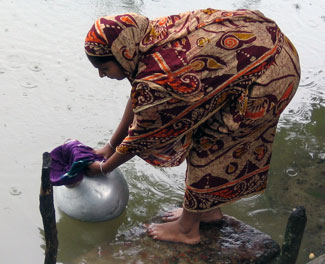
Sari cloth can filter cholera from water, research shows

Woman dressed in sari stands on rock at edge of water, dips urn with sari cloth covering opening into water to filter it
Photo courtesy of Dr. Anwar Huq/University of Maryland
A simple method of filtering water through sari cloth can reduce
cholera incidence by nearly half.
​by Cathy Kristiansen
A simple method of using readily available sari cloth to filter pond and river water successfully reduced the incidence of cholera by nearly half in a study conducted in Bangladesh. Funded by the NIH's National Institute of Nursing Research (NINR), the findings may have applications in other low-resource settings. More than 1 billion people worldwide lack access to safe drinking water and over 5 million die each year from waterborne illness, according to the WHO.
In many rural areas of Bangladesh, women use surface water for their household since it may be safer than well water, which can contain arsenic. The research team took its cue from a local practice to rid drinking water of insects and leaves by pouring it through sari cloth. Lab tests supported by the Thrasher Research Fund showed that a filter made of four layers of worn cotton material held back more than 99 percent of all cholera bacteria - using more layers or newer cloth slowed water collection too much.
"The filter is unique and useful," said Dr. Anwar Huq, who has collaborated on the project with University of Maryland colleague Dr. Rita Colwell. "It doesn't require any money or sophisticated training and the women bringing water to the house enthusiastically used the filtration, once the benefit was explained to them."
To test the filter's effectiveness, Huq and his colleagues studied about 45,000 residents, all in households with children under age five, who are typically more vulnerable to cholera. They showed the women how to use sari cloth to filter water that would be consumed or used to clean teeth, food and tableware. They followed up by visiting the village every two weeks to encourage compliance. An additional group of villages served as controls, adopting no interventions. In the households that were filtering water, cholera incidence was about half the level of the control participants and infections arising were milder, the scientists reported in Proceedings of the National Academy of Sciences. The study also showed the practice benefited neighbors who did not filter their water, by reducing the overall incidence of cholera in the community.
In a follow-up study five years later, researchers discovered about one-third of participants continued to filter water as trained. Huq suggested repeated training and messages on TV and the radio could improve usage. He added he hopes to investigate if the filter blocks other waterborne pathogens as well, such as E. coli.

Friday, November 28, 2014

Ireland: More Bottled Water Recalled

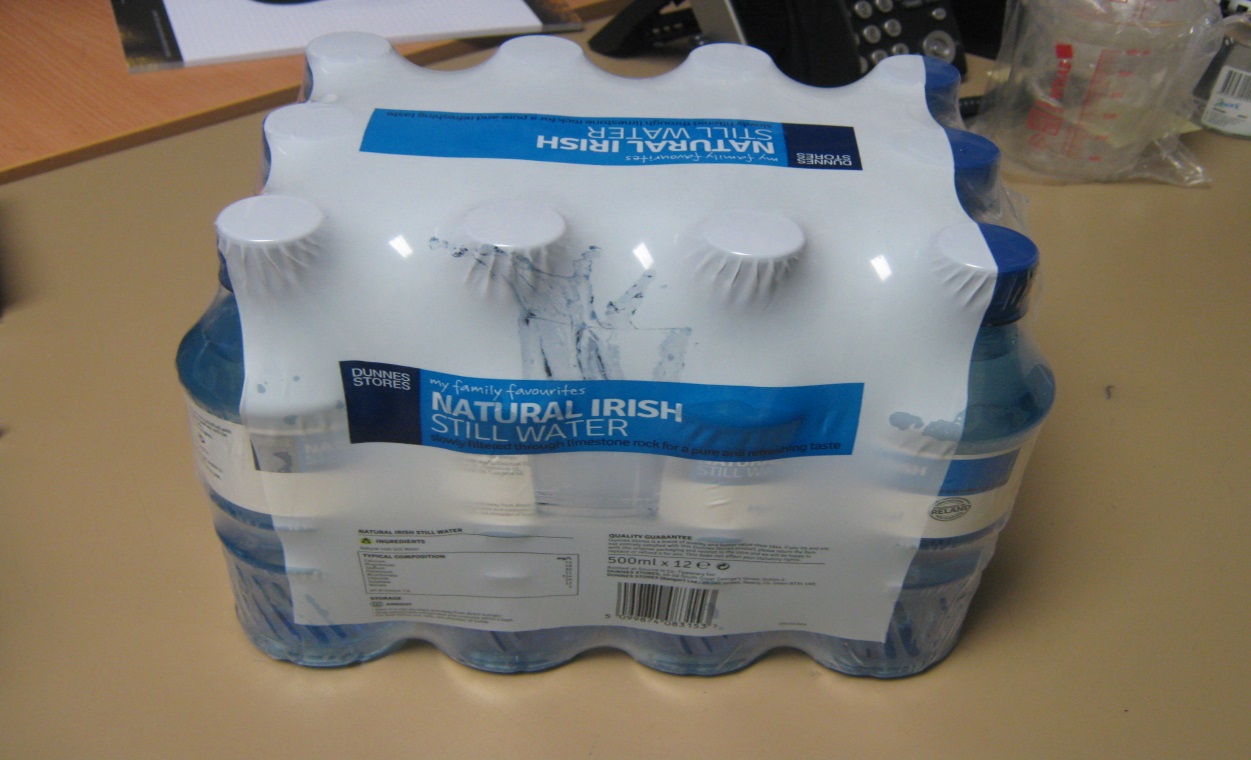
Dunnes Stores Extends Bottled Water Recall (Update 1)
Product:
Dunnes Stores “my family favourites” Natural Irish Still Water; pack size: 12x 500ml bottles (multipack)
Batch Code:
Barcode: 5099874083153; best before end (BBE): Nov 15
Country Of Origin:
Ireland
Message:
Dunnes Stores is extending its recall of “my family favourites” bottled still water, to include all batches with expiry dates of November 2015. This is a precaution following the detection of residues of cleaning fluid in one batch of the water. Point of sale recall notices are being displayed in stores.
Dunnes Stores Water Multipack

Wednesday, November 26, 2014

Ireland: Bottled Water Recall

Ireland Bottled Water Recall
Dunnes Stores Recalls a Batch of Bottled Water Due to the Presence of Residues of Cleaning Fluid

Product:
Dunnes Stores 'my family favourites' Natural Irish Still Water; pack size: 12 x 500ml bottles (multi pack).
Batch Code:
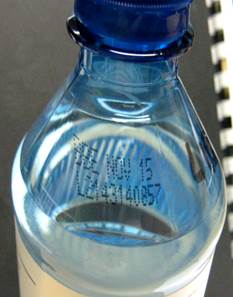
L214314; best before end (BBE): Nov 15
Country Of Origin:
Ireland
Message:
Dunnes Stores is recalling one batch of its 'my family favourites' bottled water due to the presence of residues of cleaning fluid.  Point of sale notices are being displayed in stores.
Dunnes Stores Bottled Water
Dunnes Stores Water Multipack
Dunnes Stores Still Water

Tuesday, November 11, 2014

Ireland: Water And Sparkling Water Recalled


Fior Uisce Naturally Irish Still Water and Fior Uisce Naturally Irish Sparkling Water; sizes: 250 ml (glass bottle), 750ml (glass bottle) and 19 litre (plastic bottle).are recalled due to elevated levels of organic compounds
Elevated levels of tetrachloroethene and trichloroethene were detected in Fior Uisce bottled water. Fior Uisce is recalling all batches from consumers.

Wednesday, June 11, 2014

Great Britain: Spring Water Recalled

Nisa Retail Limited recalls Heritage Montgomery Spring Still Natural Mineral Water due to contamination with small black particles
Nisa Retail Limited is recalling one date code of Heritage Montgomery Spring Still Natural Mineral Water, on a precautionary basis, as some bottles have been found to have small black particles floating in them.
Product: Heritage Montgomery Spring Still Natural Mineral Water
Bottle size: 2 litre
'Best before' end: May 2016 L14135
Nisa Retail Limited is recalling the above product. Product recall notices will be displayed in all stores supplied by Nisa, advising consumers of the recall and what they can do if they have bought the affected product.
If you have bought the above product, do not drink it. Instead, return it to the store from which you purchased it for a full refund.

Wednesday, February 5, 2014

2/5/14 Health News: Mexico City: Water Torture - Oldest Known Living Cancer - Good Cholesterol can Turn Nasty

Mexico City: Water Torture
In Mexico City, Holy Water is basically just tap water, and it is debatable whether the priest's blessing is enough to rid the water of all the parasites or toxic substances that swarm in it. Continue Trading


Dogs Carry the Oldest Known Living Cancer
Canines are in a rare category when it comes to cancer: They and Tasmanian devils are the only two animals that can transmit it from one individual to another. A new genetic study reveals that the dog form of the cancer, which causes genital tumors, is 11,000 years old—making it the oldest continuously living cancer. Canines can also develop cancers that are akin to human cancers, but their transmissible cancer spreads when cells from one dog's tumor rub off during sexual contact and grow into a new tumor on the other animal. The study notes that the cancer originated in an ancient dog closest to the modern-day breeds of Alaskan malamutes and huskies. Continue Reading


Good Cholesterol can Turn Nasty and Clog Arteries
Good cholesterol also has a nasty side that can increase the risk of heart attacks, according to US doctors. "Good", or HDL, cholesterol normally helps to keep arteries clear and is good for heart health. But the team at the Cleveland Clinic showed it can become abnormal and lead to blocked blood vessels. They say people should still eat healthily, but that the good cholesterol story is a more complex tale than previously thought. Low-density lipoprotein (LDL) cholesterol is "bad" because it is deposited in the walls of arteries and causes hard plaques to build up that can cause blockages, resulting in heart attacks and stroke.

High-density lipoprotein (HDL) cholesterol is "good" because the cholesterol is instead shipped to the liver. The evidence shows that having a high ratio of good to bad cholesterol is good for health. However, researchers at the Cleveland Clinic say trials aimed at boosting levels of HDL have "not been successful" and the role of good cholesterol is clearly more complicated. In their study, published in the journal Nature Medicine, they showed how HDL cholesterol could become abnormal. One of the researchers, Dr Stanley Hazen, said HDL cholesterol was being modified in the walls of the artery. He told the BBC: "In the artery walls it is acting very differently to in the circulation. It can become dysfunctional, and contributes to the development of heart disease." Continue Reading

Friday, January 10, 2014

China: Dirty Pond Water injected into Lamb Meat

With major food industry scandals making the headlines just about every other week and the government vowing to crack down hard, the newest food safety scandal occurred this week when Chinese state television announced the government arrested seven people in southern Guangdong province for injecting dirty pond water into lamb meat to swell its weight and raise its price.
The suspects slaughtered up to 100 sheep per day at an illegal warehouse, pumping bacteria-ridden water into the meat before it was sold at markets, food stalls and restaurants in major cities such as Guangzhou and Foshan, according to China Central Television (CCTV). Authorities raided the illegal lamb meat abattoir in Guangdong at the end of December, finding around 30 carcasses injected with water, 335 live sheep, forged inspection stamps, and equipment to inject water into the meat, the report showed.
China has been hit by a number of food safety scandals, from deadly chemical-laced dairy products to recycled "gutter oil" used for cooking. Two weeks ago Wal-Mart was forced to apologize after a Chinese supplier of donkey meat snacks was found to have mixed fox meat into the product.

Thursday, January 9, 2014

Recreational Water–Associated Disease Outbreaks

Swimming is a great form of physical activity year-round, but germs can spread in the water if we don’t each do our part to promote healthy swimming. Swimmers can help keep germs out of the water by taking a pre-swim shower and not swimming when ill with diarrhea.
Aquatics staff can kill germs in the water by maintaining disinfectant levels and pH according to public health standards that are enforced by pool inspectors. Healthy swimming is important all year—even in the winter. Hot tubs/spas were linked to 18 (22 percent) outbreaks, of which seven (39 percent) occurred in February or March.
Harmful algal blooms commonly occur in freshwater bodies. They can create bad odors, they can discolor the water or accumulate as a scum on the surface of the water.
People should avoid, and animals should be kept from, and neither should drink directly from lakes and ponds that have a scum on the water. People should also observe any local water advisories.
The outbreaks most often affected people less than 20 years old. HABs tend to occur in warm bodies of water that are rich in nutrients and often produce a visible algal scum on the water. Harmful algal blooms {HABs) might generate toxins that can make humans sick and cause death among fish, birds and dogs. Ill people report a range of health effects, including neurologic symptoms (for example, confusion), diarrhea, cough, rash, and earache.
Health-care providers should consider HAB—toxin exposure as a possible cause of illness in people who have been in or alongside freshwater bodies with algal blooms. Future increases in water temperature and nutrient pollution are expected to result in an increase in the number of HABs in freshwater lakes.

Tuesday, December 3, 2013

12/3/13 Health News: Drug Resistance Law Proposed, Herbal Supplements Contain No Herbs, India Running Out of Water


India's Running Out of Water For Agriculture
India is now the world's third-largest grain producer after China and the United States. The adoption of higher-yielding crop varieties and the spread of irrigation have led to this remarkable tripling of output since the early 1960s. Unfortunately, a growing share of the water that irrigates three-fifths of India's grain harvest is coming from wells that are starting to go dry. This sets the stage for a major disruption in food supplies for India's growing population continue reading

Herbal Supplements Are Often Not What They Seem
Not-So-Herbal Supplements: A study using DNA testing offers perhaps the most credible evidence to date of adulteration, contamination and mislabeling in the herbal supplement industry.
Americans spend an estimated $5 billion a year on unproven herbal supplements that promise everything from fighting off colds to curbing hot flashes and boosting memory. But now there is a new reason for supplement buyers to beware: DNA tests show that many pills labeled as healing herbs are little more than powdered rice and weeds.continue reading


About 80 percent of all antibiotics distributed in the U.S. are for food animals. They're commonly used to promote growth and to prevent, control and treat disease. Overuse can promote the prevalence of antibiotic-resistant bacteria in the food supply and ultimately cause resistant infections in humans. In September, the U.S. Centers for Disease Control and Prevention released a report noting that, although the majority of drug-resistant infections.continue reading


Saturday, August 24, 2013

China’s Agriculture Decimated By Polluted Water

With its successful bid to purchase the U.S. pork giant Smithfield, which is pending U.S. governmental approval, China has revealed its major vulnerability—that of feeding its own people. Its race to get to the top of global manufacturing has extracted the heavy cost of fouling its water, land and air so that it must look outside its boundaries to keep its increasingly unsustainable growth on track.
. In order to continue its manufacturing, China must rely on the use of coal, its number one energy source. Coal requires a massive use of water both in mining and in burning. Coal industries and power stations use 17 % of China’s water.
About half of China’s rivers have dried up since 1990 and those that remain are mostly contaminated. Without enough water, coal can’t be mined, new power stations can’t run and the economy can’t grow. At least 80 percent of the nation’s coal comes from regions where the water supplies are either “stressed” or in “absolute scarcity.”
China has about 1,730 cubic meters of freshwater per person, close to the 1,700 cubic meter-level the UN deems “stressed.” The situation is worse in the north, where most of its coal and only 20 percent of its water are located.Severe water pollution affects 75 percent of China’s rivers and lakes and 28 percent are unsuitable even for agricultural use,
With the  unsustainability of China’s livestock production as pertains to water use, it seems the height of lunacy to continue meat production.
Nearly half of all the water used in the United States goes to raising animals for food.It takes more than 2,400 gallons of water to produce 1 pound of meat, while growing 1 pound of wheat only requires 25 gallons. You save more water by not eating a pound of meat than you do by not showering for six months!
The U.S. has its own problems with its water supply, which is being exacerbated by the  severe droughts brought on by climate change. So is the U.S. willing to be a CAFO (Confined Animal Feeding Operation) to China?

source  BEACH BABE IN FL ON FRI AUG 23, 2013